

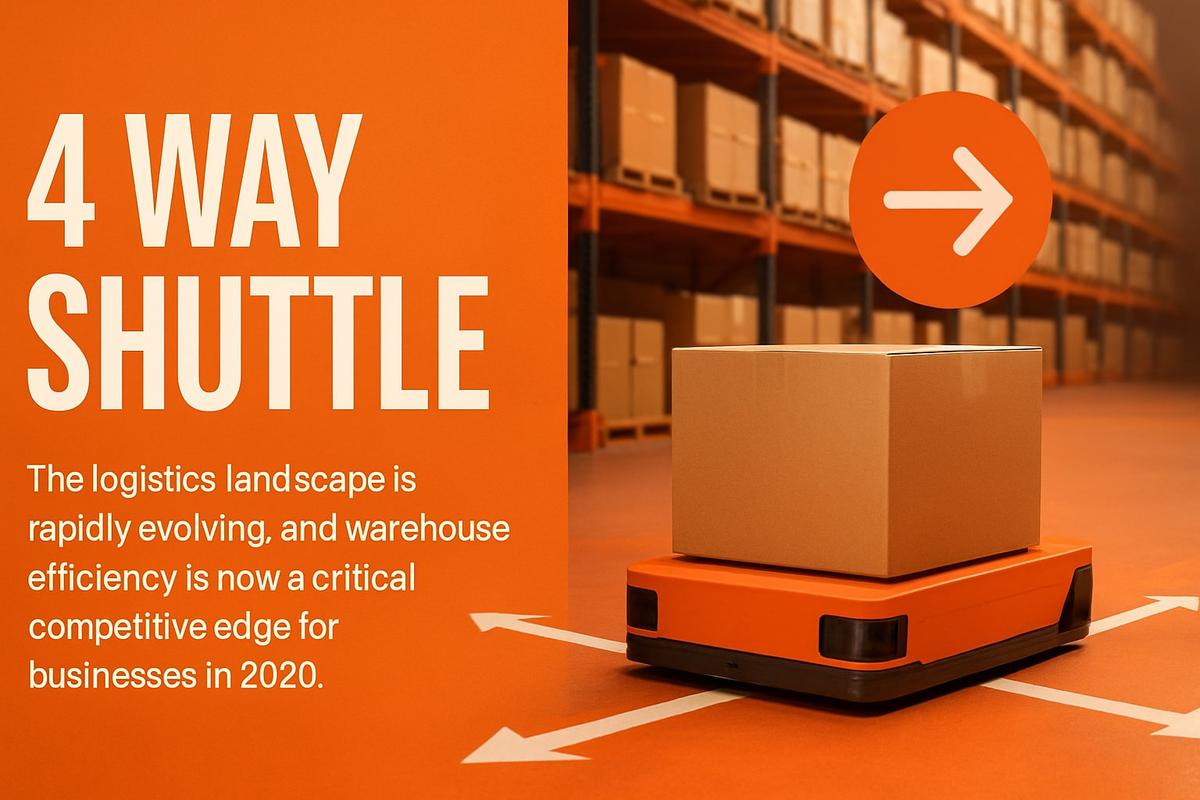
4 Way Shuttle Guide 2026: Efficient Warehouse Solutions
Share on
The logistics landscape is changing quickly, and the 4 way shuttle is leading the charge in warehouse innovation for 2026. As businesses face growing pressure to optimise space and boost efficiency, these advanced systems offer a clear competitive edge.
This guide provides a clear, practical look at 4 way shuttle technology. You will discover how these systems work, what sets them apart, and why they are transforming warehouse operations across industries.
Explore core features, major benefits, selection tips, integration strategies, real-world examples, and future trends. Ready to unlock next-level warehouse efficiency? Let’s get started.
Understanding 4 Way Shuttle Systems
Modern warehouses face mounting pressure to maximise every square metre. The 4 way shuttle stands at the heart of this transformation, offering a new benchmark in flexibility, density, and speed within automated storage environments.
What is a 4 Way Shuttle?
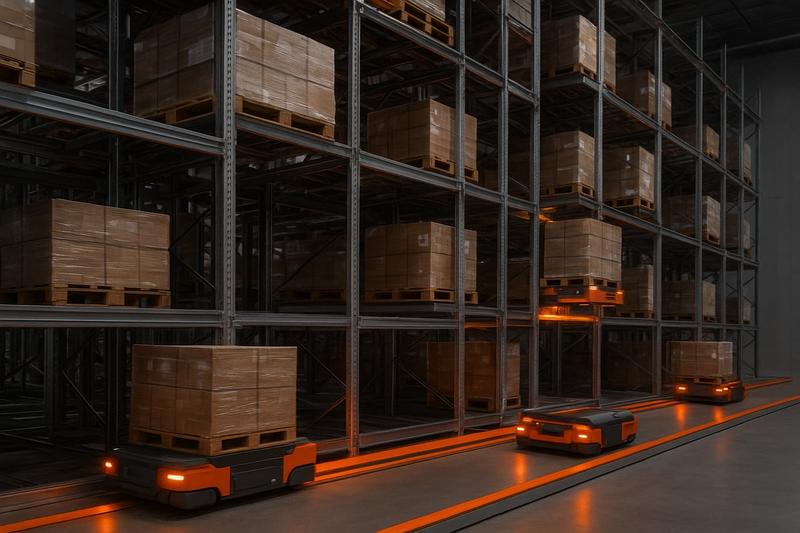
A 4 way shuttle is an advanced automated vehicle designed to transport pallets or totes within high-density storage systems. Unlike traditional pallet shuttles, which move only in a single direction along one aisle, the 4 way shuttle can navigate left, right, forward, and back, as well as operate across multiple levels. This multi-directional movement is what sets the 4 way shuttle apart, enabling seamless access to any location within the racking grid.
These systems are fully autonomous, operating under the guidance of sophisticated Warehouse Management Systems (WMS) and Warehouse Control Systems (WCS). They communicate in real time with warehouse software, receiving tasks and optimising routes for maximum efficiency. According to Eurofork, the 4 way shuttle can deliver up to 42 percent higher storage density compared to traditional solutions, a critical advantage for businesses seeking to optimise every cubic metre.
Common applications for the 4 way shuttle include:
- High-density storage facilities
- Cold storage environments
- E-commerce fulfilment centres
- Manufacturing warehouses
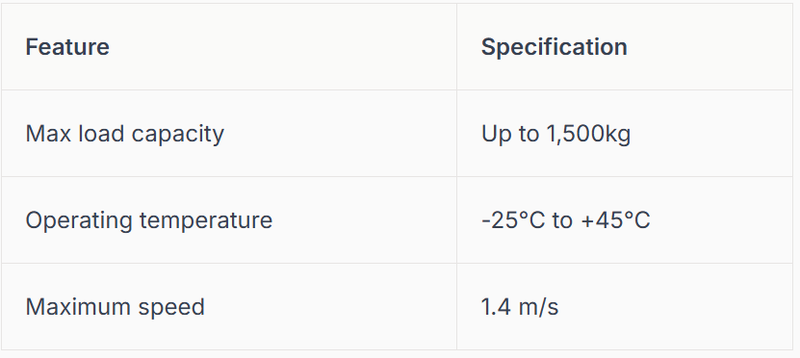
Leading examples such as E4SHUTTLE and Movu Atlas showcase the versatility and power of this technology. They are engineered for robust performance, with typical technical specifications summarised below:
For a deeper dive into product features and integration, visit ASRS and 4 Way Shuttle Solutions.
The 4 way shuttle's ability to move autonomously between aisles and levels allows it to fit into both greenfield and brownfield sites, even when warehouse layouts are complex or space is at a premium.
Evolution of Shuttle Technology
The journey of automated storage and retrieval systems (ASRS) began with single-direction shuttles, focused on simple pallet movement. Over time, the demand for higher throughput and storage density led to the development of the 4 way shuttle, capable of multi-directional travel and cross-level operation.
One of the major milestones in this evolution has been the integration of artificial intelligence and advanced software. Today, the 4 way shuttle is not just a transport device, but a smart, adaptive agent. AI-driven algorithms optimise shuttle routes, balance loads, and even predict maintenance needs, reducing downtime and extending system lifespan.
Modularity and scalability are now standard, allowing operators to expand their fleet of 4 way shuttle units as business demands grow. This flexibility ensures that both small and large operations can deploy the technology without major disruptions.
Industry adoption continues to accelerate, driven by the rise of e-commerce, labour shortages, and the need for space-efficient storage. Market forecasts predict robust growth for the 4 way shuttle sector, reflecting its central role in the future of automated warehousing.
The 4 way shuttle represents the next generation of warehouse automation, combining intelligent design with proven operational benefits. As more businesses adopt this technology, it is reshaping the logistics landscape for 2026 and beyond.
Key Features and Advantages of 4 Way Shuttle Solutions
Modern warehouses face increasing demands for space efficiency, flexibility, and high throughput. The 4 way shuttle stands out by addressing these needs with innovative design and intelligent operation. Let us explore the key features and advantages that make this solution essential for future-ready warehousing.

Maximising Storage Density and Space Utilisation
The 4 way shuttle allows deep lane access, reducing the number and width of aisles required. This means warehouses can store more pallets within the same footprint. The system adapts to brownfield sites and complex layouts, making it suitable for both new builds and retrofits.
For instance, the Eurofork E4SHUTTLE has demonstrated up to 42% increase in storage density compared to conventional solutions. The Movu Atlas system enables businesses to fully utilise their available space, even in facilities with varying ceiling heights or challenging floor plans.
By maximising every cubic metre, a 4 way shuttle transforms underused areas into high-density storage, directly impacting operational efficiency and cost savings.
Flexibility, Scalability, and Adaptability
One of the main advantages of the 4 way shuttle is its modular design. Businesses can start with a small system and easily scale up by adding more shuttles or racking as demand grows. This approach supports rapid expansion without major disruption.
The 4 way shuttle is adaptable to seasonal peaks and fluctuating inventory levels. It can be integrated into both new and existing facilities, supporting business growth and changing requirements. Companies have the flexibility to adjust system capacity to suit evolving market needs.
As a result, the 4 way shuttle offers future-proofing, making it a smart investment for dynamic warehouse environments.
Operational Efficiency and Throughput
With 24/7 autonomous operation, the 4 way shuttle delivers high throughput rates and minimal downtime. Multiple shuttles can work simultaneously across different levels, dramatically increasing order picking and replenishment speeds.
By reducing manual handling, the 4 way shuttle minimises human error and improves workplace safety. The system is designed for quick response to incoming orders, enabling faster delivery times and higher customer satisfaction.
This operational efficiency translates to measurable gains in productivity, lower labour costs, and a robust competitive edge.
Intelligent Software and AI Integration
Advanced software platforms power the 4 way shuttle, using artificial intelligence for route optimisation, load balancing, and predictive maintenance. These smart systems integrate seamlessly with Warehouse Management Systems (WMS) and Warehouse Control Systems (WCS).
Real-time data monitoring provides insights into system health and performance. For example, the EXA platform driving E4SHUTTLE operations enables proactive decision-making and continuous improvement.
By leveraging AI, the 4 way shuttle ensures optimal use of resources, reduced downtime, and enhanced visibility for managers.
Energy Efficiency and Sustainability
Energy efficiency is a core strength of the 4 way shuttle. Compared to traditional ASRS cranes, these systems consume less power due to optimised movement and smart charging features. Battery management ensures shuttles operate only when needed, extending battery life and reducing waste.
For those seeking research-backed insights, the Four-Way Shuttle-Based Warehouse Optimization Study highlights significant energy savings and efficiency improvements in dense, multi-level storage environments using 4 way shuttle technology.
These features not only lower operational costs but also help businesses meet their sustainability goals and reduce their carbon footprint.
Safety and Reliability
Safety is paramount in every warehouse, and the 4 way shuttle addresses this with patented systems for controlled access and movement. Continuous condition monitoring detects potential issues before they cause downtime, ensuring consistent performance.
By minimising manual intervention, the 4 way shuttle enhances workplace safety and reduces the risk of accidents. Reliability is further supported by robust engineering and remote diagnostics, allowing for rapid troubleshooting and maintenance.
In summary, the 4 way shuttle delivers a blend of safety, reliability, and peace of mind for warehouse operators.
How to Select the Right 4 Way Shuttle System for Your Warehouse
Choosing the best 4 way shuttle system for your warehouse requires a systematic approach. With many options on the market, a focused selection process will help you maximise efficiency, scalability, and ROI. Let us break down the key steps to ensure your investment delivers the results you need.
Assessing Warehouse Needs and Goals
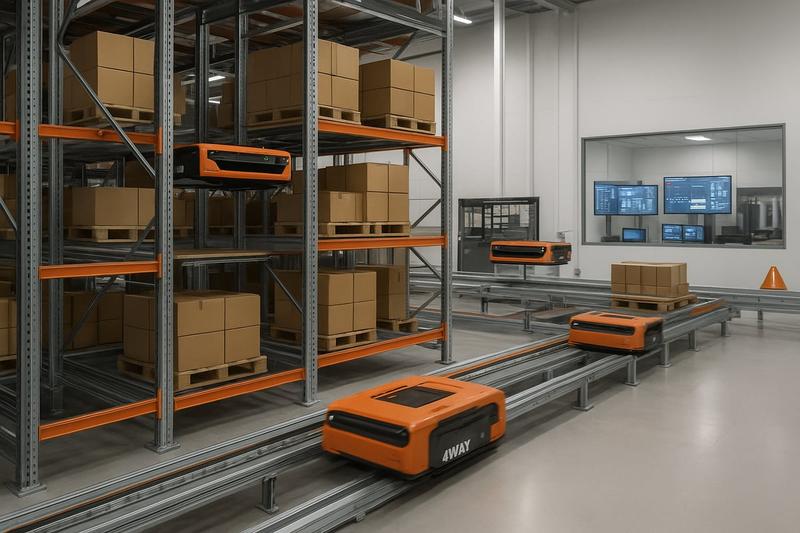
Begin your 4 way shuttle selection by thoroughly evaluating your warehouse's current and future requirements. Consider the types of products you store, SKU diversity, inventory turnover, and peak volume periods. Factor in your storage density needs, target throughput, and any special regulations such as temperature control or hazardous goods handling.
Map your facility's dimensions, ceiling heights, and unique constraints. Think about expansion plans and how a 4 way shuttle system can adapt as your business grows. This initial assessment will provide a clear set of objectives, ensuring the chosen solution aligns with both operational and strategic goals.
Comparing Leading Solutions and Vendors
When evaluating 4 way shuttle providers, look for proven technology, strong performance data, and a track record in similar warehouse environments. Compare key features such as load capacity, operating temperature range, and shuttle speed. Examine the modularity of each system and the flexibility to add more shuttles as your needs change.
Vendor support is critical. Assess after-sales service, local presence, and the ability to provide rapid response when needed. Choosing a reputable supplier with comprehensive support helps guarantee the ongoing success of your 4 way shuttle investment.
Evaluating Software and Integration Capabilities
A 4 way shuttle system is only as effective as its software integration. Review how each solution connects with your existing Warehouse Management System (WMS) or Warehouse Control System (WCS). User-friendly interfaces, real-time dashboards, and robust data analytics are essential for smooth operations.
Check for features like AI-driven route optimisation and predictive maintenance alerts. Systems that offer seamless connectivity will future-proof your warehouse and simplify the adoption of additional automation solutions. For a broader understanding of related technologies, the Automated Storage and Retrieval Systems resource offers valuable insights.
Cost Considerations and ROI
Analysing the costs and returns of a 4 way shuttle investment is crucial. Review both upfront capital expenditure (CAPEX) and ongoing operational expenses (OPEX). Some vendors offer flexible financing or leasing models, which can lower barriers to entry and improve cash flow.
Calculate projected ROI by factoring in savings from reduced labour, increased storage density, and higher throughput. Use example scenarios to estimate payback periods and long-term benefits. This financial clarity will support a confident, data-driven decision.
Implementation and Support
Implementing a 4 way shuttle system should be efficient and minimally disruptive. Look for vendors offering plug-and-play installation, clear project timelines, and comprehensive staff training. Ongoing support is vital, including maintenance, software updates, and troubleshooting.
Review client success stories and case studies to gauge vendor reliability. Choosing a partner committed to continuous improvement will maximise the long-term value of your 4 way shuttle solution.
Real-World Applications and Case Studies
Warehouses across the globe are reaping the benefits of 4 way shuttle technology, transforming traditional storage and fulfilment models. From maximising space in distribution centres to ensuring product safety in cold storage, these systems are setting new industry benchmarks. Let us explore how leading businesses are putting 4 way shuttle solutions to work.

High-Density Distribution Centres
Distribution centres are under pressure to store more inventory without expanding their footprint. By deploying a 4 way shuttle, operators can achieve deep lane storage and reduce aisle space, enabling up to 42 percent higher storage density.
For example, Dematra integrated the Movu Atlas solution, transforming its facility into a benchmark for high-density storage. The result was improved throughput, faster order processing, and better adaptability to peak demand. For further insights into optimising automation in these environments, see Maximising Automation in Distribution Centers.
Cold Storage and Temperature-Controlled Warehouses
Cold storage facilities require robust systems that can operate reliably in extreme conditions. The 4 way shuttle functions efficiently in temperature ranges from minus 25°C to plus 45°C, maintaining product integrity and energy efficiency.
Food producers and pharmaceutical firms often turn to these solutions to ensure continuous, automated movement of goods while reducing manual intervention. Consistent performance in challenging temperatures helps businesses maintain compliance and quality standards, with minimal downtime or maintenance.
E-Commerce and 3PL Fulfilment
The rise of e-commerce and third-party logistics has increased the need for flexible, high-throughput warehousing. A 4 way shuttle excels at handling diverse SKUs and variable order volumes, making it ideal for fulfilment centres.
Automated storage and retrieval enable rapid picking and replenishment, supporting same-day or next-day delivery promises. Businesses benefit from reduced picking errors, greater inventory visibility, and the agility to respond to sudden shifts in consumer demand.
Food & Beverage, FMCG, and Pharmaceuticals
These sectors demand strict traceability, hygiene, and regulatory compliance. Implementing a 4 way shuttle system allows for accurate tracking of products, streamlined batch management, and safe handling.
In food and beverage operations, the E4SHUTTLE has been deployed to boost throughput and accuracy. Pharmaceutical warehouses also leverage shuttle automation to improve safety and maintain precise temperature control, ensuring product quality from storage to dispatch.
Scalability in Growing Operations
As business needs evolve, scalability is crucial. The modular design of a 4 way shuttle system lets companies expand capacity by adding more shuttles or racking, all without major disruptions.
This approach supports both gradual and rapid growth, enabling seamless system upgrades as demand increases. Businesses gain confidence knowing their warehouse infrastructure can keep pace with expansion, supporting long-term strategic goals and operational resilience.
Integration Strategies and Best Practices for 4 Way Shuttle Deployment
Deploying a 4 way shuttle system is a transformative step that requires careful planning and execution. From initial project scoping to ongoing system optimisation, every phase impacts efficiency and ROI. The following strategies and best practices will help you achieve a seamless, future-ready deployment.
PEAK 4-Way Automated Pallet Shuttle | Apex Companies
Planning and Project Management
Successful 4 way shuttle deployment starts with structured project management. Engage all stakeholders early, including operations, IT, and safety teams, to define clear goals. Outline the project scope, budget, and timeline, ensuring alignment across departments.
Develop a detailed roadmap that covers every stage, from initial design to post-launch review. Consider referencing Four-Way Shuttle Systems in Warehouse Automation for proven implementation frameworks and insights into best practices.
- Identify key project milestones
- Assign clear roles and responsibilities
- Set measurable success criteria
Consistent communication and regular progress reviews keep the project on track and address issues quickly.
Facility Assessment and Layout Optimisation
Begin with a comprehensive assessment of your warehouse. Map out the existing layout, ceiling heights, and temperature zones to identify opportunities for maximising storage density with a 4 way shuttle system.
Leverage digital tools like 3D mapping to simulate shuttle paths and racking arrangements. For more guidance, consult Automated Storage Solutions for Warehouses, which offers practical tips for facility optimisation and system integration.
- Evaluate available space and workflow patterns
- Analyse SKU profiles and inventory turnover
- Design racking to support multi-directional shuttle movement
Tailoring the layout to the unique requirements of your operation ensures optimal performance and future scalability.
Software Integration and Data Connectivity
Integrating your 4 way shuttle with existing Warehouse Management Systems (WMS) and Warehouse Control Systems (WCS) is critical. Ensure the new system supports real-time data exchange, centralised control, and seamless user interfaces.
Work closely with IT teams to define connectivity standards and data protocols. Test the integration thoroughly before go-live to avoid disruptions.
- Set up dashboards for live monitoring
- Enable predictive analytics for maintenance
- Prioritise cybersecurity and data integrity
A robust software foundation unlocks the full potential of automation and supports continuous improvement.
Change Management and Staff Training
Transitioning to a 4 way shuttle system introduces significant change for warehouse staff. Proactive change management helps build buy-in and minimises resistance.
Provide comprehensive training on shuttle operation, safety protocols, and troubleshooting. Use a combination of classroom instruction, hands-on practice, and digital learning modules.
- Communicate the benefits of automation clearly
- Offer ongoing support and refresher courses
- Encourage feedback and continuous learning
Empowering your team ensures a smooth adoption and maximises system effectiveness.
Maintenance, Monitoring, and Continuous Improvement
Maintaining your 4 way shuttle system involves regular inspections, condition monitoring, and responsive support. Leverage predictive maintenance tools to detect potential issues before they cause downtime.
Schedule routine system reviews to assess performance and identify improvement opportunities. Use data analytics to refine shuttle routes and optimise workflows over time.
- Establish a maintenance calendar
- Monitor key performance indicators (KPIs)
- Adapt processes based on operational data
A culture of continuous improvement ensures your investment delivers long-term value and competitive advantage.
Future Trends and Innovations in 4 Way Shuttle Technology
The 4 way shuttle landscape is on the brink of transformative change. As warehouses seek to future-proof their operations, next-generation innovations are shaping how businesses approach automation and logistics. From robotics to sustainability, the evolution of 4 way shuttle solutions is accelerating, offering new opportunities for efficiency, intelligence, and adaptability.
Advancements in Robotics and AI
The 4 way shuttle is benefiting from rapid progress in robotics and artificial intelligence. Modern systems are now equipped with enhanced AI algorithms that enable self-optimising operations and adaptive routing. These advancements allow 4 way shuttle fleets to learn from real-time data, improving efficiency with every cycle.
Machine learning is a crucial driver, empowering shuttles to make autonomous decisions about route planning, load balancing, and predictive maintenance. As AI continues to evolve, warehouses can expect even greater performance and reliability from their 4 way shuttle investments.
Increased Sustainability Focus
Sustainability is now a central focus for every 4 way shuttle deployment. Manufacturers are introducing energy-efficient designs that minimise power consumption without sacrificing performance. Smart battery management systems help extend operational uptime while reducing energy costs.
Many 4 way shuttle solutions now use eco-friendly materials and processes, aligning with global sustainability goals. These innovations support businesses in their efforts to lower their carbon footprint and meet regulatory requirements for green operations.
Greater Interoperability and System Integration
Interoperability is transforming how 4 way shuttle systems fit within broader warehouse ecosystems. Modern shuttles can seamlessly connect with other automation technologies, including autonomous mobile robots, conveyor systems, and robotic picking solutions.
Open software platforms make it easier to integrate 4 way shuttle systems with warehouse management and control systems. This flexibility ensures businesses can adapt quickly to changing requirements, adding new automation components as needed for maximum efficiency.
Expansion of Use Cases
The versatility of 4 way shuttle technology is driving adoption across new sectors. While logistics and e-commerce remain primary users, industries such as automotive, electronics, and retail are now exploring these solutions for complex storage and handling needs.
Customisable 4 way shuttle configurations allow providers to address unique warehouse challenges, from irregular layouts to specialised inventory types. As technology matures, expect further expansion into sectors with demanding throughput and accuracy requirements.
Data-Driven Decision Making
Modern 4 way shuttle systems generate vast amounts of operational data. Real-time analytics platforms are increasingly used to transform this data into actionable insights for warehouse managers. Dynamic inventory management, resource allocation, and throughput optimisation are now possible with a data-driven approach.
These capabilities also enhance supply chain resilience and agility, helping businesses respond to disruptions and capitalise on new opportunities. The 4 way shuttle is at the core of this shift toward smarter, more responsive logistics.
Market Growth and Adoption Rates
Industry forecasts indicate robust growth for the global 4 way shuttle market through 2026 and beyond. Key drivers include rising labour shortages, the e-commerce boom, and increasing demand for warehouse efficiency. According to the Global Four-Way Shuttle Rack Market Forecast, adoption rates are expected to accelerate as more businesses recognise the return on investment offered by this technology.
Market trends also reveal growing interest in modular and scalable 4 way shuttle systems that can evolve alongside business needs. This flexibility is vital for companies navigating uncertain economic conditions and shifting consumer expectations.
Case Examples of Ongoing Innovation
Recent case studies highlight the pace of innovation in 4 way shuttle technology. Leading providers are partnering with logistics firms to pilot cutting-edge features, such as AI-powered predictive maintenance and real-time fleet optimisation. These collaborations are producing measurable improvements in throughput, accuracy, and cost savings.
Ongoing deployments in diverse sectors demonstrate the adaptability of the 4 way shuttle, setting new benchmarks for automated warehouse solutions. As more businesses embrace these innovations, the future of warehouse automation looks brighter than ever.
As we’ve explored, 4 way shuttle technology is redefining warehouse efficiency by maximising storage, enhancing flexibility, and enabling future proof operations. If you’re ready to leave manual bottlenecks behind and unlock new levels of productivity, now’s the perfect time to take the next step. Let’s work together to design a solution tailored to your unique needs—one that scales as your business grows and gives you a real competitive edge. Ready to see what intelligent automation can do for your operations? Automate Your Warehouse