

7 Essential Order Picking System Options for 2026 Warehouses
Share on
The rapid rise of e-commerce, ongoing labour shortages, and ever-increasing customer demands are transforming warehouse operations worldwide. Choosing the right order picking system is now a strategic priority for any facility aiming to stay efficient and competitive. In this article, we reveal seven essential order picking system options every 2026 warehouse leader should consider. You will discover the latest picking methods, automation trends, and their unique advantages. Ready to optimise your fulfilment, boost productivity, and future-proof your operation? Let’s explore your roadmap to warehouse success.
The Evolving Landscape of Order Picking in 2026
Order picking system choices are evolving rapidly as warehouses adapt to new market demands. With the rise of e-commerce, shifting labor dynamics, and advanced technology, distribution centers must rethink their order picking system strategies to remain competitive.
Warehouse leaders face mounting pressure to deliver accuracy, speed, and flexibility. Understanding the trends and selection criteria shaping the future of order picking system solutions is essential to building a resilient operation.

Key Trends Shaping Warehouse Picking
The order picking system landscape is being reshaped by several powerful trends. E-commerce and omnichannel fulfillment are driving the need for faster, more accurate picking. Customer expectations for same-day or next-day delivery mean warehouses must optimize every aspect of their order picking system.
Labor shortages and high turnover rates are pushing companies to invest in automation and ergonomic solutions. This helps reduce reliance on manual labor and supports consistent productivity. SKU proliferation and increasingly complex orders demand flexible, scalable order picking system options that can quickly adapt to new product lines and seasonal spikes.
Sustainability is also influencing order picking system design. Energy-efficient equipment and space-saving layouts are becoming priorities for environmentally conscious operations.
Technology adoption is accelerating, with AI, robotics, and real-time analytics revolutionizing how order picking system data is used to optimize workflows. Seamless integration with warehouse management software is essential, enabling real-time tracking and predictive adjustments.
According to industry data, the order picking system process accounts for over 50 percent of fulfillment center operations and 55 percent of warehouse operating costs. For further insights into these trends, Key Warehouse Automation Trends in 2026 offers a comprehensive overview.
Criteria for Selecting an Order Picking System
Choosing the right order picking system requires careful evaluation of several factors. Start by considering your order volume, SKU diversity, and seasonality. High-volume, high-SKU environments may benefit from automated or hybrid order picking system designs, while smaller operations can leverage manual or semi-automated solutions.
Facility size, layout, and available capital for automation are critical. Some order picking system technologies demand significant investment and warehouse reconfiguration, while others are more modular and scalable.
Desired accuracy, speed, and labor savings should guide the decision. The right order picking system can reduce errors, accelerate throughput, and minimize labor costs. Scalability is essential to accommodate future business growth and evolving customer demands.
Regulatory and safety requirements, especially in industries like pharmaceuticals or food and beverage, must be factored into every order picking system choice. Many leading 3PLs now deploy hybrid order picking system approaches, blending automation with manual flexibility to balance throughput and adaptability.
A careful, data-driven assessment ensures your order picking system aligns with both current needs and long-term strategic goals.
7 Essential Order Picking System Options for 2026 Warehouses
Selecting the right order picking system can make or break warehouse efficiency in 2026. With fulfilment demands at record highs, it is vital to evaluate each system’s strengths, limitations, and ideal fit. Below, we break down seven pivotal options, each reshaping the future of warehouse operations.
1. Goods-to-Person (GTP) Systems
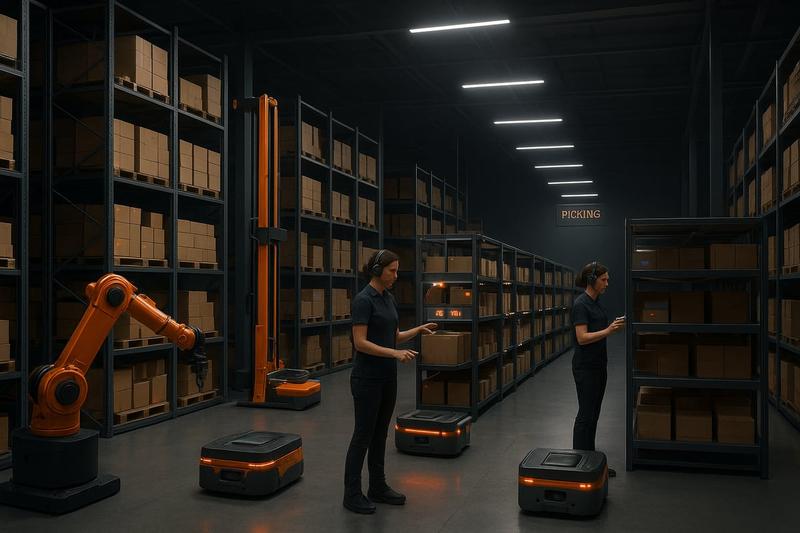
A Goods-to-Person order picking system leverages automation to bring inventory directly to warehouse operators. Automated storage and retrieval systems (ASRS) use high-density storage, shuttles, and ergonomic pick stations to minimize operator travel and maximize throughput.
Core features of this order picking system include automated shuttles that retrieve totes or bins, conveyors that deliver goods to pick stations, and software integration for real-time inventory tracking. Operators stay at their stations, increasing safety and comfort.
This order picking system offers substantial benefits: productivity can soar, labor costs drop, and accuracy improves dramatically. For example, ASRS-enabled operations can achieve picking rates exceeding 400 lines per hour per operator. These systems excel in e-commerce, pharmaceuticals, and environments with a large number of SKUs.
Pros of a GTP order picking system:
- Optimizes storage space and warehouse footprint.
- Scalable as business needs grow.
- Reduces walking and fatigue for staff.
Cons:
- Higher upfront capital investment.
- Requires robust integration with a warehouse management system.
To explore real-world solutions, see Goods-to-Person automation solutions.
2. Voice-Directed Picking
Voice-directed order picking system technology provides operators with real-time instructions through wireless headsets. The system is connected to the warehouse management software, guiding pickers step-by-step and confirming each action vocally.
Key features include hands-free operation, instant updates, and built-in error checking. This order picking system is highly effective in ambient, chilled, and freezer environments, or in facilities with frequent SKU changes.
Benefits are significant. Accuracy can reach up to 99.9 percent, and training time is notably reduced. Major grocery chains use this order picking system to handle high-volume, multi-temperature picking, ensuring speed and consistency.
Pros:
- Fast onboarding and minimal training required.
- Adaptable to changing orders or products.
- Increases safety as operators’ hands remain free.
Cons:
- May need language-specific training.
- Relies on a strong wireless network infrastructure.
Voice-directed order picking system solutions are ideal for warehouses seeking flexibility and rapid scaling.
3. Pick-to-Light and Put-to-Light Systems
A pick-to-light and put-to-light order picking system uses LED displays at each picking location to visually guide operators. Lights indicate the correct pick location and quantity, streamlining the process and reducing errors.
Core components include light modules attached to shelving, real-time order tracking, and seamless integration with conveyors or picking carts. This order picking system is especially effective for high-velocity SKUs in apparel, electronics, and consumer goods.
The main benefits are speed and accuracy. In high-volume environments, pick-to-light can cut order cycle times by 30 percent. Operators require minimal training since the system is intuitive and visually driven.
Pros:
- Intuitive and user-friendly.
- Scalable to accommodate peak periods.
- Reduces training time for new staff.
Cons:
- Installation and hardware can be costly.
- Best suited for zones with dense picking activity.
A pick-to-light order picking system delivers rapid ROI for operations with fast-moving products.
4. Batch and Cluster Picking
Batch and cluster order picking system strategies allow multiple orders to be picked simultaneously. Batch picking groups orders by SKU, while cluster picking uses multi-compartment carts to assemble several orders at once.
Key features of this order picking system include optimized pick paths, multi-order carts, and WMS-driven consolidation. This approach is popular in e-commerce, retail replenishment, and small-item fulfillment.
Adopting this order picking system reduces travel time by up to 60 percent and increases overall throughput. For example, multi-tiered picking carts enable simultaneous picking across numerous orders, boosting efficiency.
Pros:
- Highly efficient for small orders and high SKU overlap.
- Flexible and cost-effective.
- Reduces picker travel distance.
Cons:
- Requires robust sorting and consolidation after picking.
- Can become complex with very large or varied orders.
Batch and cluster order picking system models are excellent for maximizing labor productivity in dynamic environments.
5. Zone and Wave Picking
Zone and wave order picking system methods divide the warehouse into designated areas, assigning pickers to specific zones. Orders are picked in scheduled waves, often using conveyor systems to move items between zones.
Core features include zone assignments, wave planning tools, and integration with conveyors or sortation systems. This order picking system is essential for large distribution centers, grocery warehouses, and B2B fulfillment operations.
Benefits of this order picking system include balanced workloads, minimized picker movement, and support for high throughput. Wave picking can also group orders by delivery route, optimizing last-mile logistics.
Pros:
- Reduces congestion and streamlines workflow.
- Scalable for growing order volumes.
- Adaptable to diverse order profiles.
Cons:
- Requires complex coordination and planning.
- May need advanced WMS functionality.
Zone and wave order picking system approaches are crucial for large-scale, high-volume fulfillment centers.
6. Robotic and AMR-Assisted Picking
Robotic and AMR-assisted order picking system solutions feature collaborative robots or autonomous mobile robots (AMRs) that assist or automate picking and transport tasks. These systems use AI-driven navigation, dynamic routing, and integration with both GTP and manual zones.
Features include flexible deployment, real-time data exchange, and support for 24/7 operations. This order picking system is ideal for 3PLs, cold storage, and high-volume e-commerce.
Benefits are substantial: labor savings, improved safety, and consistent performance. AMRs can reduce picker walking by over 50 percent, allowing warehouses to operate around the clock with fewer staff.
Pros:
- Scalable and flexible deployment.
- Reduces dependency on manual labor.
- Enhances safety by taking over repetitive tasks.
Cons:
- Requires significant capital investment.
- Needs a robust digital infrastructure.
Robotic and AMR-assisted order picking system technology represents the future of scalable, resilient fulfillment.
7. Automated Sortation and Put Walls
Automated sortation and put wall order picking system solutions use conveyors, robotic put walls, and barcode or RFID tracking to sort and consolidate picked items into orders. These systems are vital for omnichannel fulfillment, parcel hubs, and kitting operations.
Key features include high-speed conveyor sorters, automated or semi-automated put walls, and precise tracking of inventory and orders. This order picking system accelerates order consolidation and slashes manual sorting errors.
The benefits are clear: automated put walls can handle thousands of orders per shift with minimal labor input. This order picking system is highly accurate, supports rapid order processing, and is scalable for peak periods.
Pros:
- High order accuracy and speed.
- Reduces manual labor requirements.
- Easily scales for busy seasons.
Cons:
- May require significant floor space.
- Integration with other warehouse systems can be complex.
Automated sortation and put wall order picking system options are essential for modern, high-volume fulfillment centers.
Integrating Order Picking Systems with Warehouse Software
Seamless integration between your order picking system and advanced warehouse software is the cornerstone of a truly modern fulfillment operation. As warehouses become more complex, the right combination of hardware and software ensures every process—from inventory storage to order dispatch—runs at peak efficiency.
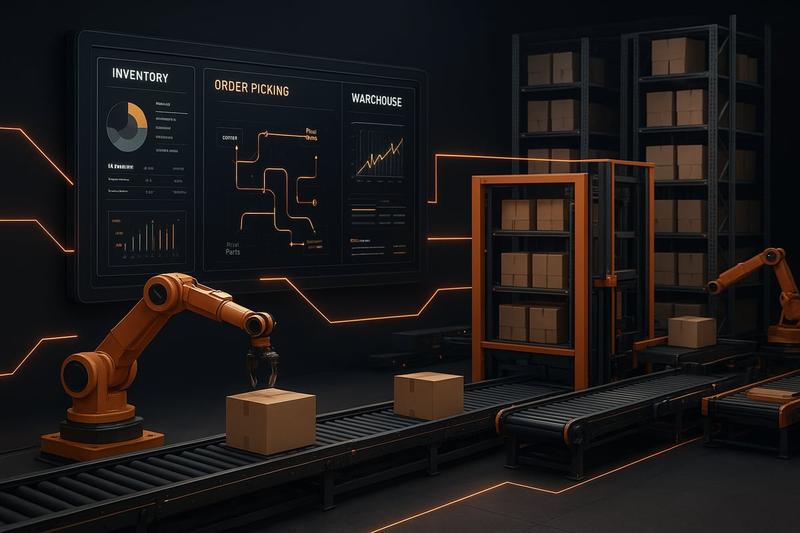
Today’s most effective order picking system relies on a suite of software solutions, including Warehouse Management Systems (WMS), Warehouse Control Systems (WCS), and Enterprise Resource Planning (ERP) platforms. These tools provide real-time visibility into inventory, track every order through its lifecycle, and manage exceptions as they occur. When picking systems and software are fully integrated, warehouses gain the ability to optimize workflows dynamically and remove bottlenecks before they impact throughput.
Data analytics and AI are transforming how the order picking system operates. Modern analytics platforms can analyze millions of data points daily, identifying patterns in order volume and SKU movement. For example, leading operations use AI-powered algorithms to predict demand spikes, adjust pick paths, and allocate labor where it’s needed most. This level of insight enables warehouses to respond to unexpected changes with agility and precision.
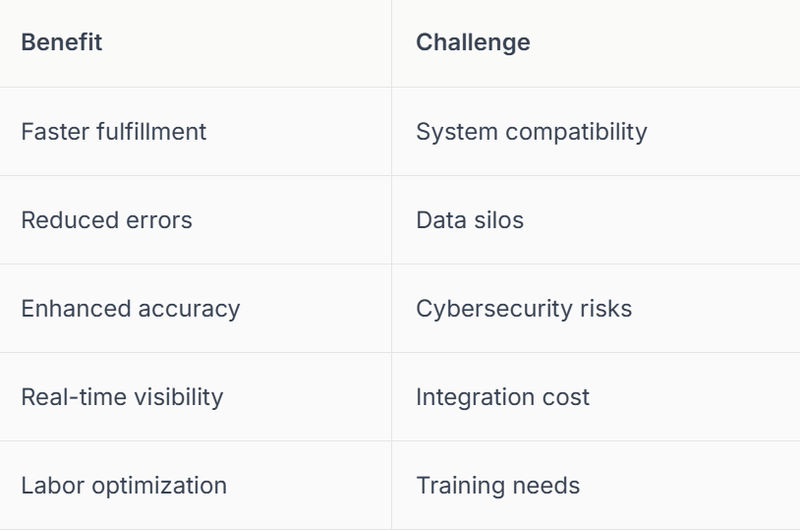
The benefits of a fully integrated order picking system are substantial. Fulfillment speed increases, errors decrease, and customers enjoy more accurate, timely deliveries. According to industry statistics, integrating WMS with picking automation can boost productivity by 20 to 40 percent. However, integration is not without challenges. Compatibility between legacy and new systems, the risk of data silos, and cybersecurity concerns must all be addressed to ensure a secure and future-ready operation.
For warehouse leaders looking to stay ahead, exploring warehouse software integration strategies is essential. These strategies can help ensure your order picking system works in harmony with your broader technology stack. As trends point toward greater convergence of software, AI, and robotics, resources like 2026 Warehouse Automation Trends: Where Software, AI, and Robotics Converge offer valuable insights into the future of integrated fulfillment.
Choosing the right order picking system and integrating it with robust software is no longer optional—it is a strategic imperative for 2026 and beyond. By focusing on data, automation, and seamless connectivity, warehouses can unlock new levels of efficiency and resilience.
Future-Proofing Your Warehouse: Scalability and Flexibility Considerations
Adapting to rapid industry shifts means your order picking system must be resilient and ready for growth. As customer demands, product assortments, and sales channels evolve, future-proofing your warehouse is essential to stay ahead.
Modular System Design
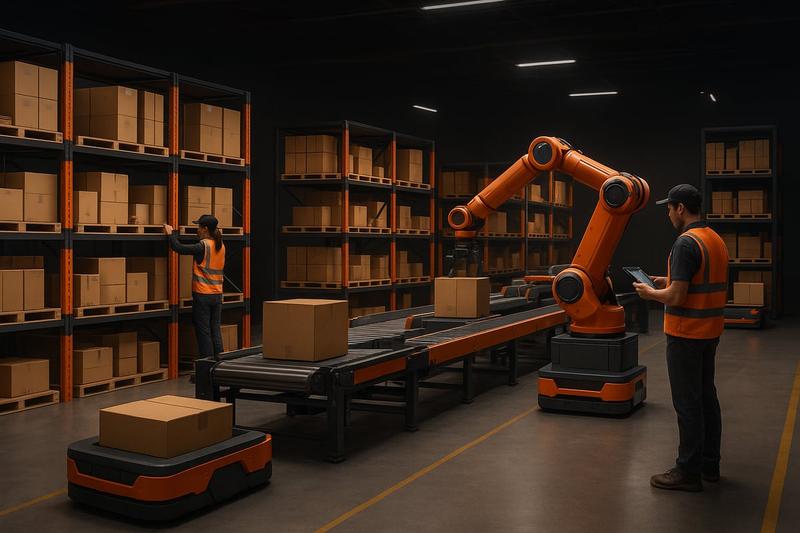
Designing your order picking system with modularity in mind allows for easy upgrades as your operation grows. Modular automation components, such as scalable conveyor sections or robotic zones, help you add capacity without disrupting daily workflows.
Adapting to Change
SKU proliferation and shifting order patterns require your order picking system to handle diverse product sizes, seasonal peaks, and new fulfillment models. Flexible software and reconfigurable storage layouts make it easier to adapt as business needs shift.
Balancing Automation and Manual Processes
The most resilient operations blend manual, hybrid, and fully automated solutions. This approach manages risk and ensures continuity during unexpected disruptions. For example, many facilities start with manual picking, then evolve to include automation like autonomous mobile robots. The Automated warehouse robotics case study illustrates how businesses scale from manual to automated picking, boosting efficiency while maintaining adaptability.
Sustainability and Workforce Enablement
Choosing energy-efficient, low-maintenance solutions reduces costs and supports long-term sustainability goals. Upskilling your workforce is equally crucial. As automation grows, empowering staff with technology training ensures smooth adoption and maximizes your order picking system’s value. For more on how automation helps address labor challenges, see Transforming logistics amid labour shortages.
Insights for Long-Term Resilience
Successful warehouses use data, automation, and flexibility to future-proof their order picking system. Embracing modular design, scalable automation, and workforce development helps you respond quickly to market changes and ensures your operation remains competitive.
As we’ve explored, the right order picking system can transform your warehouse—boosting efficiency, reducing costs, and setting you up for scalable growth in a fast-changing logistics landscape. Whether you’re dealing with rising SKUs, labor challenges, or planning your next leap in automation, you don’t have to navigate the journey alone. If you’re ready to take the next step and see how intelligent automation can work for your unique operation, let’s make it happen together.
Explore Automation Solutions