


AGV Technology: Transform Your Warehouse Operations in 2026
Share on
Modern warehouses face unprecedented pressure to process orders faster, reduce costs, and maintain accuracy across increasingly complex supply chains. Automated guided vehicles have emerged as a foundational technology for businesses seeking to eliminate bottlenecks, improve material flow, and scale operations without proportional increases in labour costs. These intelligent transport systems move goods autonomously throughout facilities, integrating seamlessly with warehouse management systems to create responsive, efficient logistics environments. Understanding how agv technology functions and where it delivers maximum value enables logistics managers to make informed decisions about automation investments.
Understanding Automated Guided Vehicle Technology
An agv is a mobile robot designed to transport materials throughout warehouses, distribution centres, and manufacturing facilities without human operators. These vehicles navigate using various guidance systems, including magnetic strips, laser targets, vision systems, or natural feature navigation that maps the facility environment.
The core components of an agv system include the vehicle itself, a navigation system, a control system, and communication infrastructure. Modern implementations leverage sophisticated sensors and software to enable vehicles to detect obstacles, adjust routes dynamically, and communicate with central management platforms. This integration into modern intralogistics environments creates coordinated material handling ecosystems where multiple vehicles operate simultaneously without collision.
Vehicle types vary significantly based on application requirements:
- Unit load carriers transport pallets and containers
- Tow vehicles pull carts or trailers in trains
- Forklift AGVs lift and stack palletised goods
- Assembly line vehicles deliver components to workstations
- Light load carriers handle smaller items and totes
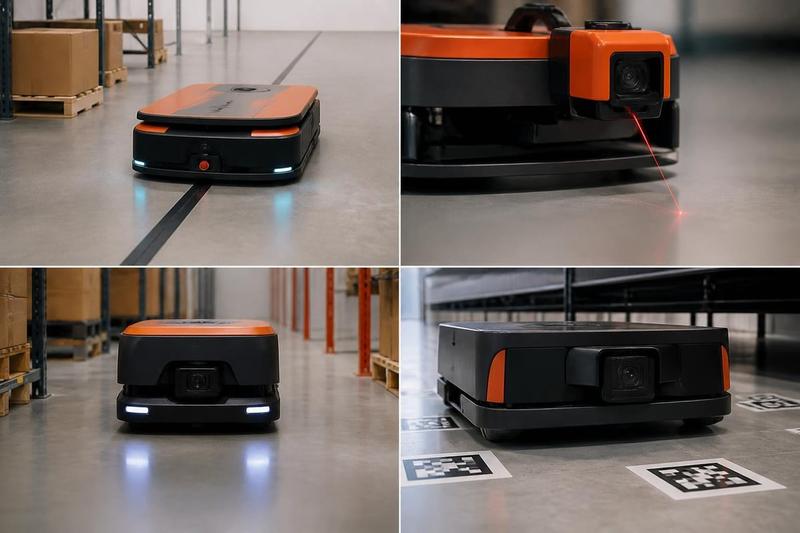
Navigation accuracy determines operational efficiency. Laser-guided systems achieve precision within millimetres, essential for high-density storage environments where tight tolerances prevent collisions. Vision-guided systems offer greater flexibility, allowing route modifications without physical infrastructure changes. Natural feature navigation represents the latest advancement, using artificial intelligence to create and update facility maps dynamically as layouts evolve.
Safety Systems and Operational Protocols
Safety remains paramount when integrating autonomous vehicles into facilities with human workers. Modern agv platforms incorporate multiple redundant safety features, including proximity sensors, emergency stop functions, audible warnings, and visual indicators. These systems detect personnel, obstacles, and other vehicles, triggering automatic slowdowns or stops to prevent incidents.
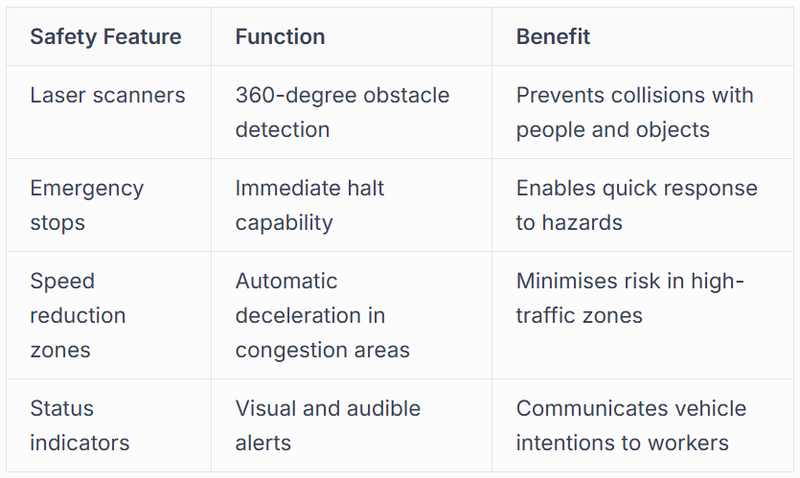
The relationship between automation and machine safety extends beyond individual vehicle features to encompass facility-wide protocols. Designated agv lanes, clearly marked pedestrian zones, and comprehensive staff training create environments where humans and machines coexist productively. Research into human-AGV interactions provides valuable insights for designing safer collaborative workspaces.
Applications Across Warehouse Operations
Automated guided vehicles excel in repetitive transport tasks where consistency and reliability drive value. Raw material delivery, work-in-progress movement, finished goods transfer, and order consolidation all benefit from agv automation. The diversity of AGV applications demonstrates their versatility across different operational contexts.
Receiving and putaway operations represent ideal initial deployment areas. Vehicles transport incoming pallets from dock doors to storage locations, following optimised routes that minimise travel distance and congestion. Integration with warehouse management systems enables dynamic storage assignment, directing vehicles to appropriate zones based on product characteristics, velocity, and storage density requirements.
Order picking support transforms fulfilment efficiency. AGVs deliver empty totes to picking stations, transport completed orders to packing areas, and replenish forward pick locations from reserve storage. This continuous material flow eliminates picker walking time, enabling staff to focus exclusively on selection activities. For businesses handling high order volumes, this productivity gain translates directly to increased throughput capacity.
Kitting and assembly operations benefit substantially from precise, scheduled agv deliveries. Vehicles supply production lines with components timed to manufacturing sequences, reducing work-in-progress inventory and floor space requirements. Just-in-time material delivery minimises buffer stocks while maintaining production continuity.
Cross-docking operations leverage agv speed and accuracy to move goods rapidly from receiving to shipping without intermediate storage. Vehicles transport inbound shipments directly to consolidation areas where orders are assembled and loaded onto outbound vehicles. This flow-through approach reduces handling touches, warehouse space requirements, and order cycle times.
Industry-Specific Implementation Strategies
Different sectors prioritise distinct agv capabilities based on operational requirements. FMCG and food and beverage operations emphasise hygiene, requiring washdown-capable vehicles constructed from stainless steel or corrosion-resistant materials. These environments often mandate specific certifications for equipment operating near food products.
Pharmaceutical and healthcare logistics demand exceptional traceability and environmental control. AGV systems in these sectors integrate with serialisation platforms, maintaining chain-of-custody records for regulated products. Temperature-controlled variants transport sensitive materials through cold storage zones, maintaining product integrity throughout internal movements.
E-commerce fulfilment centres prioritise flexibility and scalability. Peak season volumes fluctuate dramatically, requiring agv fleets that expand or contract to match demand. Modular systems allow businesses to add vehicles during high-volume periods, then reduce capacity during slower seasons without operational disruption.
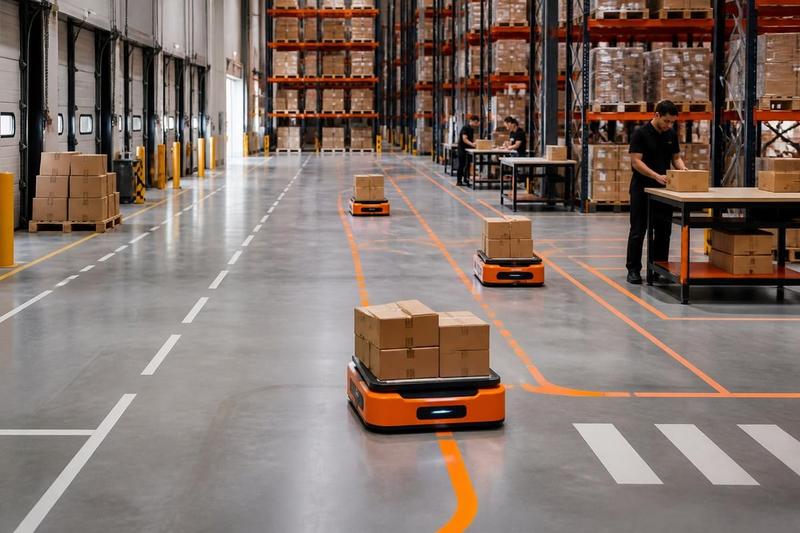
Third-party logistics providers managing multiple clients within shared facilities value agv systems that support operational segregation. Vehicles can be assigned to specific clients, preventing cross-contamination of inventory while maximising facility utilisation. Software partitioning enables separate reporting and billing while maintaining coordinated traffic management.
Implementing AGV Systems Successfully
Successful agv implementation begins with comprehensive process analysis. Mapping current material flows identifies bottlenecks, excessive travel distances, and inefficient handling practices. This baseline assessment quantifies potential improvements and establishes metrics for measuring return on investment.
Site preparation requirements vary based on navigation technology:
- Infrastructure installation for magnetic or wire-guided systems
- Reflector positioning for laser-guided navigation
- Charging station placement to maintain operational availability
- Network infrastructure for communication and control
- Safety zone demarcation separating vehicle and pedestrian areas
Fleet sizing calculations balance capital investment against operational requirements. Under-sizing creates bottlenecks during peak periods, while excessive capacity inflates costs without proportional benefits. Simulation modelling tests different fleet configurations against historical demand patterns, identifying optimal vehicle quantities for target service levels.
Integration with existing warehouse management systems determines how effectively agv fleets respond to operational demands. Robust interfaces enable real-time task assignment, priority management, and exception handling. The warehouse management system directs vehicles to specific locations, while the agv control system manages navigation, traffic coordination, and fleet optimisation.
Financial Considerations and Return on Investment
Investment in agv technology encompasses vehicle acquisition, infrastructure installation, system integration, and ongoing maintenance. While initial costs appear substantial, comprehensive analysis must consider both direct savings and broader operational benefits.
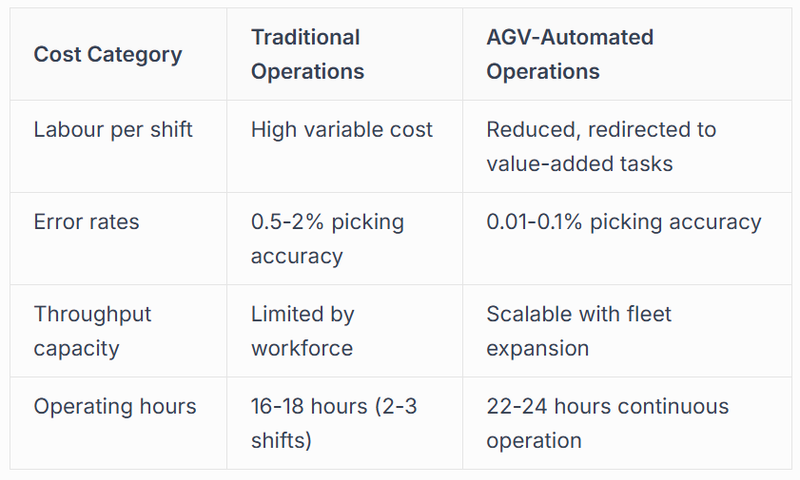
Direct labour savings often justify agv investments alone. Vehicles eliminate forklift operator positions for internal transport, allowing businesses to redeploy staff to picking, packing, and quality control activities. Reduced error rates prevent costly shipping mistakes, returns processing, and customer dissatisfaction.
Operational flexibility represents significant but less quantifiable value. AGV systems accommodate facility layout changes without extensive reconfiguration. Business growth no longer requires proportional workforce expansion, as additional vehicles provide incremental capacity increases. This scalability proves particularly valuable for businesses experiencing rapid growth or seasonal demand fluctuations.
For businesses ready to explore warehouse automation, the Automate-X GTP Starter Grid provides an accessible entry point. This scalable goods-to-person system integrates seamlessly with agv transport solutions, creating comprehensive automation ecosystems that optimise both storage and material movement.
Technology Trends Shaping AGV Development
The agv market continues evolving rapidly, with innovations addressing traditional limitations and expanding application possibilities. Recent trends in warehouse automation highlight several transformative developments reshaping how businesses approach automated transport.
Autonomous mobile robots represent the next generation beyond traditional agv platforms. While conventional vehicles follow predetermined paths, AMRs navigate dynamically using onboard intelligence and real-time environmental sensing. This flexibility eliminates fixed infrastructure requirements, enabling deployment in facilities where permanent guidance systems prove impractical.
Collaborative capabilities allow vehicles to work safely alongside human workers without physical barriers. Advanced sensor fusion combines multiple detection technologies, creating comprehensive awareness of surrounding environments. Machine learning algorithms improve navigation efficiency over time, optimising routes based on observed traffic patterns and obstacle locations.
Fleet management software leverages artificial intelligence to coordinate multiple vehicles, balancing workload distribution and minimising congestion. Predictive analytics forecast maintenance requirements, scheduling interventions before failures disrupt operations. Cloud connectivity enables remote monitoring and management across multiple facilities, supporting multi-site operations.
Battery Technology and Energy Management
Lithium-ion batteries have replaced traditional lead-acid systems in modern agv platforms, delivering longer operating cycles, faster charging, and reduced maintenance. Opportunity charging strategies allow vehicles to recharge during idle periods, eliminating dedicated charging downtime and maximising availability.
Wireless charging systems enable vehicles to recharge while loading or unloading, further reducing non-productive time. Inductive charging plates installed at staging locations automatically initiate charging when vehicles position correctly, requiring no manual intervention or cable connection.
Energy management algorithms optimise battery consumption by selecting efficient routes, managing acceleration profiles, and coordinating charging schedules. Fleet-wide energy monitoring identifies inefficient vehicles requiring service, preventing performance degradation that reduces operational capacity.

Overcoming Implementation Challenges
Despite compelling advantages of AGV systems, businesses encounter common challenges during deployment. Proactive planning and realistic expectation setting prevent disappointment and ensure successful outcomes.
Change management represents the most significant non-technical hurdle. Warehouse staff often perceive automation as threatening employment, creating resistance that undermines implementation success. Comprehensive communication emphasising how automation eliminates tedious tasks while creating opportunities for skilled positions builds support. Involving operational staff in system design ensures solutions address real workflow challenges rather than theoretical improvements.
Integration complexity varies dramatically based on existing systems and processes. Legacy warehouse management systems may lack interfaces required for seamless agv coordination, necessitating middleware development or platform upgrades. Standardisation efforts within the industry aim to simplify integration, but customisation remains common for complex operational requirements.
Maintenance capabilities require development alongside system deployment. While AGV platforms offer reliability advantages, they introduce new technical requirements beyond traditional material handling equipment. Training maintenance staff, establishing spare parts inventories, and developing relationships with equipment vendors ensures rapid issue resolution that maintains operational continuity.
Measuring Performance and Continuous Improvement
Defining clear performance metrics enables objective assessment of agv system effectiveness. Beyond basic utilisation rates, comprehensive measurement frameworks track cycle times, error rates, throughput capacity, and system availability. Comparing actual performance against projected benefits validates investment decisions and identifies optimisation opportunities.
Key performance indicators for agv operations include:
- Vehicle utilisation rate (active transport time versus total available time)
- Average task completion time from assignment to delivery
- Queue times indicating capacity constraints or workflow bottlenecks
- Error rates measuring delivery accuracy and damage incidents
- Energy efficiency tracking battery consumption per task
- Maintenance intervals and mean time between failures
Regular performance review sessions identify trends requiring attention. Gradual utilisation decline may indicate growing demand exceeding fleet capacity, prompting timely expansion before service levels deteriorate. Increasing maintenance frequency signals component wear requiring replacement before failures occur.
Process refinement continues post-implementation as operations teams gain experience with automated systems. Route optimisation, task prioritisation rules, and traffic management protocols evolve based on observed performance. The integration between automation technology and automated packaging creates end-to-end workflows where continuous improvement in one area benefits downstream processes.
Selecting the Right AGV Solution
The diversity of available agv platforms requires careful evaluation to match technology capabilities with operational requirements. Understanding what automated guided vehicles offer provides foundation knowledge for informed selection decisions.
Load capacity specifications must accommodate current requirements with headroom for future growth. Oversized vehicles waste capital and occupy excessive floor space, while undersized platforms cannot handle planned workloads. Modular fleet approaches combine vehicle types optimised for different load profiles, maximising efficiency across varied applications.
Navigation technology selection balances precision requirements against infrastructure investment and flexibility needs. Magnetic guidance offers reliability and precision at the lowest vehicle cost but requires permanent floor installations limiting future layout changes. Laser and vision systems provide greater flexibility with higher vehicle costs and more complex commissioning requirements.
Vendor evaluation criteria extend beyond equipment specifications:
- Industry experience and reference installations in similar operations
- System integration capabilities with existing warehouse platforms
- Geographic service coverage and response time commitments
- Training programmes supporting operations and maintenance staff
- Upgrade paths enabling technology evolution without complete replacement
- Financial stability ensuring long-term support availability
Pilot programmes reduce implementation risk by validating technology performance before full-scale deployment. Limited-scope installations in controlled areas test integration, identify workflow adjustments, and build operational confidence. Successful pilots provide compelling evidence supporting broader investment while minimising disruption if unexpected challenges emerge.
Scalability planning prevents premature capacity constraints as operations grow. Modular systems allow incremental expansion, adding vehicles and extending coverage areas without redesigning entire installations. Cloud-based control platforms accommodate fleet growth without infrastructure upgrades, supporting businesses experiencing rapid expansion.
Automated guided vehicle technology has matured into a proven solution delivering measurable improvements across warehouse and logistics operations. By understanding application requirements, planning comprehensive implementations, and selecting appropriate platforms, businesses position themselves for sustainable competitive advantage through operational excellence. Automate-X combines modern robotics, warehouse software, and system integration expertise to design agv solutions tailored to your specific logistics challenges, delivering scalable automation that drives productivity, accuracy, and growth across your distribution network.