

ASRS Racking: Maximising Warehouse Efficiency in 2026
Share on
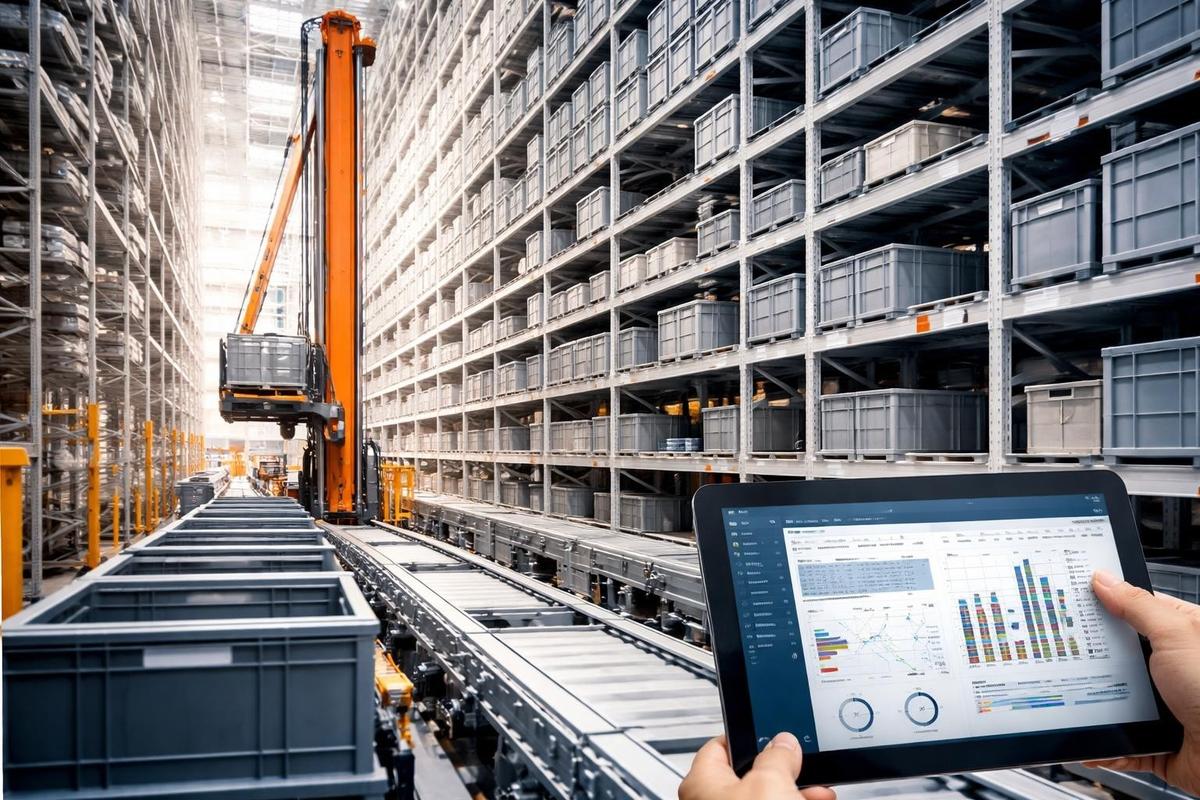
Modern warehouses face mounting pressure to maximise storage density while accelerating order fulfillment rates. As e-commerce demand surges and labour costs rise across Australia and New Zealand, logistics operations are turning to automated solutions that deliver both efficiency and scalability. ASRS racking represents one of the most transformative technologies in warehouse automation, combining sophisticated mechanical systems with intelligent software to create storage environments that operate at unprecedented levels of productivity.
Understanding ASRS Racking Fundamentals
Automated Storage and Retrieval System (ASRS) racking forms the structural backbone of automated warehouse operations. Unlike conventional static racking that requires manual material handling, asrs racking works in tandem with automated machinery to store and retrieve inventory without human intervention at the pick face.
The core components of these systems include specially engineered racking structures, stacker cranes or shuttles, conveyor systems, and warehouse control software that orchestrates all movements. The racking itself must meet exacting specifications for dimensional tolerance, load capacity, and structural integrity to support continuous automated operations.
System Architecture and Design Principles
ASRS racking configurations vary based on operational requirements and facility constraints. High-bay warehouse designs commonly extend 30 metres or higher, maximising vertical cube utilisation whilst minimising building footprint. The structural framework must account for seismic requirements, thermal expansion, and the dynamic loads generated by high-speed stacker cranes.
Key design considerations include:
- Aisle width optimisation for specific stacker crane profiles
- Rack height limitations based on local building codes and fire protection requirements
- Load beam spacing calibrated to pallet or container dimensions
- Integration points for conveyor systems and pick stations
- Accessibility requirements for maintenance and emergency retrieval
Proper ASRS system design requires close collaboration between racking manufacturers, automation integrators, and warehouse operators to ensure all components function cohesively.
Categories of ASRS Racking Solutions
The warehouse automation market offers distinct ASRS racking variants, each optimised for specific load types and operational requirements. Selecting the appropriate system type directly impacts storage density, throughput capability, and return on investment.
Pallet-Based ASRS Racking
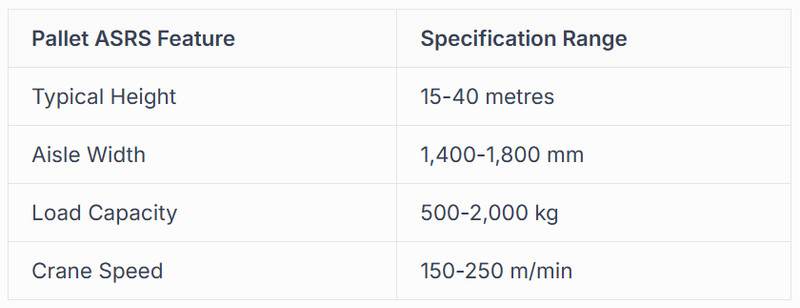
ASRS solutions for pallets dominate distribution centre applications where bulk inventory moves in standardised pallet configurations. These systems typically handle loads ranging from 500 kg to 2,000 kg per pallet, with stacker cranes travelling at speeds exceeding 200 metres per minute.
Heavy-duty structural components characterise pallet asrs racking, with reinforced uprights and load beams engineered to withstand the dynamic forces of high-speed automated equipment. The racking depth often accommodates double-deep or even quadruple-deep storage, dramatically increasing storage density compared to conventional selective racking.
Case and Tote ASRS Systems
Warehouses handling smaller inventory units benefit from ASRS racking designed for cases or totes. These configurations feature closer beam spacing and lighter-duty construction suitable for loads typically under 50 kg per storage location.
Mini-load ASRS racking excels in pharmaceutical distribution, electronics warehousing, and spare parts operations where SKU proliferation demands maximum storage positions. The automated retrieval mechanisms achieve exceptional picking rates, often exceeding 200 picks per hour per crane.
Operational Benefits Driving ASRS Adoption
Organisations implementing asrs racking report transformative improvements across multiple performance metrics. The business case extends beyond simple labour reduction to encompass inventory accuracy, space utilisation, and operational flexibility.
Documented advantages include:
- Space optimisation: Vertical storage extending to 40 metres increases capacity by 200-400% within the same footprint
- Labour efficiency: Automated retrieval eliminates travel time and reduces picking labour by 60-85%
- Inventory accuracy: System-controlled movements achieve 99.9%+ accuracy rates
- Throughput scaling: Multi-crane systems provide linear throughput growth as volumes increase
- Worker safety: Removing personnel from high-rack environments eliminates fall hazards
Research into ASRS implementation outcomes demonstrates measurable improvements in warehouse key performance indicators across diverse industries.
Safety and Compliance Considerations
The intersection of heavy automation equipment and high-density storage creates unique safety challenges requiring specialised protocols. ASRS racking installations must comply with local building codes, fire protection standards, and occupational health and safety regulations.
Fire Protection Requirements
Fire safety represents a critical consideration for high-bay ASRS facilities. The National Fire Protection Association research examines specific requirements for automated warehouses, including in-rack sprinkler placement, smoke detection systems, and emergency response protocols.
Storage heights exceeding 12 metres typically require enhanced fire suppression systems, with sprinkler head spacing, water supply capacity, and detection sensitivity all calibrated to the specific racking configuration and stored commodities.
Structural Inspection Protocols
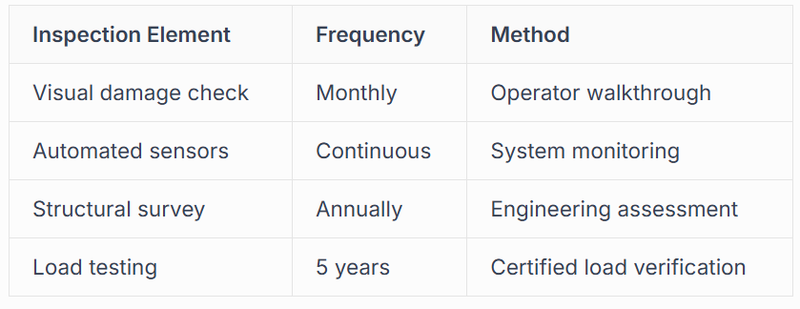
Regular inspection programmes maintain asrs racking integrity throughout operational life. Automated racking inspection requirements differ from conventional racking due to the continuous dynamic loads and higher consequences of structural failure.
Inspection frequency typically ranges from quarterly visual assessments to annual comprehensive structural evaluations by qualified engineers. Automated monitoring systems can track rack plumbness, beam deflection, and column straightness in real-time, providing early warning of developing issues.
Implementation Planning and Integration
Successful ASRS racking deployment requires meticulous planning across facility design, equipment selection, and operational integration phases. The capital investment and operational disruption necessitate thorough analysis before commitment.
Site Assessment and Feasibility
Early evaluation determines whether existing facilities can accommodate asrs racking or if new construction proves necessary. Floor loading capacity, ceiling height, column spacing, and seismic conditions all influence system feasibility and design parameters.
Building a new facility around ASRS capabilities offers maximum optimisation opportunity, with structural design, fire protection, and material flow all engineered specifically for automated operations. Retrofitting existing warehouses constrains system dimensions but can still deliver substantial benefits for suitable facilities.
Phased Implementation Strategies
Many organisations adopt staged deployment approaches to manage risk and capital requirements. Initial phases might automate the fastest-moving inventory whilst maintaining conventional storage for slower SKUs. For smaller operations exploring warehouse automation, solutions like the Automate-X GTP Starter Grid provide an accessible entry point to goods-to-person automation without the complexity of full ASRS implementation.
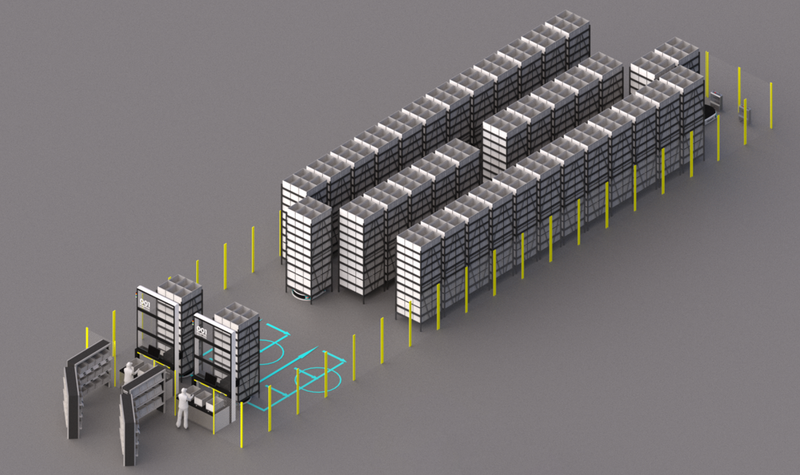
Subsequent phases expand automated capacity based on proven operational results and refined understanding of system capabilities. This methodology reduces implementation risk whilst building internal expertise progressively.
Software Integration Requirements
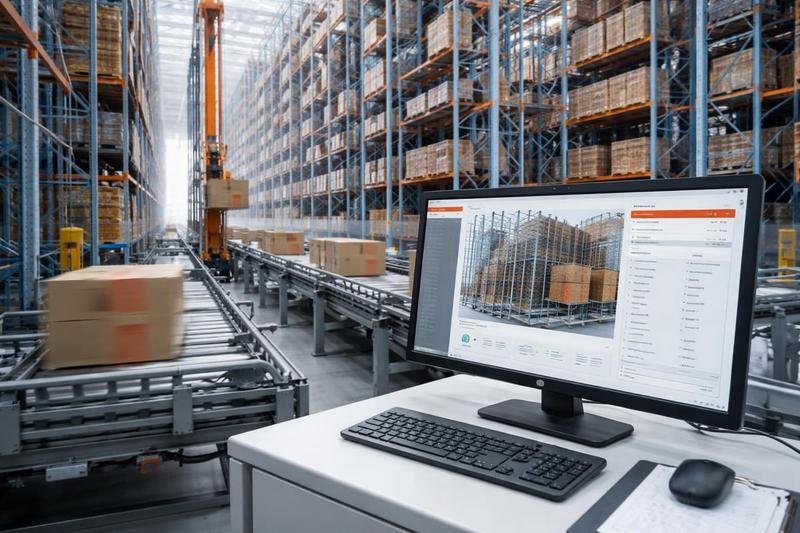
ASRS racking systems operate as components within broader warehouse management ecosystems. The warehouse control system (WCS) manages crane movements, storage allocation, and retrieval sequencing, whilst the warehouse management system (WMS) handles inventory tracking, order management, and business logic.
Seamless integration between these software layers determines overall system performance. Data synchronisation, error handling protocols, and failover mechanisms require extensive testing before go-live.
Critical integration points include:
- Real-time inventory position updates between WMS and WCS
- Order wave release and task prioritisation logic
- Exception handling for damaged pallets or mis-picks
- Performance monitoring and reporting dashboards
- Maintenance scheduling and downtime management
Market Trends and Future Developments
The ASRS racking market analysis projects continued strong growth through 2034, driven by e-commerce expansion, labour shortages, and advancing automation technology. Several emerging trends are reshaping system design and capabilities.
Artificial Intelligence and Machine Learning
Modern ASRS installations increasingly incorporate AI algorithms that optimise storage location assignment, predict maintenance requirements, and adapt retrieval sequencing based on real-time demand patterns. Machine learning models analyse historical order data to position fast-moving inventory in optimal locations for rapid access.
Predictive maintenance capabilities monitor equipment sensor data to identify developing mechanical issues before failures occur, minimising unplanned downtime and extending equipment life.
Modular and Scalable Architectures
Newer asrs racking designs emphasise modularity, allowing capacity expansion without complete system redesign. Shuttle-based systems particularly excel at incremental scaling, with additional shuttles added to existing rail infrastructure as throughput requirements grow.
This flexibility proves valuable for operations facing uncertain growth trajectories or seasonal demand variation. Capital investment aligns more closely with actual capacity needs rather than requiring large upfront commitments based on projected future volumes.
Selecting ASRS Racking Suppliers
The long-term success of automated warehouse systems depends heavily on supplier selection. ASRS racking represents a 20-30 year capital investment requiring ongoing technical support, spare parts availability, and potential system upgrades.
Evaluation Criteria
Prospective buyers should assess suppliers across multiple dimensions beyond initial capital cost. Comprehensive ASRS racking solutions encompass engineering support, local manufacturing capabilities, and post-installation service networks.
Key supplier evaluation factors:
- Engineering expertise in local seismic and building code requirements
- Manufacturing quality and material specifications
- Project management track record for comparable installations
- Service and support infrastructure within the operating region
- Financial stability and long-term viability
- References from similar operations in comparable industries
Customisation Capabilities
Standard asrs racking configurations serve many applications effectively, but unique operational requirements may demand customised solutions. Suppliers offering design flexibility can accommodate non-standard pallet sizes, specialised commodity requirements, or integration with existing equipment.
The ability to work collaboratively during design development ensures the final system addresses actual operational needs rather than forcing operations to adapt to rigid system limitations.
Cost Considerations and ROI Analysis
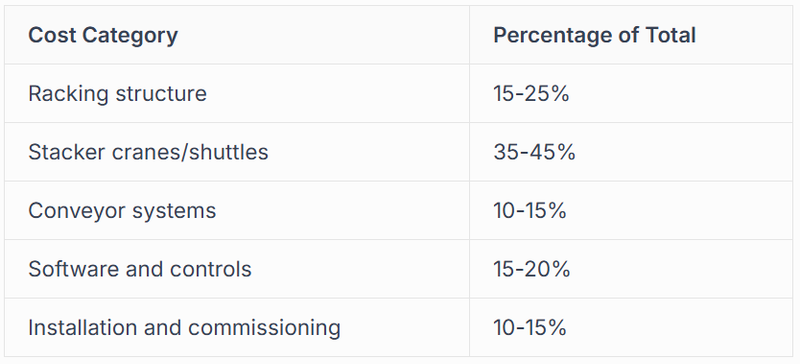
ASRS racking installations represent significant capital investments, typically ranging from $2 million to $20 million depending on system scale and sophistication. Comprehensive financial analysis must account for both direct costs and operational impacts.
Operational Cost Impacts
Labour savings typically drive asrs racking justification, but comprehensive analysis includes inventory carrying cost reductions from improved space utilisation, accuracy improvements reducing shrinkage, and throughput enhancements enabling revenue growth.
Maintenance costs for automated systems exceed conventional racking but remain substantially lower than the labour costs eliminated. Preventive maintenance contracts from equipment suppliers provide budget predictability and ensure optimal system performance.
Studies examining ASRS application in limited storage spaces demonstrate how automation delivers value beyond simple labour replacement through enhanced space efficiency and operational capability.
Industry-Specific Applications
Different sectors leverage asrs racking capabilities in ways optimised for their unique requirements. Understanding industry-specific considerations helps tailor system design for maximum benefit.
Cold Storage Operations
Temperature-controlled environments particularly benefit from automation given the challenging working conditions and premium facility costs. ASRS racking maximises the utilisation of expensive refrigerated space whilst eliminating the need for personnel to work extended periods in sub-zero temperatures.
Energy efficiency improves as automated operations require less climate control volume and maintain better temperature stability through reduced door openings and faster inventory movements.
Pharmaceutical Distribution
Highly regulated pharmaceutical warehousing leverages ASRS capabilities for traceability, lot control, and first-expired-first-out (FEFO) inventory rotation. The system maintains complete chain of custody documentation and ensures regulatory compliance through automated processes.
Manufacturing and FMCG
Production operations utilise asrs racking for raw material storage and finished goods warehousing, with tight integration to manufacturing execution systems enabling just-in-time component delivery and efficient production scheduling.
ASRS racking technology continues advancing warehouse automation capabilities, delivering measurable improvements in storage density, operational efficiency, and inventory accuracy across diverse applications. When properly designed and implemented, these systems transform warehouse operations from labour-intensive manual processes into precisely controlled automated environments that scale efficiently with business growth. Automate-X specialises in designing and implementing intelligent warehouse automation solutions tailored to your specific operational requirements. Whether you're exploring initial automation opportunities or expanding existing capabilities, our team combines proven robotics, advanced software, and comprehensive system integration to help your warehouse operation achieve maximum productivity and sustainable competitive advantage.