

ASRS System Warehouse: Complete 2026 Implementation Guide
Share on
The modern warehouse faces unprecedented pressure to increase throughput, maximise storage capacity, and reduce operational costs while maintaining accuracy. An asrs system warehouse represents a strategic response to these challenges, leveraging automated storage and retrieval technology to fundamentally transform how businesses manage inventory, fulfil orders, and scale operations. As logistics complexity increases across New Zealand and global markets, understanding the capabilities and implementation considerations of automated storage solutions has become essential for competitive advantage.
Understanding ASRS System Warehouse Technology
An asrs system warehouse integrates sophisticated hardware, software, and control systems to automate the storage and retrieval of goods with minimal human intervention. These systems replace manual picking processes with coordinated machinery that positions, stores, and retrieves inventory according to software-driven commands.
The technology encompasses several core components working in harmony. Storage structures provide the physical framework, whilst automated mechanisms such as cranes, shuttles, or robotic units handle movement. Warehouse management software orchestrates operations, determining optimal storage locations and retrieval sequences based on real-time demand patterns.
Modern implementations go beyond simple mechanisation. They incorporate advanced decision-support systems that analyse inventory characteristics, order patterns, and throughput requirements to optimise every storage decision. This intelligence transforms warehouses from static storage facilities into dynamic distribution engines.

Core Technology Components
Every asrs system warehouse relies on interconnected subsystems that must function seamlessly together. The storage structure itself determines capacity and configuration options, ranging from high-bay racking systems exceeding 30 metres in height to compact modular units suitable for smaller operations.
Retrieval mechanisms vary based on load characteristics and throughput requirements:
- Stacker cranes handle heavy palletised loads in high-bay configurations
- Shuttle systems provide high-density storage with rapid access times
- Vertical lift modules maximise floor space utilisation in constrained environments
- Robotic units offer flexibility for mixed inventory profiles
Control systems integrate these components through sophisticated algorithms. They manage simultaneous storage and retrieval operations, prevent collisions, optimise travel paths, and coordinate with broader warehouse management systems to align automation with business processes.
Types of ASRS Technologies for Different Applications
Multiple ASRS technologies exist, each designed for specific operational requirements, inventory characteristics, and facility constraints. Selecting the appropriate technology requires careful analysis of throughput demands, SKU profiles, and growth trajectories.
Unit-Load ASRS Solutions
Unit-load systems represent the traditional asrs system warehouse configuration, optimised for full pallets and large containers. These installations feature automated stacker cranes operating within narrow aisles, retrieving entire pallets from storage positions and delivering them to designated transfer points.
Primary applications include:
- Manufacturing facilities storing raw materials and finished goods
- Distribution centres handling bulk palletised inventory
- Third-party logistics providers managing multiple client inventories
- Cold storage operations requiring density and environmental control
Unit-load systems excel in environments with consistent load profiles and predictable throughput patterns. Their capacity ranges from hundreds to tens of thousands of pallet positions, with retrieval rates typically between 25 to 100 pallets per hour per crane depending on configuration.
Mini-Load and Case-Handling Systems
Mini-load configurations address smaller unit requirements, handling cartons, totes, and trays rather than full pallets. These systems prove particularly valuable for e-commerce fulfilment, pharmaceutical operations, and retail distribution where order profiles involve mixed-case picking.
The technology operates similarly to unit-load systems but with lighter-duty mechanisms optimised for faster cycle times. Typical installations achieve retrieval rates exceeding 150 transactions per hour, supporting high-velocity picking operations.

Shuttle-Based Storage Systems
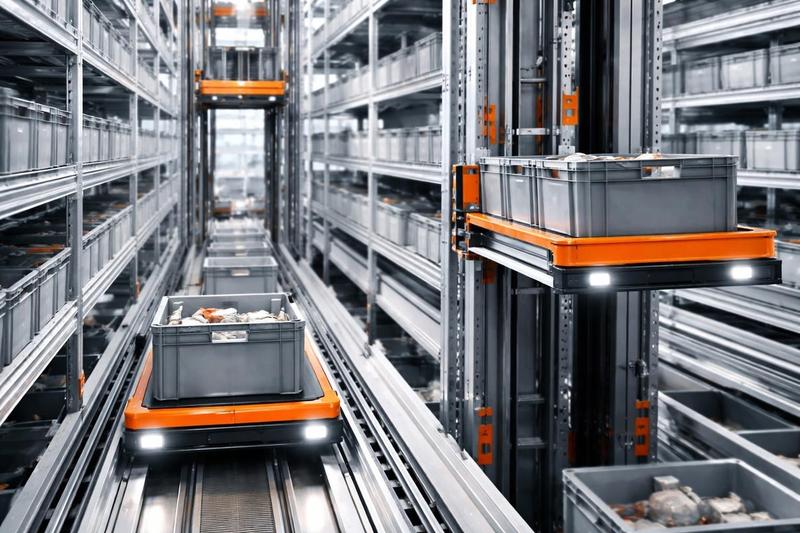
Shuttle technology represents one of the fastest-growing segments within asrs system warehouse implementations. These systems deploy autonomous shuttle vehicles operating on rails within storage racks, moving inventory horizontally whilst lifts handle vertical transport.
The architecture delivers exceptional scalability. Operations can begin with minimal shuttles and expand capacity by adding units without disrupting existing operations. This modularity proves particularly valuable for businesses experiencing rapid growth or seasonal fluctuation.
Performance characteristics make shuttle systems compelling for high-throughput environments. Multiple shuttles operating simultaneously eliminate the single-point bottleneck inherent in crane-based systems, whilst redundancy ensures continued operation even if individual shuttles require maintenance.
Strategic Benefits Driving ASRS Adoption
Implementing an asrs system warehouse delivers quantifiable improvements across multiple operational dimensions. Understanding these benefits helps justify investment and establish performance benchmarks for measuring success.
Space Optimisation and Capacity Gains
Automated systems achieve storage densities impossible with manual operations. By eliminating aisle requirements for human operators and forklifts, facilities reclaim 30-40% more storage capacity within existing footprints. High-bay configurations extend vertical storage beyond what manual operations can safely access, often doubling or tripling effective capacity.
This density proves particularly valuable in markets with high real estate costs. Operations can defer facility expansion, avoid relocation, or reduce their physical footprint whilst maintaining or increasing inventory holdings.
Key space benefits include:
- Reduced aisle width requirements (as narrow as 1.5 metres)
- Vertical storage extending to 40+ metres in some configurations
- Elimination of safety clearances required for manual equipment
- Optimised cube utilisation through precise positioning
Labour Efficiency and Cost Reduction
An asrs system warehouse fundamentally changes the labour equation. Instead of workers traversing warehouses to pick items, automated systems bring inventory to ergonomic workstations where staff perform value-added activities like order verification, packing, and quality control.
This transition addresses multiple challenges simultaneously. Labour costs decrease through reduced headcount requirements, whilst remaining positions shift toward higher-value activities. Physical strain reduces dramatically, improving worker safety and reducing injury-related costs and disruptions.
Recruitment challenges ease as positions require less physical capability and offer better working conditions. This proves particularly valuable in tight labour markets where warehouse workers remain difficult to attract and retain.
Accuracy and Quality Improvements
Automated storage and retrieval systems eliminate many common sources of picking errors. Computer-controlled positioning ensures items retrieve from correct locations, whilst integrated verification systems confirm accuracy before releasing orders.
Typical accuracy rates exceed 99.9%, compared to 95-99% for manual operations. This improvement reduces returns, enhances customer satisfaction, and eliminates the labour costs associated with rectifying errors. For industries like pharmaceuticals where accuracy carries regulatory implications, automation provides essential quality assurance.
Implementation Considerations and Planning Requirements
Successfully deploying an asrs system warehouse requires comprehensive planning addressing technical, operational, and organisational factors. Rushed implementations risk cost overruns, performance shortfalls, and disrupted operations.
Facility Assessment and Design Integration
Physical infrastructure determines feasibility and configuration options. Floor loading capacity must support concentrated storage density, whilst ceiling heights establish vertical storage potential. Existing structural elements like columns influence layout efficiency and system selection.
Environmental factors matter considerably. Temperature-controlled environments require specialised components and sealing systems. High-humidity conditions demand corrosion-resistant materials. Seismic considerations in earthquake-prone regions like New Zealand necessitate additional structural engineering.
Integration with existing operations presents both challenges and opportunities. Systems must coordinate with receiving docks, shipping areas, and manual processes. Material flow patterns should minimise congestion whilst maintaining throughput. Buffer storage may prove necessary to decouple automation from variable upstream or downstream processes.
Software Integration and System Coordination
An asrs system warehouse generates maximum value when fully integrated with enterprise systems. Warehouse management systems provide operational commands, whilst enterprise resource planning software drives demand signals. Real-time coordination ensures automation responds to actual business requirements rather than operating in isolation.
Modern implementations leverage data analytics to continuously optimise performance. Machine learning algorithms identify patterns in order profiles, adjusting storage strategies to position frequently-accessed items for faster retrieval. Predictive maintenance monitors component performance, scheduling interventions before failures disrupt operations.
API connectivity enables coordination across multiple systems. E-commerce platforms trigger fulfilment processes automatically. Transportation management systems coordinate picking sequences with carrier schedules. Inventory planning systems adjust replenishment based on real-time stock positions.
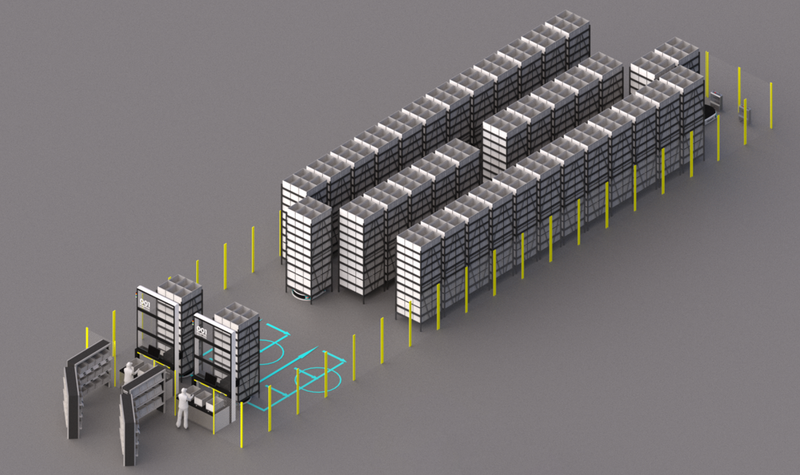
For growing businesses seeking an accessible entry point into warehouse automation, the Automate-X GTP Starter Grid provides a modular goods-to-person solution designed specifically for small and medium operations in Australia and New Zealand, delivering core automation benefits without requiring extensive facility modifications or capital investment.
Change Management and Workforce Transition
Technology implementation succeeds or fails based on human factors. Workforce concerns about job security can create resistance that undermines adoption. Transparent communication about role evolution, retraining opportunities, and career pathways proves essential for building buy-in.
Training requirements extend beyond equipment operation. Staff must understand system capabilities and limitations, troubleshoot common issues, and recognise when situations require intervention. Maintenance teams need specialised knowledge spanning mechanical, electrical, and software domains.
Industry-Specific Applications and Use Cases
Different sectors leverage asrs system warehouse technology to address unique operational challenges. Understanding industry-specific applications helps identify relevant benefits and implementation strategies.
E-Commerce and Omnichannel Fulfilment
E-commerce operations face extreme variability in order profiles, from single-item shipments to bulk replenishment for physical stores. An asrs system warehouse provides the flexibility to handle this complexity efficiently, consolidating diverse inventory whilst enabling rapid picking for individual orders.
Seasonal peaks that might overwhelm manual operations become manageable through automation's consistent throughput. Systems operate continuously during high-demand periods, maximising facility utilisation without the recruitment and training challenges of scaling temporary workforces.
Healthcare and pharmaceutical logistics demonstrate automation's value in regulated environments where traceability, temperature control, and accuracy carry critical importance.
Manufacturing and Production Support
Manufacturing environments deploy ASRS technology for raw material storage, work-in-process management, and finished goods handling. Just-in-time production philosophies rely on precise material availability, which automation delivers through predictable retrieval times and accurate inventory positioning.
Component variety creates complexity that benefits from automation. Modern manufacturers manage thousands of SKUs across product variations, each requiring timely availability to support production schedules. Automated systems track every item's location, expiration date, and lot number, ensuring proper rotation and regulatory compliance.
Cold Storage and Temperature-Controlled Environments
Cold storage operations face unique challenges that make automation particularly attractive. An asrs system warehouse minimises human exposure to extreme temperatures, improving worker safety whilst reducing the energy losses caused by personnel doors and forklift traffic. Dense storage configurations reduce the refrigerated cubic volume required, lowering ongoing energy costs substantially.
Temperature consistency improves when automation reduces door openings and thermal disruption. This proves critical for frozen foods, pharmaceuticals, and other temperature-sensitive products where quality depends on consistent environmental control.
Performance Metrics and Continuous Optimisation
Successful asrs system warehouse operations establish clear performance indicators and implement continuous improvement processes to maximise return on investment.
Key Performance Indicators
Measuring automation success requires tracking metrics across multiple dimensions:
Operational efficiency indicators:
- Throughput rates (storage and retrieval transactions per hour)
- Cycle time from order receipt to pick completion
- Capacity utilisation (percentage of available positions occupied)
- System availability (uptime percentage)
Quality and accuracy metrics:
- Picking accuracy rate
- Inventory accuracy
- Damage rates
- Order completeness
Financial performance measures:
- Labour cost per unit handled
- Operating cost per transaction
- Return on investment timeline
- Total cost of ownership
Ongoing Optimisation Strategies
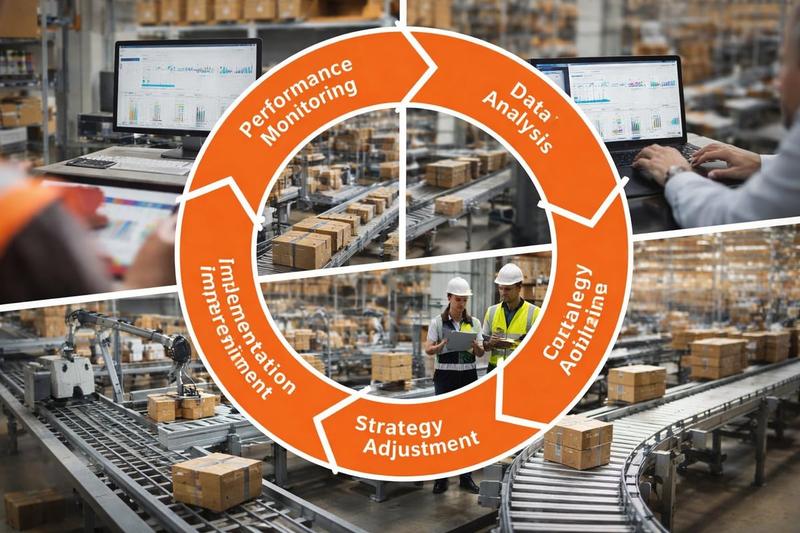
Advanced ASRS implementations continuously adapt to changing conditions. Slotting optimisation repositions inventory based on velocity changes, ensuring high-demand items remain in accessible locations. Task interleaving coordinates storage and retrieval operations to minimise empty travel and maximise throughput.
Seasonal adjustments recognise that optimal configurations vary throughout the year. Retail operations might prioritise different product categories as holidays approach, whilst agricultural sectors manage harvest-driven inventory fluctuations. Dynamic strategies respond automatically to these patterns.
Predictive analytics identify improvement opportunities by correlating operational data with business outcomes. Which SKU combinations frequently appear together in orders? How do retrieval sequence optimisations impact pack station productivity? Data-driven insights answer these questions, guiding continuous refinement.
Future Developments Shaping ASRS Technology
The asrs system warehouse landscape continues evolving as emerging technologies create new capabilities and business models adapt to changing market conditions.
Artificial Intelligence and Machine Learning Integration
AI-powered systems move beyond rule-based automation toward adaptive intelligence. Machine learning algorithms recognise complex patterns in order data, inventory turnover, and operational performance, adjusting storage strategies without human intervention. Computer vision enables quality inspection during retrieval, identifying damaged goods before they reach customers.
Natural language processing facilitates intuitive system interaction. Warehouse managers query performance using conversational interfaces rather than navigating complex dashboards. Exception handling becomes more sophisticated as systems learn from historical resolutions.
Robotics Convergence and Flexible Automation
Traditional fixed-infrastructure ASRS technology increasingly integrates with mobile robotics. Autonomous vehicles transport items between automated storage and manual processes, whilst collaborative robots assist with tasks requiring human judgment alongside automation's consistency.
This convergence creates hybrid environments leveraging each technology's strengths. Fixed automation handles bulk storage density, whilst mobile robots provide flexibility for variable processes. The result accommodates both predictable, high-volume operations and unpredictable, customised requirements.
Sustainability and Environmental Performance
Environmental considerations drive automation adoption as businesses address sustainability mandates and stakeholder expectations. An asrs system warehouse reduces energy consumption through optimised material movement, eliminating redundant forklift travel. Lighting systems activate only in areas with active operations, further reducing power requirements.
Smaller facility footprints decrease heating and cooling demands. Precise inventory control minimises waste from obsolescence and damage. These benefits align automation investment with corporate sustainability objectives, creating additional justification beyond purely operational returns.
Risk Management and Business Continuity
Despite their advantages, automated systems introduce dependencies that require careful risk management. Understanding potential vulnerabilities and implementing mitigation strategies ensures operational resilience.
System Redundancy and Failure Modes
Single points of failure represent the primary risk in automation. Comprehensive designs incorporate redundancy at critical junctures. Multiple retrieval mechanisms ensure continued operation if one unit fails. Backup power systems maintain functionality during electrical disruptions. Manual override capabilities allow intervention when software issues arise.
Maintenance strategies balance preventive and predictive approaches. Scheduled component replacement prevents wear-related failures, whilst condition monitoring identifies developing issues before they cause breakdowns. Spare parts inventory ensures rapid repairs without extended downtime.
Scalability and Future-Proofing
Business growth trajectories rarely follow linear paths. An asrs system warehouse must accommodate expansion without requiring complete replacement. Modular designs support incremental capacity additions as demand increases. Software architectures enable integration with emerging technologies and evolving enterprise systems.
Flexibility proves equally important. Can the system adapt to changing SKU profiles? Does it handle multiple clients in third-party logistics environments? Will it integrate with future automation investments? Addressing these questions during design prevents costly limitations.
Implementing an asrs system warehouse transforms operational capabilities across storage density, throughput efficiency, accuracy, and labour productivity whilst addressing the scaling challenges facing modern logistics operations. Whether you're managing e-commerce fulfilment, manufacturing support, or specialised applications like cold storage, Automate-X combines advanced robotics, intelligent software, and comprehensive system integration to design and deploy automation solutions tailored to your specific operational requirements, facility constraints, and growth objectives across Australia and New Zealand.