

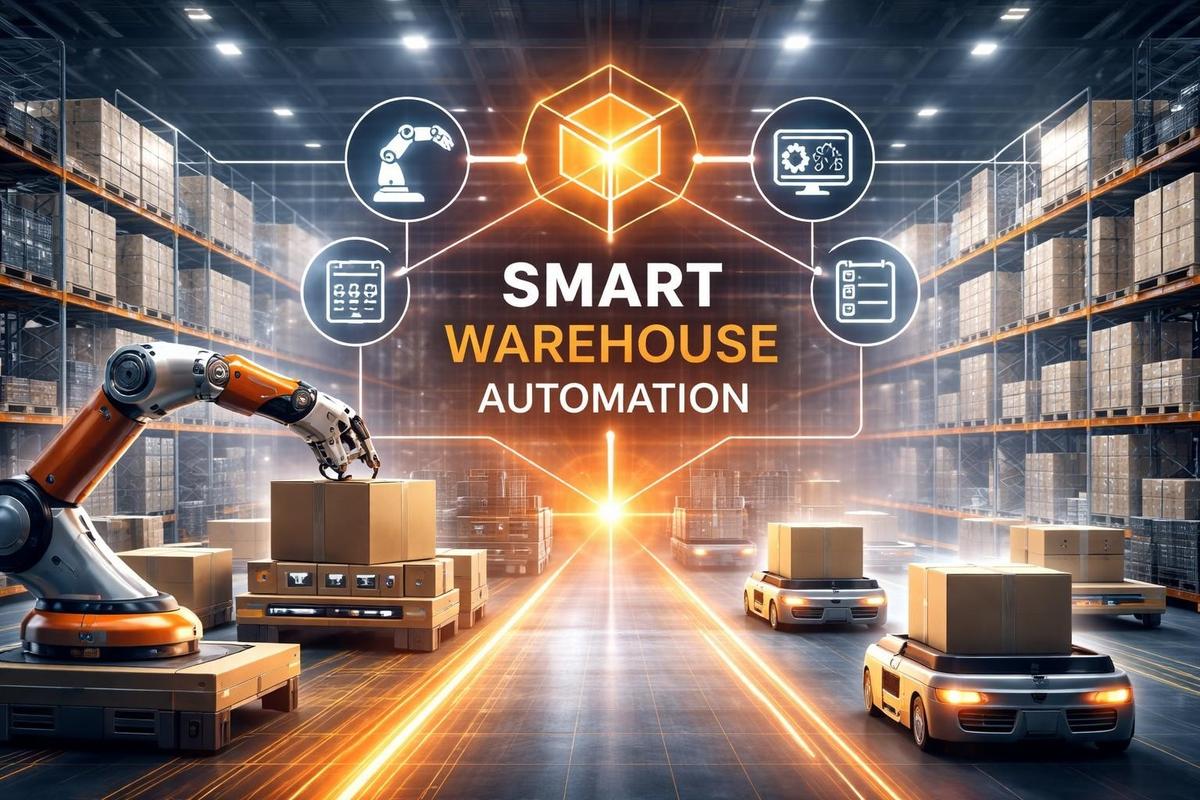
Automated Storage and Retrieval Systems Explained
Share on
Modern warehouse operations face mounting pressure to increase throughput, reduce errors, and maximize every square metre of available space. Traditional manual storage methods struggle to meet the demands of contemporary logistics, particularly as e-commerce growth drives higher order volumes and faster delivery expectations. Automated storage and retrieval technology addresses these challenges by combining robotics, intelligent software, and advanced racking systems to create highly efficient material handling environments that dramatically outperform conventional approaches.
Understanding Automated Storage and Retrieval Technology
Automated storage and retrieval systems represent a fundamental shift in how warehouses manage inventory. These sophisticated solutions use computer-controlled mechanisms to automatically place and retrieve items from designated storage locations, eliminating much of the manual labour traditionally required in warehouse operations.
The core principle involves creating a tightly controlled environment where every item has a specific location, and robotic systems handle the physical movement of goods. Automated storage and retrieval systems have evolved significantly since their introduction in the 1960s, now incorporating advanced sensors, artificial intelligence, and real-time data analytics to optimise performance.
Key Components of Modern Systems
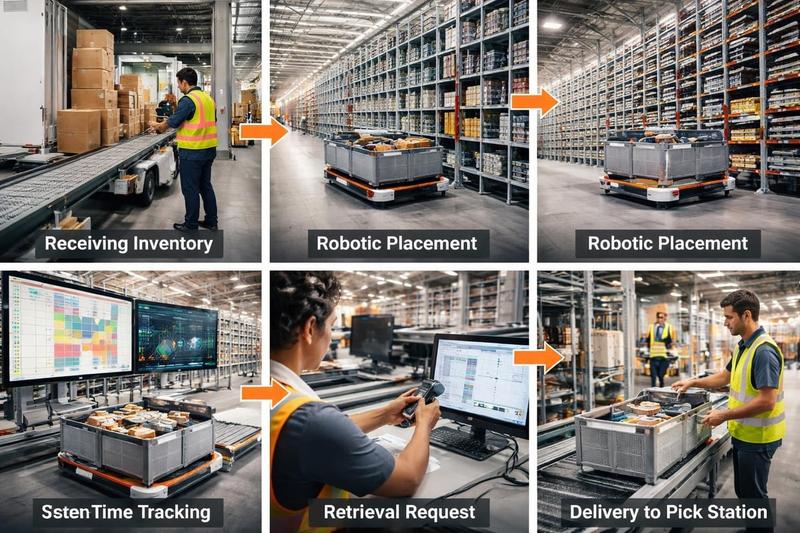
An effective automated storage and retrieval implementation comprises several integrated elements working in concert:
- Storage structures: High-density racking systems designed specifically for automated access
- Retrieval mechanisms: Cranes, shuttles, or robotic units that move along defined pathways
- Conveyor networks: Transport systems connecting storage zones with pick stations
- Warehouse management software: Intelligent systems coordinating all movements and inventory tracking
- Control systems: Real-time processors managing traffic, priorities, and sequencing
These components must work seamlessly together, requiring precise integration and ongoing calibration. The warehouse management software serves as the central nervous system, making thousands of micro-decisions each hour about optimal storage locations, retrieval sequences, and traffic management.
Types of Automated Storage and Retrieval Solutions
Different operational requirements demand different technological approaches. The warehouse automation landscape offers several distinct system types, each suited to particular inventory characteristics and throughput demands.
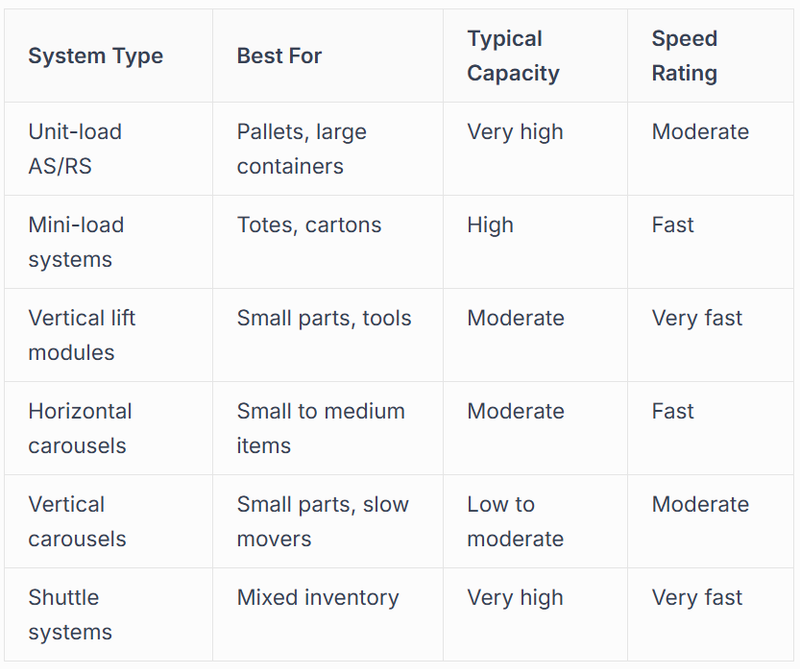
Unit-load systems handle full pallets or large containers, typically serving distribution centres and manufacturing facilities with bulk storage requirements. These systems feature massive cranes traveling along aisles reaching heights of 30 metres or more, maximizing vertical space utilisation.
Mini-load configurations work with smaller containers, totes, or cartons. These systems excel in e-commerce fulfillment and pharmaceutical distribution where individual item picking drives operational requirements.
Goods-to-Person Versus Person-to-Goods
A critical architectural decision involves choosing between goods-to-person and traditional person-to-goods approaches. Goods-to-person systems bring inventory directly to stationary picking stations, eliminating worker travel time and dramatically increasing pick rates.
This approach fundamentally changes warehouse dynamics. Workers remain at ergonomic workstations while the automated storage and retrieval system delivers required items in optimal sequence. Recent case studies demonstrate remarkable results, with Heaven Hill Distillery achieving a 400% improvement in shipping speed after implementing a complete automated solution.
For businesses considering their automation journey, solutions like the Automate-X GTP Starter Grid provide an accessible entry point into goods-to-person automation, allowing small and medium enterprises to experience the benefits of automated picking processes without overwhelming capital investment.
Operational Benefits Driving Adoption
The business case for automated storage and retrieval extends well beyond simple labour reduction. Comprehensive implementations deliver value across multiple operational dimensions simultaneously.
Space Optimisation and Capacity Gains
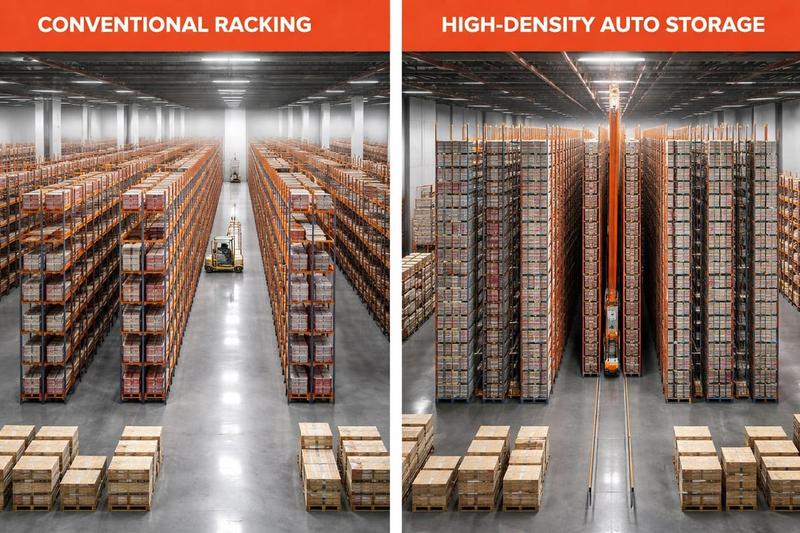
Automated systems routinely achieve 40% to 85% better space utilisation compared to conventional racking. This improvement stems from several factors:
- Elimination of wide aisles required for forklift operation
- Ability to build storage structures much higher than manual access permits
- Denser storage configurations without accessibility concerns
- Precise placement allowing minimal clearances between stored items
Manufacturing and distribution operations frequently discover they can handle significant growth within existing facilities rather than leasing additional space. The case study from Trinchero Family Estates illustrates how automated storage enabled substantial capacity expansion while simultaneously reducing energy consumption and improving quality control.
Accuracy and Quality Improvements
Human error represents a persistent challenge in manual warehouse operations. Mispicks, incorrect putaway locations, and inventory discrepancies create costly downstream problems including wrong shipments, stockouts, and customer dissatisfaction.
Automated storage and retrieval systems typically achieve accuracy rates exceeding 99.9% through several mechanisms:
- Barcode or RFID verification at every transaction
- Controlled access preventing unauthorised inventory movements
- System-directed putaway eliminating location errors
- Real-time inventory visibility across all storage positions
- Automated cycle counting during normal operations
These accuracy improvements translate directly into reduced returns, higher customer satisfaction, and lower safety stock requirements. Pharmaceutical operations particularly benefit from this precision, as automation in pharma environments must meet stringent regulatory requirements and product traceability standards.
Strategic Implementation Considerations
Successfully deploying automated storage and retrieval technology requires careful planning and realistic expectations. The most successful implementations share common characteristics in their approach to design, integration, and change management.
Analysing Operational Requirements
Effective system design begins with thorough operational analysis. Understanding your specific inventory characteristics, throughput patterns, and growth projections ensures the selected solution aligns with actual business needs rather than theoretical capabilities.
Critical data points include:
- SKU count and velocity distribution (fast movers versus slow movers)
- Order profile analysis (lines per order, units per line, order timing)
- Inventory turnover rates by product category
- Seasonal variation and peak demand periods
- Current space constraints and expansion possibilities
- Integration requirements with existing warehouse management systems
Many businesses discover that 20% of their SKUs drive 80% of their volume. This insight allows for hybrid approaches where high-velocity items receive automated handling while slower movers remain in conventional storage, optimising capital deployment.
The productivity solutions framework helps organisations evaluate which automation technologies deliver maximum impact for their specific operational profile.
Integration with Existing Systems
Automated storage and retrieval systems don't operate in isolation. They must integrate seamlessly with warehouse management systems, enterprise resource planning platforms, and transportation management solutions to deliver full value.
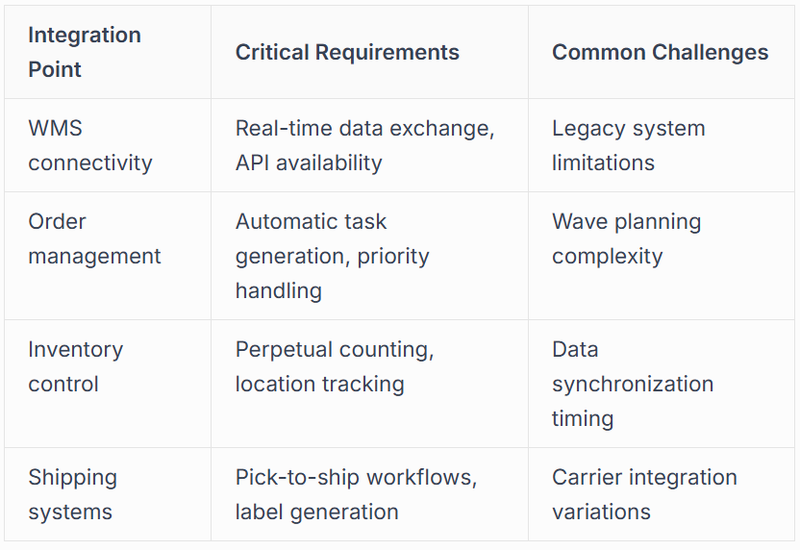
Modern systems typically use standardised communication protocols, but older warehouse management platforms may require middleware or upgrades to support real-time automated storage and retrieval operations. Budgeting adequate time and resources for integration testing prevents costly post-installation surprises.
Market Growth and Future Directions
The global automated storage and retrieval market demonstrates robust expansion across all major regions. Market projections indicate growth to $12,928 million by 2027, driven by e-commerce expansion, labour cost pressures, and technological advancement.
Several emerging trends are shaping the evolution of automated storage and retrieval technology:
Artificial intelligence and machine learning now optimise storage location assignments dynamically, learning from historical patterns to pre-position inventory near likely pick locations. Research in deep reinforcement learning frameworks for multi-deep storage systems demonstrates how advanced algorithms can significantly improve retrieval efficiency in complex storage configurations.
Modular and scalable architectures allow businesses to start with smaller implementations and expand capacity incrementally as volumes grow. This approach reduces initial capital requirements and aligns investment timing with revenue growth.
Energy efficiency has become a key differentiator as sustainability initiatives gain priority. Modern systems incorporate regenerative braking, LED lighting, and intelligent sleep modes to minimize power consumption during idle periods.
Industry-Specific Adaptations
Different sectors have developed specialized automated storage and retrieval approaches addressing unique operational requirements:
- Cold storage operations integrate temperature-controlled environments with automated handling, reducing energy costs by minimizing door openings and human presence in refrigerated zones
- Pharmaceutical warehousing incorporates serialization tracking, controlled substance security, and temperature monitoring throughout the storage and retrieval process
- Food and beverage distribution addresses first-in-first-out rotation, lot tracking, and expiration date management through intelligent system algorithms
- E-commerce fulfillment focuses on rapid single-unit picking and same-day shipping capabilities
The case study from Sazerac Company demonstrates how spirits distribution adapted automated storage and retrieval technology to handle the unique requirements of beverage alcohol logistics, including regulatory compliance and product protection.
Return on Investment and Financial Planning
Automated storage and retrieval systems represent significant capital investments, typically requiring careful financial analysis to justify expenditure. Understanding the full cost structure and realistic payback timelines enables sound decision-making.
Cost Components and Budget Considerations
Total project costs extend beyond equipment purchase prices:
- Hardware costs: Racking structures, cranes, shuttles, conveyors, and robotic mechanisms
- Software licensing: Warehouse control systems, integration middleware, and ongoing support
- Installation expenses: Site preparation, equipment assembly, system commissioning
- Integration services: Connecting to existing systems, data migration, testing
- Training and change management: Operator training, process documentation, ongoing support
- Maintenance reserves: Preventive maintenance, spare parts inventory, service contracts
Projects typically require 12 to 18 months from initial planning through full operational deployment. Phased implementations can extend this timeline but reduce financial risk by validating performance before full commitment.
Calculating Payback Periods
Most automated storage and retrieval installations achieve payback within three to five years through multiple value streams:
- Labour savings: Reduced headcount requirements or redeployment to value-added activities
- Space avoidance: Deferred facility expansion or lease reductions
- Inventory reduction: Lower safety stock through improved accuracy and visibility
- Throughput increases: Higher order volumes without proportional cost increases
- Error reduction: Fewer mispicks, returns, and customer service issues
The warehouse automation market data shows sustained growth in automated storage and retrieval segment revenue, reflecting widespread recognition of positive returns across diverse industries.
Selecting the Right Technology Partner
The complexity of automated storage and retrieval implementations demands experienced partners who understand both technology and warehouse operations. Successful projects share common characteristics in how organisations approach vendor selection and relationship management.
Evaluation Criteria for Solution Providers
Strong automation partners demonstrate several critical capabilities:
- Proven experience in your specific industry with referenceable installations
- Technical expertise across robotics, software, and mechanical systems
- Integration capabilities connecting automated storage and retrieval with existing platforms
- Local support presence for ongoing maintenance and rapid response to issues
- Financial stability ensuring long-term parts availability and system support
- Scalability options allowing future expansion as business needs evolve
Request detailed references from similar operations and conduct site visits to observe systems under actual working conditions. The PPP Industries case study provides an example of how successful warehouse automation transforms operational performance across multiple metrics.
Implementation methodology matters as much as technology selection. Partners should demonstrate structured project management, comprehensive testing protocols, and realistic timeline expectations. Rushed installations frequently encounter problems during ramp-up that could have been prevented through thorough commissioning.
Ongoing Support and Optimisation
Automated storage and retrieval systems require continuous attention to maintain peak performance. Establish clear service level agreements covering response times, parts availability, and preventive maintenance schedules before signing contracts.
Performance typically improves during the first year of operation as operators gain experience and system parameters are refined based on actual operational patterns. Plan for regular optimisation reviews examining key metrics:
- Throughput rates by time period and product category
- Inventory accuracy and cycle count results
- Equipment utilisation and idle time analysis
- Energy consumption trends
- Maintenance frequency and mean time between failures
Advanced partners provide analytics dashboards and regular business reviews to identify improvement opportunities and validate return on investment assumptions.
Automated storage and retrieval technology delivers transformative improvements in warehouse efficiency, accuracy, and space utilisation when properly planned and implemented. The key to success lies in thorough operational analysis, realistic expectations, and selecting experienced partners who understand your industry's unique requirements. Automate-X combines deep expertise in warehouse automation with proven implementation methodologies to help logistics, e-commerce, manufacturing, and distribution operations achieve scalable growth through intelligent automation solutions tailored to your specific operational environment.