

Guide to Automated Storage Solutions: Expert Insights 2026
Share on
Warehousing and logistics operations are transforming faster than ever in 2026, with automated storage solutions leading the way for modern businesses. As companies strive to boost efficiency and stay competitive, the adoption of automated storage solutions has become essential.
This guide delivers expert insights into the latest automated storage solutions, exploring their technologies, benefits, and real-world applications. You will discover clear definitions, system types, industry trends, key advantages, step-by-step implementation strategies, and a future outlook.
Ready to unlock efficiency, reduce costs, and future-proof your operations? Let’s dive into the world of automated storage solutions with practical, proven advice.
Understanding Automated Storage Solutions
The landscape for automated storage solutions is transforming rapidly as businesses seek greater efficiency and accuracy in their warehouse operations. Automated storage solutions represent the next step in optimising both space and productivity, addressing the growing challenges of inventory complexity, labour shortages, and rising operational costs.
What Are Automated Storage Solutions?
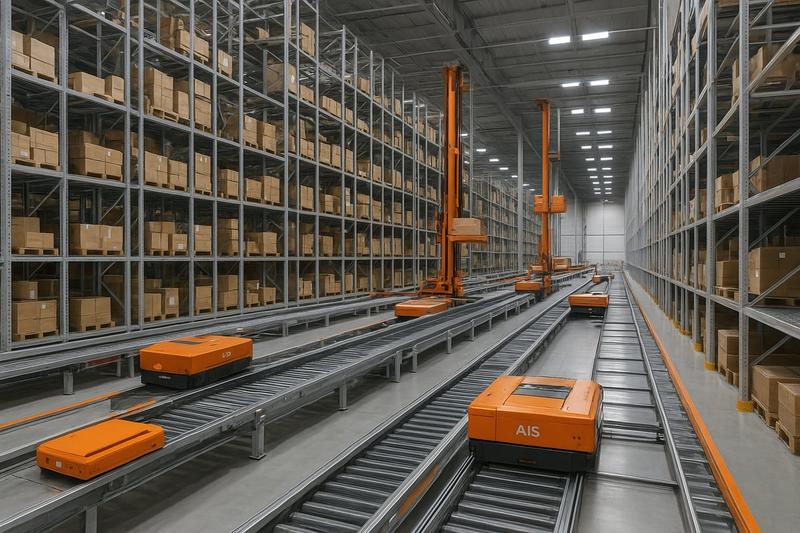
Automated storage solutions are advanced systems that use a combination of robotics, high-density racking, shuttles, stacker cranes, conveyors, and sophisticated warehouse management software (WMS) to store, retrieve, and manage goods within a warehouse. These solutions can be fully automated, semi-automated, or manual, with each type offering different levels of technology integration and human intervention.
Key components include:
- Robotic shuttles and stacker cranes for moving goods vertically and horizontally.
- High-density racking to maximise floor space and vertical storage.
- Conveyor systems for seamless transfer of products across zones.
- Warehouse management software (WMS) to track inventory, automate picking, and manage workflows.
A core distinction lies in system scalability and modularity. Modular automated storage solutions can be tailored for various business sizes, from small e-commerce sites to large-scale manufacturers. The core workflow in these systems is goods-to-person, where products are automatically delivered to operators for picking, reducing unnecessary travel and manual handling.
Consider the following real-world example: shuttle systems for pallets and high-bay storage allow for up to 90% floor space utilisation and continuous 24/7 operation. Automated small parts warehouses leverage retrieval machines to minimise human error and boost picking accuracy. Industry data consistently shows that automated storage solutions can reduce manual errors, cut labour costs, and support businesses in high-volume, fast-paced environments.
New Zealand firms, along with global leaders, have implemented automated storage solutions across logistics, manufacturing, and e-commerce sectors, achieving measurable gains in efficiency and safety.
Types of Automated Storage Systems
There is a diverse range of automated storage solutions available to meet different operational needs. The main types include:
- Unit load AS/RS: Designed for pallet-based storage of heavy or bulky goods.
- Mini-load AS/RS: Ideal for small parts and lightweight items.
- Shuttle systems: Flexible for both pallets and containers, offering high throughput.
- Vertical lift modules (VLMs): Space-saving for small parts and order picking.
- Carousel systems: Efficient for rapid item retrieval in compact spaces.
A key comparison is between single-deep and multi-deep storage options:
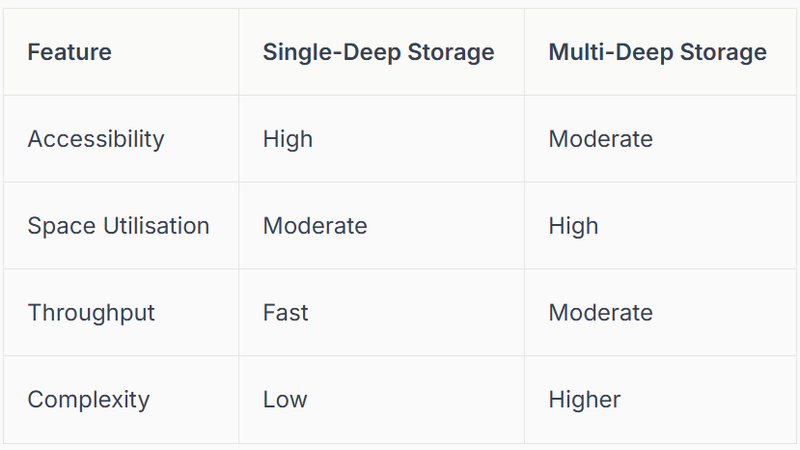
Modern systems are designed for flexibility, allowing seamless integration with existing infrastructure and the ability to expand as business needs evolve. They are also suitable for specialised environments, such as cold storage, hazardous materials, and temperature-controlled warehouses.
For example, the use of shuttle systems is illustrated in Bulk Pallet Storage Automation, where high-density pallet storage and automated retrieval have transformed warehouse operations for efficiency and reliability. Industry-leading machines like MASTer stacker cranes, FSP Shuttles, and BOXer units demonstrate the breadth of technology available.
Automated storage solutions can be adapted across industries, providing scalable and robust answers for today’s warehousing challenges.
Key Benefits and ROI of Automated Storage Solutions
Warehouse operations in 2026 demand more than traditional methods. Automated storage solutions are transforming the way businesses handle goods, streamlining processes, and driving measurable returns. By investing in these technologies, companies are unlocking new levels of efficiency and resilience.

Operational Efficiency and Cost Savings
Automated storage solutions deliver a step change in warehouse productivity. By minimising manual handling, businesses can significantly reduce labour costs and reallocate staff to higher-value tasks.
Key operational benefits include:
- Faster inbound and outbound goods movement, accelerating overall throughput.
- Up to 90% floor space utilisation, enabling smaller warehouse footprints or increased storage within existing facilities.
- 24/7 operation, eliminating downtime and supporting business continuity.
- Reduced picking and storage errors, which helps lower returns and improve customer satisfaction.
- Enhanced safety, as automation minimises physical strain and workplace injuries.
For example, cold storage facilities benefit from automation by keeping staff out of harsh environments, while high-volume distribution centres see measurable gains in order processing speed. Real-world data shows that automated storage solutions can reduce error rates and increase productivity, resulting in substantial cost savings over time.
To maximise financial returns, it is essential to plan and budget for automation projects effectively. Resources like Optimising Your Automation Budget offer practical guidance on achieving the best ROI from your investment.
Business Impact and Competitive Advantage
Beyond immediate efficiency gains, automated storage solutions provide strategic advantages that help businesses stay ahead in a competitive market.
These systems enable:
- Increased order accuracy, leading to improved customer loyalty.
- Scalability to accommodate seasonal peaks or long-term growth, supporting business expansion.
- Enhanced inventory visibility through integrated warehouse management software, ensuring precise stock control and faster decision-making.
- Future-proofing against labour shortages and rising wages by automating repetitive tasks.
- Sustainability benefits, thanks to energy-efficient designs and reduced material waste.
Industries such as 3PL, e-commerce, and FMCG are leveraging automated storage solutions to respond rapidly to market changes. By adopting these technologies, companies gain the agility and resilience needed to navigate evolving supply chain challenges.
In summary, the return on investment from automated storage solutions extends far beyond cost reduction. It empowers businesses to optimise space, boost productivity, and secure long-term competitive advantage.
Industry Applications and Use Cases
The impact of automated storage solutions is being felt across a wide spectrum of industries in New Zealand and globally. As businesses face rising demand for speed, accuracy, and resilience, these systems are transforming the way goods are handled, stored, and dispatched.

Sectors Benefiting from Automated Storage Solutions
Automated storage solutions have become essential in industries where speed, precision, and scalability are critical. Logistics and distribution centres rely on advanced systems to manage high-volume, fast-moving goods with minimal errors. E-commerce fulfilment operations benefit from rapid order picking and dispatch, meeting customer expectations for same-day or next-day delivery.
Third-party logistics (3PL) providers use automated storage solutions to handle diverse inventories for multiple clients, ensuring flexibility and efficiency. In manufacturing, these systems streamline component storage and work-in-progress management, reducing downtime and boosting throughput.
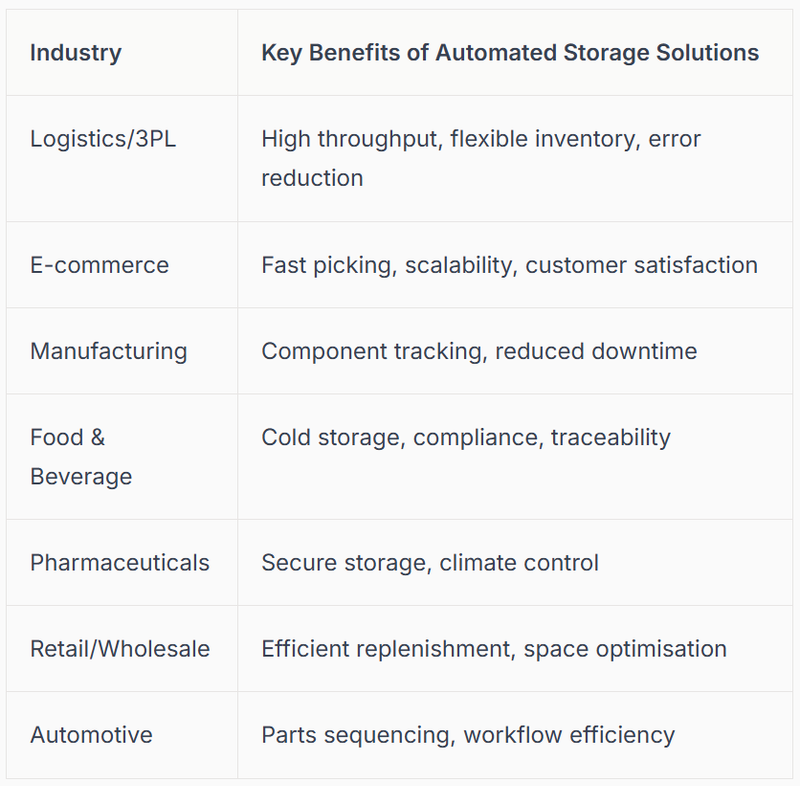
Food and beverage sectors leverage automation for cold storage, compliance, and traceability, maintaining product integrity even in extreme temperatures. Pharmaceuticals depend on secure, climate-controlled environments provided by automated storage solutions, ensuring safety and regulatory compliance. Retail and wholesale businesses use these systems to optimise back-of-store storage and improve replenishment cycles. Automotive manufacturers employ them for parts storage and sequencing, supporting just-in-time assembly lines.
A summary table illustrates how different industries benefit:
To explore how these systems are tailored for each sector, see Industry-Specific Automation Solutions.
Real-World Examples and Case Studies
Across New Zealand, many organisations have adopted automated storage solutions to achieve measurable gains in efficiency and safety. For instance, logistics providers have reported significant improvements in order accuracy and reduced manual handling incidents. E-commerce businesses have cut order fulfilment times, allowing them to keep pace with market growth.
Globally, over 1,000 installations showcase the versatility of automated storage solutions. Automated pallet warehouses deliver high-density storage and rapid throughput, supporting businesses with fluctuating demand. Small parts warehouses utilise shuttles and retrieval machines to streamline picking and packing, reducing labour costs and errors.
Transformation stories abound. Companies have reclaimed valuable floor space, enhanced productivity, and improved service levels. In cold storage environments, automated storage solutions enable 24/7 operation while protecting workers from harsh conditions. Pharmaceutical firms benefit from secure, climate-controlled storage that meets strict compliance standards.
These real-world applications demonstrate how automated storage solutions empower organisations to stay competitive, adapt to changing market demands, and build future-ready supply chains.
Core Technologies Behind Automated Storage Solutions
The backbone of modern automated storage solutions lies in the seamless integration of advanced machinery and intelligent software. These technologies work together to transform warehouses into highly efficient, accurate, and safe environments. Understanding the core technologies is essential for any business considering automated storage solutions in 2026.
Robotics, Shuttle Systems, and Cranes
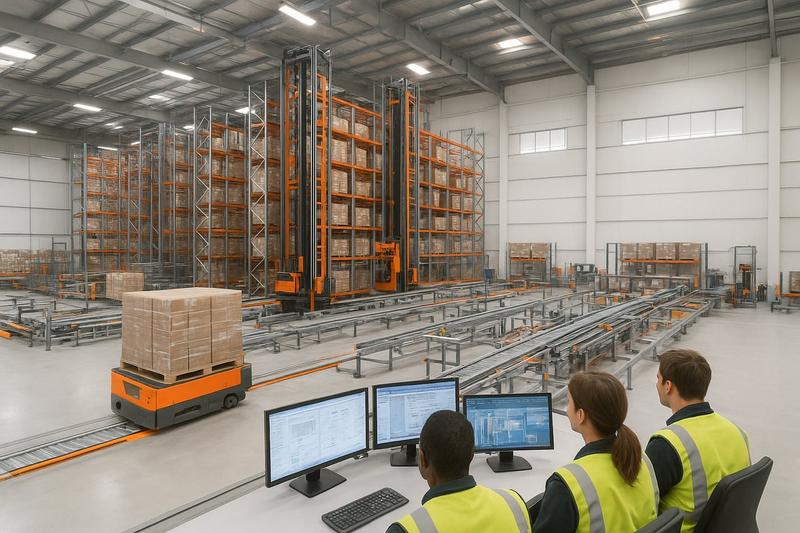
At the heart of automated storage solutions are robotic movers, stacker cranes, and shuttle systems. These machines handle goods movement with precision and speed, supporting goods-to-person workflows that minimise manual travel and handling.
Stacker cranes, such as the MASTer models, retrieve and store pallets in high-bay racking, maximising vertical space. Multi-directional shuttle systems, like the FSP Shuttle, transport containers or cartons across multiple storage levels. These technologies enable rapid access to inventory and support 24/7 operation.
Conveyor systems play an essential role in linking different storage and picking zones. They move items efficiently between receiving, storage, picking, and dispatch areas. Automated packaging solutions further streamline the process, handling tasks such as forming, filling, sealing, and labelling orders before shipment.
For smaller items, vertical lift modules and carousel systems provide dense, secure storage with fast retrieval. These machines bring goods directly to operators, reducing picking times and improving accuracy. The BOXer machine is a prime example, designed for small parts management.
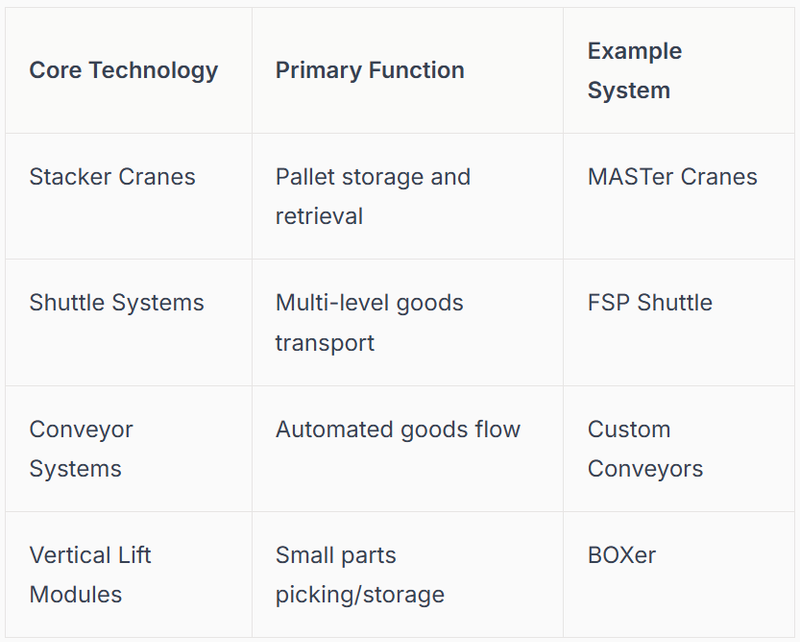
Together, these elements deliver the speed, reliability, and flexibility that define automated storage solutions today.
Warehouse Software and System Integration
Behind every high-performing automated storage solution is a sophisticated software suite. Warehouse Management Systems (WMS) and Warehouse Control Systems (WCS) coordinate machinery, manage inventory, and optimise workflows in real time.
A modern WMS tracks inventory locations, order status, and movement history. It uses data analytics to identify bottlenecks, reduce errors, and improve space utilisation. Warehouse Control Systems interface directly with hardware, ensuring seamless operation between cranes, shuttles, and conveyors.
Integration with ERP and broader supply chain systems provides end-to-end visibility, supporting better decision-making and faster response to market changes. Modular software suites, such as logOS, allow for scalable control and easy upgrades as business needs evolve.
Cybersecurity and data protection are critical, given the reliance on digital infrastructure. Advanced encryption and access controls safeguard sensitive inventory and operational data.
The market for automated storage solutions is rapidly expanding, driven by the adoption of smarter technologies and the need for resilience. According to the Global AS/RS Market Forecast, the global automated storage and retrieval system market is projected to reach $14.8 billion by 2030, highlighting the accelerating pace of innovation.
When combined, intelligent software and advanced machinery create a robust foundation for automated storage solutions, delivering measurable gains in efficiency, accuracy, and adaptability.
Step-by-Step Guide to Implementing Automated Storage Solutions
Implementing automated storage solutions is a strategic process that can transform operations and deliver significant competitive advantages. This step-by-step guide provides a practical roadmap for businesses ready to embrace automation in their warehouses. Each phase is designed to minimise risk and maximise return, ensuring a smooth transition from manual or semi-automated processes to fully automated storage solutions.
Revolutionize Your Warehouse With Our Automated Storage Solutions
1. Assessing Business Needs and Readiness
The journey to automated storage solutions begins with a thorough analysis of your current warehouse operations. Identify major pain points such as bottlenecks, inefficiencies, or safety risks. Set clear goals for automation—do you want to boost efficiency, reduce costs, enhance safety, or prepare for future growth?
Involve stakeholders from operations, IT, and finance early. Gather data on inventory profiles, throughput, order volumes, and seasonal peaks. Use digital tools and consulting services to model potential improvements. This foundational step ensures your investment in automated storage solutions aligns with overall business strategy and sets the stage for measurable success.
A readiness checklist may include:
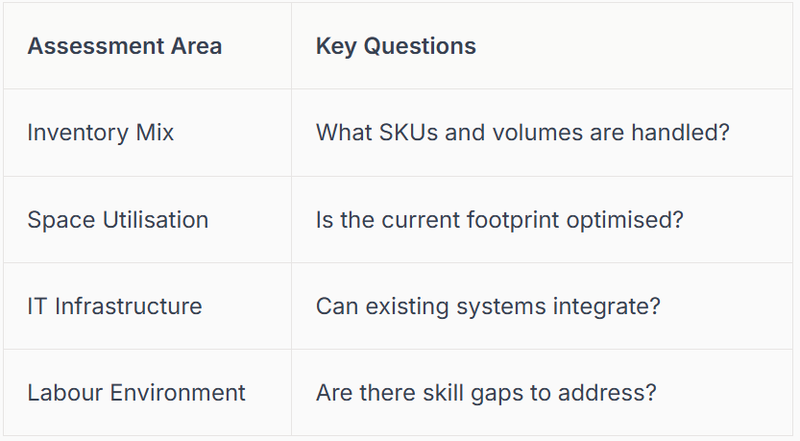
Taking time to analyse and plan ensures the right fit for your warehouse.
2. Solution Design and Technology Selection
Once business needs are clear, design your automated storage solutions to fit both current and future requirements. Choose the system type that best matches your inventory—pallet-based, small parts, or mixed. Decide on single-deep versus multi-deep racking, shuttle technology, or vertical lift modules, depending on throughput and space constraints.
Customise the layout for optimal goods flow and future expansion. Evaluate the integration of robotics, conveyors, and warehouse management software. Consider environmental requirements such as temperature control or hazardous goods. Early collaboration with technology experts ensures automated storage solutions are scalable and flexible.
A solution comparison table can help clarify options:
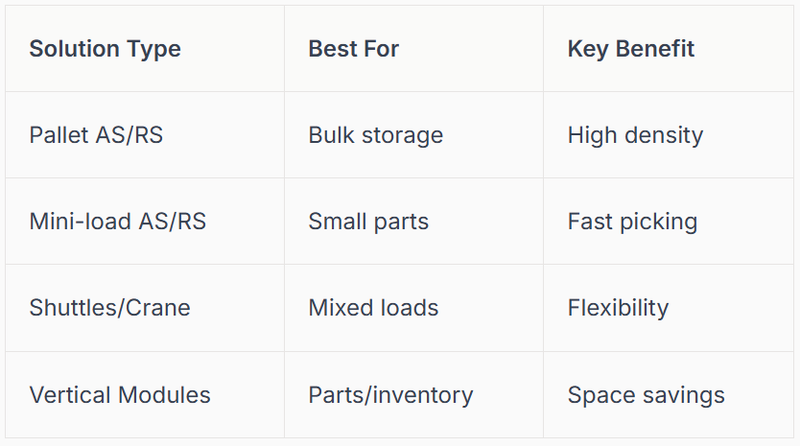
Selecting the right blend of technology is crucial for long-term value.
3. Partnering with Solution Providers
Finding the right partner for automated storage solutions is essential. Look for providers with proven expertise, a strong local presence, and a track record of successful installations. Assess their ability to deliver tailored solutions and offer ongoing support.
Engage in detailed consultations and request references or site visits to similar projects. Seek partners who offer comprehensive project management, from analysis through to commissioning. For example, Cloudy Bay Automation Case Study demonstrates how a New Zealand winery leveraged specialist support to enhance its warehouse efficiency.
Prioritise providers who value collaboration and transparency. Long-term service agreements and responsive maintenance support will help your automated storage solutions deliver sustained results.
4. Implementation, Testing, and Training
With the right design and partner in place, the implementation phase begins. Develop a structured project plan with clear milestones and responsibilities. Installation includes hardware setup, software integration, and safety system configuration.
Rigorous testing is critical. Validate system performance against design specifications. Conduct real-world simulations to ensure seamless picking, storage, and dispatch. Comprehensive staff training is essential—operators must understand safe use, troubleshooting, and basic maintenance of automated storage solutions.
Ongoing communication between your team and the solution provider minimises disruptions. Successful implementation paves the way for reliable, high-performance automation.
5. Ongoing Maintenance and Optimisation
Sustaining the benefits of automated storage solutions requires a proactive approach to maintenance and continuous improvement. Implement preventive maintenance schedules and leverage digital monitoring tools to predict and address issues before they impact operations.
Optimise processes using data analytics from warehouse management software. Regularly review system performance and identify areas for adjustment. Maintain an inventory of critical spare parts and establish rapid-response support with your provider.
Continuous training ensures staff remain confident and skilled. By focusing on lifecycle management, your automated storage solutions will adapt and perform reliably as your business evolves.
6. Measuring Success and ROI
After implementation, it is vital to measure the impact of your automated storage solutions. Monitor key performance indicators such as throughput, order accuracy, space utilisation, and cost savings. Compare results against pre-automation baselines to quantify improvements.
A post-implementation review enables you to fine-tune processes and maximise ROI. Accessing real-world results, such as those in Automated Storage Case Studies, provides valuable benchmarks and inspiration for ongoing optimisation.
By systematically tracking outcomes, businesses can showcase the value of automated storage solutions and justify future investments in advanced automation.
Future Trends and Innovations in Automated Storage Solutions
The future of automated storage solutions is rapidly unfolding, driven by advancements in technology and evolving market needs. As businesses seek greater efficiency and resilience, staying ahead of these trends is critical to maintaining a competitive edge.
Emerging Technologies and Market Drivers
Automation is advancing at an unprecedented pace. Artificial intelligence and machine learning are becoming integral to automated storage solutions, enabling predictive analytics for maintenance and adaptive automation that adjusts to real-time demands. These technologies support seamless integration of robotics, shuttle systems, and autonomous vehicles for end-to-end warehouse automation.
Cloud-based warehouse management systems and Internet of Things (IoT) connectivity are providing real-time data, remote system monitoring, and enhanced transparency. As a result, businesses can optimise inventory flows, reduce downtime, and react quickly to shifting market conditions.
Energy efficiency and sustainability are now top priorities. Automated storage solutions are designed to minimise energy consumption and reduce waste, aligning with global sustainability goals. Advanced safety features, such as smart sensors and compliance automation, further enhance operational security. For deeper insights into how AI is shaping next-generation warehouse environments, see this report on AI in Industrial Real Estate.
Evolving Business Models and Industry Shifts
Business models are transforming alongside technology. Automation-as-a-Service is gaining traction, allowing organisations to adopt automated storage solutions with minimal upfront investment and flexible, scalable payment structures. This shift makes high-end automation accessible to both SMEs and large enterprises.
Modular and scalable systems are now standard, enabling businesses to expand or reconfigure their automated storage solutions as needs change. The demand for automation is especially strong in e-commerce, cold storage, and pharmaceuticals, where speed, accuracy, and compliance are critical.
Globalisation and ongoing supply chain disruptions are further accelerating adoption. Companies are investing in automated storage solutions to bolster resilience, address labour shortages, and keep pace with rising operational costs. Industry leaders are integrating automation to streamline processes and future-proof their operations.

Expert Predictions for 2026 and Beyond
Industry analysts forecast significant growth in the adoption of automated storage solutions worldwide and in New Zealand. According to recent research, the global AS/RS market is set to expand rapidly as businesses prioritise efficiency and adaptability. For a comprehensive look at market projections, refer to the U.S. AS/RS Market Analysis.
Experts agree that automated storage solutions will play a crucial role in addressing ongoing labour shortages and rising costs. As automation becomes more sophisticated, companies can expect even greater gains in productivity, space utilisation, and customer satisfaction.
Looking ahead, future-proofing strategies will focus on integrating advanced AI, robotics, and data-driven optimisation. Industry leaders recommend ongoing investment in staff training and system upgrades to stay ahead of the curve. The next wave of automated storage solutions will deliver unprecedented agility, helping businesses thrive in a dynamic global marketplace.
As you can see, automated storage solutions are transforming how businesses like yours manage logistics, distribution, and fulfilment. With the latest advances in robotics, software, and system integration, you can boost productivity, reduce errors, and scale with confidence—no matter your industry or warehouse environment. If you’re ready to take the next step towards a more efficient and future proof operation, now is the perfect time to see what’s possible. Let’s make your warehouse work smarter for you—Start Your Automation Journey today.