

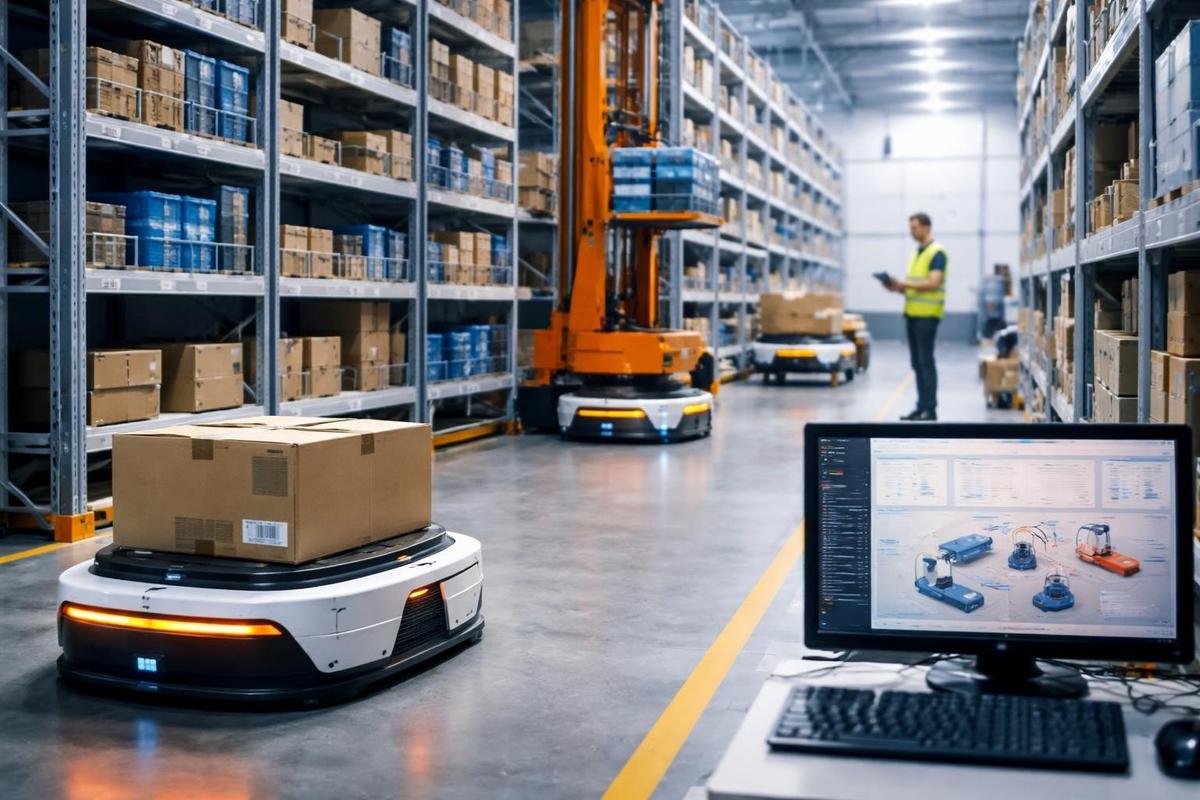
Automated Warehouse Racking System: Complete 2026 Guide
Share on
Modern warehouses face unprecedented pressure to process higher volumes with greater accuracy while controlling operational costs. The convergence of robotics, artificial intelligence, and advanced materials handling has created opportunities for logistics operations to fundamentally transform how they store and retrieve inventory. An automated warehouse racking system represents a strategic investment that addresses labour shortages, space constraints, and the relentless demand for faster order fulfillment that characterises today's supply chain environment.
Understanding Automated Warehouse Racking Systems
An automated warehouse racking system combines physical storage structures with mechanised equipment and intelligent software to manage inventory movement without manual intervention. These systems replace traditional static shelving and manual picking processes with dynamic storage solutions that bring products directly to operators or autonomous systems.
The fundamental architecture includes high-density racking structures, automated storage and retrieval systems (AS/RS), conveyor networks, and warehouse management software that orchestrates every movement. Unlike conventional warehouses where workers travel to pick locations, automated storage systems deliver requested items to ergonomic workstations, dramatically reducing travel time and physical strain.
Core Components and Integration
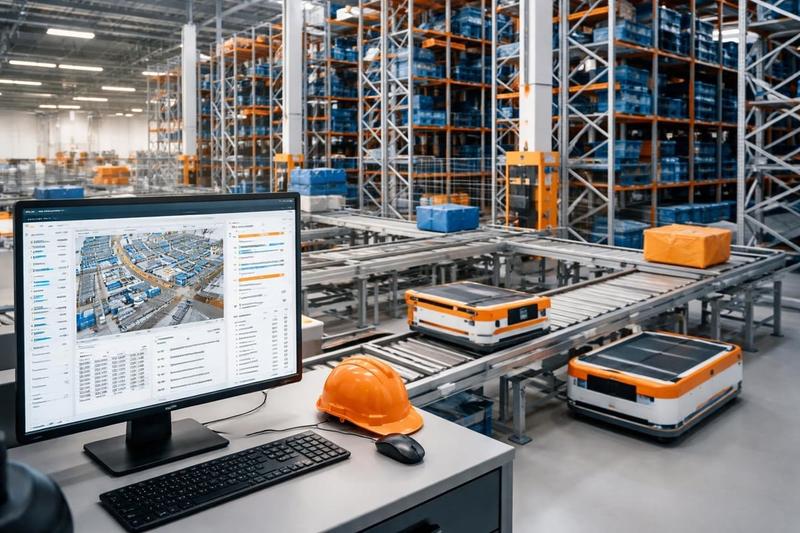
Modern implementations integrate several technology layers working in concert. The racking infrastructure itself features precision-engineered rails, guides, and storage positions designed for robotic access. Shuttle systems, cranes, or mobile robots navigate these structures based on real-time software instructions.
Key integration elements include:
- Warehouse control systems (WCS) managing equipment movements
- Warehouse management systems (WMS) directing inventory logic
- Sensor networks providing position and status feedback
- Safety systems protecting equipment and personnel
- Power and communication infrastructure supporting operations
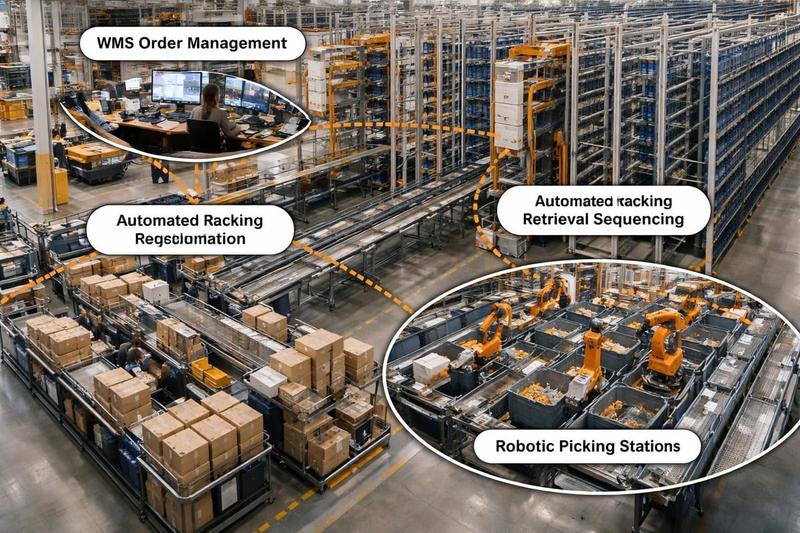
The software layer determines system intelligence, making decisions about storage location assignment, retrieval sequencing, and load balancing. Advanced algorithms optimize these choices based on product velocity, order patterns, and operational priorities, creating significant efficiency gains over manual decision-making.
Strategic Benefits for Logistics Operations
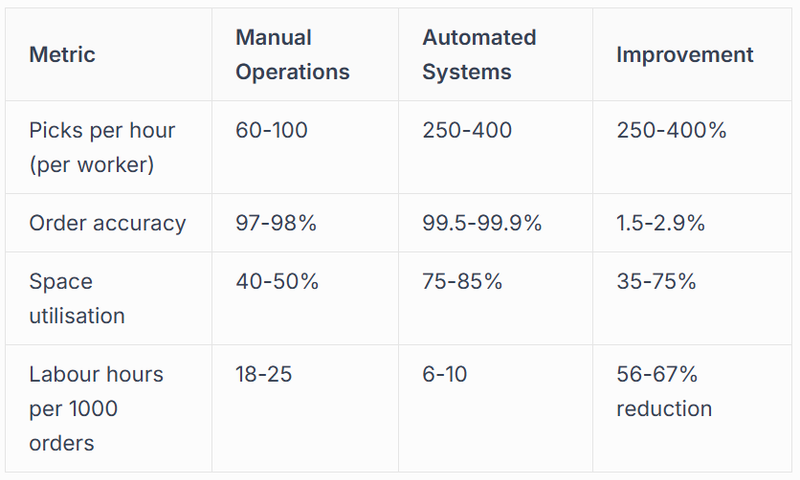
Implementing an automated warehouse racking system delivers measurable improvements across multiple operational dimensions. Space utilisation typically increases 40-60% compared to conventional layouts, as automated systems can safely operate in narrower aisles and reach greater heights without requiring wide forklift turning radius or safety clearances.
Labour productivity transforms dramatically when workers focus on value-added tasks rather than walking and searching. Picking rates often triple or quadruple, while accuracy improves to 99.9% or better. These gains directly impact customer satisfaction and reduce costly returns processing.
Financial Performance Metrics
Return on investment varies based on operation scale, labour costs, and throughput requirements. Most facilities see payback periods between 3-7 years, with ongoing operational savings continuing indefinitely.
Energy efficiency represents another significant advantage. Automated systems can operate in dark, unheated environments when appropriate for product characteristics, dramatically reducing HVAC and lighting costs. The benefits of automated storage racking extend to reduced product damage rates, as machines handle inventory more consistently than variable human performance.
Implementation Approaches and Considerations
Successful deployment requires careful planning that aligns technology choices with business requirements. Organisations must evaluate current and projected throughput, SKU profiles, order characteristics, and growth trajectories before selecting system architecture.
Critical assessment factors include:
- Order profile analysis – understanding piece-picking versus case-picking ratios
- Inventory characteristics – dimensions, weights, special handling requirements
- Throughput requirements – peak versus average volumes, seasonal variations
- Physical constraints – building dimensions, floor loading capacity, ceiling heights
- Integration requirements – existing systems, IT infrastructure, data formats
The phased implementation approach has proven most successful for organisations new to automation. Starting with a pilot zone containing representative inventory allows teams to develop operational expertise and refine processes before full-scale rollout. Our Automate-X GTP Starter Grid provides small and medium businesses with an accessible entry point into warehouse automation, specifically designed to prove value in picking operations before committing to enterprise-scale investments.

System Architecture Options
Different automated warehouse racking system designs suit different operational profiles. Unit-load AS/RS handles pallets and large containers, ideal for manufacturing and wholesale distribution. Mini-load systems manage smaller totes and cartons, serving piece-picking and e-commerce operations effectively.
Shuttle-based systems offer exceptional flexibility, with independent carriers that can be redeployed as demand patterns shift. These systems scale incrementally, allowing capacity additions without disrupting operations. Vertical lift modules (VLMs) and horizontal carousels provide compact automation for slower-moving inventory or parts operations.
Research into adaptive task planning for robotized warehouses demonstrates how modern systems optimize fulfillment cycle times through sophisticated path planning and reinforcement learning algorithms, continuously improving performance as they process more orders.
Technology Integration and Workflow Optimization
The true power of an automated warehouse racking system emerges through intelligent integration with broader warehouse operations. Material flow design determines overall efficiency, requiring careful coordination between receiving, storage, picking, packing, and shipping zones.
Wave planning and batch optimization become more sophisticated when leveraging automation capabilities. Systems can simultaneously prepare multiple orders, staging inventory for efficient processing while maintaining strict FIFO or FEFO requirements for date-sensitive products.
Data-Driven Performance Management
Automated systems generate extensive operational data that enables continuous improvement. Real-time dashboards display throughput rates, equipment utilisation, error frequencies, and maintenance requirements. This visibility supports proactive management rather than reactive problem-solving.
Performance monitoring categories:
- Throughput metrics – lines processed, units handled, orders completed
- Quality indicators – accuracy rates, damage incidents, return reasons
- Equipment performance – uptime percentages, cycle times, maintenance intervals
- Labour productivity – picks per hour, value-added time, idle time analysis
- Inventory health – stock rotation, obsolescence risks, replenishment efficiency
Advanced analytics identify patterns invisible to manual observation. Machine learning algorithms detect subtle performance degradation before failures occur, scheduling preventive maintenance during low-demand periods. Slotting optimization continuously adjusts storage locations based on evolving demand patterns, keeping fast-moving items in most accessible positions.
Operational Excellence Through Automation
Running an automated warehouse racking system effectively requires different skills and organizational structures compared to manual facilities. Maintenance capabilities become critical, as equipment downtime directly impacts throughput. Many operations establish dedicated automation technician teams with electrical, mechanical, and software troubleshooting expertise.
Operator training emphasizes system interaction rather than physical material handling. Workers learn to manage exceptions, quality control, and value-added processes while machines handle repetitive tasks. This transition often improves job satisfaction by reducing physical strain and increasing technical skill development.
Safety and Compliance Standards
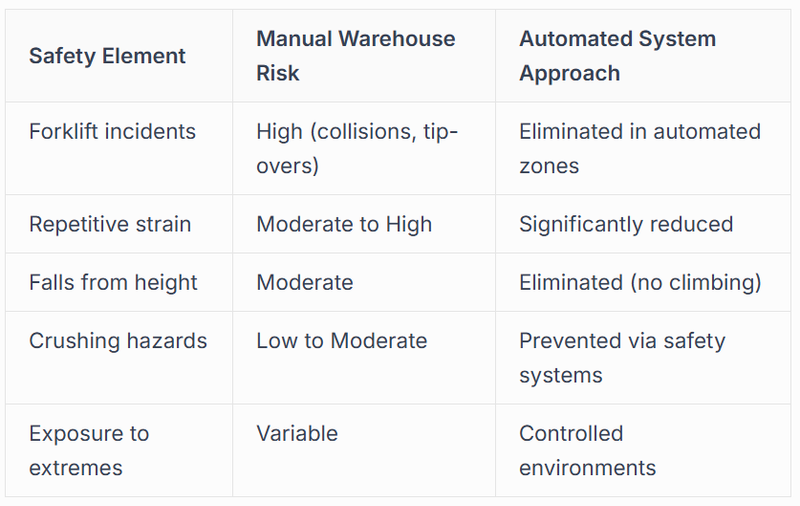
Automated systems fundamentally improve workplace safety by removing workers from hazardous environments. Forklifts account for numerous serious injuries in traditional warehouses, risks eliminated when automation handles material movement. Proper implementation includes comprehensive safety systems with sensors, light curtains, and interlocks preventing human access during equipment operation.
Compliance with local regulations remains essential. New Zealand operations must meet health and safety requirements while considering building codes, electrical standards, and accessibility requirements. Documentation of risk assessments, safety procedures, and training records demonstrates due diligence.
Advanced Technologies Shaping Future Developments
The evolution of warehouse automation continues accelerating as emerging technologies mature. Artificial intelligence enhances decision-making capabilities, while improved sensors and vision systems enable more sophisticated handling of variable products. Research into virtual reality interfaces for robotic warehouse systems demonstrates how immersive technologies can improve human supervision of autonomous operations.
Collaborative robots (cobots) increasingly work alongside automated warehouse racking systems, handling irregular items that challenge pure automation. These systems learn from human demonstrations, gradually expanding their capability range. The integration of autonomous mobile robots with fixed automation creates hybrid solutions combining the density advantages of racking systems with the flexibility of mobile platforms.
Sustainability and Environmental Impact
Modern automated warehouse racking systems contribute significantly to sustainability objectives. Energy efficiency improvements reduce carbon footprints, while optimized space utilisation decreases the building footprint required for equivalent capacity. Precise inventory control minimizes waste from obsolescence and damage.
Some facilities achieve carbon-neutral operations by combining automation with renewable energy sources and recovered heat systems. The business case strengthens as environmental regulations tighten and customers increasingly value sustainable supply chain partners.
Environmental benefits include:
- Reduced energy consumption through dark warehouse operations
- Lower HVAC requirements from reduced occupancy
- Decreased product waste through improved handling
- Minimized building materials via compact design
- Extended equipment lifecycles through predictive maintenance
Industry-Specific Applications and Case Studies
Different sectors leverage automated warehouse racking systems in ways tailored to their unique requirements. Pharmaceutical operations benefit from precise temperature control, strict lot tracking, and expiry date management. Cold storage facilities maximize expensive refrigerated space while minimizing door openings that compromise temperature stability.
E-commerce operations handle extreme order variability and seasonal peaks that would require excessive labour in manual facilities. Manufacturing environments integrate automated storage with production scheduling, ensuring materials arrive at assembly lines precisely when needed. Our work with Easysteel demonstrates how customized automation solutions address specific industry challenges while delivering measurable productivity improvements.
Third-party logistics providers (3PLs) use automation to profitably serve multiple clients from shared infrastructure, dynamically allocating capacity and maintaining strict inventory segregation. The flexibility of modern systems supports this multi-tenant model while maintaining the security and accuracy each client requires.
Technology Selection Framework
Choosing the right automated warehouse racking system architecture requires systematic evaluation of multiple factors. Technology maturity, vendor stability, and local support capabilities significantly impact long-term success. Organizations should assess total cost of ownership including installation, training, maintenance, and eventual upgrades.
- Define operational requirements with specific throughput, accuracy, and uptime targets
- Evaluate physical constraints including building characteristics and expansion possibilities
- Assess integration complexity with existing systems and processes
- Analyze financial scenarios comparing multiple automation approaches
- Select experienced partners with relevant industry expertise and regional presence
- Develop implementation roadmap with realistic timelines and risk mitigation
- Establish performance metrics for ongoing optimization and ROI tracking
The design of automated robotic systems for warehouse applications continues advancing, with improved perception, planning, and manipulation capabilities expanding the range of products that can be fully automated. Organizations benefit from staying informed about these developments while implementing proven technologies that deliver immediate value.
Integration With Broader Automation Strategies
An automated warehouse racking system rarely operates in isolation. Maximum value emerges when storage automation connects seamlessly with receiving automation, picking technologies, packing systems, and shipping operations. Smart racking systems integrate robotic shuttle technology with warehouse control platforms, creating cohesive material flow from dock to dock.
Transportation management systems (TMS) feed inbound arrival data to warehouse systems, enabling advanced receiving preparation. Order management systems trigger picking sequences optimized for packing station capacity and carrier pickup schedules. This orchestration across platforms creates competitive advantages impossible with standalone automation.
Data integration enables supply chain visibility that benefits all stakeholders. Customers receive accurate delivery estimates, suppliers see consumption patterns for better production planning, and finance teams gain real-time inventory valuation. The ten key advantages of automated systems include this enhanced visibility alongside operational efficiency gains.

Maintenance and Long-Term Performance
Sustaining peak performance from an automated warehouse racking system requires structured maintenance programs combining preventive, predictive, and corrective approaches. Equipment manufacturers provide recommended maintenance schedules addressing mechanical, electrical, and software components. Following these protocols prevents minor issues from escalating into costly failures.
Predictive maintenance leverages sensor data and machine learning to identify developing problems before they cause downtime. Vibration analysis detects bearing wear, thermal imaging reveals electrical issues, and performance trend analysis flags efficiency degradation. This proactive approach optimizes maintenance spending while maximizing uptime.
Spare parts inventory management balances availability against carrying costs. Critical components with long lead times warrant local stock, while commodity items can rely on supplier networks. Many operations establish service contracts with system integrators or equipment manufacturers, ensuring rapid response to issues.
Maintenance program elements:
- Daily operational checks and visual inspections
- Weekly cleaning and lubrication routines
- Monthly detailed component inspections
- Quarterly performance calibration and adjustment
- Annual comprehensive system audits
- Continuous predictive monitoring and analysis
Workforce Development and Change Management
Transitioning to an automated warehouse racking system represents significant organizational change requiring thoughtful management. Workers understandably feel concerned about job security when automation arrives. Successful implementations address these concerns through transparent communication, retraining programs, and role evolution rather than elimination.
Many organizations find automation enables growth that creates net employment increases despite per-unit labour reductions. New roles emerge in system operation, maintenance, quality assurance, and data analysis. Investing in workforce development builds capabilities while demonstrating commitment to employees during transformation.
Change management programs should begin months before equipment installation, providing transparency about project objectives, timelines, and expected impacts. Involving frontline workers in process design captures valuable operational knowledge while building buy-in. Pilot programs allow learning and adjustment before full-scale rollout.
Training requirements span technical skills, safety procedures, and new workflow understanding. Hands-on practice with equipment builds confidence and competence. Ongoing coaching supports the transition period when workers apply new skills in production environments. Organizations that invest adequately in people realize automation benefits faster and more completely than those focused solely on technology.
Automated warehouse racking systems represent a transformative investment that addresses the fundamental challenges facing modern logistics operations: labour availability, space constraints, accuracy requirements, and relentless pressure for faster fulfillment. Success requires selecting appropriate technology, planning thorough implementation, and developing organizational capabilities alongside infrastructure. Automate-X combines robotics expertise, warehouse software proficiency, and system integration experience to help logistics, 3PL, e-commerce, and manufacturing operations implement intelligent automation solutions that drive measurable productivity improvements and enable scalable growth. Whether you're exploring automation possibilities or ready to transform your warehouse operations, our team can guide your journey from assessment through implementation to ongoing optimization.