

Automatic Storage Retrieval System Guide for 2026 Success
Share on
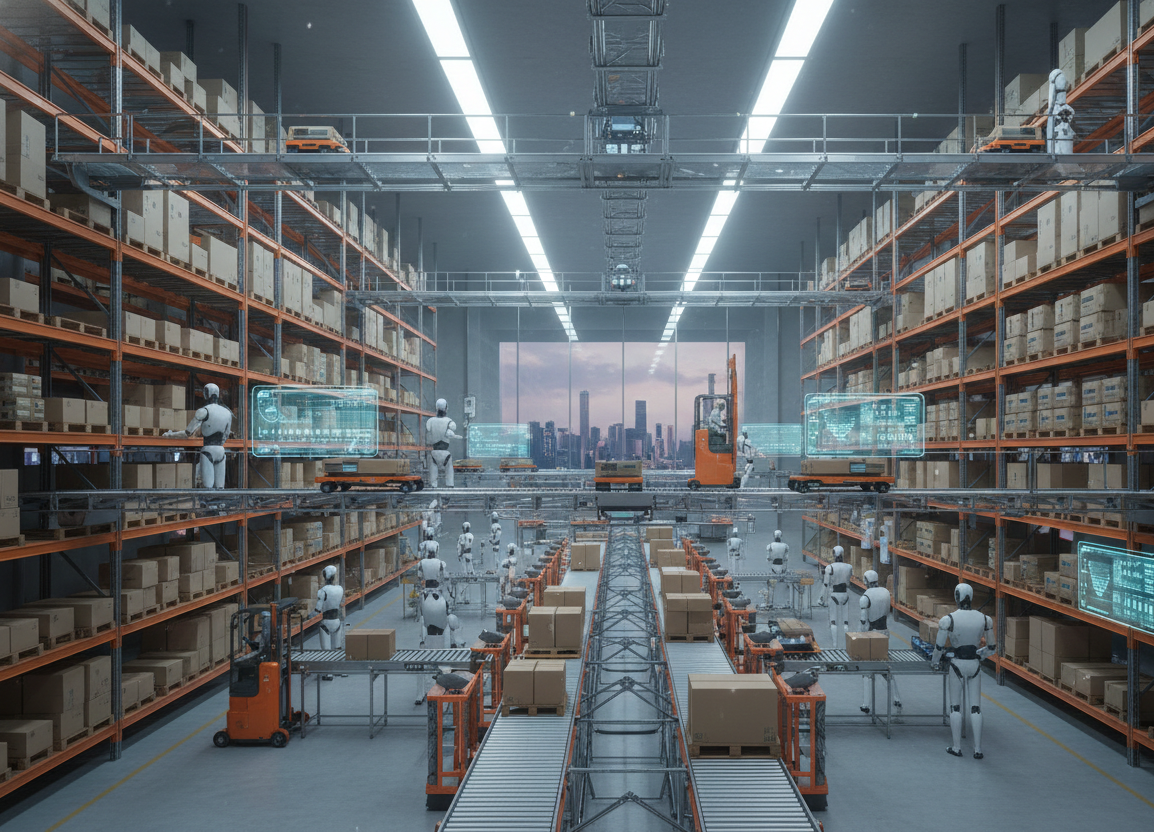
Imagine a warehouse where robots seamlessly manage every task, inventory mistakes are eliminated, and space is used for maximum profit. This is not science fiction, it is the reality enabled by the automatic storage retrieval system in 2026. The global ASRS market is booming, with values rising from USD 9.23 billion in 2019 to a projected USD 13.77 billion by 2027. Businesses now rely on this technology to streamline warehousing, cut costs, and unlock scalable growth. This guide will show you how to select, implement, and optimise an automatic storage retrieval system for your business success in 2026.
Understanding Automatic Storage Retrieval Systems (ASRS)
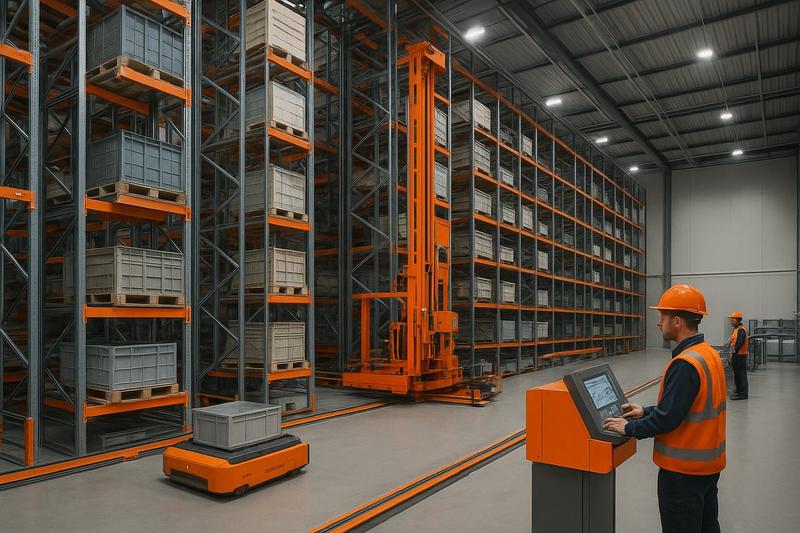
Automatic storage retrieval systems are transforming how warehouses and distribution centres work. At its core, an automatic storage retrieval system is a computer-controlled solution that handles the placement and retrieval of inventory with minimal human intervention. These systems use robotic cranes, shuttles, and advanced software to automate the movement of goods, making storage faster, more accurate, and highly efficient.
Integration with warehouse management systems (WMS) is a crucial element. This allows for real-time inventory tracking, so every item’s location is always known. The main components of an automatic storage retrieval system include:
- Storage racks designed for high-density vertical or horizontal storage
- Robotic cranes or shuttles that move goods in and out of storage locations
- Control and tracking systems that coordinate movement and data flow
Imagine a high-density distribution centre where robotic shuttles glide along aisles, moving pallets to and from storage locations several stories high. Modern ASRS installations can reach heights of up to 100 feet, significantly increasing storage density compared to traditional racking. According to industry data, these solutions can boost usable storage space by up to 50 percent.
The first automatic storage retrieval system appeared in the 1960s, focused on automating repetitive warehouse tasks. Since then, ASRS technology has evolved to support advanced robotics, sophisticated software integration, and a wide range of industries. For businesses facing labour shortages, large SKU counts, and increasing pressure for rapid order fulfilment, ASRS is no longer a luxury but a necessity. For a more detailed overview, see the Automated Storage and Retrieval System Guide.

What is an ASRS?
The automatic storage retrieval system is designed to automate the movement and storage of inventory, reducing reliance on manual labour. By combining robotics, smart software, and specially engineered racks, these systems streamline warehousing operations. Integration with digital management platforms means inventory data is updated instantly, minimising errors and improving transparency.
Key components of an automatic storage retrieval system include:
- Storage racks that maximise vertical and horizontal space
- Robotic cranes or shuttles for moving items efficiently
- Control systems that coordinate operations and monitor inventory
A practical example is a distribution centre where robotic shuttles transport goods between storage and picking stations, operating around the clock. This level of automation supports high throughput and accuracy, especially in environments with many SKUs or tight delivery timeframes.
Historically, the automatic storage retrieval system began as a solution for repetitive, labour-intensive tasks in the 1960s. Today, it incorporates advanced robotics and software, making it essential for modern businesses. With increasing demand for rapid, accurate order fulfilment and ongoing labour shortages, ASRS adoption continues to rise.
Core Features and Capabilities
The automatic storage retrieval system offers several core features that set it apart from traditional warehousing methods. High-density storage, both vertically and horizontally, allows businesses to make the most of every square metre. Full automation of repetitive tasks reduces manual handling, improving both speed and consistency.
Key capabilities include:
- Real-time inventory management and tracking, reducing discrepancies
- Seamless integration with WMS and ERP systems for digital control
- Customisation for different load types, such as pallets, totes, and cartons
- Enhanced safety features, lowering the risk of workplace injuries
A strong example is the use of an automatic storage retrieval system in cold storage. Here, automation maintains strict temperature controls and protects product quality, all while minimising staff exposure to cold environments.
Statistically, implementing an automatic storage retrieval system can cut warehouse space requirements by up to 50 percent compared to traditional setups. This not only saves real estate costs but also supports scalable growth. With ongoing advancements, ASRS solutions are adaptable, safe, and capable of meeting the needs of various industries.
Types of Automatic Storage Retrieval Systems for 2026
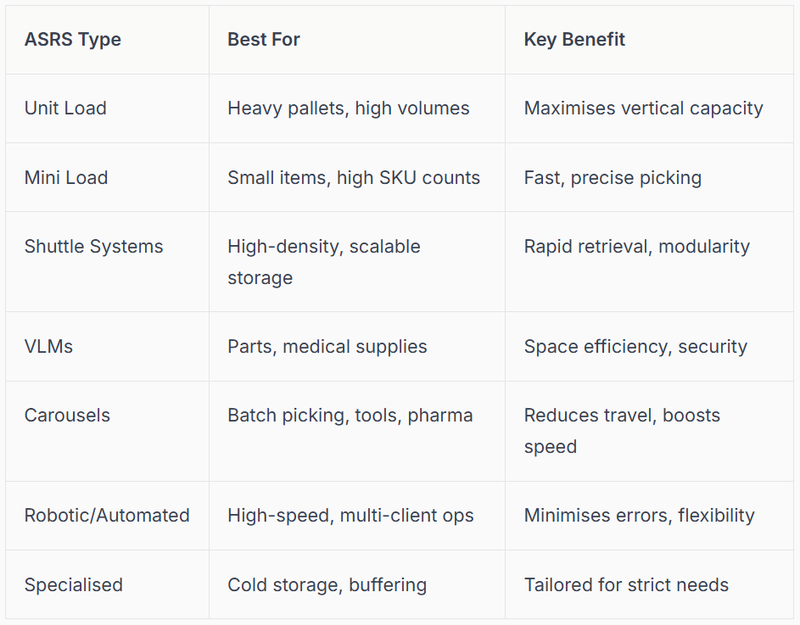
Modern warehousing relies on a diverse range of automatic storage retrieval system solutions, each engineered to address specific operational demands. As technology advances, businesses have access to a suite of ASRS types, tailored for everything from heavy pallet handling to high-speed e-commerce picking. Understanding these options is crucial for selecting the right fit, maximising efficiency, and future-proofing your operations. For a deeper dive into the variety and benefits of today's automated storage technologies, see this Automated Storage Solutions Overview.
Unit Load ASRS
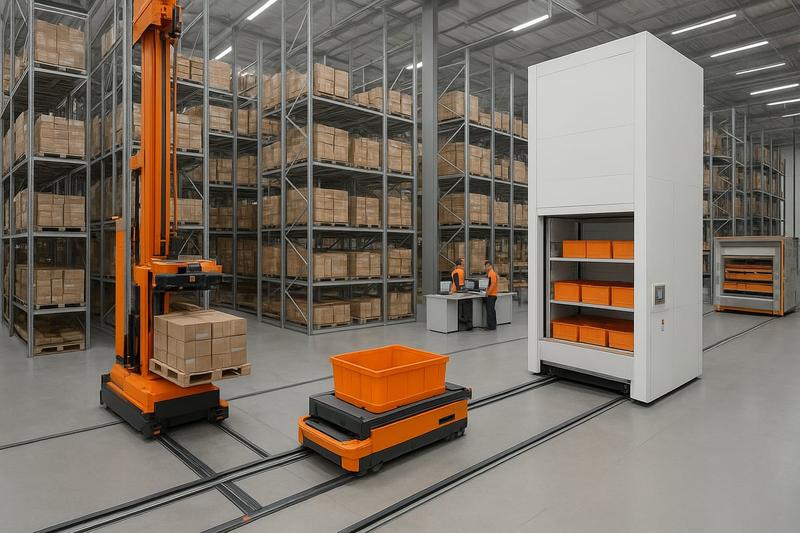
Unit load automatic storage retrieval system designs are built for large, heavy palletised goods. These systems use robust robotic cranes and pallet conveyors to move products, often weighing several tonnes, in and out of high bay storage racks.
Commonly found in manufacturing and large distribution centres, unit load ASRS streamlines the handling of bulk inventory. Automotive parts suppliers, for example, rely on this technology for just-in-time manufacturing, ensuring the right part is delivered to the production line exactly when needed.
Unit load ASRS can reach impressive heights, maximising vertical space and delivering fast, accurate pallet retrieval even in high-volume environments.
Mini Load ASRS
Mini load automatic storage retrieval system solutions focus on small items stored in totes, cartons, or bins. These systems employ agile robotic cranes or shuttle systems, optimised for environments with thousands of SKUs and rapid picking requirements.
E-commerce fulfilment centres and pharmaceutical distributors benefit from mini load ASRS, where picking speed and accuracy are critical. By automating the retrieval of small goods, these systems help businesses manage high order volumes without increasing floor space or labour costs.
This type of ASRS is ideal for operations where order profiles are diverse and precision is non-negotiable.
Shuttle Systems (4-way and Multi-deep)
Shuttle-based automatic storage retrieval system technology enables goods to move within racking structures, supporting both high-density and high-throughput operations. Robotic shuttles travel horizontally and vertically, accessing products stored many positions deep.
These systems are particularly suited for cold storage, buffer storage, and facilities requiring rapid movement of perishable goods. Food and beverage warehouses often deploy shuttle systems to maintain product integrity while maximising storage capacity.
The modular nature of shuttle systems allows businesses to scale storage and retrieval operations as demand grows.
Vertical Lift Modules (VLMs)
Vertical lift module automatic storage retrieval system configurations use tall, enclosed columns filled with automated trays. When an item is requested, the VLM delivers the tray to an ergonomic access point, saving time and minimising picker travel.
VLMs are popular in parts storage, medical supply rooms, and office environments where space is tight and inventory control is paramount. By making full use of vertical height, VLMs can condense hundreds of square metres of storage into a small footprint.
This approach not only boosts storage density but also enhances security and reduces picking errors.
Carousels (Vertical & Horizontal)
Carousel-based automatic storage retrieval system platforms feature rotating bins or shelves, bringing items directly to the operator. Vertical carousels are ideal for tall spaces, while horizontal carousels excel in wider, low-ceilinged areas.
These systems are widely used in batch picking, pharmacy automation, and tool storage applications. For example, electronics distributors utilise horizontal carousels to speed up order picking and improve accuracy.
Carousels minimise picker travel, streamline workflows, and support both small- and medium-sized item storage.
Robotic ASRS and Automated Pallet Shuttles
Robotic automatic storage retrieval system solutions are at the cutting edge of warehouse automation. These systems use autonomous robots for picking, placing, and transporting inventory across the facility.
Multi-client warehouses, 3PLs, and high-speed fulfilment centres deploy robotic ASRS to handle complex order profiles and reduce picking errors by up to 90 percent. Automated pallet shuttles move goods efficiently between storage and dispatch zones, maintaining high throughput even during peak periods.
Robotic ASRS are customisable, scalable, and designed to integrate seamlessly with other digital warehouse systems.
Specialised ASRS (Cold Storage, Automated Buffering)
Specialised automatic storage retrieval system designs cater to environments with unique requirements, such as strict temperature control or production line buffering. Cold storage ASRS maintains consistent temperatures for perishables, ensuring food safety and pharmaceutical compliance.
Automated buffering systems optimise production flows by temporarily storing goods between manufacturing stages, reducing bottlenecks and downtime. These tailored solutions are essential for industries where product integrity and timely delivery are critical.
Businesses with stringent storage needs benefit from the adaptability and reliability of specialised ASRS.
Key Advantages and Potential Challenges of ASRS
Warehousing and logistics are being transformed by the automatic storage retrieval system. As businesses look to future-proof their operations, understanding the strengths and limitations of these systems is crucial for making informed decisions. In this section, we explore the key benefits that make ASRS a game-changer, as well as the challenges that must be considered before investing.
Major Benefits of ASRS
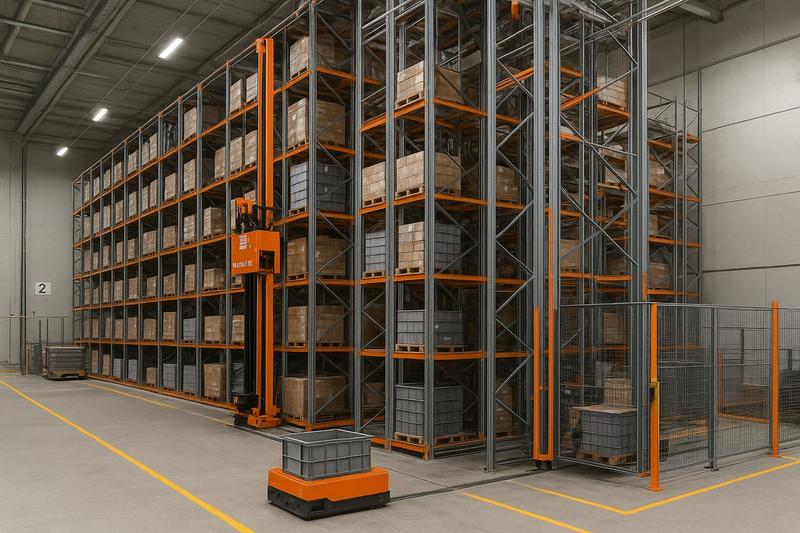
The automatic storage retrieval system delivers a substantial boost to warehouse productivity. By automating repetitive and labour-intensive tasks, it enables round-the-clock operations without fatigue or error. This leads to increased throughput and allows businesses to scale up efficiently during peak demand.
Key advantages include:
- Operational Efficiency: ASRS technology minimises manual intervention, speeding up picking, putaway, and retrieval times.
- Labour Cost Reduction: Automation reduces the need for manual labour, cutting costs and helping businesses cope with labour shortages.
- Space Optimisation: High-density vertical and horizontal storage means warehouses can store more inventory in less space, with some systems reducing space requirements by up to 50% compared to traditional racking.
- Inventory Accuracy: Real-time tracking and integration with digital systems greatly reduce inventory discrepancies.
- Safety Improvements: Automated systems limit the need for staff to access high shelves or handle heavy loads, decreasing workplace injuries.
- Scalability: ASRS can be adapted and expanded to support business growth and seasonal spikes.
- Order Accuracy: Advanced picking systems improve order fulfilment accuracy, with some achieving over 99.9% accuracy.
For example, an e-commerce warehouse that implemented an automatic storage retrieval system saw order fulfilment times cut in half, while picking errors dropped to near zero. In addition, cold storage operations benefit from automated systems that maintain strict temperature controls, ensuring product integrity and food safety.
The automatic storage retrieval system is particularly valuable for industries managing thousands of SKUs or requiring rapid, accurate order processing. As the technology becomes more accessible, its adoption is becoming essential for businesses seeking a competitive edge.
Potential Drawbacks and Considerations
Despite its compelling advantages, the automatic storage retrieval system is not without challenges. One of the primary concerns is the significant upfront investment required for system purchase, installation, and integration. Ongoing costs, such as maintenance and technical support, must also be factored into the total cost of ownership.
Potential considerations include:
- Initial Cost: ASRS installations can require substantial capital outlay, which may be a barrier for smaller businesses.
- Maintenance and Complexity: These systems are technically complex and require regular maintenance, specialised skills, and periodic updates.
- Flexibility: While highly efficient for stable, high-volume operations, ASRS may struggle to adapt quickly to rapid changes in product mix or SKU profiles.
- System Downtime: Technical failures or integration issues can disrupt operations, making contingency planning essential.
- ROI for Low Throughput: Businesses with lower throughput or less inventory variety may find it challenging to justify the investment.
For instance, a small retailer with modest order volumes may not see a quick return on investment from an automatic storage retrieval system, especially when compared to manual or semi-automated alternatives. It is vital to conduct a thorough needs analysis and assess warehouse requirements before proceeding.
To help navigate these considerations, resources like ASRS Warehouse Implementation Insights offer practical guidance and best practices for planning and deploying ASRS in modern warehouses. By taking a strategic approach, businesses can maximise benefits while mitigating risks.
Ultimately, while the automatic storage retrieval system offers transformative benefits, careful planning and realistic assessment are key to successful adoption and long-term value.
Step-by-Step Guide to Implementing ASRS for 2026 Success
Implementing an automatic storage retrieval system is a transformative journey for any warehouse or distribution business. Success in 2026 requires a methodical approach, careful analysis, and collaboration with trusted partners. This section breaks down the implementation process into clear, actionable steps so you can maximise your investment and future-proof your operations.
Step 1: Assessing Business Needs and Goals
The first step in implementing an automatic storage retrieval system is a detailed assessment of your current warehouse environment. Begin by identifying bottlenecks, such as limited space, high labour costs, or frequent inventory errors.
Set clear objectives for automation. Are you aiming to double throughput, reduce costs, or improve scalability? Analyse your inventory profile, considering SKU count, order volume, and product variability.
- List your current operational pain points.
- Define measurable automation goals.
- Review future business growth forecasts.
For example, an FMCG company may want to increase throughput without expanding their warehouse footprint. By mapping these needs, you ensure the automatic storage retrieval system aligns with your long-term strategy.
Step 2: Selecting the Right ASRS Type and Vendor
With your goals defined, the next step is to choose the most suitable automatic storage retrieval system type. Consider the size, weight, and handling requirements of your products. Unit load ASRS is ideal for heavy palletised goods, while mini-load and shuttle systems suit smaller, high-SKU environments.
Evaluate vendors not only for their technology, but also for integration expertise and support services. Look for partners with proven track records in your industry.
- Match ASRS type to your inventory.
- Assess vendor experience and local presence.
- Check scalability and future upgrade paths.
For a pharmaceutical distributor, selecting a mini-load automatic storage retrieval system ensures high-value items are handled with precision and security.
Step 3: Designing and Planning the ASRS Layout
Effective layout design is crucial for maximising the benefits of your automatic storage retrieval system. Collaborate with engineers and your chosen vendor to simulate workflows and optimise racking configurations.
Plan for integration with existing warehouse management systems, ensuring seamless data exchange and process automation.
- Map out storage zones and material flows.
- Simulate peak and off-peak operations.
- Prepare for phased implementation if needed.
A 3PL provider, for instance, may design multi-client storage areas within the ASRS to accommodate varying customer needs and ensure operational flexibility.
Step 4: System Integration and Testing
The integration phase links your automatic storage retrieval system with key digital platforms, such as WMS and ERP. Rigorous system testing is essential to validate performance and ensure data accuracy.
Staff training is equally important. Employees should understand both the technology and revised safety protocols. For further insights on integrating automation, see Goods-to-Person Automation Explained.
- Conduct system and user acceptance tests.
- Set up real-time inventory tracking.
- Train staff on new workflows and safety measures.
A retailer may run phased tests, first automating a single picking zone before scaling up, reducing risk and ensuring a smooth transition.
Step 5: Go-Live, Optimisation, and Continuous Improvement
Transitioning to live operation with an automatic storage retrieval system requires careful management. Monitor key performance indicators such as throughput, accuracy, and downtime from day one.
Implement continuous improvement strategies. Regularly update software, refine processes, and gather feedback from users. The flexibility to adapt and optimise ensures your investment delivers long-term value.
- Monitor and review system KPIs.
- Schedule ongoing training and maintenance.
- Plan for upgrades as technology evolves.
For example, an e-commerce warehouse may halve picking errors and boost customer satisfaction by continuously refining their ASRS workflows. By treating automation as an ongoing journey, you position your business for sustainable success in the years ahead.
Calculating ROI and Cost-Benefit Analysis for ASRS Investments
Investing in an automatic storage retrieval system is a significant decision for any business. Understanding the costs, benefits, and ROI is crucial before moving forward. Let us break down the key factors and provide a clear roadmap for your analysis.
Creating an Automated Storage and Retrieval System in Virtual Factory Professional
Key Cost Factors
The first step in evaluating an automatic storage retrieval system is to identify all relevant costs. These typically fall into two categories: upfront and ongoing.
Upfront costs include system purchase, installation, and integration with existing digital infrastructure. For a large distribution centre, this might mean a multi-million dollar investment, especially if the system is highly customised.
Ongoing costs cover maintenance, energy consumption, software licensing, and technical support. While these costs are often predictable, it is important to include regular system upgrades and unexpected repairs in your budget.

As the Global ASRS Market Growth Projections show, increasing demand for automation is driving investment, making it vital to plan for both short-term and long-term expenses when considering an automatic storage retrieval system.
Analysing Benefits
The benefits of an automatic storage retrieval system often outweigh the initial costs, especially in high-volume environments. Labour cost savings are significant, as automation can reduce the need for manual picking and handling.
Increased storage density means you can store more inventory in the same footprint, potentially reducing real estate expenses. Improved inventory accuracy lowers shrinkage and discrepancies, while faster order fulfilment boosts customer satisfaction and retention.
Industry data shows that an automatic storage retrieval system can deliver ROI within 2 to 5 years, particularly in regions with high labour costs. Enhanced accuracy, often exceeding 99.9%, also minimises costly errors.
ROI Calculation Methods
Calculating the return on investment for an automatic storage retrieval system involves a few straightforward formulas and analysis methods.
The standard ROI formula is:
ROI (%) = (Net Benefits / Total Costs) x 100%
Net benefits include all savings and revenue gains from the system, such as reduced labour, higher throughput, and fewer errors. The payback period method can help estimate how long it will take to recoup your investment.
Factors influencing ROI include industry type, company size, order volume, SKU count, and local labour rates. For example, an e-commerce business that reduces picking staff by 60% could achieve ROI in three years.
Regional and Industry Considerations
ROI for an automatic storage retrieval system varies by region and industry. In areas with high labour costs, such as Europe and the US, payback periods are typically shorter. Leasing and financing options can make automation more accessible, especially in Asia-Pacific markets.
Some governments also offer incentives for automation investments, further improving ROI. Industry-specific factors, such as temperature-controlled storage for food or compliance for pharmaceuticals, can also impact costs and benefits.
It is essential to consider local market dynamics and regulations when planning your investment.
Common Pitfalls and How to Avoid Them
Despite the clear advantages, implementing an automatic storage retrieval system is not without risks. Common pitfalls include underestimating the complexity of system integration, overlooking ongoing maintenance costs, and failing to account for staff training.
Another frequent issue is not future-proofing the system for evolving business needs. To avoid these challenges, conduct a thorough needs analysis, plan for change management, and partner with experienced vendors.
Recent research, such as the ASRS Efficiency Enhancement Study, highlights the importance of optimising system design and processes to maximise efficiency and minimise downtime.
Careful planning and continuous improvement are key to achieving the best possible ROI from your automatic storage retrieval system.
Future Trends and Innovations in ASRS for 2026 and Beyond
The landscape for the automatic storage retrieval system is evolving at a rapid pace, with technology and market demands shaping its future. According to the ASRS Market Forecast Report, the global ASRS market is expected to reach USD 14.8 billion by 2030, driven by automation, digital integration, and the need for scalable solutions. These trends are set to redefine how businesses leverage the automatic storage retrieval system for efficiency, sustainability, and growth.
Next-Generation Robotics and AI
The next wave of innovation in the automatic storage retrieval system centres on robotics powered by artificial intelligence. These smart robots are designed to adapt to changing inventory, learn optimal picking routes, and handle a variety of products with minimal human intervention. Predictive maintenance is becoming standard, as IoT sensors monitor equipment health and prevent breakdowns before they disrupt operations.
For example, some warehouses now deploy robots that analyse picking patterns in real time, ensuring faster order fulfilment and reduced travel distances. These advancements not only boost speed but also improve accuracy and system resilience.
Software Integration and Data-Driven Warehousing
Modern warehouses rely on seamless software integration to unlock the potential of the automatic storage retrieval system. Cloud-based WMS and ERP platforms connect every aspect of storage and retrieval, enabling real-time inventory tracking and advanced analytics.
With data-driven insights, businesses can forecast demand, optimise storage layouts, and adjust to seasonal fluctuations. Automated systems are increasingly capable of self-optimising, adjusting workflows based on live order volumes and SKU movement patterns. This deep integration makes the automatic storage retrieval system a vital part of digital transformation strategies.
Modular and Scalable ASRS Solutions
Scalability is a key trend shaping the future of the automatic storage retrieval system. Modular ASRS designs allow businesses to expand storage capacity or add new automation modules without major disruptions. Plug-and-play components simplify upgrades, letting companies adapt quickly to market changes or seasonal peaks.
For example, a 3PL provider might start with a basic shuttle system and later add extra modules to handle increased demand. This flexibility ensures that the automatic storage retrieval system continues to deliver value as business needs evolve.
Sustainability and Energy Efficiency
Sustainability is now a priority in ASRS design. Modern systems use energy-saving technologies like regenerative drives and smart lighting to cut power consumption. Some automatic storage retrieval system solutions optimise airflow and temperature control, which is especially critical in cold storage environments.
Recent advances have driven energy usage down by as much as 30 percent compared to older systems. These improvements not only lower operational costs but also help businesses meet environmental targets and regulatory requirements.
Industry-Specific Innovations
The automatic storage retrieval system is becoming more specialised to serve unique industry needs. In pharmaceuticals, ASRS units offer enhanced traceability, compliance, and secure storage for high-value goods. Food and beverage sectors benefit from systems designed for strict hygiene and temperature control, while automotive manufacturers deploy ASRS for just-in-time parts sequencing.
These tailored solutions ensure that every automatic storage retrieval system delivers maximum benefit in its target environment, aligning with both regulatory and operational demands.
Preparing for the Future: Strategic Recommendations
To remain competitive, businesses must continuously upskill their workforce to manage and maintain advanced automatic storage retrieval system technologies. Regular audits and system upgrades are essential to leverage new capabilities and avoid obsolescence.
Building strong partnerships with leading automation providers also helps organisations stay ahead of emerging trends. Strategic planning and ongoing investment in skills and technology will ensure long-term success with any automatic storage retrieval system.
Key Takeaways for 2026 Success
The automatic storage retrieval system is set to become even more critical for competitive, efficient, and scalable warehouse operations by 2026. Early adoption of next-generation technologies such as AI-driven robotics, modular designs, and sustainable practices will help businesses future-proof their supply chains.
Organisations that invest in continuous innovation and strategic planning will lead their sectors, capitalising on the full potential of the automatic storage retrieval system in the years ahead.
As we’ve explored throughout this guide, embracing Automatic Storage Retrieval Systems is a smart move for future-ready warehouse success. Whether you’re looking to boost efficiency, minimise manual errors, or prepare your operations for the challenges of 2026, the right automation can make all the difference. If you’re ready to take the next step and unlock the full potential of your logistics or supply chain business, now is the perfect time to act. Let’s turn your vision of a streamlined, scalable warehouse into reality—Automate Your Warehouse today.