

Guide to Automation in Distribution Centers for 2026 Success
Share on
The landscape of automation in distribution centers is changing at record speed, driven by breakthroughs in AI and robotics. Businesses that do not adapt risk falling behind as 2026 approaches.
This guide will show how automation in distribution centers is revolutionising operations, offering practical strategies for staying ahead. You will discover the latest technologies, step-by-step implementation advice, tangible benefits, common challenges, future trends, and real-world success stories.
Explore how embracing automation can unlock a competitive edge, boost productivity, and future-proof your distribution centre for the demands of tomorrow.
The State of Automation in Distribution Centers (2024-2026)
Distribution centers have entered a period of remarkable transformation. The landscape is evolving at pace, with automation in distribution centers reshaping how goods move, orders are fulfilled, and businesses scale to meet new demands.
This shift is driven by technological leaps, market pressures, and the relentless push for efficiency. As we approach 2026, understanding the current state of automation in distribution centers is crucial for any business aiming to stay competitive.
Evolution of Distribution Center Automation
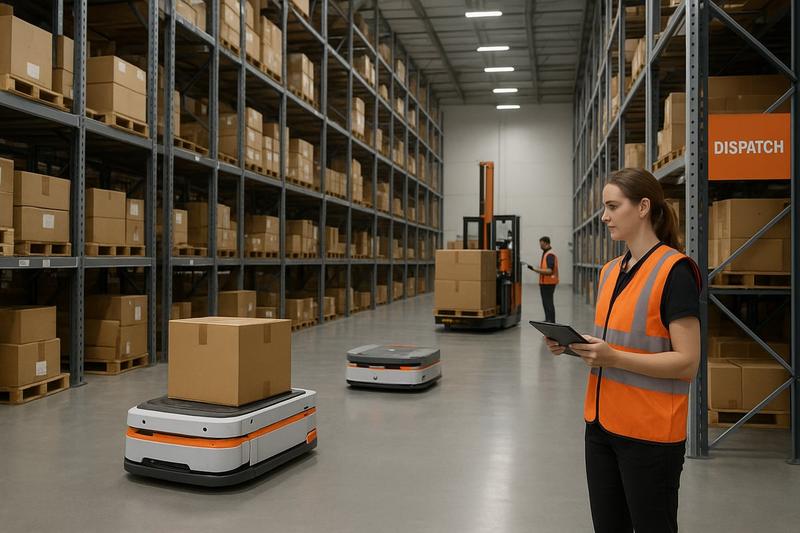
The journey of automation in distribution centers began with manual picking and basic mechanised tools. Over the last two decades, these centres transitioned to semi-automated systems, introducing conveyor belts and barcode scanning.
By the early 2020s, robotics and AI-driven solutions emerged as game changers. Automated Guided Vehicles (AGVs) and Autonomous Mobile Robots (AMRs) started to handle repetitive transport tasks, freeing human workers for more complex roles.
Key milestones include:
- Adoption of robotics for picking and sorting
- Integration of IoT sensors for real-time visibility
- AI-powered software for predictive optimisation
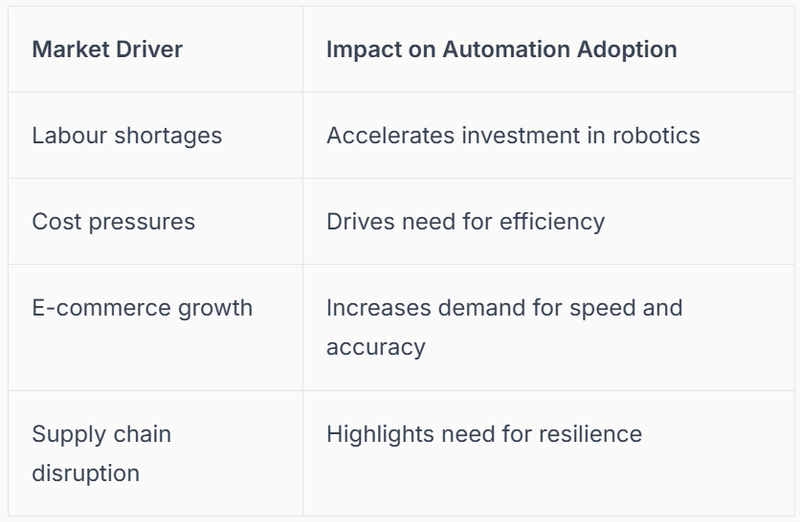
E-commerce growth, globalisation, and frequent supply chain disruptions have accelerated the adoption of automation in distribution centers. These forces demand greater flexibility and resilience, making intelligent automation not just advantageous but essential.
Market Drivers and Industry Statistics
Several powerful trends are fuelling the adoption of automation in distribution centers. Labour shortages, especially in logistics, have pushed companies to seek alternatives to manual work. Rising operational costs and the increasing expectation for rapid, accurate fulfilment only add to the urgency.
Recent statistics highlight the scale of change. Between 2024 and 2026, the global adoption rate of automation in distribution centers is expected to grow by more than 25%. Businesses report up to a 40% increase in order accuracy and a 35% reduction in fulfilment time after implementing automated systems.
Automation in distribution centers also enhances customer satisfaction. Faster delivery times, real-time order tracking, and fewer errors create a more reliable experience for end users. These measurable benefits underpin the business case for investment in automation.
Core Technologies Transforming Distribution Centers
Modern automation in distribution centers relies on a suite of advanced technologies. AGVs and AMRs handle internal transport, moving pallets and totes with precision. Automated Storage and Retrieval Systems (ASRS) maximise space and enable high-density storage.
Warehouse Management Systems (WMS) and Warehouse Control Systems (WCS) centralise operations, ensuring seamless coordination between machines and people. AI-powered predictive analytics provide insights into demand trends, inventory levels, and process bottlenecks.
Digital twin technology is gaining traction, allowing operators to simulate and optimise warehouse layouts and workflows before making physical changes. These innovations collectively drive a step change in efficiency and adaptability.
Key technologies include:
- AGVs and AMRs for material movement
- ASRS for automated storage
- WMS and WCS for integration and control
- AI-driven analytics and digital twins for process improvement
Current Adoption Landscape
Adoption of automation in distribution centers varies by industry and business size. Third-party logistics (3PL), e-commerce, FMCG, and pharmaceutical sectors are leading the way, investing heavily in robotics and intelligent systems.
Large enterprises often have the resources to deploy full-scale automation, but small and medium-sized businesses are also embracing modular solutions. While budget and integration complexity remain barriers, scalable technologies are lowering the entry threshold.
A standout example is the Distribution Center Automation Case Study, which details how a real-world operation transformed its pallet storage and fulfilment through automation. Early adopters report notable gains in productivity, accuracy, and staff satisfaction, setting benchmarks for others to follow.
The landscape for automation in distribution centers is dynamic, with new adopters entering the field each year. As technology matures and costs fall, expect adoption to accelerate, reshaping the logistics sector across New Zealand and beyond.
Key Automation Technologies for 2026 Success
The landscape of automation in distribution centers is rapidly evolving, with cutting-edge technologies driving productivity, accuracy, and flexibility. To secure operational success by 2026, businesses must understand and embrace the tools transforming warehouse operations. Below, we break down the essential technologies shaping distribution centers of the future.
Robotics and Automated Material Handling Systems
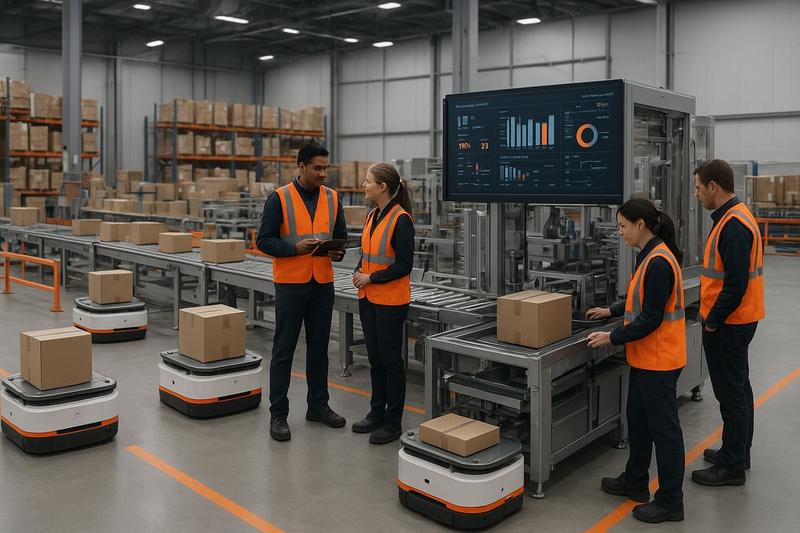
Robotics are at the core of automation in distribution centers, dramatically reducing manual handling and boosting throughput. Autonomous Mobile Robots (AMRs) and Automated Guided Vehicles (AGVs) transport goods independently, improving efficiency and reducing human error.
Goods-to-person systems streamline picking and packing, ensuring the right items reach operators quickly. Conveyor and sortation systems keep products moving smoothly, while 4-way shuttle Automated Storage and Retrieval Systems (ASRS) enable high-density storage and rapid access to inventory.
These advancements allow businesses to handle higher volumes with fewer resources. For more detailed insights on robotics trends and applications, visit Robotics in Modern Warehousing.
Intelligent Software and Data Integration
Software solutions are the brains behind automation in distribution centers. Warehouse Management Systems (WMS) and Warehouse Control Systems (WCS) centralise control, coordinating everything from robots to inventory tracking.
AI and machine learning power predictive analytics, enabling demand forecasting, route optimisation, and smarter inventory management. Digital twin technology allows managers to simulate warehouse layouts and processes, testing changes before implementation. Traffic management software ensures AMRs and AGVs move seamlessly, preventing bottlenecks and delays.
With these tools, businesses gain end-to-end visibility and control, turning data into actionable insights that enhance efficiency.
Automated Packaging and Quality Control
Automated packaging lines are revolutionising how distribution centers prepare orders. These systems form, fill, seal, and label packages at speeds unmatched by manual processes, driving consistency and reducing turnaround times.
AI-powered visual inspection tools scan products for defects or damage, ensuring only quality goods reach customers. This approach minimises returns and builds customer trust. Automation in distribution centers also enables rapid scaling during peak periods, as automated packaging adapts to fluctuating demands with ease.
Consistency and accuracy are critical advantages here, as automation ensures every order meets expectations.
Predictive Maintenance and IoT
Predictive maintenance is a game changer for automation in distribution centers. Sensors and IoT devices continuously monitor equipment health, collecting real-time data for analysis by AI systems.
This proactive approach detects anomalies early, allowing teams to address issues before they cause downtime. Real-time anomaly detection in conveyor systems, for example, helps avoid bottlenecks and costly delays. Predictive maintenance reduces unplanned outages and optimises maintenance schedules, resulting in lower costs and higher system reliability.
As automation becomes more complex, these smart monitoring tools become essential for uninterrupted operations.
Intelligent Automation Solutions by Automate-X
Automate-X delivers tailored automation in distribution centers across logistics, e-commerce, 3PL, FMCG, and more. Their integrated solutions include goods-to-person systems, ASRS, custom conveyors, automated packaging, and robotics, all designed to maximise productivity and space.
Seamless integration with WMS and WCS platforms ensures smooth operations and data-driven decision-making. Businesses benefit from improved scalability, safety, and operational efficiency. Automate-X’s local expertise supports clients in New Zealand and Australia, offering reliable project delivery and comprehensive after-sales support.
By choosing a partner like Automate-X, organisations future-proof their automation in distribution centers and unlock enduring competitive advantages.
Step-by-Step Guide to Implementing Automation in Distribution Centers
Adopting automation in distribution centers is a strategic process that requires careful planning and execution. To ensure a smooth transition and maximise return on investment, businesses should follow a systematic approach. This step-by-step guide walks you through each stage, helping you implement automation in distribution centers with confidence.
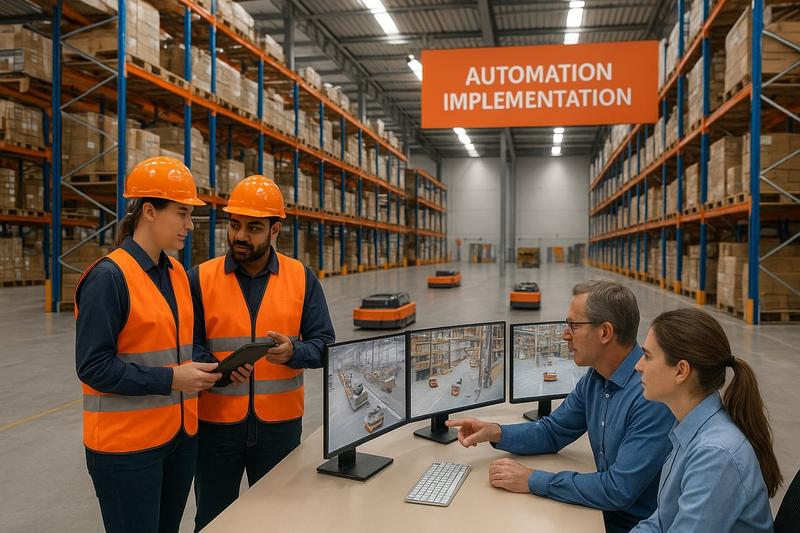
Step 1: Assessing Operational Needs and Readiness
Begin by evaluating your current operations. Map out workflows to identify bottlenecks, inefficiencies, and areas with high error rates. This foundational step is critical for successful automation in distribution centers.
Consider labour shortages, rising demand, and business growth objectives. Review your existing technology stack, including warehouse management systems and data infrastructure, to determine compatibility with new automation solutions.
Engage with stakeholders, from floor staff to leadership, to gather insights and ensure alignment. This assessment helps you prioritise automation investments that address your most pressing operational challenges.
Step 2: Selecting the Right Automation Solutions
Once operational needs are clear, match automation technologies to specific business goals. Evaluate options such as Autonomous Mobile Robots, Automated Storage and Retrieval Systems, and advanced Warehouse Management Systems for your distribution center.
Key considerations include scalability, flexibility, and ease of integration with current systems. Assess potential vendors for their ability to customise solutions, provide local support, and futureproof your investment.
Create a shortlist of automation partners that align with your strategic vision. This stage ensures your distribution center’s automation journey is tailored and sustainable.
Step 3: System Design and Simulation
Designing your automation in distribution centers requires accurate modelling and scenario planning. Use digital twin technology to simulate facility layouts, material flows, and peak period demands.
Simulation allows you to test different configurations, identify inefficiencies, and estimate performance gains before committing to physical changes. For deeper insights, consider the 5 Advantages of Automation Simulation, which highlight how simulation reduces risk and speeds up decision-making.
Work collaboratively with internal teams and automation experts to refine your design, ensuring it meets operational requirements and can adapt to future growth.
Step 4: Implementation and Integration
Careful planning is essential for a successful rollout of automation in distribution centers. Decide whether to deploy solutions in phases or as a full-scale transformation, depending on your risk tolerance and business needs.
Integrate new automation systems with existing WMS, ERP, and IT infrastructure. Effective change management is vital, so invest in workforce training to build confidence and competence with new technologies.
Monitor progress closely, resolve integration issues promptly, and maintain open communication with all stakeholders to ensure a smooth transition and minimal disruption.
Step 5: Optimisation and Continuous Improvement
After initial deployment, focus on optimising automation in distribution centers for peak performance. Leverage real-time data and analytics to fine-tune processes, identify new efficiencies, and track key performance indicators.
Establish proactive maintenance routines and plan for regular system upgrades. Continuous improvement is crucial—measure ROI through productivity, accuracy, and cost savings, and adjust strategies as your business evolves.
By following these steps, your distribution center can not only adapt to rapid industry change but thrive in an increasingly automated landscape.
Maximising the Benefits of Automation in Distribution Centers
The rapid evolution of automation in distribution centers is transforming the way businesses operate and compete. By harnessing cutting-edge technologies, organisations can unlock unprecedented levels of efficiency, accuracy, and customer satisfaction. The following sections explore the core benefits that automation in distribution centers delivers today and will continue to expand in 2026.
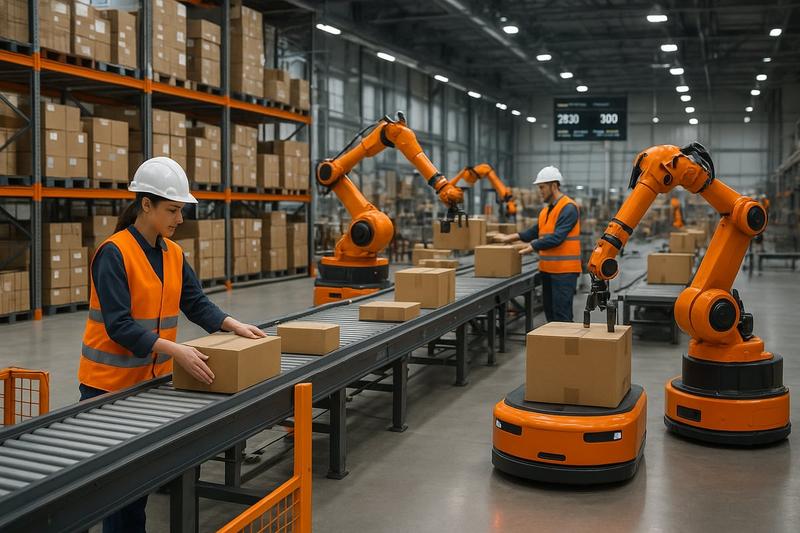
Enhancing Speed, Accuracy, and Productivity
Automation in distribution centers significantly accelerates order processing and boosts fulfilment rates. Robotic picking and automated sortation systems can reduce order cycle times from hours to minutes. By automating repetitive tasks, businesses see a marked increase in throughput and inventory accuracy.
Key improvements include:
- Faster picking and packing with goods-to-person systems
- Reduced picking errors due to machine precision
- Optimised space utilisation and inventory tracking
According to Distribution Industry Statistics 2025, early adopters of automation in distribution centers have reported up to a 35 percent decrease in picking errors and a 40 percent improvement in order accuracy. This data demonstrates how automation in distribution centers drives measurable gains in operational performance.
Workforce Transformation and Safety
The adoption of automation in distribution centers is reshaping workforce roles for the better. By taking over repetitive or physically demanding tasks, robots and automated systems help reduce workplace injuries and fatigue.
Employees are empowered to focus on value-added activities such as problem-solving and process optimisation. Workforce management tools further support optimal scheduling and performance tracking, creating a safer and more engaging work environment.
This transformation not only improves morale but also helps attract and retain talent in a highly competitive market.
Cost Reduction and Scalability
One of the most compelling advantages of automation in distribution centers is the reduction of operational costs. Automated systems lower labour expenses and optimise energy consumption, contributing to significant savings over time.
Businesses benefit from:
- Modular automation solutions that scale with demand
- Reduced downtime through predictive maintenance
- Flexible operations to manage seasonal peaks
Case studies show that companies can expand their operations with minimal disruption, maintaining high productivity even as order volumes fluctuate.
Customer Experience and Competitive Advantage
Automation in distribution centers directly enhances the customer experience by enabling faster, more accurate order fulfilment. Real-time inventory visibility ensures that stock levels are up-to-date, reducing the risk of stockouts and delays.
With improved speed and accuracy, businesses can exceed customer expectations and build brand loyalty. Staying ahead with advanced automation technologies secures a strong competitive advantage in the evolving logistics landscape.
In summary, automation in distribution centers is a strategic investment that pays dividends across every aspect of operations, from productivity and safety to cost efficiency and customer satisfaction.
Overcoming Challenges in Distribution Center Automation
Adopting automation in distribution centers brings immense benefits, yet it also introduces unique challenges that need strategic solutions. From integrating new systems to addressing human factors, overcoming these hurdles is essential for operational success. Let us explore the most pressing issues and practical ways to tackle them.
Inside Walmart's Automated Warehouse of the Future
Integration and Interoperability Issues
One of the first hurdles with automation in distribution centers is ensuring seamless integration between legacy systems and new automation assets. This often involves connecting Warehouse Management Systems, robotics, and IoT devices that may use different protocols or data formats.
Key strategies include:
- Adopting open standards for software and hardware interfaces
- Investing in middleware or integration platforms to bridge gaps
- Prioritising flexible, modular solutions for future scalability
Proper planning and collaboration with experienced providers can minimise disruptions and maximise return on investment as automation evolves.
Data Security and Cybersecurity Risks
With the rise of connected devices and AI-driven operations, data security is a growing concern for automation in distribution centers. Protecting sensitive inventory, customer, and operational data requires robust network infrastructure and cybersecurity measures.
Best practices involve:
- Implementing multi-factor authentication and access controls
- Regular security audits and vulnerability testing
- Encrypting data both at rest and in transit
For more insights on how artificial intelligence is shaping secure logistics environments, see Artificial Intelligence in Logistics.
Change Management and Workforce Adoption
Introducing automation in distribution centers can lead to resistance or uncertainty among staff. Employees may worry about job security or struggle to adapt to new technologies.
Successful change management includes:
- Transparent communication about the purpose and benefits of automation
- Training and upskilling programs to empower employees
- Involving staff in the transition process to build engagement
When teams understand the value of automation and have the right support, adoption rates and morale improve significantly.
Cost, ROI, and Project Justification
Investing in automation in distribution centers requires a clear business case. Upfront costs can be substantial, but long-term savings and efficiency gains are compelling.
Steps to justify investment:
- Calculate potential ROI using metrics like reduced labour, increased throughput, and fewer errors
- Explore government incentives, grants, or financing options
- Benchmark against industry leaders for realistic payback periods
A real-world example can be found in Hypercity's Automation Success Story, which demonstrates measurable cost reduction and productivity gains from automation.
Maintenance and System Reliability
Ongoing maintenance is crucial to sustaining automation in distribution centers. Unplanned downtime can quickly erode the benefits of advanced systems.
To ensure reliability:
- Establish predictive maintenance programs using sensors and analytics
- Partner with reliable vendors for prompt support and spare parts
- Use automated alerts and remote diagnostics for critical assets
By proactively addressing maintenance, businesses keep their automation running smoothly and protect their investment.
The Future of Distribution Center Automation: Trends and Predictions for 2026 and Beyond
The next few years will bring unprecedented change as automation in distribution centers accelerates. Businesses must understand emerging trends and technologies to stay ahead in a rapidly shifting landscape. By 2026, distribution centers will look vastly different, shaped by innovations that drive efficiency, sustainability, and competitive advantage.
AI and Machine Learning Advancements
AI and machine learning are set to redefine automation in distribution centers by 2026. These technologies will power real-time decision-making, from demand forecasting to autonomous operations. Large language models will enable systems to interpret complex data, optimise workflows, and adapt to unexpected changes.
Key developments include AI-driven inventory management, predictive analytics for supply chain resilience, and smarter robots that learn on the job. According to Key Warehouse Automation Trends in 2026, intelligent automation will transform logistics by improving accuracy and responsiveness. Businesses leveraging AI will be able to anticipate trends, reduce costs, and deliver a superior customer experience.
Autonomous Vehicles, Drones, and Next-Gen Robotics
Autonomous vehicles and drones are rapidly changing the face of automation in distribution centers. Intralogistics fleets of self-driving forklifts and delivery drones will streamline material movement and last-mile delivery. Next-generation robotics will offer greater flexibility, handling a wider variety of tasks and adapting to new product types or layouts.
Drones will be used for inventory checks and rapid order fulfilment, while collaborative robots, or cobots, will work alongside humans to optimise throughput. For more insight into these developments, see Future of Ecommerce Fulfillment, which explores how automation and AI are enhancing scalability and efficiency in modern warehouses.
Hyperconnected and Data-Driven Operations
Hyperconnectivity will be at the core of automation in distribution centers by 2026. IoT sensors, edge computing, and 5G networks will enable real-time monitoring and control, linking every asset and process. Data from conveyors, robots, and inventory systems will feed into unified platforms, providing actionable insights for managers.
Predictive analytics will allow proactive supply chain management, identifying bottlenecks before they disrupt operations. Digital twins will simulate processes, test scenarios, and fine-tune strategies. This interconnected environment will maximise efficiency and support fast, data-driven decisions.
Sustainability and Green Automation
Sustainability will be a defining feature of automation in distribution centers. Companies will invest in energy-efficient automation solutions, such as low-power robotics, LED lighting, and smart HVAC systems. Solar panels and battery storage will help reduce reliance on the grid, while electric vehicles will cut emissions from internal transport.
Circular supply chains will gain traction, with automation supporting waste reduction and resource reuse. Intelligent sorting and packaging systems will minimise material usage, supporting both cost savings and environmental goals. Sustainable automation will not only help the planet but also improve brand reputation and compliance.
Human-Machine Collaboration
The future of automation in distribution centers is not just about machines. Human-machine collaboration will become increasingly important, with cobots and augmented reality tools empowering staff. Routine, repetitive tasks will be automated, freeing workers to focus on value-added activities like quality control and process improvement.
Training and upskilling will be essential as roles evolve. Augmented reality headsets and wearable tech will assist with complex tasks and provide real-time information. This partnership between people and technology will drive productivity, safety, and job satisfaction.
Evolving Business Models and Competitive Landscape
As automation in distribution centers matures, business models will evolve. The rise of “as-a-service” automation and outcome-based contracts will lower entry barriers and allow companies to scale technology investments flexibly. Partnerships between technology providers and logistics firms will become more common, fostering innovation.
New entrants will disrupt traditional players, while regulatory changes and ethical considerations will shape how automation is implemented. Companies that adapt quickly and invest in the right technologies will maintain a competitive edge, ensuring long-term success in a dynamic market.
As you’ve seen throughout this guide, automation is rapidly transforming distribution centers and will be crucial for success by 2026. By embracing intelligent solutions like robotics, warehouse software, and seamless system integration, you can streamline operations, boost productivity, and position your business for scalable growth. If you’re ready to move beyond manual processes and take the next step, now’s the perfect time to learn how leading organisations are gaining a competitive edge.
Start Your Automation Journey and discover how tailored automation can unlock new levels of efficiency and reliability in your warehouse operations.