

Guide to Automation in Pharma: Trends and Insights 2026
Share on
The pharmaceutical sector is undergoing a rapid transformation, driven by technological advances and shifting global expectations. In today’s environment, automation in pharma is not just a trend but a critical strategy for companies seeking to remain competitive amidst post-pandemic demands and regulatory pressures.
This guide offers a comprehensive overview, focusing on the evolution of automation, its core benefits, and the most influential trends shaping the industry through 2026. Discover how leading organisations are leveraging emerging technologies, implementing effective strategies, and preparing for the future. Equip your team with the essential insights needed to stay ahead in this dynamic field.
The Evolution of Automation in Pharma
The journey of automation in pharma has radically transformed the sector over recent decades. What began as a series of manual, labour-intensive processes has evolved into a sophisticated landscape defined by robotics, digitalisation, and intelligence-driven manufacturing. This transformation is not just about efficiency but also about meeting the rising expectations for quality, speed, and compliance.
Historical Context and Drivers of Change
Decades ago, pharmaceutical production lines relied heavily on manual tasks, from weighing ingredients to filling and labelling vials. Human operators played a central role, and while this approach provided flexibility, it also introduced considerable risk. Issues such as human error, contamination, and inconsistent results were common challenges in the pre-automation era.
As the global demand for medicines surged, the need for more reliable, scalable, and traceable solutions became critical. Several factors accelerated the adoption of automation in pharma:
- Stringent regulatory requirements: Regulatory agencies imposed stricter standards for quality, documentation, and traceability.
- Globalisation: Expanding supply chains required standardised and reproducible processes.
- Speed and accuracy: The race to bring new therapies to market highlighted the limitations of manual production.
- Pandemic pressures: COVID-19 served as a major catalyst, pushing companies to automate rapidly to meet urgent demand and ensure continuity with minimal staff on site.
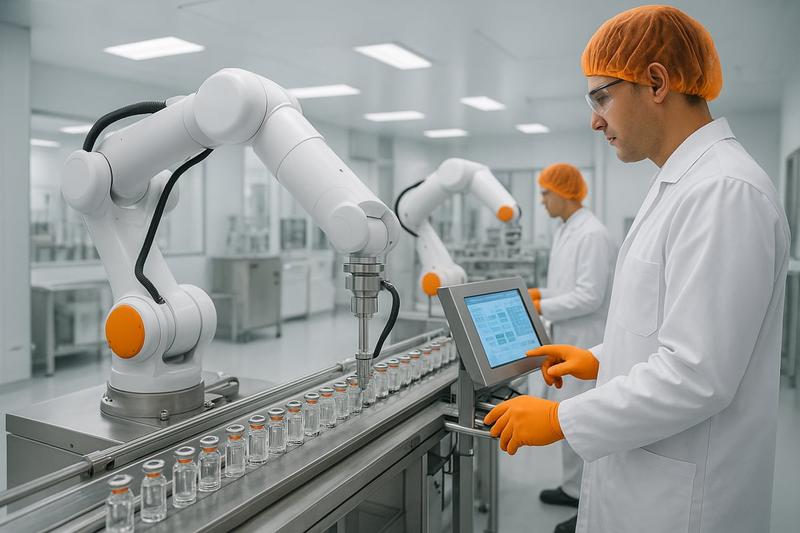
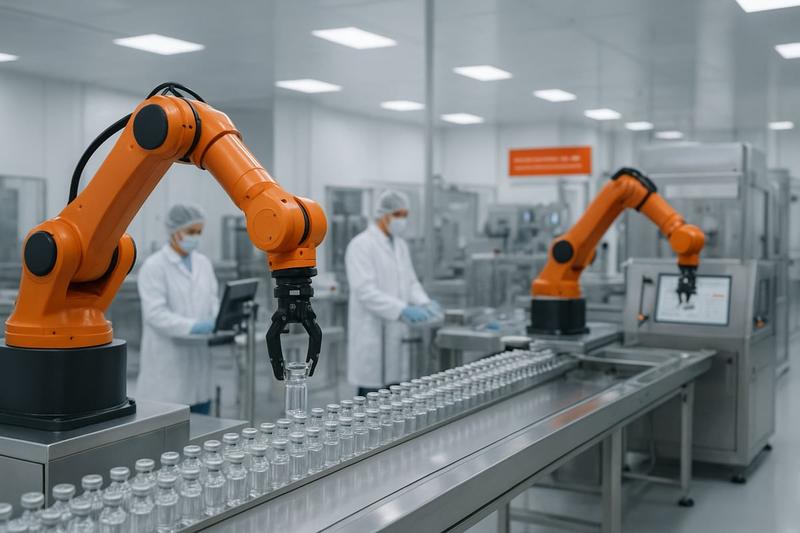
A striking example of this evolution is the transition from manual vial filling to fully robotic systems. These automated lines not only increase throughput but also minimise contact, thereby reducing contamination risks. According to ReAgent, automation in pharma has been proven to reduce human error and limit contamination, which is crucial for patient safety and regulatory compliance.
In today's landscape, digital transformation has moved from the factory floor to the boardroom agenda. Pharma leaders now prioritise investments in automation in pharma, recognising that agility and compliance are essential for long-term competitiveness.
Core Technologies Powering Pharma Automation
The backbone of modern automation in pharma consists of several interlinked technologies, each driving efficiency and quality to new heights.
- Robotics: Automated filling, packaging, and assembly lines are now standard in many facilities. Robots handle repetitive, high-precision tasks, consistently outperforming manual methods in speed and reliability.
- AI and Machine Learning: By leveraging predictive analytics and process optimisation, AI tools identify inefficiencies and flag quality concerns before they escalate. For a deeper dive into these trends, the Pharmaceutical Robots Market Report provides valuable insights into the growth and applications of robotics in pharmaceutical environments.
- IoT and Smart Sensors: Real-time monitoring of equipment and environmental conditions enables proactive maintenance and rapid response to deviations, which is vital for sterility.
- Advanced Analytics: Data-driven decision-making is now possible at every stage, from raw material intake to final product release.
A practical example is the use of automated vision systems for quality control. These systems inspect thousands of units per hour, spotting defects or anomalies with a level of consistency unattainable by human inspectors. When integrated, these technologies ensure automation in pharma meets and exceeds the rigorous standards expected by 2026.
In summary, the integration of robotics, AI, IoT, and analytics is no longer optional. Automation in pharma is the foundation upon which future-ready, compliant, and innovative manufacturing is being built.
Key Trends in Pharma Automation for 2026
The landscape of automation in pharma is evolving at a rapid pace, with several key trends shaping the industry’s future. Companies are embracing advanced technologies to remain competitive, drive efficiency, and meet regulatory demands. Let us explore the major trends set to define automation in pharma by 2026.

Flexible and Modular Manufacturing Systems
Pharmaceutical manufacturers are increasingly shifting to high-mix, low-volume production models. This trend demands flexibility and adaptability on the production floor. Modular robotics and reconfigurable lines are now central to automation in pharma, enabling companies to pivot quickly when product specifications or market demands change.
For example, solutions like ESSERT’s MicroFactory offer modular workstations that can be rearranged to suit various tasks. This approach minimises downtime and supports faster product transitions. The ability to customise automation in pharma facilities is crucial for responding to emerging therapies and personalised medicines.
Flexible manufacturing not only improves responsiveness but also optimises resource use. Companies adopting modular automation in pharma can scale operations effectively, reduce waste, and maintain high-quality standards across a diverse product portfolio.
End-to-End Digitalisation and Data Integration
Digital transformation is no longer optional for automation in pharma. End-to-end digitalisation connects every stage of production, from raw material intake to final packaging. Manufacturing Execution Systems (MES) and full digital traceability are now core requirements.
Real-time data collection and advanced analytics support compliance, streamline reporting, and enable rapid decision-making. Automated systems create meticulous records, ensuring robust documentation for audits. Data integrity and connectivity are now critical for meeting evolving regulatory standards.
Industry leaders are investing in integrated digital platforms to future-proof their operations. For more on the direction these technological advancements are heading, see the Top Future Trends in Pharma 2026. By adopting connected systems, companies can achieve seamless automation in pharma, unlocking new levels of transparency and operational excellence.
Advanced Quality Control and Compliance Automation
Quality control is at the heart of automation in pharma. Automated visual inspection, in-line testing, and digital batch records are now the norm. These systems use AI-driven anomaly detection to identify deviations instantly, reducing the risk of defective products reaching the market.
Robots standardise inspection protocols, ensuring each product meets strict criteria. Predictive maintenance powered by machine learning minimises unplanned downtime. Automation in pharma also supports robust compliance, with digital audit trails and automated documentation for regulatory review.
By enhancing consistency and traceability, automated quality control systems help companies maintain high standards and reduce compliance risks. This proactive approach is essential for meeting Good Manufacturing Practice (GMP) requirements and building trust with regulators and patients alike.
Lab Automation and Accelerated R&D
Automation in pharma is revolutionising laboratory environments and research workflows. Automated sample preparation, high-throughput screening, and robotic assay development are now commonplace. These technologies dramatically shorten drug discovery cycles and increase the pace of innovation.
Automated compound synthesis and data analysis allow scientists to screen vast libraries of compounds efficiently. This not only accelerates the identification of promising drug candidates but also improves data accuracy. Automation in pharma labs minimises manual errors, freeing researchers to focus on high-value tasks and creative problem-solving.
The integration of automation in pharma R&D supports a culture of continuous improvement. By leveraging these tools, companies can bring new therapies to market faster and respond to emerging health challenges with agility.
Supply Chain and Logistics Automation
Automation in pharma extends beyond the production line to the entire supply chain. Automated warehouse management, inventory tracking, and distribution systems ensure products are delivered safely and on time. Robotics are used for picking, packing, and managing cold-chain logistics, which is essential for temperature-sensitive products.
Automated logistics streamline distribution networks, reducing the risk of stockouts and delays. Real-time inventory monitoring enables proactive replenishment and minimises waste. As a result, automation in pharma supply chains is a key differentiator, supporting reliability and customer satisfaction.
Companies investing in end-to-end supply chain automation in pharma are better positioned to meet global demand surges and adapt to market fluctuations. This strategic focus enhances resilience and ensures patients receive critical medications without interruption.
Sustainability and Resource Optimisation
Sustainability is becoming a top priority for automation in pharma. Energy-efficient automation systems and waste minimisation strategies are now built into facility design. Automation supports sustainable manufacturing practices by optimising resource use and reducing environmental impact.
Regulatory and consumer pressures are driving the adoption of green technologies. Automation in pharma enables precise control over processes, helping companies meet strict environmental standards. The move towards resource optimisation not only supports compliance but also reduces costs and enhances corporate reputation.
By integrating sustainability into automation in pharma, organisations can achieve long-term growth while fulfilling their responsibility to the environment and society. This trend is set to accelerate as industry standards continue to evolve.
Implementation Strategies: Building the Automated Pharma Facility
Adopting automation in pharma is a transformative journey that requires careful planning, collaboration, and a relentless focus on quality. To build a future-ready facility, companies must align their automation strategy with business goals, regulatory demands, and evolving technology landscapes. Below, we break down the essential steps for successful implementation.
Planning and Design Considerations
Effective planning is the cornerstone of any successful automation in pharma initiative. Organisations must first assess their readiness, set clear automation objectives, and define measurable outcomes. This process starts with a thorough evaluation of existing workflows, infrastructure, and production requirements.
Key design considerations include:
- Facility layout optimised for smooth material flow and sterility.
- Scalability to accommodate future product lines or volume increases.
- Selection of automation technologies that match product characteristics and regulatory needs.
A table can help summarise these elements:
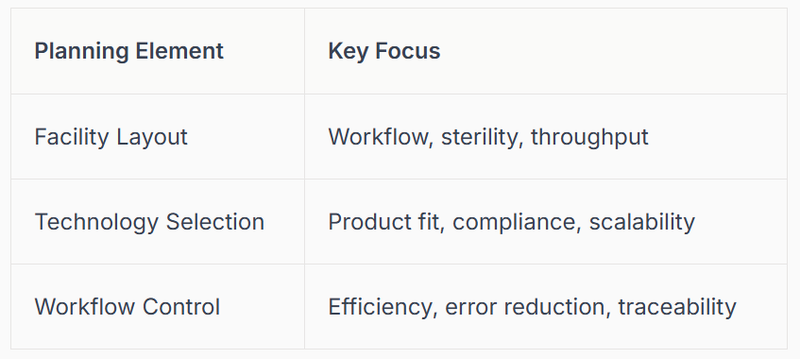
For example, workflow control and equipment choice are critical. A poorly planned layout can lead to bottlenecks and contamination risks, whereas a well-designed facility streamlines operations and minimises errors.
Strategic planning also ensures return on investment and future scalability. Utilising automation simulation during the planning phase allows teams to test layouts and processes virtually, reducing costly mistakes. For more on this, see the 5 advantages of automation simulation.
Automation in pharma requires not just technical decisions but also a commitment to continuous improvement and adaptability. With clear goals and robust planning, companies set the stage for long-term success.
Integration and Change Management
Introducing automation in pharma facilities often involves blending new technologies with existing systems. Integration should be approached methodically, starting with pilot lines before scaling to full production. This stepwise approach helps identify risks and fine-tune processes without disrupting ongoing operations.
Successful integration also depends on people. Staff training is essential to ensure everyone understands how to operate and maintain new systems. Change management strategies, including regular communication and hands-on workshops, can ease transitions and build confidence across teams.
Collaboration with trusted automation vendors and technology partners is another key factor. These experts can provide tailored solutions and support, ensuring that integration aligns with regulatory standards and production goals.
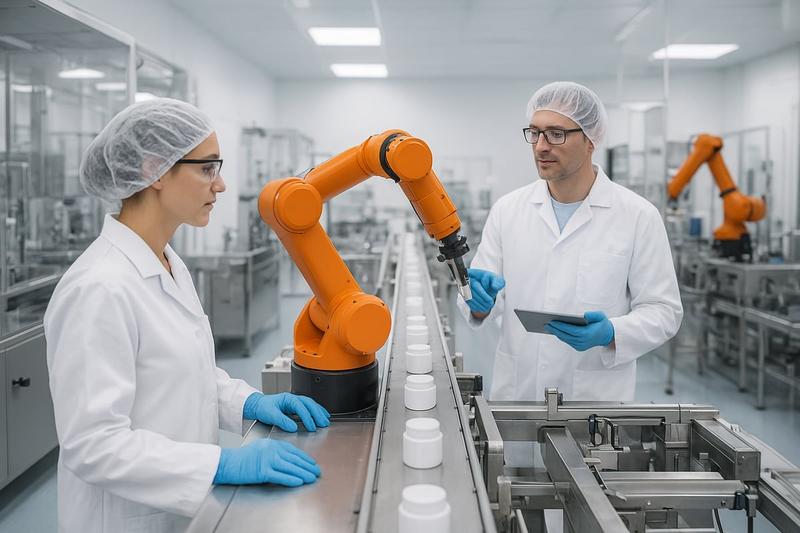
Human-robot collaboration is emerging as a future model. By leveraging the strengths of both, pharma companies can achieve higher productivity, improved safety, and greater flexibility. Automation in pharma is not just about machines but about empowering people to work smarter and innovate faster.
Safety, Sterility, and Contamination Control
Maintaining the highest levels of safety and sterility is non-negotiable in pharmaceutical environments. Automation in pharma plays a pivotal role in reducing contamination risks and ensuring compliance with stringent quality standards.
Automated cleaning systems, real-time environmental monitoring, and advanced material handling solutions drastically reduce human error. For instance, automated cleanroom material handling minimises direct contact, keeping sensitive products free from contamination.
Statistics from industry leaders highlight that automation in pharma can significantly decrease the risk of contamination and improve overall safety outcomes. By integrating these technologies, facilities not only protect products and patients but also enhance operational efficiency and regulatory compliance.
Benefits and Impact of Automation in Pharma
The benefits of automation in pharma are transforming the industry, driving measurable gains across every facet of operations. From streamlined production to improved safety, automation is reshaping how pharmaceutical companies compete, comply, and innovate.
Enhanced Efficiency and Productivity
Automation in pharma dramatically increases efficiency by reducing manual intervention, eliminating bottlenecks, and streamlining workflows. Automated systems can operate continuously, leading to reduced downtime and consistent output.
- Robots perform repetitive tasks such as vial filling and packaging with high speed and accuracy.
- Automated scheduling and production tracking optimise resource allocation.
- Predictive maintenance minimises unplanned stoppages.
By leveraging automation in pharma, companies can achieve higher throughput and meet growing market demands. This efficiency is a key factor in maintaining competitiveness, especially as global supply chains become more complex.
Improved Quality and Regulatory Compliance
Maintaining stringent quality standards is critical in pharma. Automation in pharma ensures consistency by reducing human error and variability in production processes. Automated quality control systems use vision technologies and sensors to inspect products in real time, detecting defects or deviations before products leave the facility.
- Digital batch records and automated compliance checks create robust audit trails.
- AI-driven monitoring flags anomalies for immediate corrective action.
- Standardised processes support Good Manufacturing Practice (GMP) adherence.
Ultimately, automation in pharma fosters a culture of compliance, making it easier to satisfy international regulatory requirements and build trust with stakeholders.
Cost Savings and Resource Optimisation
Cost pressures are a constant in the pharmaceutical industry. Automation in pharma delivers savings by minimising manual labour, reducing waste, and enabling optimal use of raw materials. Predictive analytics facilitate just-in-time inventory management, decreasing storage costs and stockouts.
- Lower operational costs free up budget for R&D and innovation.
- Energy-efficient systems reduce utilities expenses.
- Streamlined processes cut down on material waste.
According to recent Pharmacy Automation Market Analysis, investment in automation in pharma is growing rapidly due to these tangible financial benefits, positioning companies for sustained profitability.
Accelerated Time-to-Market and Innovation
Speed is vital when bringing new drugs to market. Automation in pharma shortens development cycles by automating laboratory workflows, clinical trial data processing, and manufacturing scale-up. This agility enables companies to respond quickly to emerging health challenges and shifting market needs.
- Automated high-throughput screening accelerates compound discovery.
- Digital platforms streamline documentation and regulatory submissions.
- Flexible manufacturing lines allow rapid product changeovers.
By adopting automation in pharma, organisations can launch new therapies faster, supporting both public health and business growth.
Increased Safety for Workers and Patients
Safety is paramount in pharmaceutical manufacturing. Automation in pharma minimises the risk of human exposure to hazardous substances and reduces workplace injuries associated with repetitive or heavy tasks.
- Automated material handling in cleanrooms maintains sterility and reduces contamination risk.
- Remote monitoring and control lower direct contact with dangerous processes.
- Consistent protocols protect both workers and end patients.
As automation in pharma continues to evolve, the industry can expect even greater advances in safeguarding people and products.
Real-World Examples and Case Studies
Pharmaceutical companies worldwide are leveraging automation in pharma to transform their operations. The following real-world case studies demonstrate how leading organisations are unlocking efficiency, quality, and innovation through targeted automation investments.
How to Automate Testing in Pharma Industry - Automation Solution for Testing Autoinjector, Pens&PFS
Automated Drug Manufacturing and Packaging
One of the most significant shifts driven by automation in pharma is the adoption of robotic assembly and packaging lines. For example, parenteral device manufacturers have integrated automated filling, inspection, and secondary packaging machines to handle high volumes with minimal human intervention.
Key benefits include:
- Consistency in fill volumes and packaging integrity
- Rapid throughput for large batch sizes
- Enhanced compliance with regulatory standards
By deploying advanced robotics, pharma firms have reduced the risk of contamination and improved product traceability. To explore similar robotics solutions, see the industrial robotics solutions overview.
Lab Automation Driving R&D Innovation
Lab automation in pharma is accelerating drug discovery and research. Automated high-throughput screening platforms now process thousands of samples simultaneously, greatly reducing manual errors and increasing speed.
A typical setup includes:
- Robotic arms for sample preparation and handling
- Automated compound synthesis systems
- Integrated data analysis software
This approach enables research teams to identify promising drug candidates faster and with greater confidence. The integration of automation in pharma labs directly translates to shorter development cycles and more innovative therapies reaching the market.
Quality Control and Data Management Automation
Quality control is a critical area where automation in pharma delivers measurable impact. Automated visual inspection systems, paired with digital data entry tools, ensure each batch meets stringent criteria. AI-driven anomaly detection software rapidly flags deviations, streamlining compliance tracking.
Some notable features:
- Real-time monitoring of product quality
- Automated documentation for audit readiness
- Machine learning algorithms supporting predictive analytics
For a deeper dive into how AI and machine learning support quality in manufacturing, review machine learning in manufacturing.
Supply Chain and Distribution Automation
End-to-end supply chain automation in pharma is driving reliability and responsiveness. Automated inventory management systems track stock levels, while robotics handle warehouse picking and cold-chain logistics for temperature-sensitive products.
Improvements seen include:
- Fewer stockouts and delays
- Real-time visibility of inventory movement
- Enhanced accuracy in order fulfilment
By integrating these solutions, pharma companies ensure that medicines reach patients safely and efficiently, strengthening their competitive position.
Future Outlook: The Road to 2026 and Beyond
The next few years will see the landscape of automation in pharma evolve rapidly. As the sector embraces digital transformation, new technologies and approaches are reshaping how medicines are developed, manufactured, and delivered. The journey to 2026 promises both exciting opportunities and significant challenges for pharma leaders.
The Rise of Smart Pharma Facilities
By 2026, smart pharma facilities will become the new benchmark. These plants are fully connected, with every machine, sensor, and system integrated for seamless communication. AI-driven analytics and IoT devices will enable predictive maintenance, adaptive manufacturing, and real-time process optimisation.
Digital twins—virtual replicas of entire facilities—will support scenario planning and rapid troubleshooting. As highlighted by Digital Transformation in Pharma Statistics, AI and data integration are accelerating the adoption of automation in pharma. This shift empowers companies to make faster, data-backed decisions and remain competitive.
Personalised Medicine and Adaptive Manufacturing
Automation in pharma is unlocking the potential for personalised medicine. As demand grows for tailored therapies and small-batch production, flexible manufacturing lines will be essential. Adaptive systems can switch between products quickly, supporting the delivery of bespoke treatments.
These advancements reduce time-to-market for novel drugs and enable more responsive supply chains. Automation in pharma ensures that patient needs are met efficiently, even as product complexity increases.
Regulatory Evolution and Global Standards
Regulatory frameworks are evolving to keep pace with automation in pharma. Authorities are placing greater emphasis on data integrity, cybersecurity, and transparent processes. Real-time compliance reporting and digital batch records are becoming standard, reducing the risk of errors and non-compliance.
Global standards for automated systems will likely become more stringent. Companies must invest in robust data management and security practices to meet these requirements and maintain trust.
Workforce Transformation and Skills Development
The future of automation in pharma will see significant changes in workforce roles. Manual tasks will give way to positions focused on system oversight, data analysis, and process optimisation. Upskilling and cross-disciplinary training will become essential for staff to thrive in highly automated environments.
Human-machine collaboration will define this new era. Employees will leverage automation in pharma to boost productivity and focus on higher-value work, while technology handles repetitive or hazardous tasks.
Key Challenges and Opportunities Ahead
Despite the promise, automation in pharma faces hurdles such as high upfront costs, integration complexity, and evolving regulations. However, these challenges also present opportunities. Organisations that invest strategically in automation in pharma can achieve a competitive edge, improve patient outcomes, and drive sustainable growth.
Industry-wide adoption is expected to rise as technology matures and the benefits become clearer. The road to 2026 will reward those who embrace change, innovate boldly, and commit to ongoing improvement.
As you’ve seen throughout this guide, the future of pharma is being shaped by automation—from intelligent robotics and data-driven compliance to streamlined supply chain operations. If you’re looking to boost productivity, maintain compliance, and keep your competitive edge as industry standards evolve, now is the time to take action. You don’t have to navigate these changes alone. We’re here to help you unlock the full potential of automation and set your organisation up for scalable growth. Ready to take the next step? Start Your Automation Journey