


Essential Guide to Industrial Automation and Robotics 2026
Share on
Industrial automation and robotics are transforming how industries operate, driving a new era of efficiency and innovation worldwide. Across manufacturing and supply chains, these technologies are rapidly solving labour shortages, reducing costly errors, and boosting overall productivity.
This essential guide explores the core concepts, technologies, and strategies shaping industrial automation and robotics in 2026. Business leaders, engineers, and decision-makers will gain actionable insights on key systems, implementation steps, real-world applications, and emerging trends to harness automation’s full potential.
Understanding Industrial Automation and Robotics
Industrial automation and robotics are at the heart of the modern industrial revolution. These technologies are transforming how businesses operate, enabling new levels of efficiency, quality, and competitiveness across sectors.
Defining Industrial Automation
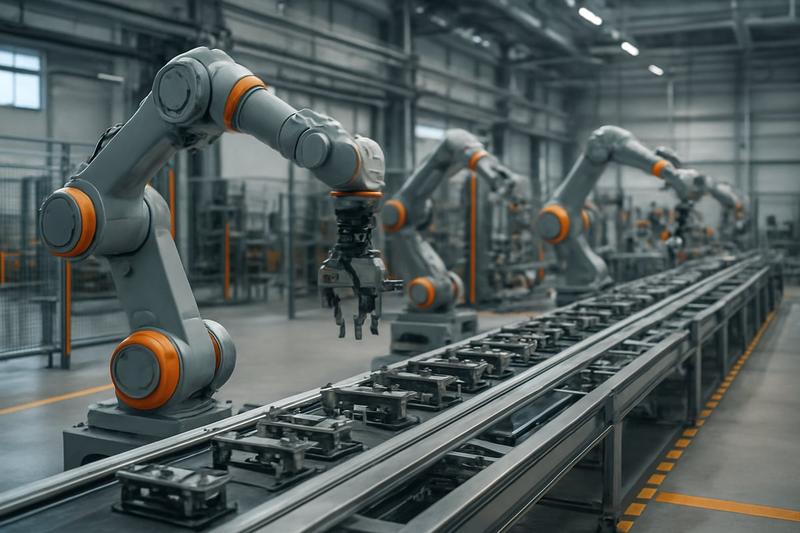
Industrial automation refers to the use of control systems such as programmable logic controllers (PLCs), computers, and software to operate machinery and industrial processes. The main objective is to improve efficiency, reduce human intervention, and minimise operational errors.
There are three main types of automation:
- Fixed automation for high-volume, repetitive tasks.
- Programmable automation suitable for batch production.
- Flexible automation designed for rapid changeovers.
Key benefits include consistent product quality, faster production speeds, lower costs, and reduced manual errors. For example, automated assembly lines in automotive manufacturing can increase productivity by up to 30 percent, demonstrating the tangible impact of industrial automation and robotics in practice.
What is Robotics in Industry?
Robotics in industry is a specialised field of engineering focused on designing, building, and deploying programmable machines that perform specific tasks. While automation covers process control, robotics brings autonomy, adaptability, and precision to task execution.
Industrial robots include:
- Robotic arms for welding and assembly
- Mobile robots for materials transport
- Collaborative robots (cobots) for safe human interaction
For instance, robotic systems handle welding and painting in car manufacturing with unmatched accuracy. To explore the range of technologies and real-world deployments, see the Industrial robotics solutions overview. As a key pillar of industrial automation and robotics, these solutions are redefining production capabilities worldwide.
Core Components and Technologies
At the core of industrial automation and robotics are several essential components:
- Sensors detect position, temperature, and quality metrics.
- Actuators convert signals into mechanical movement.
- Controllers such as PLCs manage operations and logic.
- Software integration connects machines with business systems.
Industrial computers and edge devices enable fast processing on-site, while communication protocols like Ethernet and wireless ensure seamless data flow. Machine vision and artificial intelligence play a growing role, allowing robots to "see" and make decisions. For example, IoT-connected sensors can predict maintenance needs, helping to avoid downtime and optimise performance in industrial automation and robotics environments.
Evolution and Milestones in Automation and Robotics
The journey of industrial automation and robotics began with simple mechanisation, evolving through milestones like computer numerical control (CNC) machines and the first programmable logic controllers. The introduction of the first industrial robots in the 1960s marked a turning point, allowing automation of tasks previously done only by humans.
Today, Industry 4.0 brings together IoT, AI, and advanced analytics, powering smart factories and digital transformation. Modern fulfilment centres have moved from manual warehousing to fully automated systems, exemplifying how industrial automation and robotics are continuously raising the bar for productivity and innovation.
Relationship Between Automation and Robotics
Automation and robotics work hand in hand to streamline industrial operations. Automation delivers process control and consistency, while robotics adds flexibility and dexterity, tackling tasks that require precision or adaptation.
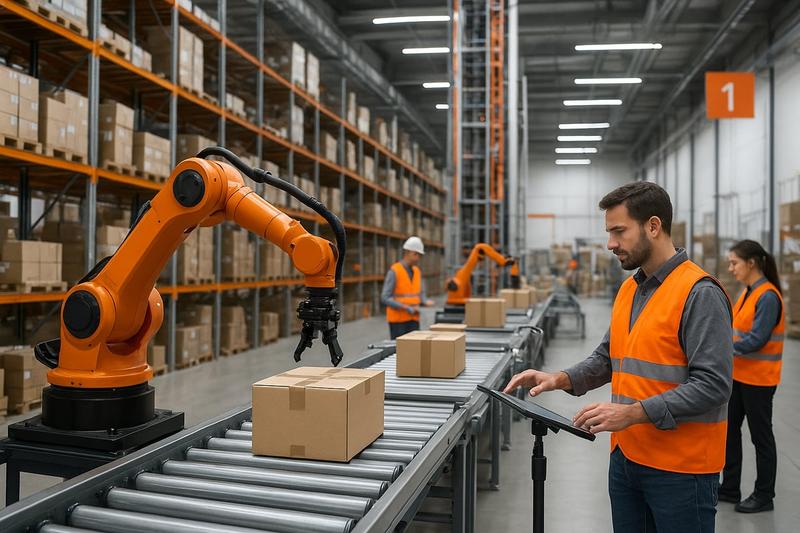
A typical example is the integration of conveyor systems with robotic picking arms, combining the strengths of both approaches to achieve greater efficiency. As industrial automation and robotics become more interconnected, businesses can unlock new opportunities for growth and innovation.
Key Types of Industrial Robots and Their Applications
Industrial automation and robotics encompass a diverse range of robot types, each engineered to tackle specific industrial challenges. By understanding these categories, organisations can make informed decisions about which solutions best fit their operations. The integration of these robots is transforming productivity and efficiency across sectors.
Major Robot Types in Industry
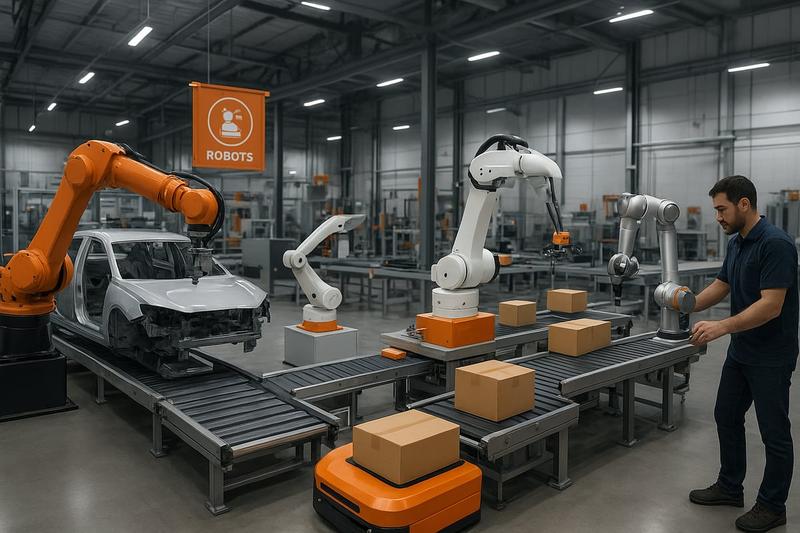
The backbone of industrial automation and robotics lies in several core robot types. Articulated robots, with their multi-jointed arms, are widely used for welding and assembly tasks. SCARA robots excel at high-speed pick-and-place operations due to their selective compliance. Delta robots, known for their spider-like design, are ideal for rapid sorting and packaging.
Cartesian robots operate along linear axes, making them perfect for CNC machining and 3D printing. Autonomous mobile robots (AMRs) handle internal logistics by navigating factory floors independently. Each of these robots plays a vital role in streamlining workflows and boosting throughput.
Collaborative Robots (Cobots)
Collaborative robots, or cobots, represent a significant advancement in industrial automation and robotics. Unlike traditional robots, cobots are designed with advanced safety features, allowing them to work safely alongside humans without extensive guarding.
Cobots are particularly valuable in electronics assembly, machine tending, and quality inspection, where flexibility and gentle handling are required. For instance, in electronics manufacturing, cobots can assemble delicate components without causing damage. Their user-friendly interfaces and rapid redeployment capabilities make them an accessible entry point for businesses looking to embrace automation.
Automated Guided Vehicles (AGVs) and AMRs
Automated Guided Vehicles (AGVs) and Autonomous Mobile Robots (AMRs) are essential for material transport in modern facilities. AGVs follow fixed paths guided by wires, magnets, or visual markers, making them suitable for repetitive routes. In contrast, AMRs use sensors and AI for dynamic navigation, adapting to changing environments and obstacles.
These systems are widely deployed in warehouses, distribution centres, and production lines, optimising transport efficiency and reducing manual handling. For a detailed explanation of AMRs and their role in industrial automation and robotics, see What is an Autonomous Mobile Robot (AMR)?. The adoption of AGVs and AMRs is driving scalable, flexible logistics solutions.
Specialized Robots for Industry Sectors
Industrial automation and robotics are tailored to meet the unique requirements of different sectors. In the food and beverage industry, hygienic robots handle packaging and palletising under strict cleanliness standards. Pharmaceutical environments use sterile robots for drug compounding and handling, ensuring safety and compliance.
Automotive manufacturing relies on heavy-duty robots for welding, painting, and assembly, while logistics operations benefit from robots dedicated to picking, sorting, and shipping. Each sector leverages specialised robotics to meet regulatory demands, improve efficiency, and maintain product integrity.
Real-World Applications and Case Studies
Industrial automation and robotics are now deeply embedded in global operations. In automotive manufacturing, over 70 percent of production steps use robotic painting and welding, resulting in fewer defects and higher output. Electronics assembly utilises micro-assembly and inspection robots to ensure precision and speed.
Warehousing has embraced goods-to-person systems and automated storage, achieving faster fulfilment and lower error rates. Healthcare facilities employ surgical robots and pharmacy automation for improved patient outcomes. These real-world applications highlight the transformative power of industrial automation and robotics in driving measurable business value.
The Business Case for Industrial Automation and Robotics
Industrial automation and robotics are transforming the business landscape by delivering measurable value across industries. As companies face pressure to remain competitive, understanding the tangible benefits and challenges of automation is essential for informed investment and long-term success.
Operational Benefits and ROI
Implementing industrial automation and robotics delivers significant operational advantages. Businesses experience increased throughput and reduced cycle times, leading to greater output and improved efficiency. The consistency of automated processes also results in fewer errors and higher product quality.
One of the most compelling factors is cost reduction. By automating repetitive or hazardous tasks, companies can lower labour costs and address workforce shortages. For example, automated distribution centres can operate around the clock with minimal human intervention.
According to recent Industrial Robotics Market Size and Growth Trends 2031 analysis, robotics can reduce manufacturing costs by up to 20 percent on average. These savings, combined with faster production and lower defect rates, make the ROI for industrial automation and robotics highly attractive for manufacturers and logistics providers.
Safety, Compliance, and Risk Reduction
Industrial automation and robotics play a vital role in enhancing workplace safety and meeting compliance requirements. By assigning dangerous or repetitive tasks to robots, organisations can reduce human exposure to hazardous environments and minimise the risk of injuries.
Automated systems are designed to comply with stringent safety standards, including ISO and OSHA regulations. For instance, robots are used in pharmaceutical plants to handle toxic chemicals, ensuring safe, sterile operations.
These technologies also help reduce the likelihood of repetitive strain injuries and accidents, supporting a healthier workforce. With industrial automation and robotics, companies can create safer, more compliant workplaces while protecting both staff and assets.
Flexibility, Scalability, and Adaptability
Modern industrial automation and robotics solutions offer unparalleled flexibility and scalability. Businesses can rapidly reprogram robots and automated systems to accommodate new products or changing production requirements. This adaptability is especially valuable for industries with seasonal demand or frequent product updates.
Scalable automation allows organisations to expand operations without major infrastructure changes. Integration with existing systems, such as warehouse management or enterprise resource planning software, ensures seamless upgrades as business needs evolve.
An example is the flexible deployment of collaborative robots in multi-product assembly lines, where rapid changeovers and customisation are essential. Industrial automation and robotics empower companies to respond quickly to market shifts and maintain operational agility.
Challenges and Barriers to Adoption
Despite the clear advantages, adopting industrial automation and robotics comes with challenges. High upfront investment costs can be a barrier, particularly for small and medium-sized businesses. Justifying these expenses requires careful ROI modelling and strategic planning.
Another significant challenge is the skills gap. As automation increases, there is a growing need for workforce retraining and upskilling to manage and maintain advanced systems. Integration with legacy equipment can also add complexity and require expert support.
Cybersecurity and data privacy are additional concerns, as connected automation systems may be vulnerable to cyber threats. For example, small manufacturers may struggle with both budget constraints and technical expertise when considering automation upgrades.
Industry-Specific Value Propositions
The value of industrial automation and robotics varies by sector but consistently drives measurable improvements. In logistics and warehousing, automated solutions enable faster order fulfilment and reduce errors, while automated warehouses can increase storage density by 40 percent.
Manufacturing operations benefit from lean production and the ability to offer mass customisation efficiently. In cold storage, automation supports safe, temperature-controlled handling and minimises manual labour in challenging environments.
By tailoring automation strategies to their unique needs, businesses across industries can unlock productivity gains, enhance quality, and remain resilient in an evolving market.
Implementing Industrial Automation and Robotics: A Step-by-Step Guide
Successfully implementing industrial automation and robotics requires a methodical, strategic approach. Each stage, from initial assessment to ongoing optimisation, influences your project’s success and return on investment. This guide breaks down the process into manageable steps, ensuring you can confidently lead your organisation through digital transformation.

Assessing Organisational Needs and Readiness
Begin by thoroughly auditing your current workflows and processes. Identify manual bottlenecks, inefficiencies, and areas prone to errors. Evaluate your existing IT and operational infrastructure to determine compatibility with industrial automation and robotics.
Engage key stakeholders from management, operations, and IT to ensure alignment. Consider staff readiness and openness to change. Ask yourself: Are you prepared for the integration of new systems? Have you mapped out potential risks and opportunities?
A clear understanding of your starting point forms the foundation for a successful automation journey.
Setting Clear Objectives and KPIs
Define what you want to achieve with industrial automation and robotics. Set measurable goals such as increased throughput, reduced error rates, or lower operational costs. Establish relevant KPIs to track progress, like pick rates, cycle times, or downtime.
Model your expected ROI, considering both short and long-term gains. Benchmark your targets against industry standards and best practices. For example, you might aim to cut order picking errors by half within the first year.
Clear objectives guide decision-making and keep your automation project focused on meaningful outcomes.
Selecting the Right Technologies and Partners
Choosing the right mix of technology is crucial for industrial automation and robotics success. Compare different robot types, automation platforms, and supporting software. Assess each option for compatibility with your existing systems, scalability for future growth, and overall cost of ownership.
Prioritise vendors with a strong reputation, proven local support, and a track record of successful projects in your industry. Evaluate the level of after-sales service and training provided. Consider both fixed and flexible automation solutions to match your operational needs.
Selecting reliable partners ensures smoother implementation and ongoing support.
Designing and Integrating the Solution
System design is where your vision becomes reality. Optimise the layout for safety, efficiency, and future expansion. Integrate automation with warehouse management systems, ERP, and IoT platforms for seamless data flow.
Simulation tools and digital twins can help validate your plans before physical deployment. When incorporating advanced systems like Automated storage and retrieval systems, consider how they interact with conveyors, picking robots, and other equipment.
A well-designed integration minimises disruption and maximises the benefits of industrial automation and robotics.
Implementation, Testing, and Training
Roll out your industrial automation and robotics project in phases to manage risk. Start with a pilot project or a single process, then expand as confidence grows. Conduct thorough system testing, debugging, and acceptance trials to ensure reliability.
Invest in comprehensive training for your workforce. Upskill employees to operate, maintain, and troubleshoot new automated systems. Prepare clear documentation and support materials.
Well-executed implementation builds trust and supports long-term operational excellence.
Change Management and Cultural Adoption
Successful adoption of industrial automation and robotics hinges on people as much as technology. Address workforce concerns early by communicating the benefits and new opportunities automation brings. Involve cross-functional teams in planning and execution to foster buy-in.
Promote a culture of continuous improvement. Offer training pathways for staff to advance into higher-skilled roles. Recognise and celebrate early wins to build momentum.
Effective change management ensures your organisation embraces automation as a positive force.
Measuring Performance and Continuous Optimisation
Monitor key performance indicators and productivity metrics from day one. Use real-time data to identify areas for improvement or further automation. Schedule regular reviews to ensure your industrial automation and robotics investments are delivering expected results.
Leverage analytics and predictive maintenance to minimise downtime. As successes accumulate, scale automation to new sites or processes.
Continuous optimisation keeps your operations competitive and future-ready.
Emerging Trends and the Future of Automation and Robotics (2026 and Beyond)
Industrial automation and robotics are on the brink of significant transformation as we move into 2026 and beyond. New technologies, evolving workforce skills, and sustainability imperatives are reshaping the landscape. Understanding these emerging trends is crucial for any organisation looking to stay ahead in a rapidly changing market.
Robots & Cobots: The Future of Industrial Automation
Artificial Intelligence and Machine Learning in Automation
Artificial intelligence and machine learning are now at the core of industrial automation and robotics. AI-driven control systems enable adaptive manufacturing, real-time decision making, and predictive maintenance. Machine learning algorithms allow robots to detect anomalies, optimise processes, and learn from production data. For instance, AI-powered robots can identify defective items faster than human inspectors, improving quality and throughput. According to industry forecasts, by 2026, 60 percent of new industrial robots will include embedded AI capabilities. To explore this topic further, see Machine learning in manufacturing.
Industrial Internet of Things (IIoT) and Connectivity
The Industrial Internet of Things is transforming industrial automation and robotics through real-time connectivity. IIoT devices connect machines, sensors, and control systems for instant data sharing and process visibility. Edge computing supports low-latency analytics and autonomous decision-making at the source. This connectivity enables predictive maintenance, remote diagnostics, and asset tracking, all critical for efficient operations. Recent surveys show that 80 percent of manufacturers plan to invest in IIoT by 2026, indicating its central role in the future of industrial automation and robotics.
Human-Robot Collaboration and Cobots
Collaboration between humans and robots is emerging as a defining feature of industrial automation and robotics. Collaborative robots, or cobots, are designed to work safely alongside people, using advanced sensors and AI to ensure intuitive interaction. Cobots excel in tasks like packaging, inspection, and machine tending, providing flexibility and efficiency. The global cobot market is projected to reach 12 billion dollars by 2026, reflecting growing adoption across industries. For a broader view of these trends, see Top 5 Global Robotics Trends 2026.
Sustainability and Green Automation
Sustainability is now a central concern for any industrial automation and robotics strategy. Energy-efficient robots, circular manufacturing processes, and waste-reducing automation systems are helping companies meet environmental goals. Automated systems sort recyclables, reduce energy use, and minimise material waste. In some sectors, automation has led to energy savings of up to 15 percent. These solutions not only support regulatory compliance but also improve operational efficiency and brand reputation.
Smart Warehousing and Logistics
Smart warehousing is redefining logistics through the integration of industrial automation and robotics. Automated storage and retrieval systems, autonomous mobile robots, and advanced software enable faster, more accurate fulfilment. These solutions deliver 24/7 operation, scalability, and real-time supply chain visibility. Automated warehouses now process orders twice as fast as manual sites, meeting the demands of e-commerce and omnichannel distribution. The result is a competitive edge in delivery speed and accuracy.
New Materials and Advanced Manufacturing Techniques
Advancements in materials and manufacturing methods are expanding the scope of industrial automation and robotics. Lightweight, durable components such as carbon fibre arms enhance robot speed and reach. Additive manufacturing, or 3D printing, enables rapid prototyping and customisation of robot parts. These innovations reduce downtime, increase flexibility, and support new applications. As a result, industries can respond quickly to changing market requirements and customer expectations.
Workforce Evolution and Skills of the Future
The evolution of industrial automation and robotics is reshaping workforce roles. Manual tasks are giving way to system supervision, data analysis, and technical management. There is a growing need for STEM education, digital literacy, and continuous upskilling. Technicians are now responsible for managing fleets of mobile robots and interpreting analytics. Despite the opportunities, 58 percent of manufacturers report that the skills gap remains a leading challenge. Preparing the workforce for this new era is essential for long-term success in industrial automation and robotics.
Industry Use Cases: Automation and Robotics in Action
Across every major sector, industrial automation and robotics are reshaping processes, driving efficiency, and setting new benchmarks for productivity. Let us explore how these technologies are being put into action, transforming industries from automotive manufacturing to cold storage.
Automotive Manufacturing
Automotive manufacturing stands as a flagship example of industrial automation and robotics in action. Robotic welding, painting, and assembly lines now dominate modern car production. Automated quality inspection using machine vision ensures consistent standards. Over 70 percent of automotive production steps are automated, resulting in reduced defects and enhanced safety.
This industry has seen a dramatic increase in robot deployment, reflecting global trends. For instance, global robot demand in factories doubles over 10 years, highlighting the sector’s rapid evolution. Industrial automation and robotics are enabling round-the-clock production and setting new benchmarks for output.
Electronics and High-Tech Assembly
Precision is crucial in electronics and high-tech assembly, making industrial automation and robotics indispensable. Advanced robots handle micro-assembly, soldering, and component placement with accuracy beyond human capability. Cleanroom robots are essential in semiconductor manufacturing, reducing contamination and ensuring product integrity.
The result is higher yields, less waste, and rapid product cycles. Companies leverage industrial automation and robotics to scale up production and respond quickly to technological advances. As demand for smaller and more complex devices grows, so does reliance on automated solutions for consistent quality and efficiency.
Logistics, Warehousing, and E-Commerce
In logistics and e-commerce, industrial automation and robotics have revolutionised fulfilment. Goods-to-person systems, automated storage and retrieval systems (ASRS), and conveyor integration streamline order processing. Autonomous mobile robots (AMRs) handle picking, sorting, and internal transport with speed and precision.
Warehouses using industrial automation and robotics can process thousands of orders per hour with lower error rates and 24/7 operation. E-commerce giants rely on these systems to meet customer expectations for fast, accurate delivery. The integration of robotics ensures scalability and efficiency in dynamic supply chain environments.
Food, Beverage, and Pharmaceuticals
Stringent hygiene and safety standards make industrial automation and robotics vital in food, beverage, and pharmaceutical sectors. Hygienic robots manage packaging, sorting, and inspection, operating in temperature-controlled and sterile environments. Automated systems ensure traceability and reduce the risk of product recalls.
Robots can perform repetitive or hazardous tasks, supporting compliance with strict industry regulations. Industrial automation and robotics also enable faster changeovers between products, supporting mass customisation and batch production. The result is improved quality, reduced errors, and enhanced consumer safety.
Cold Storage and Distribution
Cold storage and distribution facilities face unique challenges, from sub-zero temperatures to space optimisation. Robotics for palletising, depalletising, and order picking reduce manual handling risks in harsh environments. Automated storage solutions maximise space and minimise energy consumption.
Industrial automation and robotics deliver increased throughput and safer working conditions in these environments. By automating repetitive tasks, businesses can maintain product integrity and meet stringent temperature requirements. These solutions are crucial for industries like pharmaceuticals and frozen foods, where reliability and safety are paramount.
After exploring how automation and robotics are transforming industries and unlocking new levels of efficiency, it’s clear there’s tremendous potential for your business to evolve. Whether you’re in logistics, manufacturing, e-commerce, or cold storage, the right automation strategy can help you overcome operational challenges, boost productivity, and set the stage for scalable growth. If you’re ready to take the first step and see how these solutions could fit your unique environment, I invite you to Start Your Automation Journey. Together, let’s make your warehouse and supply chain smarter, safer, and future ready.