

The Essential Guide to Intralogistics Automation in 2026
Share on
Warehouses and supply chains are transforming at an unprecedented pace as we approach 2026. The logistics sector faces mounting pressure from rising order volumes, persistent labour shortages, and the unrelenting demand for speed and precision.
In this dynamic landscape, intralogistics automation is emerging as the key to unlocking greater efficiency, flexibility, and resilience. Businesses are turning to smart technologies to future-proof operations and stay ahead in a rapidly evolving market.
This guide provides a comprehensive, up-to-date look at intralogistics automation in 2026. You will discover the latest trends, essential technologies, core benefits, common challenges, practical implementation steps, and what the future holds for automated warehouses.
Understanding Intralogistics Automation in 2026
Warehouses and distribution centres are experiencing a revolution as intralogistics automation takes centre stage in 2026. Operations that once relied heavily on manual labour are now driven by advanced robotics, integrated software, and real-time data tracking. This section explores what intralogistics automation means today, why it is rapidly evolving, and the core technologies driving smarter, more resilient warehouse environments.
Defining Intralogistics and Automation
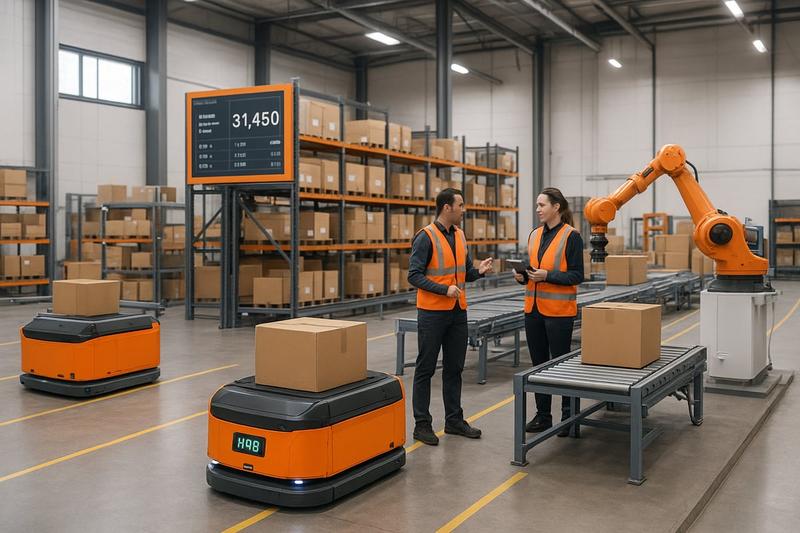
Intralogistics describes the internal flow of materials within warehouses and distribution centres. It includes every movement, storage, picking, packing, and data tracking process that keeps goods moving efficiently. Automation in this context refers to the use of robotics, digital systems, and intelligent software to manage these flows with minimal human intervention.
Traditional manual processes often involved repetitive, time-consuming tasks. With intralogistics automation, these activities are handled by technologies like automated guided vehicles (AGVs), conveyor systems, and warehouse management software. For a comprehensive overview of the core systems powering this shift, see the Automated Warehouse Systems Overview.
The scope of intralogistics automation covers:
- Goods movement and transport
- Automated storage and retrieval
- Order picking and packing
- Real-time data capture and tracking
This transformation allows businesses to achieve higher throughput, accuracy, and operational visibility.
Key Drivers of Automation Adoption
The rapid uptake of intralogistics automation is driven by several converging forces. Labour shortages are making it difficult to staff warehouses, while operational costs continue to rise. The explosive growth of e-commerce and omni-channel fulfilment has pushed companies to process more orders, faster than ever before.
Customers now expect rapid delivery, accurate tracking, and full transparency at every stage. Intralogistics automation enables scalability and adaptability, which are vital as markets shift quickly and unpredictably. Businesses also face mounting pressure to reduce errors, minimise waste, and eliminate costly downtime, making automation a strategic necessity.
These drivers are not isolated—they reinforce one another, accelerating the adoption of automated solutions across the industry.
Evolution of Intralogistics Automation (2016–2026)
Over the past decade, intralogistics automation has evolved from isolated automation islands to fully integrated, intelligent systems. Early investments focused on standalone machines, but the trend now is towards seamless connectivity and data-driven decision-making.
Digitalisation has played a major role, enabling real-time analytics and predictive maintenance. Adoption of AGVs and automated storage and retrieval systems (ASRS) has surged, especially in response to challenges like the COVID-19 pandemic and global supply chain disruptions.
A key turning point was the shift towards integrating automation technologies, allowing warehouses to operate as cohesive, adaptive environments. This evolution has enabled businesses to respond quickly to demand spikes and unforeseen disruptions.
Core Components of Modern Intralogistics Automation
Modern intralogistics automation is built upon several core components working in harmony:
- Automated storage and retrieval systems (ASRS)
- Goods-to-person picking technologies
- Conveyor and sortation systems
- Robotics, including mobile robots, cobots, and robotic arms
- Advanced warehouse management and control software
- Real-time tracking using RFID and barcodes
These technologies work together to streamline material flow, improve order accuracy, and provide complete visibility into warehouse operations. Intralogistics automation now forms the backbone of future-ready supply chains, delivering measurable improvements in speed, efficiency, and resilience.
Major Technologies Shaping Intralogistics Automation in 2026
The technology landscape for intralogistics automation in 2026 is rapidly evolving. Businesses are investing in smarter, integrated systems to streamline every facet of warehouse operations. From robotics to advanced software, these innovations are transforming how goods move, are stored, and are tracked.
Robotics and Autonomous Mobile Robots (AMRs)
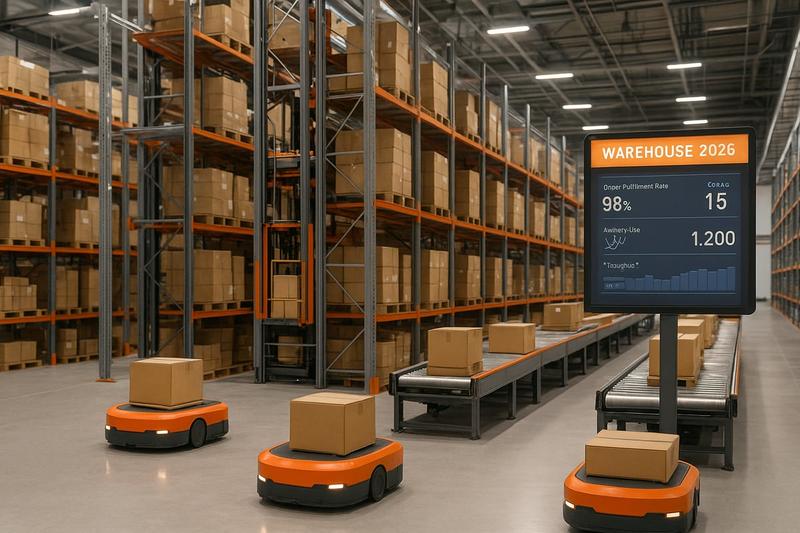
Robotics, especially autonomous mobile robots (AMRs) and automated guided vehicles (AGVs), sit at the heart of intralogistics automation. These robots perform tasks such as transporting pallets, moving bins, and working alongside humans in picking zones. AMRs can navigate complex layouts, avoid obstacles, and adapt to changing environments with minimal human intervention.
Modern warehouses deploy robotic arms and collaborative robots (cobots) for picking, packing, and sorting items. For example, R-MATICs from Linde MH are used for automated pallet transport, improving throughput and reducing manual handling. The investment in warehouse robotics continues to surge as organisations seek 24/7 operation, improved safety, and fewer errors. Explore more about AGV and AMR Warehouse Automation to understand their critical role in intralogistics automation.
Automated Storage and Retrieval Systems (ASRS) & Shuttle Solutions
Automated storage and retrieval systems (ASRS) and shuttle solutions are redefining the storage landscape in intralogistics automation. Vertical lift modules, shuttle systems, and advanced 4-way shuttles enable high-density, space-efficient storage. These technologies automate the movement of goods between storage locations and order fulfilment points.
Shuttle systems offer modularity and scalability, allowing businesses to expand capacity as demand grows. In e-commerce distribution centres, ASRS dramatically increases throughput and minimises picking times, supporting the need for rapid order processing. By integrating ASRS, companies achieve better space utilisation and inventory accuracy, making intralogistics automation a foundation for future growth.
Conveyor and Sortation Systems
Conveyor and sortation systems are the backbone of material flow within automated warehouses. In intralogistics automation, conveyors streamline the transfer of goods between receiving, storage, picking, and shipping areas. Modern systems include belt, roller, cross-belt, and automated sorters, each designed for specific item types and volumes.
Integration with robotics and warehouse management software enhances efficiency, allowing for seamless tracking and routing of items. Automated sortation is especially vital in fast-moving consumer goods (FMCG) and parcel logistics, where speed and accuracy are paramount. These technologies reduce manual handling, lower error rates, and support continuous operation in intralogistics automation.
Warehouse Software and Digitalisation
Software is the intelligence behind intralogistics automation. Warehouse Management Systems (WMS) and Warehouse Control Systems (WCS) coordinate the movement of goods, optimise picking paths, and monitor performance in real time. Digital twins and simulation tools provide virtual models for planning and testing new workflows before implementation.
IoT sensors and cloud connectivity enable data integration across all warehouse systems, supporting predictive maintenance and continuous improvement. Real-time analytics deliver actionable insights, ensuring operations remain agile and responsive. The digitalisation of intralogistics automation not only boosts productivity but also provides the flexibility to adapt to changing business needs.
Vision Systems and Quality Assurance Automation
Vision systems and quality assurance automation are transforming how warehouses ensure accuracy and product quality. Advanced 3D vision and AI-driven defect detection enable automated inspection, identifying damaged or misplaced items with high precision. These technologies are used for bin picking, quality control, and item recognition within intralogistics automation.
By reducing manual checks, vision systems lower error rates and enhance traceability throughout the supply chain. Automated quality assurance also improves customer satisfaction by ensuring only compliant products are shipped. As part of intralogistics automation, these systems support both efficiency and regulatory compliance.
Benefits and ROI of Intralogistics Automation
Adopting intralogistics automation delivers transformative benefits for warehouses and distribution centres. From day one, businesses experience measurable improvements in efficiency, accuracy, and workforce safety. At the same time, automation provides a future-proof foundation for adapting to shifting market demands and sustainability targets.
Operational Efficiency and Cost Reduction
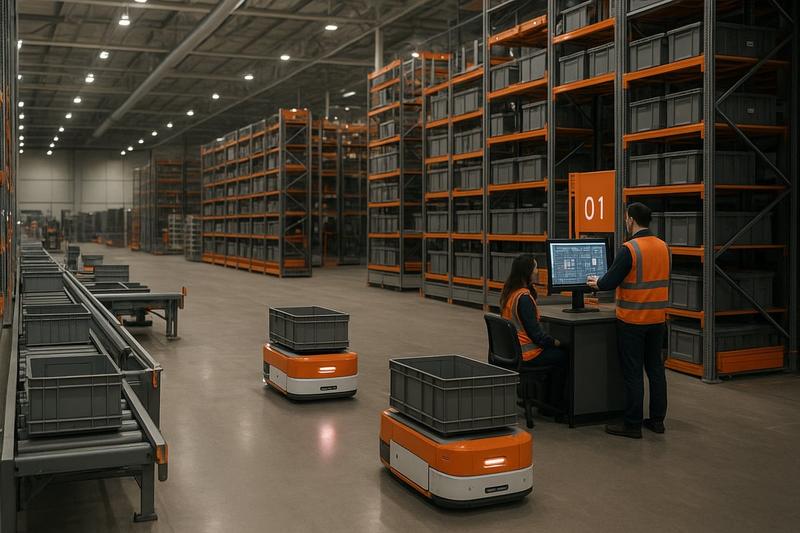
Intralogistics automation significantly increases throughput while reducing reliance on manual labour. Automated picking, packing, and storage systems process orders faster, minimise overtime, and boost inventory accuracy. For example, the integration of Automated Storage and Retrieval Systems (ASRS) can cut picking errors by up to 70 percent, directly impacting the bottom line.
Labour shortages are offset by 24 7 operational capabilities, ensuring consistent output even during peak seasons. Most businesses report a return on investment within two to four years, thanks to lower operational costs and improved order accuracy.
Flexibility, Scalability, and Future-Proofing
Modern intralogistics automation solutions are modular, enabling businesses to scale operations in phases. This flexibility allows warehouses to adapt quickly to seasonal demand spikes, product launches, or changing order profiles without large infrastructure changes.
Systems can be reconfigured rapidly to accommodate new workflows or product types. As a result, companies can future proof their operations and respond confidently to evolving market needs, maintaining a competitive edge.
Enhanced Safety and Workplace Quality
Automated systems take over repetitive, strenuous, or hazardous tasks, reducing the risk of workplace injuries. Intralogistics automation incorporates advanced safety features like collision avoidance and real time warnings, protecting both people and assets.
With automation handling routine jobs, employees can focus on higher value work, leading to improved job satisfaction and retention. A safer, more ergonomic environment also helps attract and keep skilled talent in a tight labour market.
Sustainability and Environmental Impact
Sustainability is an increasingly important driver for intralogistics automation. Automated solutions use energy efficient technologies such as lithium ion batteries and intelligent power management, lowering overall consumption.
Automation reduces waste by optimising resource usage and improving inventory turnover. Data driven systems support transparent ESG reporting, helping organisations meet environmental targets and regulatory requirements. Over time, these initiatives contribute to lower carbon footprints and a more sustainable supply chain.
Steps to Implementing Intralogistics Automation in 2026
Embarking on an intralogistics automation journey requires a structured, well-planned approach. Each step is essential for reducing risk, maximising return on investment, and ensuring long-term success. Below is a comprehensive guide through the critical phases of implementation, tailored for 2026’s dynamic warehousing landscape.
Assessing Business Needs and Readiness
The journey to intralogistics automation begins with a thorough assessment of your current operations. Identify key pain points such as manual bottlenecks, high labour costs, or accuracy challenges. Set clear objectives for automation, focusing on measurable outcomes like cost reduction, throughput gains, or improved safety.
Engage stakeholders across operations, IT, and finance early in the process. Their input ensures alignment and uncovers practical considerations. Benchmark your processes against industry standards to highlight gaps and opportunities. By taking these steps, you lay a solid foundation for successful intralogistics automation.
Solution Design and Technology Selection
Once objectives are defined, map out your material flows and storage needs. Decide whether a turnkey or modular approach is best for your operation. Assess which technologies fit your requirements, such as robotics, ASRS, or conveyors. Integration with existing infrastructure is crucial for seamless operation.
For instance, conveyor systems play a pivotal role in automated workflows. Consider reviewing Conveyor System Integration in Warehousing for insights on optimising material movement. Evaluate factors like scalability, flexibility, and compatibility to ensure your intralogistics automation investment delivers long-term value.
Partner Selection and Project Planning
Selecting the right partners is critical for intralogistics automation success. Evaluate vendors and integrators based on their industry expertise, technology portfolio, and local support capabilities. Look for a track record of delivering similar projects in logistics, e-commerce, or manufacturing.
Develop a phased implementation roadmap with clear milestones and realistic timelines. Define key performance indicators (KPIs) to track progress. A collaborative approach with your chosen partner ensures effective project delivery and risk mitigation throughout the intralogistics automation process.
Integration, Testing, and Change Management
System integration is a complex step in intralogistics automation, involving connections between ERP, WMS, and legacy systems. Conduct pilot tests to validate system performance and address potential issues before full-scale deployment.
Invest in employee training and upskilling to support the transition. Effective change management and open communication help reduce resistance and foster acceptance. By focusing on these areas, you increase the likelihood of a smooth, successful rollout of intralogistics automation technologies.
Go-Live, Optimisation, and Continuous Improvement
A phased go-live approach minimises disruption and allows for incremental adjustments. Monitor system performance closely during and after deployment. Establish troubleshooting protocols and ensure ongoing support from your vendor or integrator.
Leverage real-time data analytics to identify optimisation opportunities. Continuous improvement is vital for sustaining the benefits of intralogistics automation. Plan for future upgrades and scalability to keep pace with evolving business needs and technological advances.
How Automate-X Empowers NZ & AU Businesses
Automate-X stands as a leading provider of intralogistics automation solutions for New Zealand and Australia. With expertise spanning robotics, ASRS, conveyor design, and advanced warehouse software, Automate-X delivers custom solutions tailored to logistics, e-commerce, manufacturing, food and beverage, pharmaceuticals, and cold storage sectors.
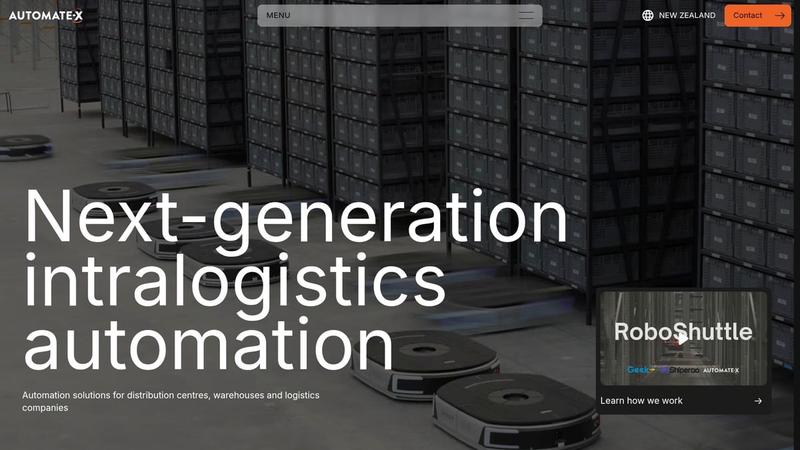
The end-to-end project delivery model covers assessment, design, integration, and ongoing support. Real-world results include improved productivity, reduced costs, and scalable operations. Automate-X’s commitment to safety, quality, and local support ensures your intralogistics automation project achieves measurable success.
Overcoming Challenges and Common Pitfalls
Implementing intralogistics automation brings significant opportunities, but it also introduces several hurdles that organisations must navigate. Addressing these challenges early ensures a smoother transition and sustainable results for warehouse operations.
Intralogistics Journey From Manual to Automated
Integration with Legacy Systems and Infrastructure
One of the most common challenges in intralogistics automation is connecting new technologies with existing legacy systems. Many warehouses rely on older equipment and software, making integration complex.
Solutions include using middleware or APIs to bridge different platforms. Modular upgrades allow gradual replacement of outdated systems, reducing disruption. Data standardisation and detailed process mapping are crucial for seamless connectivity. For example, a brownfield site successfully integrated automated guided vehicles with its legacy warehouse management software, resulting in improved efficiency without major overhauls. Addressing integration early prevents costly delays and maximises the benefits of intralogistics automation.
Change Management and Workforce Adaptation
Introducing intralogistics automation affects not just technology, but also people and culture. Employees may have concerns about job security or adapting to new roles. Upskilling and retraining are essential to empower staff for future tasks.
Clear communication and leadership support foster acceptance. Involving employees in planning and training encourages a smoother transition. According to Automation Reshapes Warehouses and the Future of Work, companies that prioritise workforce engagement experience higher productivity and morale during automation rollouts. Building a culture of innovation is key to successful intralogistics automation.
Cost, ROI, and Scalability Concerns
Managing the investment required for intralogistics automation is a major consideration. Upfront costs can be significant, especially for large-scale projects. Organisations must assess total cost of ownership, including maintenance and future upgrades.
A phased implementation strategy allows businesses to spread costs and measure ROI at each stage. Comparing modular versus comprehensive solutions can help match investment to business needs. Automation should be viewed as a long-term enabler of growth, improving scalability and adaptability as markets evolve. Careful financial planning ensures the full value of intralogistics automation is realised.
Data Security and System Reliability
With the rise of connected devices and cloud-based systems in intralogistics automation, protecting sensitive data is vital. Cybersecurity threats, system downtime, and regulatory compliance are ongoing risks.
Implementing strong access controls, encryption, and regular system audits reduces vulnerabilities. Building redundancy and failover mechanisms ensures operational continuity. Compliance with data privacy standards, such as ISO or industry regulations, is non-negotiable. Regular staff training further strengthens security awareness. By prioritising reliability and data protection, businesses safeguard the integrity of their intralogistics automation investments.
Future Trends and Innovations in Intralogistics Automation
The next wave of intralogistics automation is redefining how warehouses and distribution centres operate in 2026. As digital transformation accelerates, businesses are adopting smarter, more integrated solutions to stay ahead. Let us explore the most influential trends and innovations shaping the future of intralogistics automation.
AI and Machine Learning in Warehouse Operations
Artificial intelligence and machine learning are rapidly becoming central to intralogistics automation. Predictive analytics now enable precise demand forecasting, allowing inventory to be managed proactively. AI-powered systems optimise picking routes, allocate tasks dynamically, and identify bottlenecks in real time.
Machine learning algorithms can detect anomalies in equipment performance, triggering preventative maintenance before costly breakdowns occur. This results in fewer disruptions and improved productivity. Businesses leveraging AI in intralogistics automation also benefit from smarter supply chain decisions, as data-driven insights refine operations continuously.
For more on how AI is transforming the industry, see the Warehouse Automation Trends Shaping 2026 for emerging use cases and best practices.
Collaborative Robots (Cobots) and Human-Robot Interaction
The rise of collaborative robots, or cobots, is reshaping intralogistics automation by enabling humans and machines to work side by side. Unlike traditional robots, cobots are designed with advanced sensors and vision systems, ensuring safety and adaptability on the warehouse floor.
Cobots assist with assembly, packaging, and quality checks, taking over repetitive or ergonomically challenging tasks. This collaboration not only boosts productivity but also enhances workplace satisfaction by allowing employees to focus on higher-value activities.
Intralogistics automation that incorporates cobots is helping organisations address labour shortages and maintain operational flexibility, especially during peak periods or unexpected disruptions.
Advanced Energy Systems and Sustainability
Modern intralogistics automation is increasingly focused on reducing environmental impact. The adoption of lithium-ion batteries and fuel cell technologies in AGVs and AMRs is dramatically improving energy efficiency and lowering emissions.
Smart energy management systems monitor usage patterns and optimise charging schedules, supporting sustainability initiatives. Many warehouses are now integrating green building practices and renewable energy sources to further cut their carbon footprint.
By prioritising sustainable intralogistics automation, companies are not only meeting regulatory requirements but also aligning with corporate ESG goals and responding to customer demand for responsible operations.
Digital Twins and Simulation Technologies
Digital twins are becoming a key innovation in intralogistics automation, offering a virtual replica of warehouse operations. These digital models allow businesses to simulate different scenarios, test layouts, and evaluate process changes before making physical adjustments.
Simulation tools help identify potential bottlenecks and optimise resource allocation, reducing risk and cost. Training staff using digital twins also accelerates learning and improves safety outcomes.
The result is a more agile, resilient operation that can adapt quickly to changing market demands, making digital twins a cornerstone of future intralogistics automation strategies.
Hyperautomation and End-to-End Supply Chain Integration
Hyperautomation is pushing intralogistics automation beyond isolated tasks to achieve seamless, end-to-end supply chain integration. This approach connects warehouse systems with upstream suppliers and downstream distribution channels, enabling real-time visibility and autonomous decision-making.
Platforms now orchestrate robotics, software, and IoT devices to streamline processes from goods receipt to order fulfilment. Hyperautomation increases responsiveness to market shifts and supports personalised customer experiences.
According to recent Warehouse Automation Trends Shaping 2026, this integrated approach is driving smarter, faster, and more adaptive warehouse operations across the industry.
Regulatory, Social, and Market Impacts
As intralogistics automation matures, evolving regulations and social expectations are shaping its adoption. Safety standards for robotics and AI are becoming more stringent, requiring ongoing compliance and staff training.
Workforce transformation is another key impact, with roles shifting from manual tasks to supervision, data analysis, and system management. Companies must foster a culture of innovation and support upskilling to realise the full benefits of intralogistics automation.
Market dynamics are also changing, as consolidation and new entrants drive competition and spur further innovation. Businesses that adapt quickly will gain a lasting competitive edge in the evolving landscape of intralogistics automation.
As we look towards 2026, it's clear that intralogistics automation is set to transform the way warehouses and supply chains operate—offering smarter solutions to tackle labour shortages, rising demand, and the need for greater accuracy. Whether you're managing e-commerce fulfilment, cold storage, or complex manufacturing, embracing automation can give you the flexibility, efficiency, and resilience your business needs to stay ahead. If you're ready to see how intelligent automation could drive real results for your operations, take the first step and Start Your Automation Journey.