

Intralogistics Solutions Guide: Streamline Operations in 2026
Share on
Warehouses and distribution centres face mounting pressure as 2026 approaches. Labour shortages, rising operational costs, and the demand for rapid, accurate order fulfilment have never been higher. Meeting customer expectations and staying ahead in a competitive market now require more than traditional methods.
This guide explores the role of intralogistics solutions in transforming internal operations. By leveraging automation, data, and smart processes, businesses are achieving significant efficiency gains and cost reductions. Real success stories show error rates dropping and throughput soaring.
Ready to future-proof your operations? Dive into this guide for actionable insights and strategies to unlock scalable growth with intralogistics solutions.
Understanding Intralogistics: Definition and Evolution
Intralogistics solutions form the backbone of modern warehouses and distribution centres. As businesses strive for greater accuracy and speed, understanding what defines intralogistics and how it has evolved is essential for future-ready operations.

What is Intralogistics?
Intralogistics solutions refer to the internal management and optimisation of material flow, information, and goods within a facility. Unlike traditional logistics, which focuses on the movement of goods between locations, intralogistics solutions concentrate on what happens inside the warehouse walls.
The key components of intralogistics solutions include goods receiving, storage, picking, packing, and shipping. Each step is interconnected, relying heavily on precise coordination. Modern intralogistics solutions leverage data and intelligent software to streamline these processes.
A prominent example is the adoption of Automated storage and retrieval systems, which use robotics and sophisticated algorithms to manage inventory. These systems minimise manual handling, cut down retrieval times, and significantly reduce order errors. According to ShipBob, warehouses utilising advanced intralogistics solutions can decrease order errors by up to 70 percent.
The industry is experiencing a rapid shift from manual operations to data-driven, automated environments. This transition is redefining efficiency benchmarks and setting new standards for accuracy in intralogistics solutions.
Evolution Toward 2026
Historically, intralogistics solutions relied on manual labour and basic equipment. Over time, facilities introduced semi-automated systems to handle repetitive tasks. Today, the move towards fully automated intralogistics solutions is accelerating, driven by several key factors.
Labour shortages, increasing SKU complexity, and the pressure for faster fulfilment have made automation a necessity. The adoption of robotics, automation, and integrated software is no longer optional but critical for keeping pace with market demands.
Industry drivers such as the e-commerce boom and the expectation for 2-day shipping require real-time inventory visibility. Companies are gradually integrating these technologies, often starting with modular solutions and scaling as needs evolve. For example, Daifuku’s consultative approach combines system design, integration, and ongoing support to deliver comprehensive intralogistics solutions.
As 2026 approaches, businesses embracing advanced intralogistics solutions will be better positioned to adapt, scale, and outperform competitors. The evolution toward automation is not just a trend but a strategic imperative for the future of warehouse operations.
Core Technologies Powering Intralogistics in 2026
Warehouses and distribution centres in 2026 will rely on a sophisticated mix of automation, software, and tracking systems to deliver the next level of efficiency. These core technologies are the backbone of modern intralogistics solutions, driving accuracy, speed, and competitive advantage. By understanding how these tools work together, businesses can make informed decisions to future-proof their operations.
Automation Systems and Robotics
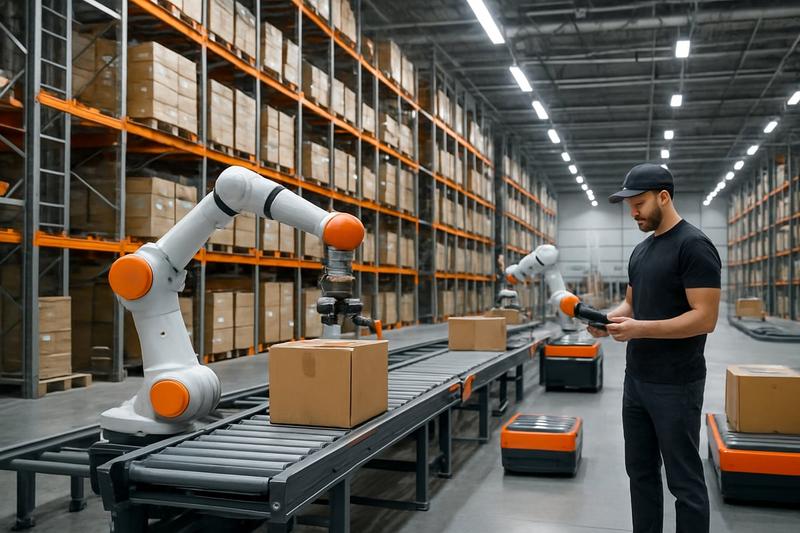
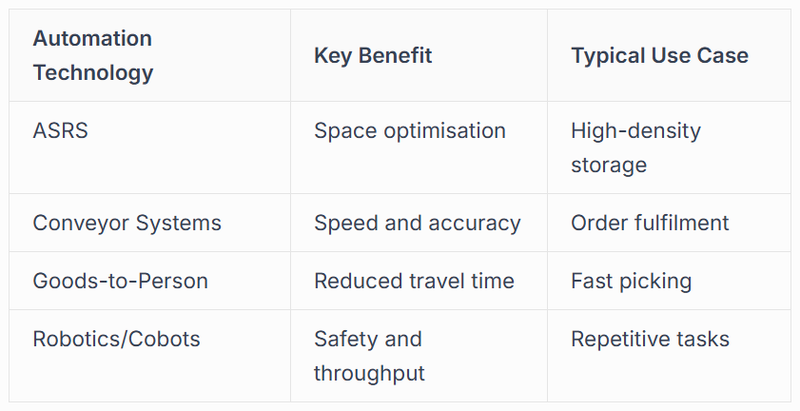
At the heart of intralogistics solutions are automation systems and robotics designed to handle repetitive, high-volume, and time-sensitive tasks. Automated Storage and Retrieval Systems (ASRS) offer high-density storage, rapid access, and space optimisation, significantly reducing the footprint required for warehousing. Conveyor and sorter systems streamline the movement of items and enable fast, accurate order sorting.
Goods-to-person systems bring products directly to operators, minimising travel time and boosting picking speed. Industrial robotics and collaborative robots, known as cobots, perform hazardous or monotonous jobs, enhancing both productivity and safety. A compelling case is the use of four-way shuttle systems, which provide scalable and high-speed operations for growing businesses.
To understand how these technologies are shaping the future, see the comprehensive overview of warehouse automation technologies in 2026. These advancements are central to intralogistics solutions, allowing companies to keep pace with market demands while maintaining operational control.
Software and Digital Integration
Software is the nervous system of intralogistics solutions, ensuring that all automation equipment and processes work in harmony. Warehouse Management Systems (WMS) provide real-time inventory tracking, order processing, and actionable analytics. These platforms allow managers to monitor performance and make data-driven decisions.
Warehouse Control Systems (WCS) synchronise automation hardware, directing tasks and workflows to maximise efficiency. Integration with ERP and supply chain platforms delivers end-to-end visibility, ensuring that inventory levels, order status, and resource allocation are transparent across the business. Predictive analytics, powered by these systems, help forecast demand and optimise resource use, further enhancing the value of intralogistics solutions.
According to ShipBob, integrating a WMS can reduce picking errors by 50 percent and boost fulfilment speed by 30 percent. This level of digital integration is vital for businesses looking to scale operations and adapt to rapidly changing customer expectations.
Smart Tracking and Traceability
Accurate tracking and traceability are essential components of modern intralogistics solutions. Technologies such as RFID, barcodes, and QR codes enable precise monitoring of goods as they move through the facility. This ensures compliance with industry standards and provides real-time insight into inventory location and status.
IoT sensors are increasingly used, particularly in cold chain logistics, to monitor temperature-sensitive goods and maintain strict quality standards. Real-time dashboards display asset locations, environmental data, and operational alerts, empowering teams to act quickly if issues arise.
For example, automated cold storage facilities equipped with IoT sensors can reduce energy costs while ensuring product integrity. With smart tracking in place, intralogistics solutions can meet regulatory requirements and deliver the transparency customers and partners expect.
Step-by-Step Guide to Implementing Intralogistics Solutions
Embarking on the journey to implement intralogistics solutions requires a clear, structured approach. This guide breaks down the process into actionable steps, ensuring your transition is efficient, measurable, and aligned with your operational goals. By following these five stages, you will future proof your warehouse and unlock the full potential of intralogistics solutions.
1. Assessing Operational Needs and Goals
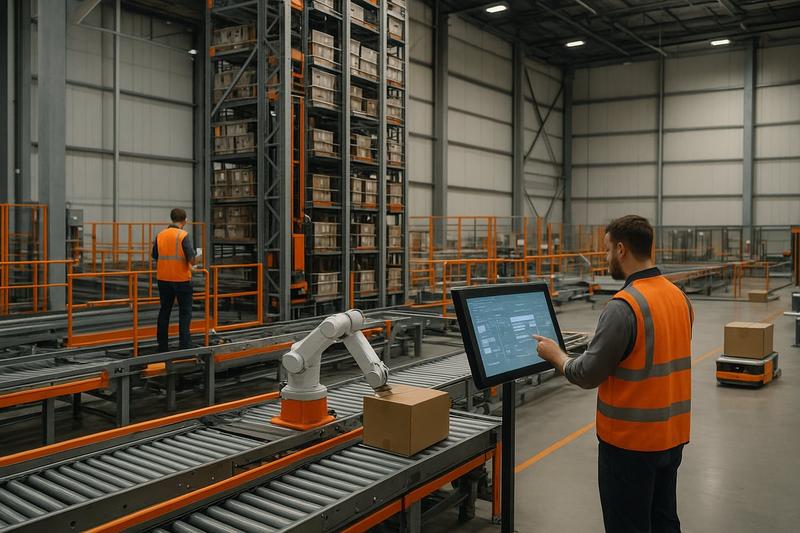
The first step in adopting intralogistics solutions is a comprehensive assessment of your current operations. Begin by conducting a workflow audit to pinpoint bottlenecks, inefficiencies, and manual dependencies.
Set clear KPIs that matter most to your business. These may include throughput, order accuracy, cycle time, and cost per order. Involve key stakeholders from operations, IT, and finance to ensure all perspectives are considered.
By understanding where your processes stand now, you can set realistic benchmarks and prepare your team for the changes intralogistics solutions will introduce.
2. Designing the Optimal Solution
Once your needs are clear, map out existing processes to identify where automation or digital integration will deliver the most value. This is the stage to explore technologies like ASRS, conveyor systems, robotics, and advanced WMS platforms.
Carefully plan your facility layout, keeping future scalability in mind. Modular designs allow for phased automation, supporting growth without disruption. For a detailed look at the possibilities, the Automated warehouse systems overview offers practical insights into system features and design considerations.
Selecting the right elements at this stage ensures your intralogistics solutions are tailored, flexible, and ready for tomorrow’s demands.
3. Technology Selection and Vendor Evaluation
Choosing the right providers for intralogistics solutions is critical. Evaluate vendors based on their industry experience, local support, and ability to integrate with your existing systems.
System compatibility is essential. Ensure all hardware and software can communicate smoothly to avoid future integration challenges. Assess the total cost of ownership, balancing initial investment with long-term savings and productivity gains.
A consultative approach, where vendors work with you from design through implementation, can significantly reduce risk. Real world case studies demonstrate that robust intralogistics solutions deliver strong ROI when aligned with business needs.
4. Integration and Change Management
To minimise disruption, implement intralogistics solutions in phases. Start with pilot areas, then expand as teams adapt and processes stabilise.
Comprehensive staff training is vital. Equip your workforce with the skills needed to operate and maintain new systems. Plan data migration and software integration carefully to ensure seamless information flow across platforms.
Adopt change management strategies that encourage feedback, open communication, and continuous improvement. This helps foster a culture where innovation and efficiency become part of your daily operations.
5. Testing, Optimisation, and Scaling
Before full deployment, pilot test your intralogistics solutions and fine tune system settings. Use analytics tools to monitor performance, track KPIs, and uncover further opportunities for optimisation.
Continuous improvement is key. Warehouses that regularly review and adjust their intralogistics solutions report productivity gains of up to 20 percent year on year. Plan for future growth by choosing modular, scalable systems that evolve with your business.
Through diligent testing and ongoing optimisation, your intralogistics solutions will remain agile and competitive in the years ahead.
Industry-Specific Intralogistics Solutions and Use Cases
Modern intralogistics solutions are redefining efficiency standards across diverse industries. As operational requirements evolve, tailored approaches are crucial for meeting sector-specific challenges and maximising value. Let us examine how different industries leverage intralogistics solutions, with real-world examples and measurable results.
E-Commerce and Retail
E-commerce and retail are at the forefront of adopting intralogistics solutions due to rapid order cycles, high SKU counts, and fluctuating demand. Automated picking systems and real-time warehouse management software enable same-day shipping and seamless inventory updates.
Retailers increasingly rely on Goods-to-person automation explained to reduce picking times and minimise errors. This approach brings items directly to operators, significantly boosting throughput and order accuracy. According to ShipBob, automated e-commerce warehouses process orders up to three times faster than manual facilities, empowering brands to deliver on customer expectations.
Third-Party Logistics (3PL)
Third-party logistics providers require flexible intralogistics solutions to manage multi-client inventories and dynamic workflows. Integration with client systems is vital for real-time visibility and accurate order fulfilment.
Automated cross-docking and advanced sortation systems allow 3PLs to handle diverse product lines efficiently. By deploying modular automation, 3PLs can rapidly scale capacity while maintaining high service standards. These intralogistics solutions support seamless transitions between clients and reduce turnaround times, positioning 3PLs as agile partners in complex supply chains.
Food, Beverage, and Cold Chain
Stringent regulations around traceability and temperature control make intralogistics solutions indispensable in food, beverage, and cold chain environments. IoT sensors monitor storage conditions, while automated storage and retrieval systems safeguard perishable products.
Cold storage facilities using automation can reduce energy consumption by 20 percent, translating to significant cost savings. End-to-end tracking ensures compliance and quality, while modular intralogistics solutions allow these businesses to adapt to seasonal demand and regulatory changes without sacrificing operational continuity.
Pharmaceuticals and Healthcare
The pharmaceutical and healthcare industries demand intralogistics solutions that guarantee precision, traceability, and compliance. Automated batch tracking, quality assurance, and vision-guided robotics reduce human error and ensure regulatory adherence.
Vision systems detect product defects, while robotics assemble orders with pinpoint accuracy. These intralogistics solutions support fast, error-free distribution of critical products, safeguarding patient health and streamlining supply chain operations in a highly regulated environment.
Manufacturing and Industrial
Manufacturers implement intralogistics solutions to synchronise production lines, manage inventory, and enable just-in-time delivery. Automated material handling systems, robotics, and AGVs transport raw materials and finished goods efficiently across facilities.
Lean manufacturing initiatives benefit from intralogistics solutions that minimise waste and improve flow. Robotics and automation not only reduce manual handling but also enhance workplace safety and productivity, allowing manufacturers to respond swiftly to fluctuations in demand and maintain competitive advantage.
Benefits and ROI of Modern Intralogistics Solutions
As warehouses and distribution centres look to the future, the benefits and return on investment from intralogistics solutions are impossible to ignore. These integrated systems drive measurable improvements across every operational touchpoint, delivering value that extends far beyond the warehouse floor.
Operational Efficiency and Productivity Gains
Intralogistics solutions revolutionise productivity by automating repetitive tasks and creating seamless material flow. Automated warehouses can process up to four times more orders per hour than manual facilities, dramatically increasing throughput.
Technologies like robotics and automated storage systems minimise manual handling, which not only accelerates picking and packing but also reduces fatigue and errors. According to Robotics in Intralogistics Statistics, robot adoption in logistics is growing rapidly, further boosting productivity across the sector.
With intralogistics solutions, businesses can operate around the clock, meeting customer demand even during peak periods. Real-time data visibility ensures bottlenecks are quickly identified and resolved.
Cost Reduction and Resource Optimisation
One of the primary advantages of intralogistics solutions is significant cost reduction. By automating workflows, businesses lower their reliance on manual labour and can reallocate staff to higher-value roles.
High-density storage systems, such as ASRS, maximise available space, allowing companies to reduce their warehouse footprint by up to 60 percent. This leads to lower overheads and more efficient use of resources.
A quick comparison:
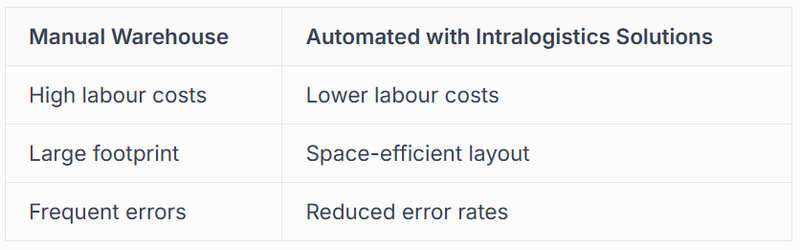
These savings directly impact the bottom line, making intralogistics solutions a smart investment.
Enhanced Accuracy, Safety, and Compliance
Accuracy and safety are critical in modern supply chains. Intralogistics solutions introduce automated quality checks and real-time error detection, minimising costly mistakes.
Automated systems reduce manual lifting and repetitive tasks, creating a safer working environment and lowering incident rates. Compliance is strengthened through end-to-end product traceability, essential for industries like food, pharmaceuticals, and healthcare.
With regulatory demands increasing, intralogistics solutions provide the digital audit trails and monitoring capabilities necessary for peace of mind and reputation management.
Scalability and Future-Proofing
Modern intralogistics solutions are designed to grow with your business. Modular systems can be expanded or reconfigured as needs change, supporting new product lines or increased order volumes.
Integration with emerging technologies, such as AI and IoT, ensures your operations remain competitive over time. According to the Intralogistics Automation Market Growth Forecast, the global market for intralogistics automation is set to reach $100 billion by 2034, underlining the scalability and long-term ROI these systems offer.
Investing in scalable intralogistics solutions today means your business will be ready for tomorrow’s challenges.
Customer Experience and Competitive Edge
Fast, accurate order fulfilment is the new standard. Intralogistics solutions enable rapid deliveries, real-time order tracking, and high service consistency.
With automated systems, companies can offer value-added services such as custom packaging or kitting, further enhancing the customer experience. These capabilities help build loyalty and set your business apart in a crowded marketplace.
By adopting intralogistics solutions, organisations position themselves for sustainable growth and a lasting competitive edge.
Future Trends: The Next Generation of Intralogistics
As 2026 approaches, the landscape for intralogistics solutions is changing rapidly. Forward-looking businesses are embracing new technologies to stay ahead and meet increasing customer demands. The future of intralogistics will be shaped by AI, robotics, advanced connectivity, and a strong focus on sustainability. Here’s what you need to know to keep your operations future-ready.
AI and Machine Learning in Warehouse Operations
AI and machine learning are redefining intralogistics solutions by enabling predictive analytics and autonomous decision-making. These technologies help forecast demand, optimise inventory, and streamline order processing. For example, an AI-powered warehouse management system can dynamically adjust stock levels and route picking tasks based on real-time data.
Key advantages include:
- Improved forecasting accuracy
- Reduction in stockouts and overstock
- Automated resource allocation
For a deeper dive into these technologies, see Future Trends in Intralogistics.
Advanced Robotics and Autonomous Vehicles
The adoption of advanced robotics is accelerating, with autonomous mobile robots (AMRs) and automated guided vehicles (AGVs) transforming material handling. These innovations boost efficiency, reduce manual labour, and enhance safety.
Key trends:
- Human-robot collaboration for safer workflows
- Scalable robot fleets for peak demand
- Global AMR adoption projected to grow by 40 percent annually through 2026
Intralogistics solutions that integrate robotics will offer unmatched flexibility and throughput.
IoT and Real-Time Data Connectivity
IoT sensors and connected devices are essential for modern intralogistics solutions. They provide real-time monitoring of assets, environmental conditions, and equipment health. Smart dashboards allow managers to make proactive decisions, while automated alerts minimise downtime.
Examples include:
- Asset tracking with RFID and sensors
- Environmental monitoring for cold chain compliance
- Predictive maintenance scheduling
This level of connectivity drives transparency and reliability across operations.
Sustainable and Green Intralogistics
Sustainability is becoming a core consideration for intralogistics solutions. Energy-efficient automation, eco-friendly facility design, and waste reduction strategies are now standard. Automated systems can lower energy use, while optimised packaging minimises material waste.
Key initiatives:
- LED lighting and solar energy integration
- Automated cold storage reducing carbon footprint
- Recycling and reuse of packaging materials
These measures help businesses achieve regulatory compliance and meet their environmental goals.
Preparing for the Future
To stay competitive, businesses must foster a culture of innovation and adaptability. Continuous learning and agile adoption of emerging technologies will be critical. According to Intralogistics Market Size and Trends, the sector is set for significant growth, with new intralogistics solutions driving efficiency and scalability.
Investing in next-generation systems today will position your warehouse operations for leadership in 2026 and beyond.
As you look to future proof your warehouse operations for 2026, it’s clear that intelligent automation and integrated intralogistics are essential to stay ahead. By embracing solutions like robotics, smart software, and scalable system design, you can address labour shortages, boost productivity, and set your business up for sustainable growth. If you’re ready to move from manual processes to streamlined, data driven operations, now is the perfect time to take the next step. Let’s transform your workflow together—Start Your Automation Journey and unlock the full potential of your warehouse.