

Next Generation Robotics Guide: Innovations and Insights 2026
Share on
Robotics is evolving at an extraordinary pace, reshaping the way industries operate and compete by 2026. The rise of next generation robotics, fuelled by advances in artificial intelligence, cutting-edge hardware, and powerful simulation tools, is setting new benchmarks for what machines can achieve.
These innovations are tackling labour shortages, driving productivity gains, and supporting more sustainable business growth. As organisations face new challenges, next generation robotics is becoming the cornerstone for smarter, safer, and more efficient operations.
This guide explores the latest breakthroughs and practical insights in robotics technology for 2026. You will discover emerging tools, AI integration, simulation trends, real-world industry applications, and predictions for the future landscape.
The Evolution of Robotics: From Industrial Arms to Intelligent Systems
The journey of robotics has been nothing short of remarkable. What began as simple industrial arms performing repetitive tasks has evolved into a landscape defined by intelligence, adaptability, and collaboration. This transformation marks a pivotal shift, laying the foundation for next generation robotics across industries.
The Industrial Roots of Robotics
Early robotics systems were built for consistency and endurance. Industrial robots, first introduced in the 1960s, revolutionised manufacturing by handling tasks too dangerous or tedious for humans. These machines excelled at welding, painting, and assembly, but they were limited to single-purpose roles and rigid programming.
As industries demanded more flexibility, the limitations of these early systems became apparent. The need for robots to adapt and perform diverse tasks drove the search for smarter, more versatile solutions.
The Rise of Intelligent and Collaborative Robots
The integration of artificial intelligence and machine learning has propelled robotics into a new era. Next generation robotics harness AI to process sensor data, learn from their environment, and make decisions in real time. This enables robots to collaborate with humans, adapt to changing scenarios, and perform complex operations.
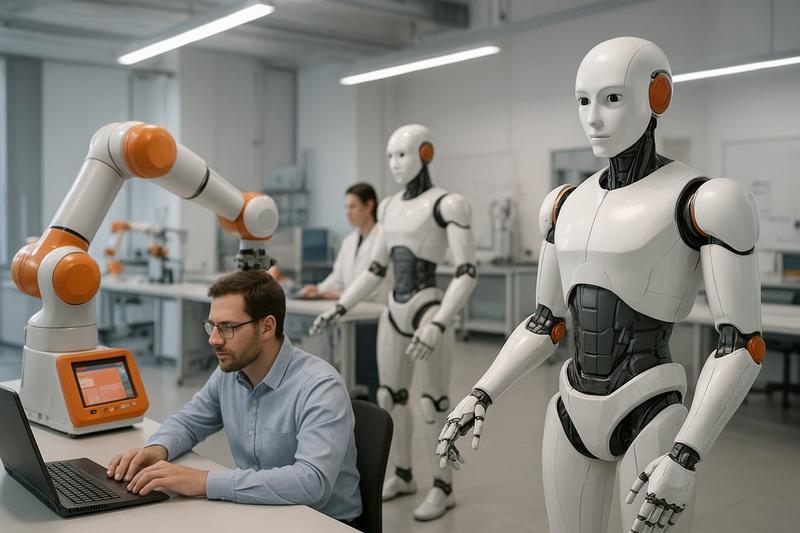
The shift from fixed automation to multi-functional platforms is most evident in the emergence of collaborative robots, or cobots, and humanoid robots. Cobots like Universal Robots’ UR15 can safely work side by side with people, handling intricate assembly or material handling tasks. Meanwhile, NEURA Robotics’ 4NE1 humanoid demonstrates how intelligent robots can perform inspections, manipulation, and even support operators in dynamic settings.
Europe’s commitment to next generation robotics is substantial, with industry investments surpassing €200 billion in AI-powered robotics. This surge fuels research and accelerates the adoption of intelligent systems across manufacturing, logistics, and services.
Simulation, Digital Twins, and Accelerated Innovation
Another leap in robotics evolution is the use of simulation and digital twin technologies. By creating virtual replicas of physical systems, engineers can test, validate, and optimise robots before real-world deployment. This approach reduces development cycles, lowers costs, and increases reliability.
Digital twins provide real-time monitoring and predictive maintenance, supporting the rapid rollout of next generation robotics. As labour shortages and productivity demands rise, simulation-driven design ensures that innovation keeps pace with market needs.
For those seeking deeper insights into the latest breakthroughs, Robotics trends and innovations offers a comprehensive overview of how robotics continues to transform industries.
From industrial arms to intelligent systems, the evolution of robotics is defined by relentless innovation. The next generation robotics revolution is only beginning, promising even greater adaptability, collaboration, and impact across every sector.
Core Innovations Powering Next Generation Robotics
The landscape of next generation robotics in 2026 is shaped by a surge of foundational innovations. These advances are transforming how robots perceive, reason, and interact with the world. From powerful AI models to cutting-edge hardware and open-source frameworks, the pace of change is unprecedented. Each breakthrough brings new capabilities, making next generation robotics more adaptive, efficient, and accessible across industries.

Foundational Technologies Driving Next Generation Robotics
At the heart of next generation robotics are several core technologies. AI foundation models, such as NVIDIA Isaac GR00T N1.5, are powering new levels of reasoning and skill acquisition. These models allow robots to interpret instructions, adapt to complex environments, and generalise their behaviours beyond pre-programmed routines.
Simulation tools like Isaac Sim 5.0 and Isaac GR00T-Dreams are revolutionising how robots are trained. By generating synthetic data and creating rich virtual environments, developers can test and refine robotic behaviours before deploying them in the real world. This simulation-first approach is shortening development cycles and reducing costs.
Key Technologies:
- AI foundation models for perception and reasoning
- Synthetic data generation and high-fidelity simulation
- Digital twins for real-time monitoring and predictive maintenance
These innovations are central to the capabilities of next generation robotics, ensuring rapid iteration and improved reliability.
Advances in AI Models and Simulation
Artificial intelligence has become the cornerstone of next generation robotics. Advanced models enable robots to process multimodal data, integrate information from multiple sensors, and make decisions with greater autonomy. The use of AI-Driven Robotics Innovations is evident in robots that can manipulate objects, navigate dynamic spaces, and interact safely with humans.
Simulation environments play a crucial role in validating AI models. By leveraging digital twins, developers can monitor robot performance in real time, predict maintenance needs, and optimise operations. These advances are not only boosting productivity but also improving safety and compliance across sectors.
Hardware and Sensor Innovations
Next generation robotics relies on significant hardware advancements. High-performance GPUs accelerate AI computations, while advanced sensors provide detailed environmental feedback. Modular robotic components make it easier to customise and scale robotic solutions for different industries.
Multimodal sensor fusion is another leap forward. By combining inputs from vision, touch, and audio sensors, robots achieve a richer perception of their surroundings. This enhances decision making and allows for more precise, flexible operations.
Notable Hardware Developments:
- Delta Electronics’ D-Bot series with modular design
- Wandelbots NOVA’s intuitive programming and adaptability
- Cyngn’s DriveMod for autonomous industrial vehicles
These innovations are driving the next generation robotics revolution, making robots smarter and more versatile.
Open-Source Frameworks and Real-World Impact
Open-source simulation and learning frameworks, such as Isaac Lab 2.2, are democratising robotics development. These platforms provide accessible tools for researchers, startups, and established companies to experiment and innovate.
The impact of next generation robotics is clear in the field. Companies report notable improvements in productivity, error reduction, and operational efficiency. For example, manufacturers adopting these technologies see up to 30% faster development cycles and significant cost savings.

As adoption grows, next generation robotics is setting new standards for performance and adaptability.
The Future of Scalable and Adaptive Robotics
The convergence of AI, advanced hardware, and open-source tools is reshaping what is possible. Next generation robotics is no longer confined to traditional factories, but is now driving change in healthcare, logistics, and beyond.
Investments in simulation, digital twins, and sensor fusion are unlocking new opportunities for safer, more sustainable automation. As these core innovations mature, next generation robotics will continue to lead the way in productivity and transformation.
Real-World Applications and Industry Impact
Next generation robotics are reshaping industries worldwide, bringing unprecedented levels of automation, precision, and adaptability. In 2026, organisations are leveraging these advanced systems to solve labour shortages, meet rising demand, and future-proof their operations.
The versatility of next generation robotics is evident in their deployment across manufacturing, logistics, healthcare, pharmaceuticals, and food & beverage sectors. By integrating smart robots, companies are achieving new standards for productivity, quality, and sustainability.
Manufacturing and Cobots
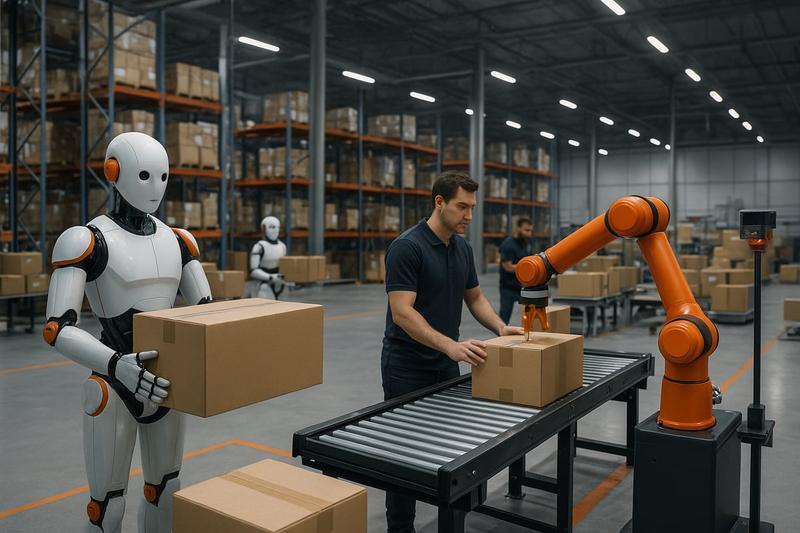
Manufacturing has been at the forefront of next generation robotics adoption. Factories are moving beyond traditional fixed automation, embracing collaborative robots (cobots) like Universal Robots’ UR15 and Delta Electronics’ D-Bot series. These cobots safely work side by side with humans, handling tasks ranging from precision assembly to materials movement.
Hexagon’s AEON humanoid robot is another example, deployed for asset inspection and operator support. Such robots can adapt to changing production lines, learning new tasks through demonstration or simulation. This flexibility is critical as manufacturers face frequent product changes and workforce fluctuations.
Key manufacturing benefits include:
- Enhanced throughput and reduced downtime
- Improved quality control through real-time data collection
- Safer work environments due to advanced AI-driven safety features
Next generation robotics are enabling manufacturers to deliver consistent results, even in high-mix, low-volume production scenarios.
Warehouse Automation
The logistics sector is experiencing a transformation driven by next generation robotics. Automated systems now manage goods-to-person workflows, automated storage and retrieval, and intelligent sorting.
Cobots and mobile robots streamline intralogistics, moving materials efficiently within warehouses and distribution centres. For instance, Wandelbots NOVA and Cyngn’s DriveMod solutions integrate seamlessly with existing infrastructure, optimising space and reducing manual handling.
A typical advanced warehouse might feature:
- Autonomous mobile robots for inventory transport
- AI-powered picking and packing stations
- Real-time monitoring via digital twins
These innovations lead to higher accuracy, faster order fulfilment, and around-the-clock operation. The adoption of next generation robotics in logistics is key for businesses responding to e-commerce growth and shifting consumer expectations.
Simulation-to-Reality and Sector Applications
A major driver of rapid deployment is simulation-to-reality transfer. Companies like Wandelbots and Doosan Robotics use virtual environments to train and validate robots before real-world rollout.
Digital twins and high-fidelity simulation platforms, such as Isaac Sim 5.0, allow for predictive maintenance and process optimisation. This approach reduces commissioning time and operational risk.
Next generation robotics are not limited to manufacturing and logistics. In cold storage, pharmaceutical, and food & beverage sectors, robots ensure compliance with strict hygiene and safety regulations. Their ability to operate in extreme or hazardous environments protects human workers and maintains product integrity.
- In pharmaceuticals, robots handle sterile packaging and transport.
- In food processing, AI-driven robots sort, inspect, and package products efficiently.
Statistics and Industry Impact
The impact of next generation robotics is quantifiable. Industry data shows:
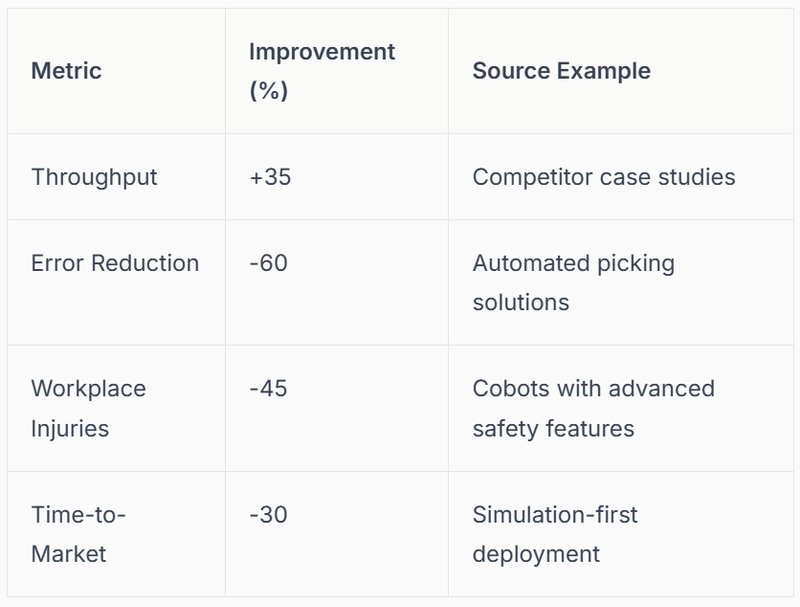
These results demonstrate how next generation robotics drive measurable gains. Companies report not only cost savings but also improved customer satisfaction due to reliable, timely delivery.
For more information on the role of AI in industry automation, see Artificial intelligence in automation.
Economic and Workforce Transformation
The rise of next generation robotics is changing the economic landscape. While some tasks become automated, new roles emerge in robot supervision, maintenance, and programming. Upskilling and reskilling initiatives are vital as the workforce adapts to more technical, value-added positions.
New business models are also taking shape. Robotics-as-a-service (RaaS) allows companies to access cutting-edge automation without significant upfront investment. This shift supports SMEs and large enterprises alike, driving broader adoption.
In summary, next generation robotics are not just tools for efficiency. They are catalysts for safer workplaces, sustainable growth, and a more resilient economy. As adoption accelerates, industries will continue to unlock new opportunities for innovation and competitive advantage.
Leading Companies and Breakthrough Solutions in 2026
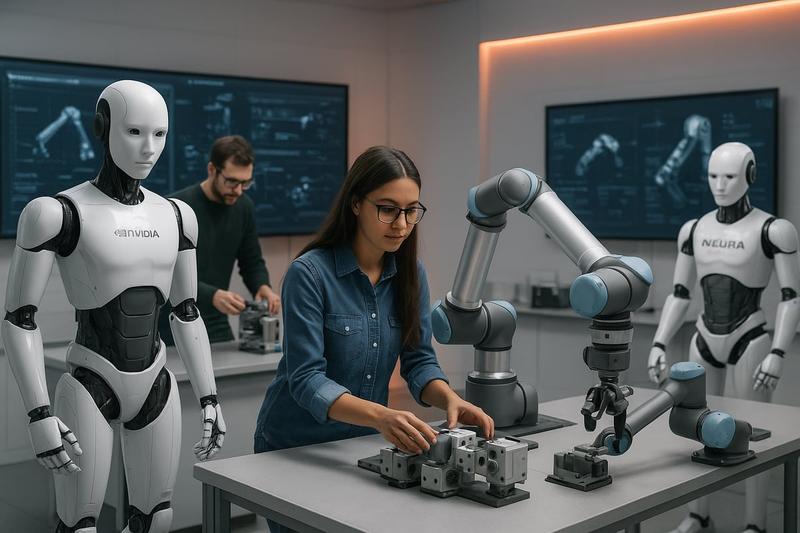
The next generation robotics sector in 2026 is defined by a wave of innovation, led by a select group of pioneering companies. These organisations are shaping the global robotics landscape, setting new standards for intelligence, adaptability, and collaboration. Their breakthroughs are not only transforming industries but also advancing the capabilities of robotics beyond traditional applications.
Industry Leaders and Their Flagship Solutions
The competitive field of next generation robotics is filled with trailblazers, each contributing unique technologies. Below is a summary of key players and their standout solutions:
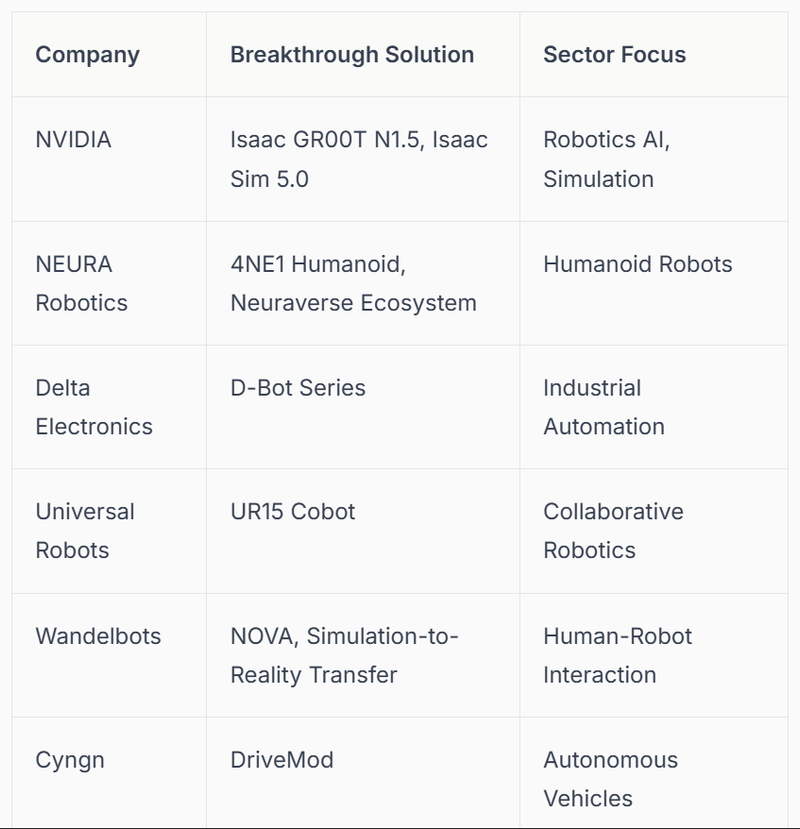
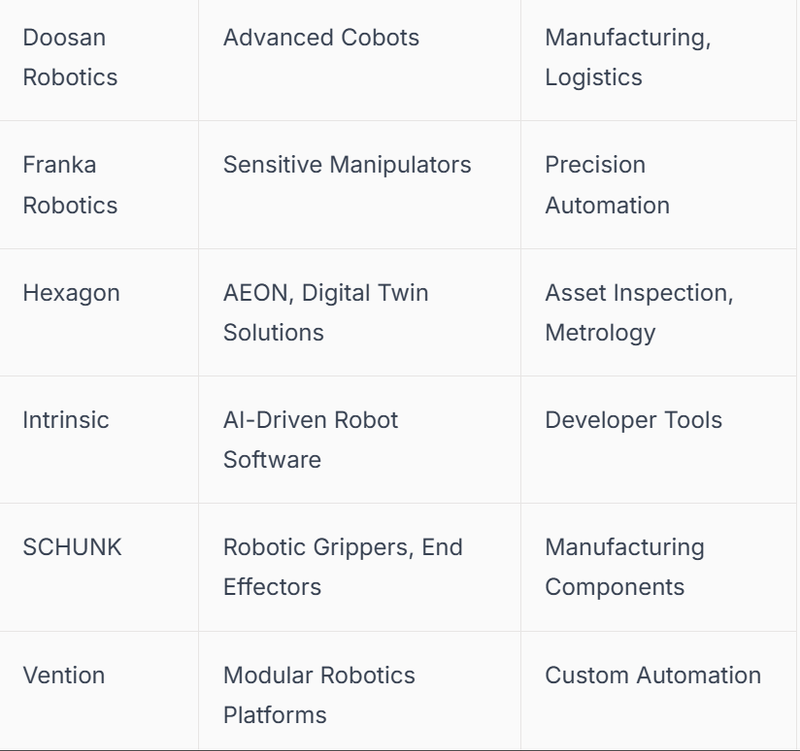
These companies are pushing the boundaries of what is possible in next generation robotics, enabling robots to reason, learn, and perform complex tasks in real-world environments.
Real-World Impact and Measurable Results
Deployment of next generation robotics is already delivering tangible benefits across sectors. For example, NEURA Robotics’ 4NE1 humanoid is supporting asset inspection and manipulation in industrial settings, while Universal Robots’ UR15 cobot is optimising intralogistics and production flows.
Delta Electronics’ D-Bot series is transforming material handling, and Wandelbots’ NOVA is streamlining human-robot collaboration through intuitive programming. Cyngn’s DriveMod platform is driving autonomous navigation in warehouses and logistics centres. These solutions are credited with boosting operational efficiency, reducing errors, and supporting 24/7 productivity.
Industry data shows that companies leveraging next generation robotics have reported productivity gains of up to 30 percent and significant reductions in workplace incidents. In healthcare, robots are assisting with repetitive tasks, resulting in improved patient outcomes and increased staff satisfaction.
Collaborative Ecosystems and Open Innovation
A defining trend in next generation robotics is the rise of collaborative ecosystems. Leading companies are partnering with hardware and software developers, research institutions, and end users to accelerate innovation.
NVIDIA, for instance, is working closely with robotics startups and industrial partners to integrate AI foundation models and high-fidelity simulation tools. Open-source frameworks like Isaac Lab 2.2 are lowering barriers for developers, fostering a vibrant community that contributes to rapid advancements.
Platforms such as the Neuraverse ecosystem enable seamless integration of digital twins, real-time monitoring, and predictive analytics. This collective approach is driving the adoption of next generation robotics across manufacturing, logistics, and service industries.
Competitive Landscape, Market Trends, and Future Outlook
The market for next generation robotics is experiencing robust growth, with adoption rates climbing steadily across Europe, Asia-Pacific, and North America. Europe alone has invested over €200 billion in AI-powered robotics, reflecting confidence in the sector’s potential.
Ecosystem partnerships and open innovation are reshaping the competitive landscape, allowing smaller startups to compete alongside established giants. The integration of advanced AI, simulation, and cloud infrastructure is accelerating product development and reducing time-to-market.
As highlighted in the AI and Autonomy in Robotics report, analytical and generative AI are enabling greater autonomy and safety in robotic systems. Market forecasts predict double-digit growth through 2026, with next generation robotics set to redefine productivity, job roles, and business models across industries.
The Road Ahead: Trends and Insights for the Future of Robotics
The landscape of next generation robotics is evolving rapidly, setting the stage for a future defined by intelligence, flexibility, and sustainability. As we look toward 2026, several trends are emerging that will shape how robotics technology integrates with daily life, industry, and society.
Next-Gen AI Robots: Unitree's Creepy H2 Humanoid, Figure 03's Public Debut, Booster K1, Sharpa Hand
Convergence of Robotics, AI, and Cloud Technologies
One of the most significant drivers for next generation robotics is the fusion of robotics, artificial intelligence, and cloud computing. This convergence is enabling robots to operate with greater autonomy, process vast amounts of data, and learn from global networks in real time.
The advancement of sovereign AI cloud infrastructure, such as Europe’s industrial AI cloud with 10,000 NVIDIA GPUs, is accelerating research and deployment. For a deeper look at the research and development focus, the AI in Robotics Roadmap provides valuable insights into future directions for AI-powered robotics.
Rise of Cognitive and Conversational Humanoid Robots
The development of cognitive and conversational humanoid robots is reshaping what is possible in human-machine interaction. Next generation robotics platforms are now capable of understanding natural language, recognising emotions, and engaging in meaningful dialogue.
Companies are introducing robots that combine advanced perception with social intelligence, opening new opportunities in healthcare, retail, and hospitality. Figure’s next-gen conversational robot exemplifies this trend, demonstrating how machines can become intuitive collaborators and assistants.
Digital Twins and the Industrial Metaverse
The expansion of digital twins and industrial metaverse applications is transforming the way robotics systems are designed, tested, and maintained. High-fidelity simulation environments allow for real-time collaboration, predictive maintenance, and rapid prototyping at scale.
Embracing a simulation-first approach enables organisations to reduce costs and accelerate development. To learn more about these benefits, see the detailed discussion on industrial automation simulation benefits. This trend is pivotal for next generation robotics, bridging the gap between virtual design and physical deployment.
Cybersecurity, Data Privacy, and Compliance
With the proliferation of connected robots, cybersecurity and regulatory compliance are more crucial than ever. Next generation robotics systems handle sensitive data and interact with critical infrastructure, making them targets for cyber threats.
Organisations are investing in advanced encryption, secure communication protocols, and robust authentication to safeguard both data and operations. Compliance with international standards and privacy regulations is now a core requirement for robotics deployment.
Workforce Upskilling and New Educational Pathways
The evolution of next generation robotics is transforming job roles and skills requirements across industries. There is a growing need for workforce upskilling, focusing on robotics programming, AI integration, and system maintenance.
Educational institutions are developing new programmes in robotics engineering and automation, preparing talent for future challenges. Industry partnerships and government initiatives are supporting continuous learning and on-the-job training.
Sustainability and the Circular Economy
Sustainability is at the heart of next generation robotics innovation. Designers are prioritising energy-efficient robots, modular systems for easy upgrades, and the use of eco-friendly materials. Circular economy models are being adopted to reduce waste and extend the lifecycle of robotics platforms.
These initiatives are helping industries meet environmental goals while maintaining high productivity and operational efficiency.
Summary Table: Key Trends Shaping Next Generation Robotics

Expert Predictions and Industry Forecasts
Experts predict a surge in adoption of next generation robotics by 2026, with investments focusing on AI-driven autonomy, flexible manufacturing, and sustainable operations. Market analysts forecast double-digit growth in robotics deployment, especially in logistics, healthcare, and manufacturing.
Societal impacts will include not just productivity gains, but also new business models and opportunities for lifelong learning. As these trends unfold, organisations that embrace innovation in next generation robotics will be best positioned for long-term success.
As we look ahead to a future defined by intelligent robotics, it’s clear that innovation is reshaping everything from warehouse productivity to supply chain resilience. If you’re ready to see how next generation automation can make your operations more efficient, scalable, and future proof, now is the perfect time to explore what’s possible. At Automate X, we combine advanced robotics, smart warehouse software, and seamless system integration to help your business thrive in a rapidly changing world. You don’t have to navigate this transformation alone—let’s take the next step together.