


The Essential Guide to Productivity Solutions in 2026
Share on
In 2026, businesses face constant pressure to move faster and achieve more. The demand for smarter, more efficient work processes has never been higher. As organisations adapt to rapid change, productivity solutions have become essential for staying ahead.
This guide explores how digital transformation, AI, and automation are reshaping the way we work. You will discover the latest trends, breakthrough technologies, and practical strategies to unlock measurable results.
Ready to future proof your operations? Dive in to learn how the right productivity solutions can help you thrive in the modern workplace.
The Productivity Landscape in 2026
Understanding the productivity landscape in 2026 is essential for organisations seeking a competitive edge. The rapid evolution of productivity solutions is redefining how teams collaborate, automate, and innovate across sectors.

Key Trends Shaping Productivity
Several key trends are reshaping productivity solutions in 2026. The adoption of hybrid and remote work models has become standard practice, driving demand for robust cloud-based collaboration platforms such as Zoom Workplace and Microsoft Teams.
AI and machine learning are now deeply embedded in daily workflows, providing intelligent automation and predictive insights. Workflow automation is a top priority, as organisations seek to streamline operations and reduce manual tasks. Employee wellbeing and engagement are recognised as core drivers of productivity, resulting in new digital workplace tools that support seamless communication.
Organisations are also leveraging data-driven decision-making to continuously refine their productivity solutions, ensuring they remain agile and responsive to market demands.
Evolving Challenges for Organisations
While productivity solutions offer significant advantages, organisations face evolving challenges. Managing dispersed teams and asynchronous schedules requires new strategies to maintain cohesion and performance. Digital fatigue and information overload are common hurdles, as the volume of communication increases across multiple platforms.
Data security and privacy remain critical concerns, especially as more workflows move to the cloud. Rapid technological change means ongoing upskilling is essential, and legacy systems can hinder integration with modern productivity solutions. Balancing automation with human-centric work, and keeping pace with compliance requirements, are ongoing priorities.
For example, enterprises often struggle to merge legacy infrastructure with new productivity solutions, which can delay transformation and limit results.
Opportunities for Competitive Advantage
Forward-thinking organisations can turn these challenges into opportunities by leveraging advanced productivity solutions. AI-powered analytics enable smarter resource allocation and predictive planning. Customised solutions tailored to industry-specific needs deliver greater impact, while flexible tooling enhances operational resilience.
Real-time data helps teams solve problems proactively, supporting a culture of continuous improvement and innovation. Companies adopting workflow automation have reported reductions in operational costs of up to 30 percent. Investing in scalable platforms ensures that productivity solutions continue to support growth as business needs evolve.
Seizing these opportunities can set organisations apart in an increasingly competitive landscape.
The Role of AI and Automation
AI and automation are at the heart of modern productivity solutions. AI-powered assistants help teams manage schedules, tasks, and communications with greater efficiency. Workflow automation tools streamline repetitive processes, allowing staff to focus on higher-value work.
Intelligent document management and voice-activated solutions boost hands-free productivity, while AI-driven insights enhance project management. For example, Zoom AI Companion is transforming meeting efficiency and follow-up. According to recent research, 65 percent of organisations plan to increase investment in AI-driven productivity solutions by 2026. For a deeper look at how AI is shaping this field, explore Artificial Intelligence Insights.
The Shift to Unified Digital Workplaces
A major shift in 2026 is the move toward unified digital workplaces. Organisations are consolidating communication, collaboration, and productivity solutions into integrated platforms, resulting in a smoother user experience and higher adoption rates.
Benefits include single sign-on, unified search, and centralised analytics, which reduce app fatigue and minimise context switching. Platforms like Zoom Workplace are becoming the standard for end-to-end workflow management. These unified solutions provide better visibility, reporting, and scalability, preparing organisations for the future rise of workplace superapps.
By embracing integrated productivity solutions, companies can achieve greater efficiency and adaptability in a fast-changing business environment.
Core Categories of Productivity Solutions
In 2026, organisations face a diverse landscape of productivity solutions. Understanding the main categories is essential for selecting the right tools to drive measurable gains. Below, we break down the five core areas transforming the way businesses operate and empower their teams.

Communication and Collaboration Tools
Communication and collaboration remain the backbone of effective productivity solutions. In 2026, organisations rely heavily on video conferencing platforms like Zoom Meetings and Microsoft Teams, supported by instant messaging and team chat apps.
Cloud-based phone systems and integrated mail and calendar solutions streamline connectivity, while real-time co-authoring tools foster seamless teamwork. For most businesses, at least two collaboration tools are used daily, significantly reducing meeting times and improving project alignment.
Key features include unified communication interfaces, mobile accessibility, and secure document sharing. These productivity solutions break down barriers between remote and onsite staff, ensuring everyone stays connected and informed.
Workflow Automation and Task Management
Workflow automation and task management are transforming productivity solutions by eliminating manual bottlenecks. Automated task assignment and tracking systems allow teams to orchestrate projects efficiently.
Modern tools offer visual workflow builders, drag-and-drop interfaces, and integration with CRM, ERP, and project management platforms. Automated notifications and reminders ensure nothing falls through the cracks.
Businesses adopting these productivity solutions achieve up to 25 percent faster project delivery. Reduced manual errors and clear accountability drive operational excellence. As automation matures, even complex workflows can be managed with minimal human intervention.
AI-Driven Productivity Enhancements
AI-driven advancements are redefining productivity solutions in 2026. AI companions summarise meetings, draft emails, and recommend next steps, reducing administrative workloads. Predictive analytics balance workloads and optimise resource allocation.
Natural language processing powers smart search and document management, while AI chatbots support internal queries and knowledge sharing. Machine learning ensures continuous process improvement.
For a deeper dive into real-world applications, read how Machine Learning in Manufacturing is revolutionising productivity solutions across industries. These innovations enable teams to focus on value-added tasks, boosting efficiency and accuracy.
Industry-Specific Productivity Solutions
Tailored productivity solutions address unique sector requirements in healthcare, finance, manufacturing, and logistics. Compliance-focused platforms ensure regulated industries stay audit-ready.
Frontline workers benefit from mobile-first interfaces and integration with hardware like barcode scanners. Automated inventory management helps retailers cut stockouts by 50 percent, while sector expertise ensures solutions fit operational realities.
Industry-specific productivity solutions often include custom reporting and analytics, supporting leaders in making informed decisions quickly. Selecting the right fit requires a deep understanding of both industry challenges and available technology.
Employee Engagement and Wellbeing Platforms
Modern productivity solutions now prioritise employee engagement and wellbeing. Platforms for pulse surveys, feedback, and recognition give staff a voice and support a positive culture.
Employee experience tools, such as Workvivo, provide access to wellbeing resources and analytics. Gamification features motivate teams, while real-time feedback loops foster continuous improvement.
Organisations implementing these productivity solutions report up to 20 percent boosts in output. The direct link between wellbeing, retention, and performance highlights the strategic value of investing in employee-focused technology.
Choosing the Right Productivity Solutions for Your Organisation
Selecting the right productivity solutions is a critical decision for any organisation aiming to stay ahead in 2026. With the rapid evolution of technology, a structured approach ensures you choose tools that genuinely align with your business needs and drive measurable results.

Assessing Organisational Needs and Goals
To begin, conduct a thorough productivity audit. Assess where current workflows excel and where bottlenecks or inefficiencies exist. Involve key stakeholders from all departments to ensure all perspectives are considered.
Map out your goals for adopting productivity solutions. Are you aiming to reduce manual workloads, improve team collaboration, or enable remote work? Aligning technology investments with these objectives helps prioritise features that will have the most impact.
Set clear productivity KPIs to measure progress. By understanding your unique challenges and opportunities, you can select productivity solutions that support long term success.
Evaluating Solution Features and Integrations
Next, evaluate the features of different productivity solutions to ensure compatibility with your existing systems. Consider scalability, user experience, and the ability to integrate with current tools.
Security and data privacy should be top priorities. Look for solutions offering robust compliance and encryption, especially if your organisation handles sensitive information.
Mobile and remote accessibility is essential for hybrid teams. Choose productivity solutions that offer seamless integration, easy onboarding, and support both on-premise and cloud deployments, enabling flexibility as your organisation grows.
Calculating ROI and Total Cost of Ownership
Understanding the financial impact of productivity solutions is vital. Compare upfront costs with long term savings in labour, error reduction, and process cycle times. Consider expenses related to training, support, and change management.
Subscription models and perpetual licensing offer different benefits. Quantify gains by running pilot programs and benchmarking against industry standards. For a deeper dive into planning and maximising your investment, refer to Optimising Your Automation Budget, which provides guidance on ROI assessment and budget planning for automation initiatives.
Organisations that approach productivity solutions with a clear financial strategy are more likely to achieve sustainable results and realise a strong return on investment.
Implementation Strategies for Success
A successful rollout of productivity solutions requires careful planning. Decide between phased rollouts or a full deployment, considering the scale and complexity of your organisation.
Invest in comprehensive user training and establish clear support channels. Regular feedback loops encourage adoption and allow for continuous improvement.
Leverage vendor expertise and best practices to address challenges early. Organisations achieve higher adoption rates and productivity gains when they prioritise change management and proactive communication throughout the implementation process.
Common Pitfalls and How to Avoid Them
Avoid overcomplicating your technology stack with too many productivity solutions. Focus on quality over quantity to prevent confusion and inefficiency.
Neglecting user training or integration planning can lead to poor adoption and wasted resources. Ensure your chosen productivity solutions align with actual workflows and receive ongoing support and updates.
Remember, continuous improvement is key. Organisations that review and evolve their productivity solutions regularly outperform those that treat implementation as a one off project.
The Impact of Warehouse and Logistics Automation on Productivity
Warehouse and logistics automation is redefining productivity solutions for supply chain operations in 2026. As businesses face mounting pressure to deliver faster, more accurately, and with lower costs, automation technologies have become essential. The following sections explore how intelligent automation is transforming productivity solutions, providing measurable gains for a wide range of industries.
The Rise of Intelligent Automation in Supply Chains
Intelligent automation is rapidly becoming a core element of productivity solutions in supply chains. Robotics, automated storage and retrieval systems (ASRS), and advanced conveyor systems now handle the bulk of repetitive warehouse tasks.
Businesses are using these technologies to address labour shortages and keep operational costs in check. Real-time inventory tracking enables seamless management of stock, reducing the risk of overstocking or stockouts. By integrating warehouse management software (WMS/WCS), companies gain end-to-end visibility over their logistics operations.
A notable example is third-party logistics providers leveraging automation to efficiently manage peak demand without increasing headcount. Automated warehouses can process up to four times more orders per hour than traditional setups, setting a new benchmark for productivity solutions.
Benefits of Advanced Warehouse Automation
The adoption of automation delivers several direct benefits for productivity solutions in warehouse and logistics environments. First, increased throughput means faster order processing and improved customer satisfaction. Automation also boosts picking accuracy, minimising returns and associated costs.
Space utilisation is optimised with high-density storage systems, allowing businesses to scale without expanding their footprint. Advanced automation contributes to better workplace safety and ergonomics, reducing injury rates and fatigue.
E-commerce companies are experiencing significant gains, with some reporting up to a 60 percent reduction in order cycle times. Around-the-clock operation becomes feasible, enabling continuous productivity. For more insights, see 5 Advantages of Industrial Automation Simulation, which outlines the tangible benefits of simulating automation before full-scale deployment.
Warehouse Automation Solutions by Automate-X
Automate-X stands out as a leader in delivering productivity solutions tailored to the New Zealand logistics sector. Their expertise spans goods-to-person systems, ASRS, conveyors, robotics, and comprehensive warehouse software.
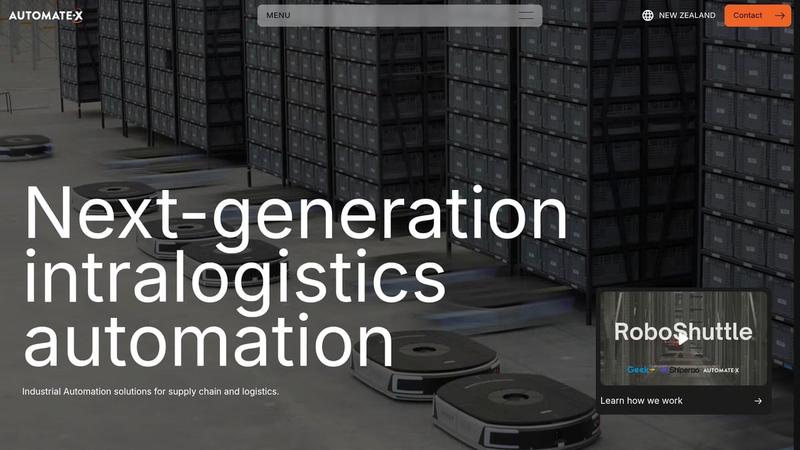
Automate-X specialises in addressing industry challenges such as labour shortages, space constraints, and rising costs. Their custom solutions are designed for efficiency, accuracy, and scalability, serving industries from distribution to e-commerce.
Clients partnering with Automate-X report measurable improvements in productivity solutions, including streamlined workflows and reduced operational expenses. The company’s local presence ensures responsive support and deep industry knowledge, making them a top choice for organisations in New Zealand and Australia seeking to enhance their productivity solutions.
Integrating Automation with Digital Productivity Platforms
Seamless integration between warehouse automation and digital productivity solutions is critical for maximising operational efficiency. Connecting warehouse systems with business productivity tools enables real-time data sharing and streamlined workflows.
Dashboards provide instant visibility into inventory, shipping status, and team performance, supporting informed decision-making. Automated alerts and workflow triggers help teams respond to issues promptly, minimising delays and manual intervention.
Logistics companies using unified platforms have reduced manual data entry by as much as 80 percent, highlighting the value of open APIs and integration partners. This integration not only boosts productivity solutions but also fosters collaboration between warehouse and office teams.
Case Studies and Industry Benchmarks
Real-world case studies highlight the tangible impact of automation on productivity solutions. For instance, a fast-moving consumer goods (FMCG) warehouse achieved a 35 percent productivity boost after implementing automation technologies.
A pharmaceutical distributor reduced picking errors to below 0.1 percent, while a retailer scaled fulfilment capacity by 300 percent with automated systems. Industry benchmarks show strong returns on investment, with many organisations seeing payback periods of less than two years.
Over 70 percent of large logistics firms plan to expand automation in 2026, reflecting a clear trend toward embracing advanced productivity solutions. These examples underline the importance of continuous improvement and adoption of best practices in the sector.
The Future of Productivity: Emerging Technologies and Best Practices
As organisations look ahead to 2026 and beyond, the landscape of productivity solutions is evolving rapidly. With the convergence of artificial intelligence, unified platforms, and a renewed focus on employee wellbeing, businesses are rethinking how they work. Let us explore the emerging technologies and best practices that are set to define the next era of productivity.
10 Productivity Problems that can be Solved with a Functional Planner
Next-Gen AI and Machine Learning Applications
AI and machine learning are at the forefront of productivity solutions in 2026. AI copilots now assist with knowledge work, recommending actions, automating routine decisions, and providing real-time analytics. Predictive analytics tools allow businesses to anticipate demand and allocate resources more effectively.
Natural language processing enables advanced document search and workflow automation, while adaptive AI learns from user behaviour, continuously improving its recommendations. According to AI's Impact on Productivity Growth, current-generation AI has the potential to double annual labour productivity growth rates, underscoring its transformative power.
These breakthroughs are not just futuristic concepts—they are driving measurable results today, helping teams save time and focus on higher-value work. As AI becomes core to productivity solutions, its role will only expand.
The Rise of Workplace Superapps and Unified Platforms
The modern workplace is moving towards superapps that consolidate chat, meetings, documents, and workflows into one seamless interface. These unified platforms are central to the next generation of productivity solutions, reducing the need for multiple logins and improving user adoption.
Features like customisable dashboards and modular app ecosystems enable teams to tailor their digital workspace to specific needs. Centralised data storage and integrated analytics allow for better decision-making and IT management.
Platforms such as Zoom Workplace exemplify this trend, offering a single source of truth for communication and collaboration. By minimising context switching, these superapps help teams stay focused and productive throughout the day.
Human-Centric Productivity: Balancing Automation and Engagement
While automation is revolutionising productivity solutions, human-centric approaches remain essential. Empathy, creativity, and critical thinking are irreplaceable skills that technology should support, not replace.
Organisations are investing in tools for real-time feedback, employee recognition, and wellbeing analytics. Flexible hybrid work policies and a culture of trust are proven to boost retention and performance. As discussed in AI's Influence on Workplace Culture, responsible AI adoption is reshaping workplace culture, making it vital to balance automation with engagement.
By integrating both technology and human factors, businesses can create productivity solutions that empower people and drive sustainable success.
Security, Compliance, and Data Privacy in 2026
Security and compliance are top priorities as organisations adopt advanced productivity solutions. Evolving regulations mean that businesses must ensure robust data handling, encryption, and access controls.
Modern platforms now offer built-in security features, including end-to-end encryption and detailed permission settings. Compliance certifications are increasingly sought after, providing assurance to both users and regulators.
Regular training on digital safety and privacy is crucial for every team member. By staying proactive, organisations can protect sensitive information and prepare for future regulatory changes while deploying productivity solutions.
Actionable Best Practices for Maximising Productivity
To get the most from productivity solutions, organisations should regularly review and update their digital toolkits. Investing in ongoing user training and change management ensures high adoption rates and maximises ROI.
Analytics should be leveraged for continuous improvement, highlighting areas for optimisation. Cross-functional collaboration and knowledge sharing help break down silos and foster innovation.
Before a full-scale rollout, pilot new technologies to identify potential challenges early. Organisations with continuous improvement programs outperform peers by 25 percent, underlining the value of adaptability and strategic planning when implementing productivity solutions.
As we’ve explored, productivity in 2026 is all about harnessing intelligent automation, seamless digital platforms, and industry-specific solutions to stay ahead in a rapidly changing world. Whether you’re looking to streamline your warehouse, improve order accuracy, or scale your logistics operations, the right automation strategy can unlock real, measurable gains. If you’re ready to take the next step and discover how these innovations can work for your business, I invite you to Explore Automation Solutions—and see what’s possible when you combine modern robotics, smart software, and expert integration.