

Warehouse Management System Automation in 2026
Share on
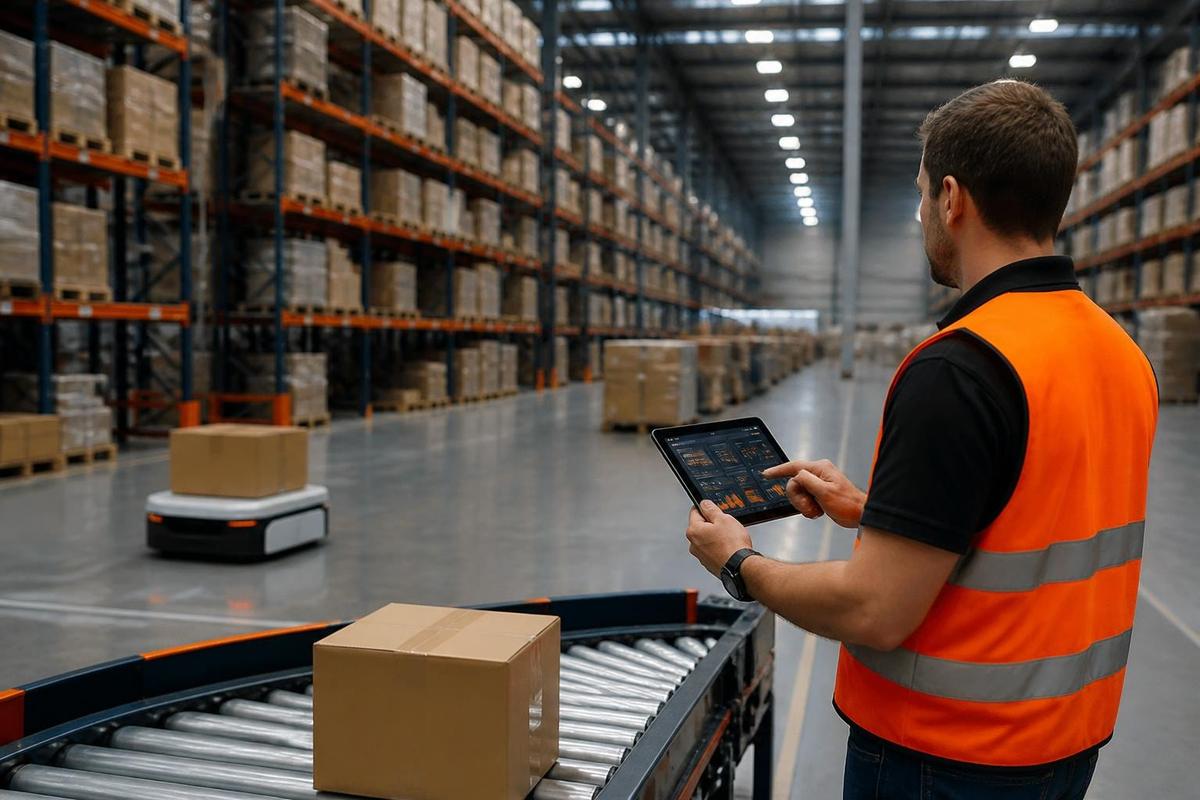
Modern warehouses face unprecedented pressure to handle increasing order volumes while maintaining accuracy and controlling costs. Manual processes and legacy systems can no longer keep pace with customer expectations for same-day delivery and real-time inventory visibility. Warehouse management system automation represents a fundamental shift in how logistics operations handle everything from receiving to dispatch, combining intelligent software with physical automation technologies to create truly responsive distribution environments. This transformation goes far beyond simple barcode scanning, encompassing autonomous mobile robots, AI-driven decision-making, and seamless integration across the entire supply chain ecosystem.
The Foundation of Automated Warehouse Management
Warehouse management system automation builds upon traditional WMS capabilities by introducing intelligent decision-making and autonomous execution. While conventional warehouse management systems provide visibility and control, automated systems actively orchestrate activities without constant human intervention.
Core components of automated WMS architecture include:
- Real-time inventory tracking with automatic location updates
- AI-powered task allocation and prioritisation algorithms
- Integration layers connecting robotics, conveyors, and sortation systems
- Predictive analytics for demand forecasting and resource planning
- Automated exception handling and workflow adaptation
The distinction between basic WMS and warehouse management system automation lies in the level of autonomous decision-making. Automated systems continuously analyse operational data, adjusting workflows in response to changing conditions without manual oversight.
Integration Architecture and System Connectivity
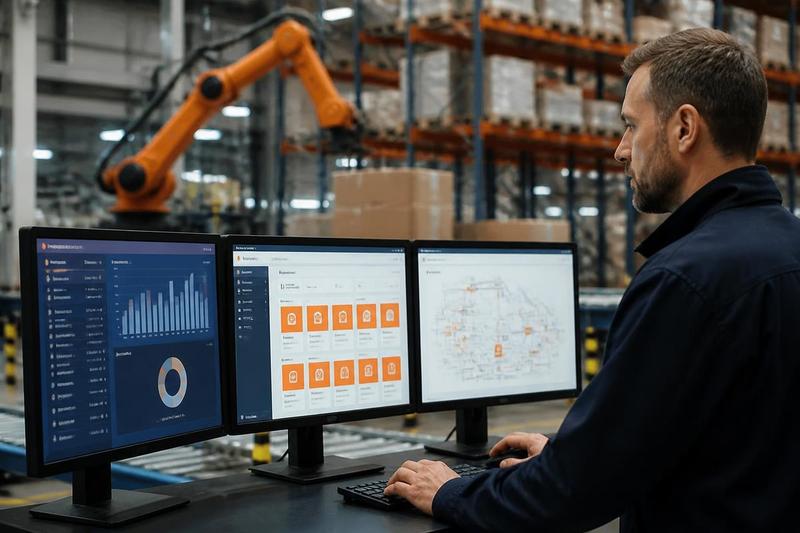
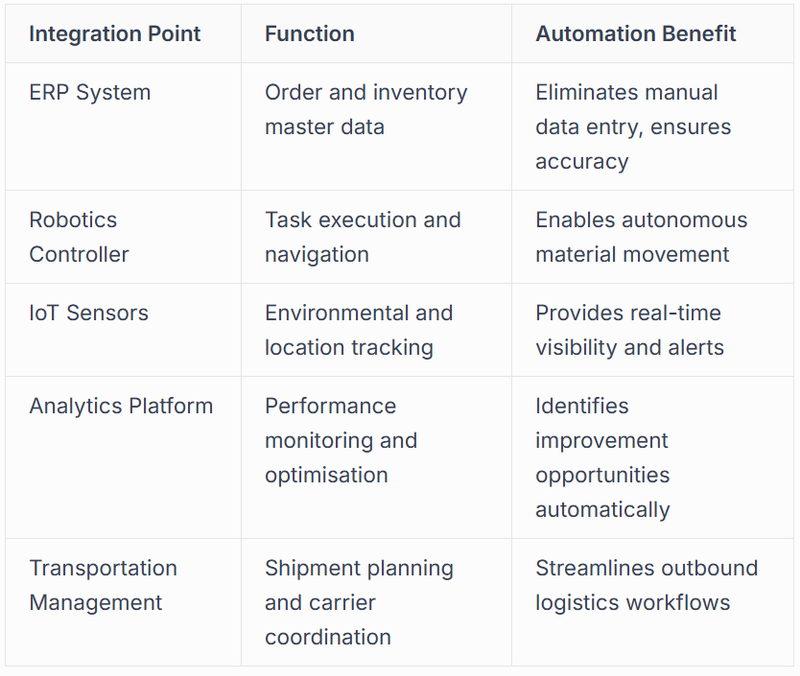
Successful warehouse management system automation requires robust integration across multiple technology layers. The WMS serves as the orchestration engine, coordinating activities between enterprise resource planning systems, transportation management platforms, and physical automation equipment.
Modern integration approaches utilise API-driven architectures that enable real-time data exchange. When an order enters the system, the WMS automatically determines optimal picking strategies, assigns tasks to available resources, and coordinates robot movements to fulfil the requirement efficiently.
Technologies Driving Warehouse Automation Evolution
The landscape of warehouse management system automation continues to evolve rapidly, driven by advances in robotics, artificial intelligence, and sensor technologies. These innovations enable capabilities that were impossible just a few years ago.
Autonomous mobile robots represent one of the most visible automation technologies in modern warehouses. Unlike fixed conveyor systems, automated guided vehicles and robotic forklifts adapt to changing layouts and requirements. Research into warehouse multi-robot automation systems demonstrates sophisticated path planning algorithms that enable multiple robots to navigate shared spaces efficiently.
Artificial Intelligence and Machine Learning Applications
AI technologies transform warehouse management system automation from rule-based execution to adaptive intelligence. Machine learning algorithms analyse historical data to predict order patterns, optimise storage locations, and improve picking routes continuously.
Deep reinforcement learning applications enable dynamic order picking that adapts to real-time warehouse conditions. These systems learn from millions of simulated scenarios, developing strategies that human planners might never consider.
Key AI applications in automated WMS:
- Demand forecasting to pre-position inventory
- Slotting optimisation based on product velocity and order correlation
- Dynamic labour allocation responding to workload fluctuations
- Quality control through computer vision and anomaly detection
- Predictive maintenance preventing equipment failures
The evolution of smart warehouse operations demonstrates how emerging technologies integrate to create increasingly sophisticated automation ecosystems. Computer vision systems verify pick accuracy, while natural language processing enables voice-directed workflows that keep operators' hands free.
Implementing Warehouse Management System Automation
Transitioning to warehouse management system automation requires careful planning and a structured implementation approach. Successful projects balance technology capabilities with operational requirements, avoiding the pitfall of automating inefficient processes.
Assessment and Strategy Development
The implementation journey begins with comprehensive assessment of current operations. Understanding existing workflows, pain points, and performance metrics establishes the baseline for measuring automation success.
Critical assessment areas:
- Order profile analysis (volume, SKU count, order lines, seasonality)
- Facility layout and material flow patterns
- Current system capabilities and integration points
- Labour availability and skill requirements
- Growth projections and scalability needs
This analysis informs the automation strategy, determining which processes offer the highest return on investment. Some operations benefit from end-to-end automation, while others achieve optimal results through targeted improvements in specific areas.
For businesses beginning their automation journey, starting with manageable scope reduces risk and builds organisational capability. The Automate-X GTP Starter Grid offers an accessible entry point for small and medium enterprises, providing goods-to-person automation without the complexity and cost of full-scale systems.

Configuration and Integration Development
Setting up a warehouse management system for automation involves more than software configuration. The WMS must understand the capabilities and constraints of connected automation equipment, translating business logic into executable machine instructions.
Integration development typically proceeds through several layers:
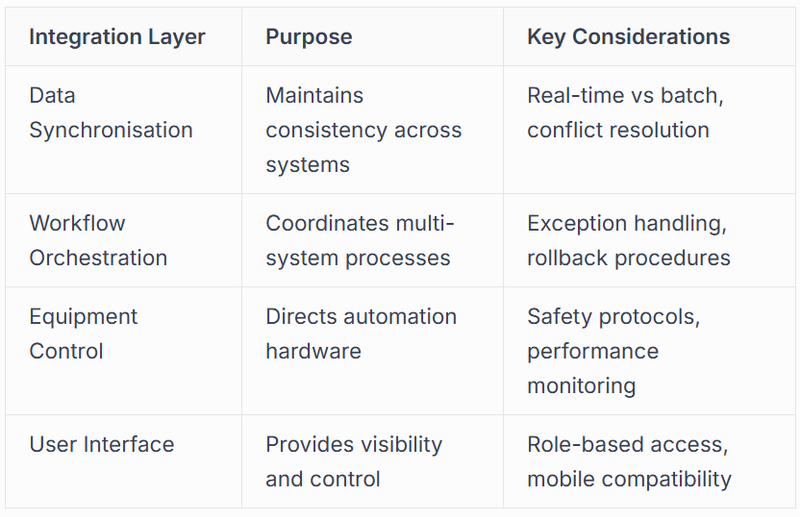
Modern WMS platforms offer pre-built connectors for common automation technologies, accelerating integration timelines. However, custom development remains necessary for unique equipment combinations or specialised operational requirements.
Operational Benefits and Performance Gains
Warehouse management system automation delivers measurable improvements across multiple performance dimensions. While specific results vary based on operation type and implementation scope, common benefits emerge consistently.
Productivity improvements represent the most immediate impact. Automated systems eliminate walking time, reduce search activities, and maintain consistent work rates regardless of shift or season. Operations typically observe 40-60% productivity increases in picking activities, with some achieving even higher gains.
Accuracy and Quality Enhancement
Automated verification at each process step dramatically reduces error rates. Barcode scanning, weight verification, and computer vision confirmation ensure the right products reach the right destinations.
Error reduction cascades through the operation, eliminating costly returns, improving customer satisfaction, and reducing quality control labour. Many operations achieve 99.9% accuracy rates, compared to 98-99% with manual processes.
The financial impact extends beyond direct labour savings. Reduced errors mean fewer expedited shipments, lower customer service costs, and improved inventory accuracy that reduces safety stock requirements.
Scalability and Growth Enablement
Traditional warehouse operations face significant challenges when scaling to meet growth. Hiring and training additional staff takes time, and physical space constraints limit throughput expansion.
Warehouse management system automation provides scalable capacity that adapts to demand fluctuations. During peak periods, existing automation equipment simply operates longer hours or processes tasks more intensively. This flexibility proves particularly valuable for e-commerce operations experiencing rapid growth or seasonal spikes.
Scalability advantages include:
- Adding capacity through software and equipment rather than facility expansion
- Handling volume increases without proportional labour growth
- Adapting to new product types or order profiles through configuration changes
- Supporting multi-site operations with standardised processes
- Enabling automation for growing businesses without disruptive overhauls
Research into reinforcement learning environments for warehouse optimisation demonstrates how AI-powered systems continuously improve performance as they process more orders, creating a virtuous cycle of increasing efficiency.
Advanced Technology Integration
The frontier of warehouse management system automation extends into emerging technologies that promise additional capabilities. Blockchain systems offer enhanced traceability and automated inventory verification, particularly valuable in pharmaceutical and food industries where provenance matters.
Collaborative robots work alongside human operators, handling repetitive tasks while humans manage exceptions and complex decisions. This hybrid approach balances automation benefits with human flexibility and problem-solving capabilities.
Digital twin technology creates virtual replicas of physical warehouses, enabling simulation-based optimisation and testing automation changes before deployment. Operators experiment with layout modifications, test new equipment configurations, and train staff in risk-free environments.
Change Management and Workforce Development
Technology implementation represents only part of the warehouse management system automation journey. Organisational change management determines whether automation delivers promised benefits or creates expensive underutilised systems.
Successful change management addresses:
- Clear communication about automation goals and workforce impact
- Comprehensive training programmes covering new systems and processes
- Role redefinition shifting workers from manual tasks to oversight and optimisation
- Performance metrics aligned with automated capabilities
- Continuous improvement culture encouraging feedback and refinement
Staff concerns about job security require transparent, honest communication. While warehouse management system automation reduces certain manual tasks, it creates new roles in system monitoring, maintenance, data analysis, and exception handling. Operations that invest in workforce development experience smoother transitions and better long-term results.
The skill requirements shift from physical endurance toward technical capability and problem-solving. Training programmes must prepare staff for these new responsibilities while maintaining operational continuity during the transition period.
Measuring Automation Success
Defining success metrics before implementation enables objective performance evaluation and continuous improvement. Warehouse management system automation generates extensive operational data, providing visibility into previously unmeasurable aspects of warehouse performance.
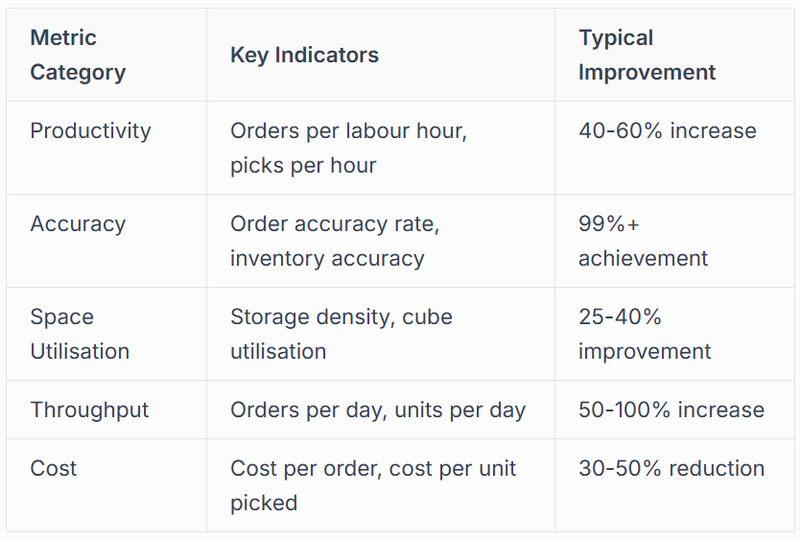
Beyond operational metrics, automation impacts strategic capabilities. Reduced lead times enable faster market response. Improved accuracy strengthens customer relationships. Enhanced visibility supports data-driven decision-making across the organisation.
Regular performance reviews identify optimisation opportunities. Automated systems generate insights into process bottlenecks, equipment utilisation patterns, and workflow inefficiencies that inform continuous improvement initiatives.
Industry-Specific Considerations
Different warehouse types face unique challenges that influence warehouse management system automation approaches. Third-party logistics providers handle diverse products and customers, requiring flexible automation that adapts to varying requirements. E-commerce operations prioritise speed and accuracy for small, multi-item orders.
Industry-specific automation priorities:
- Pharmaceutical warehouses: Batch tracking, expiry management, temperature control integration, regulatory compliance documentation
- Food and beverage: First-in-first-out enforcement, allergen segregation, cold chain monitoring, quality assurance workflows
- Manufacturing: Raw material kitting, production sequencing, work-in-process tracking, reverse logistics handling
- FMCG distribution: High-volume processing, promotional activity management, multi-channel fulfilment, returns processing
Cold storage environments present particular technical challenges. Standard automation equipment may not function reliably in sub-zero temperatures, requiring specialised solutions. Warehouse management system automation in these environments must account for condensation, battery performance degradation, and worker safety considerations.
The pharmaceutical industry demands rigorous traceability and lot control that automated systems handle more reliably than manual processes. Every product movement generates audit trails automatically, simplifying compliance and enabling rapid recall execution if required.
Future Directions in Warehouse Automation
The trajectory of warehouse management system automation points toward increasingly autonomous, adaptive systems requiring minimal human oversight. Artificial intelligence capabilities continue advancing, enabling more sophisticated decision-making and predictive capabilities.
Autonomous systems will handle routine operations entirely, escalating only genuine exceptions to human operators. This shifts the workforce role from task execution to system optimisation and strategic planning.
Integration across supply chain partners creates extended automation ecosystems. Orders flow automatically from customer systems through warehouse management system automation into carrier networks, with real-time visibility and coordination across all parties.
Sustainability considerations increasingly influence automation design. Energy-efficient robotics, optimised routing that reduces travel distances, and improved space utilisation that defers facility expansion all contribute to environmental objectives while delivering operational benefits.
The convergence of 5G connectivity, edge computing, and advanced sensors enables real-time responsiveness previously impossible. Warehouse management system automation will react to changing conditions instantaneously, adjusting workflows before problems impact operations.
Warehouse management system automation represents a strategic investment that transforms logistics operations from cost centres into competitive advantages. The combination of intelligent software, advanced robotics, and seamless integration delivers productivity gains, accuracy improvements, and scalability that manual processes cannot match. Automate-X brings together robotics, warehouse software, and system integration expertise to help logistics, 3PL, e-commerce, and manufacturing operations implement automation solutions tailored to their specific requirements. Whether you're taking the first steps toward automation or expanding existing capabilities, the right technology partner makes the difference between implementation success and costly missteps.