

Warehouse Systems Guide: Optimising Efficiency in 2026
Share on
Warehouse systems are undergoing explosive transformation in 2026, with double-digit annual growth rates in automation reshaping the logistics, e-commerce, and manufacturing sectors. Businesses face growing pressure to optimise efficiency as labour shortages, rising costs, and customer expectations for speed and accuracy intensify. Advanced warehouse systems now stand at the forefront, providing solutions to these challenges and helping companies remain competitive.
This guide delivers a comprehensive roadmap to warehouse efficiency, covering the latest technologies, proven methodologies, and real-world case studies. Explore core system types, essential innovations, implementation steps, integration best practices, 2026 trends, and practical strategies to future-proof your operations.
The Evolution of Warehouse Systems: From Manual to Automated
Warehousing has undergone a profound transformation over the last few decades. The journey from manual, paper-based processes to today’s advanced warehouse systems reflects the relentless pace of change in global supply chains. Early warehouses relied on human labour for every task, from inventory tracking to picking and packing, which often resulted in errors and inefficiencies.
Historical Overview and Drivers of Change
The shift from manual warehouses to digital and automated warehouse systems has been driven by several powerful forces. The rise of global e-commerce has placed immense pressure on businesses to fulfil orders faster and with greater accuracy. Labour shortages, particularly in logistics and manufacturing, have made it clear that relying solely on human effort is no longer sustainable.
The COVID-19 pandemic was a turning point, accelerating the adoption of warehouse systems at an unprecedented rate. According to market forecasts, the global warehouse automation sector is expected to exceed $71 billion by 2033, reflecting ongoing double-digit annual growth. Real-time inventory visibility and the need to withstand supply chain disruptions have further fuelled this trend.
Traditional warehouses, often cluttered and dependent on manual paperwork, now stand in stark contrast to technology-driven facilities. Modern examples include e-commerce fulfilment centres that have upgraded to automated storage and retrieval systems, robotic picking, and integrated software. These businesses have not only increased throughput but also enhanced accuracy and customer satisfaction.
Customisation has become essential as every operation has unique requirements. Flexible solutions allow companies to adapt to fluctuating demand, different product types, and evolving customer expectations. For a comprehensive overview of how these changes have shaped the industry, see Automated Warehouse Systems Explained.
Core Components of Modern Warehouse Systems
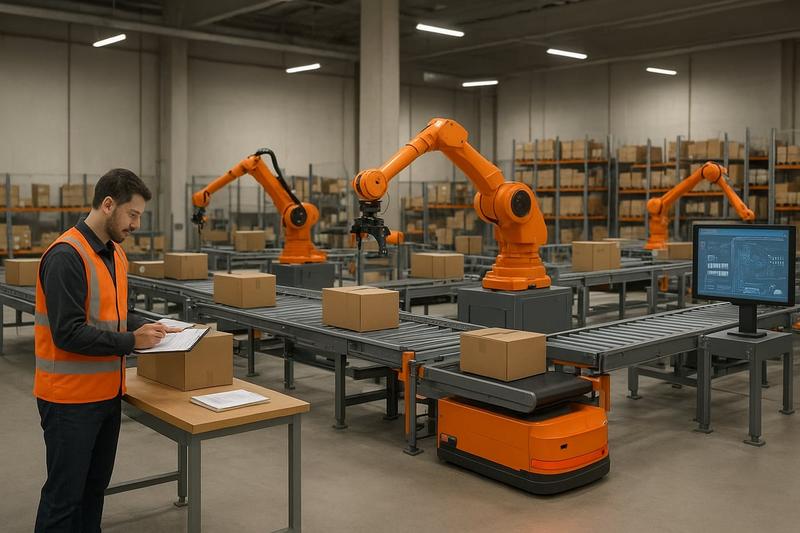
Today’s warehouse systems represent the seamless integration of hardware, software, and smart devices. Hardware includes robotics such as Automated Guided Vehicles (AGVs), Autonomous Mobile Robots (AMRs), and conveyor systems. These machines handle goods movement, picking, and sortation, reducing manual intervention and speeding up processes.
On the software side, Warehouse Management Systems (WMS) and Warehouse Control Systems (WCS) serve as the digital brains, orchestrating inventory, orders, and equipment. The Internet of Things (IoT) brings connectivity, enabling real-time tracking and monitoring of assets throughout the facility.
Key components of modern warehouse systems include:
- Automated Storage and Retrieval Systems (AS/RS)
- Conveyor and sortation systems
- Robotics (AGVs, AMRs, robotic arms)
- Warehouse management and control software
- IoT devices and real-time sensors
These elements work together to create a unified, efficient environment. For instance, an e-commerce centre might use AS/RS for high-density storage, AMRs for picking, and a WMS to coordinate every movement. Integration and interoperability are now foundational, ensuring that data flows freely and operations remain agile as business needs evolve.
Types of Warehouse Systems and Their Applications
Warehouse systems have evolved to meet the growing complexity and demands of modern supply chains. Businesses today must choose the right system type to ensure efficiency, accuracy, and scalability. Understanding the different options and their applications is essential for making informed decisions.
Manual, Semi-Automated, and Fully Automated Systems
Manual warehouse systems rely on paper-based processes and human labour for inventory tracking, picking, and packing. These setups are common in smaller operations or industries where automation is less feasible. However, manual systems often struggle with inefficiencies, high error rates, and limited scalability.
Semi-automated warehouse systems introduce technology such as barcode scanners, handheld devices, and basic conveyor belts. These solutions improve accuracy and speed by automating routine tasks, yet still require significant human involvement. For example, a manufacturer might use conveyors for transporting goods while staff handle sorting and packing.
Fully automated warehouse systems represent the pinnacle of efficiency. These solutions incorporate robotics, Automated Storage and Retrieval Systems (AS/RS), and AI-driven software to minimise manual intervention. E-commerce fulfilment centres often use robotic arms for picking and AMRs for goods movement, resulting in faster processing and reduced errors.
Choosing among manual, semi-automated, or fully automated warehouse systems depends on factors like volume, product type, workforce availability, and growth plans. Each system type offers unique advantages and limitations, making it crucial to assess operational needs carefully.
Specialised Warehouse Systems for Industry Needs
Modern warehouse systems are frequently tailored to address specific industry challenges. Goods-to-person systems, for instance, deliver inventory directly to operators, significantly reducing travel time and boosting picking speed. For a deeper look into these solutions, see Goods-to-Person Automation Insights.
Automated conveyor systems streamline the flow of materials throughout the warehouse, reducing manual handling and increasing throughput. Robotic picking and sortation solutions are essential for high-volume operations, improving order accuracy and managing diverse product ranges.
Palletising and depalletising robots support continuous operations, enhancing ergonomics and reducing the risk of workplace injuries. Industry-specific warehouse systems are designed for cold storage, pharmaceuticals, FMCG, 3PL, and e-commerce sectors, each with unique requirements.
A compelling case study comes from apparel warehouses, where robotic sortation manages complex SKUs with high accuracy and flexibility. Scalability is another key feature, as advanced warehouse systems can adapt to fluctuating demand and changing business needs.
Key Benefits and ROI of Advanced Systems
Investing in advanced warehouse systems delivers measurable benefits. Robotics and intelligent software allow for 24/7 operations, dramatically increasing throughput. Real-time inventory tracking and automated picking reduce errors, leading to higher customer satisfaction and fewer returns.
Space optimisation is achieved through vertical storage solutions and high-density AS/RS, maximising warehouse capacity. Worker safety improves as robotics handle repetitive or hazardous tasks, lowering the risk of injuries. The workforce shifts from manual roles to oversight and exception management, enhancing job satisfaction and retention.
Competitor data shows advanced warehouse systems can achieve up to 99.9 percent uptime and significantly reduce operational costs. Return rates drop, order fulfilment speeds improve, and customer experiences are elevated. Ultimately, the return on investment is evident in higher productivity, better resource utilisation, and long-term business resilience.
Essential Technologies Powering Warehouse Efficiency in 2026
The landscape of warehouse systems in 2026 is shaped by rapid technology adoption, connectivity, and automation. Businesses are leveraging a diverse toolkit of advanced technologies to streamline operations, improve accuracy, and drive productivity. Understanding these essential solutions is critical for any organisation aiming to future-proof its warehouse systems.
Robotics and Autonomous Vehicles
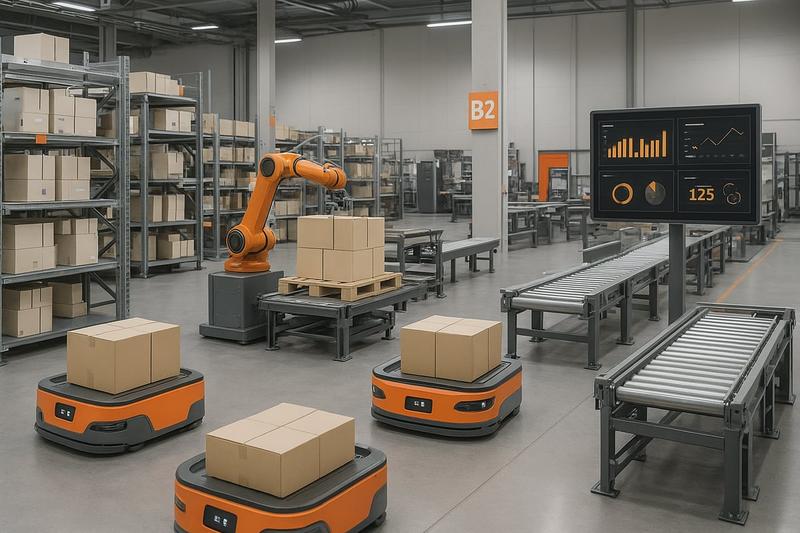
Robotics are at the heart of next-generation warehouse systems. Automated Guided Vehicles (AGVs) and Autonomous Mobile Robots (AMRs) transport products across the facility with speed and precision. These robots reduce manual travel, minimise errors, and support around-the-clock operations.
Robotic arms are increasingly deployed for high-speed picking, palletising, and handling mixed-SKU loads. Tactile mobile manipulators now manage delicate or irregular items, an innovation driven by the need for flexibility in fast-moving consumer goods (FMCG) warehouses.
Automated Storage and Retrieval Systems (AS/RS) provide high-density storage and efficient order picking. For a deeper dive into how AS/RS transforms warehouse systems, visit the Automated Storage and Retrieval Systems resource.
Warehouse Management Software (WMS, WCS, WES)
Powerful software orchestrates all operations in modern warehouse systems. A Warehouse Management System (WMS) acts as the central command, managing inventory, orders, and labour allocation. Warehouse Control Systems (WCS) and Warehouse Execution Systems (WES) direct the flow of goods and coordinate automated equipment in real time.
Cloud-based platforms offer scalability and enable businesses to manage multiple sites from anywhere. Integrated solutions link with automation like AutoStore, supporting dynamic order fulfilment and rapid response to demand fluctuations. Seamless software integration ensures all components of warehouse systems work as a unified whole.
IoT, Sensors, and Real-Time Data
Internet of Things (IoT) devices and sensors bring new levels of visibility to warehouse systems. These technologies enable precise asset tracking, monitor equipment performance, and ensure inventory accuracy. RFID and barcode systems automate cycle counts, reducing the risk of stockouts or overstocking.
Real-time dashboards display actionable insights, helping managers make informed decisions quickly. For example, automated cycle counting with RFID technology drastically reduces the need for manual audits, saving time and improving data reliability across warehouse systems.
Artificial Intelligence and Machine Learning
Artificial intelligence is revolutionising warehouse systems by enabling smarter, data-driven decisions. AI-driven demand forecasting ensures optimal stock levels and efficient inventory placement. Machine learning algorithms optimise picking routes, predict equipment maintenance needs, and automate complex tasks.
The result is fewer errors, faster order fulfilment, and proactive management of daily operations. As AI and machine learning become more accessible, warehouse systems are achieving unprecedented levels of accuracy and efficiency.
Advanced Integration and Customisation
The most effective warehouse systems are tailored to unique business requirements. Modular robotics and scalable storage solutions allow for customisation and easy expansion as needs change. Robotics-as-a-Service (RaaS) models lower the barrier to entry, making advanced automation accessible to more organisations.
Vendor-agnostic integration lets businesses combine best-in-class automation with any warehouse management platform. Pharmaceutical warehouses, for example, benefit from integrating automated sortation with compliance tracking, ensuring both efficiency and regulatory adherence. Flexibility and seamless integration are now fundamental features of leading warehouse systems.
Step-by-Step Guide to Implementing Warehouse Systems for Maximum Efficiency
Optimising warehouse systems requires a structured, staged approach. By following these six essential steps, logistics and supply chain leaders can ensure their investments drive measurable gains in efficiency, accuracy, and scalability.

Step 1: Assessing Warehouse Needs and Setting Objectives
Begin by conducting a thorough review of current operations. Map out workflows, track inventory movement, and identify bottlenecks that hinder throughput or accuracy.
Involve stakeholders from operations, IT, and management to capture a holistic view of the warehouse systems landscape. This collaborative approach ensures all pain points are addressed and opportunities for improvement are surfaced.
Define clear, measurable objectives for your warehouse systems project. These might include boosting throughput, reducing picking errors, cutting operational costs, or enabling scalability to handle seasonal peaks. For example, a 3PL provider might discover that manual picking is the main constraint, leading to slower order fulfilment.
Documenting these needs and goals serves as the foundation for every subsequent step and keeps the project aligned with business priorities.
Step 2: Evaluating and Selecting the Right Technologies
With objectives in place, compare available technologies that align with your warehouse systems requirements. Assess automated storage and retrieval systems (AS/RS), autonomous mobile robots (AMRs), automated guided vehicles (AGVs), conveyors, and advanced warehouse management software.
Consider compatibility with existing infrastructure and future scalability. Evaluate vendor support, local expertise, and integration capabilities. For picking processes, refer to resources like 7 Essential Order Picking System Options for a detailed breakdown of leading solutions.
Use a comparison table to weigh pros and cons:
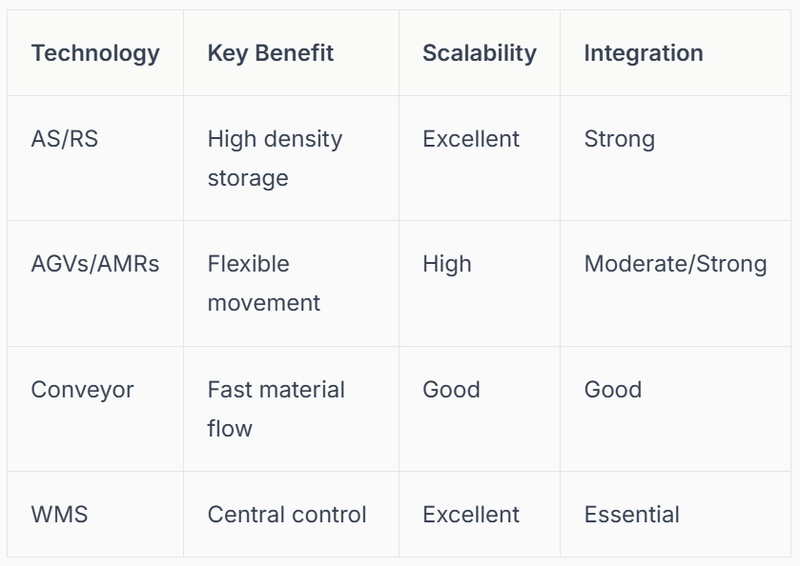
An e-commerce company, for instance, might combine goods-to-person systems with robotic picking to manage peak season demand efficiently.
Step 3: Designing and Customising the Solution
Once technologies are selected, design your warehouse systems solution to match facility layout, product mix, and order profiles. Collaboration with automation specialists is crucial at this stage to ensure configurations deliver optimal performance.
Tailor the design for modularity and future upgrades. This allows your warehouse systems to adapt as business needs evolve. For example, a cold storage facility may require robotics rated for low temperatures and specific racking configurations.
Create process flow diagrams to visualise how goods, data, and people interact within the system. This holistic view helps identify additional opportunities for efficiency gains.
Step 4: Integration with Existing Systems and Processes
Connect new automation technologies with your current ERP, WMS, and supply chain platforms. Seamless integration is vital for unified operations and real-time inventory visibility.
Test all connections thoroughly to avoid data silos and ensure robust performance. Interoperability means your warehouse systems can synchronise orders, inventory, and workflows across departments and external partners.
A pharmaceutical warehouse, for example, may integrate automated sortation with compliance tracking to meet industry regulations. This step ensures that automation enhances—not disrupts—existing business processes.
Step 5: Change Management and Workforce Training
Successful implementation of warehouse systems relies on preparing your team for new roles and workflows. Develop comprehensive training programmes tailored to system oversight, monitoring, and exception management.
Encourage open communication, address concerns, and gather feedback throughout the transition. This fosters a culture of continuous improvement and staff engagement.
As automation takes over manual tasks, employees often shift to supervisory and technical roles. For example, a team previously focused on manual picking may transition to monitoring system dashboards and handling exceptions.
Step 6: Testing, Optimisation, and Scaling Up
Pilot new warehouse systems in a controlled environment before full deployment. Monitor key metrics such as throughput, accuracy, and system uptime to identify any issues early.
Use pilot results to optimise processes, tweak system parameters, and address challenges. Once performance targets are met, scale up automation across additional operations or sites.
A FMCG distributor, for instance, may expand from a single automated zone to a network of facilities after a successful pilot. This staged approach ensures warehouse systems deliver sustained value and remain aligned with organisational goals.
Integration Best Practices: Connecting Systems for Seamless Operations
Seamless integration is the backbone of high-performing warehouse systems in 2026. As technology advances, the ability to connect disparate platforms into a unified ecosystem becomes a critical differentiator for businesses seeking efficiency, scalability, and real-time visibility.
Building a Unified Warehouse Ecosystem
Modern warehouse systems must integrate with ERP, TMS, and various supply chain platforms to enable smooth operations and information flow. This integration ensures that all components communicate efficiently, reducing errors and manual intervention.
Key strategies for building a unified ecosystem include:
- Adopting open API frameworks for easy connectivity
- Prioritising vendor-agnostic solutions for maximum flexibility
- Implementing middleware for seamless data exchange
For example, many businesses achieve robust integration by connecting automation solutions like AutoStore with platforms such as SAP or Oracle. For further guidance, see these Warehouse Management System Integration Best Practices.
Data-Driven Decision Making and Analytics
Integrated warehouse systems generate vast amounts of data daily. Leveraging this data through real-time analytics allows organisations to identify inefficiencies, forecast demand, and optimise resource allocation.
Cloud-based WMS platforms offer dashboards and reporting tools that support multi-site coordination. By analysing trends and KPIs, warehouse managers gain actionable insights to continuously refine processes and enhance decision-making.
A table summarising the benefits of data-driven integration:

Ensuring Security, Compliance, and System Resilience
As warehouse systems become more interconnected, cybersecurity and compliance take centre stage. It is essential to:
- Apply robust access controls and encryption protocols
- Conduct regular vulnerability assessments
- Ensure compliance with industry standards (e.g., food safety or pharmaceutical regulations)
System resilience is equally important. Building redundancy, implementing disaster recovery plans, and monitoring system health help maintain uptime and protect sensitive data across all integrated platforms.
Continuous Improvement and Future-Proofing
Integration is not a one-time task for warehouse systems; it requires ongoing refinement. Establish feedback loops to capture user input and system performance data. Plan for regular technology upgrades and evolving business needs by choosing modular automation solutions.
Modular systems enable businesses to adapt quickly to market changes, scale operations, and add new functionalities without major disruptions. Continuous improvement ensures warehouse systems remain competitive and aligned with long-term goals.
2026 Trends and Innovations Redefining Warehouse Efficiency
The year 2026 is set to redefine warehouse systems with an unprecedented pace of technological innovation. Businesses are rapidly adopting advanced solutions to stay ahead in an increasingly competitive market. Let us explore the trends and innovations transforming warehouse systems today.
Robotics and Autonomous Solutions
Robotics are at the heart of next-generation warehouse systems. Automated Guided Vehicles (AGVs) and Autonomous Mobile Robots (AMRs) are now standard for moving goods efficiently across facilities. Robotic picking arms and tactile mobile manipulators handle diverse products with speed and precision, catering to high-volume and complex environments.
Apparel and general merchandise warehouses use robotic sortation to boost throughput and accuracy. According to Warehouse Automation Market Growth Statistics, double-digit growth rates underline the urgency to automate. These innovations allow warehouse systems to operate around the clock, overcoming labour shortages and rising demand.
AI, Machine Learning, and Predictive Analytics
Artificial intelligence is transforming warehouse systems by driving smarter, data-led decisions. AI-powered demand forecasting, route optimisation, and maintenance scheduling are now the norm. Machine learning algorithms continuously refine picking strategies, reducing errors and increasing efficiency.
Predictive analytics minimises downtime by identifying potential issues before they occur. For example, predictive maintenance helps maintain system uptime at 99.9 percent. These AI capabilities allow warehouse systems to deliver exceptional speed and reliability.
IoT and Connected Warehouses
IoT technology is making warehouse systems smarter and more transparent. Sensors, RFID tags, and smart devices provide real-time tracking of assets, inventory, and equipment health. Automated cycle counting and asset monitoring reduce shrinkage and manual errors.
Dashboards offer instant visibility into operations, enabling proactive management. IoT-driven inventory management is helping businesses reduce stockouts and optimise space. These connected warehouse systems are essential for agile, data-informed decision making.
Advanced Software Integration and Cloud Platforms
Modern warehouse systems rely on robust software integration. Cloud-based Warehouse Management Systems (WMS) and Warehouse Execution Systems (WES) enable remote monitoring, scalability, and multi-site coordination. Real-time dashboards and mobile access empower managers to make quick, informed decisions.
Cloud WMS can orchestrate operations across multiple distribution centres, ensuring consistency and efficiency. Advanced integration also supports seamless data exchange between warehouse systems and the broader supply chain.
Flexible, Customisable, and Modular Automation
Flexibility is vital for warehouse systems in 2026. Modular robotics and scalable storage allow facilities to adapt to changing product mixes and volumes. Robotics-as-a-Service (RaaS) models lower the barrier to entry, making advanced automation accessible to more businesses.
3PL providers are adopting modular automation to handle seasonal fluctuations with ease. These adaptable warehouse systems support rapid deployment, future upgrades, and ongoing optimisation.
Sustainability and Green Warehousing
Sustainability is now a core driver in warehouse systems innovation. Energy-efficient robotics and automation minimise power consumption and reduce carbon footprint. Smart systems optimise resource usage, cut waste, and promote eco-friendly operations.
The industry is embracing green warehousing practices, from LED lighting to recyclable packaging. These measures not only reduce costs but also support corporate social responsibility goals, making warehouse systems greener and more future-ready.
Future Outlook: What’s Next for Warehouse Systems
Looking ahead, warehouse systems will see even greater convergence of AI, robotics, IoT, and cloud platforms. The focus will shift towards resilience, agility, and customer-centric fulfilment strategies. According to the Global Warehouse Automation Market Forecast, ongoing innovation and investment will fuel continued market expansion.
Continuous improvement and rapid adoption of new technologies will be key. Businesses that embrace these future-ready warehouse systems will maintain a competitive edge in an evolving landscape.
As you look ahead to 2026, it’s clear that warehouse efficiency will be defined by how well you adapt to rapidly evolving automation technologies and industry demands. We’ve explored the trends, essential systems, and proven strategies that set high-performing operations apart—now it’s your turn to put these insights into action. Whether you’re facing labour shortages, rising costs, or the pressure for faster fulfilment, intelligent automation can give your business the edge it needs. If you’re ready to see how advanced solutions can transform your warehouse, Start Your Automation Journey today.