

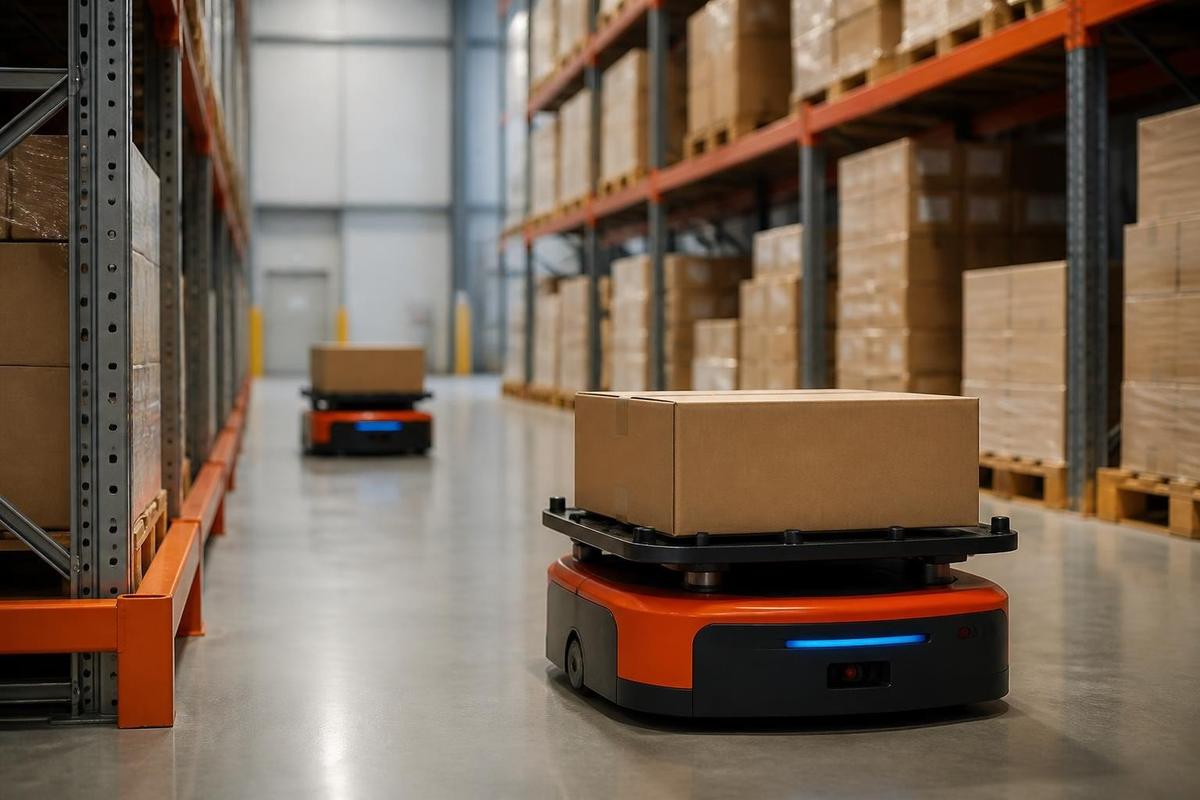
AGV Automation: Transforming Warehouse Operations in 2026
Share on
Modern warehouses face mounting pressure to handle higher order volumes, reduce operational costs, and improve accuracy while managing labour shortages. AGV automation has emerged as a transformative solution, enabling logistics and distribution centres to meet these challenges head-on. As businesses seek competitive advantages in 2026, automated guided vehicles are no longer optional for forward-thinking operations. They represent a fundamental shift in how materials move through facilities, creating safer, more efficient, and highly scalable warehouse environments.
Understanding AGV Automation in Modern Warehousing
AGV automation refers to the systematic deployment of automated guided vehicles to transport materials, products, and components throughout warehouse and distribution facilities without direct human intervention. These intelligent machines navigate predetermined paths using various guidance technologies, from magnetic tape and laser triangulation to vision-based systems and natural feature navigation.
The sophistication of agv automation has evolved dramatically over recent decades. Early systems relied on fixed wire guidance embedded in facility floors, limiting flexibility and requiring significant infrastructure investment. Today's solutions incorporate advanced sensors, artificial intelligence, and fleet management software that coordinate multiple vehicles simultaneously whilst adapting to changing operational requirements.
Core Components of AGV Systems
Successful agv automation implementations integrate several critical elements working in harmony:
- Navigation Technology: Laser scanners, vision systems, magnetic guidance, or natural feature recognition
- Fleet Management Software: Centralized control systems coordinating vehicle traffic, task allocation, and route optimization
- Safety Systems: Obstacle detection sensors, emergency stops, and collision avoidance mechanisms
- Power Infrastructure: Automated charging stations or battery swap systems maintaining continuous operation
- Integration Layers: APIs and middleware connecting AGVs with warehouse management systems and enterprise platforms
The integration of AGVs within Industry 4.0 frameworks has opened new possibilities for flexible automation, enabling warehouses to reconfigure material flows without extensive downtime or infrastructure changes.
Business Benefits Driving AGV Adoption
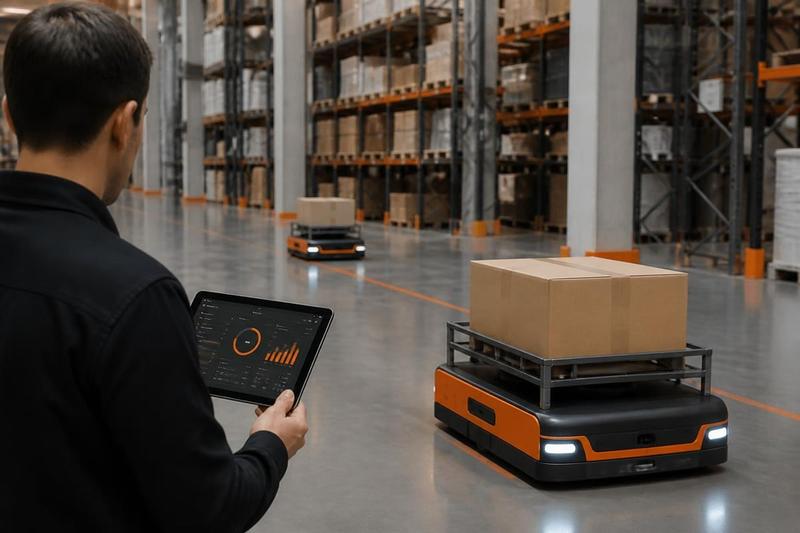
Organizations implementing agv automation report measurable improvements across multiple operational dimensions. The return on investment extends beyond simple labour cost reduction to encompass productivity gains, accuracy improvements, and enhanced workplace safety.
Operational Efficiency Gains
AGVs operate continuously without breaks, maintaining consistent performance throughout shifts. This reliability translates into predictable throughput and improved capacity utilization. Facilities can process higher order volumes without proportional increases in labour costs or physical space.
Key efficiency improvements include:
- Increased throughput by 20-40% through optimized material movement
- Reduced cycle times as vehicles follow optimized paths without delays
- Enhanced space utilization with narrower aisles and dynamic storage strategies
- Consistent performance maintaining productivity across all operating hours
The Coca-Cola bottling logistics case demonstrates these benefits in action, showing how agv automation reduced manual material handling whilst increasing overall operational efficiency in beverage distribution environments.
Safety and Ergonomic Advantages
Manual material handling presents significant injury risks, particularly in high-volume operations involving repetitive movements and heavy loads. AGV automation eliminates these hazards whilst creating safer working environments for remaining staff.
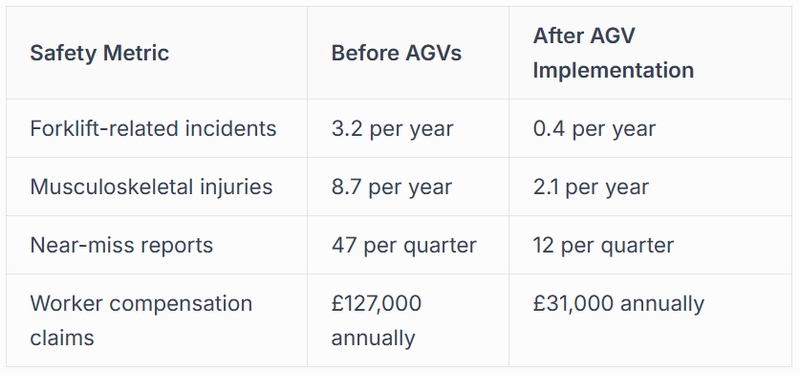
Research into human-AGV interactions in shared workspaces reveals important considerations for maintaining psychological safety alongside physical protection, ensuring workers feel comfortable operating alongside automated systems.
Implementation Strategies for Successful Deployment
Implementing agv automation requires strategic planning that balances technological capabilities with operational realities. Successful deployments follow structured approaches addressing both technical integration and organizational change management.
Assessment and Planning Phase
Before investing in AGV systems, organizations must thoroughly evaluate their operational requirements, facility characteristics, and process flows. This assessment identifies optimal deployment scenarios and helps avoid costly misalignments between technology and actual needs.
Critical planning considerations include:
- Current material flow patterns and volume fluctuations
- Floor condition and load-bearing capacity
- Existing infrastructure compatibility
- Integration requirements with current WMS and ERP systems
- Scalability needs for future growth
For operations considering their first automation steps, the Automate-X GTP Starter Grid provides an accessible entry point, offering scalable goods-to-person automation designed specifically for small and medium businesses starting their warehouse automation journey.
Technology Selection Criteria
Different AGV types suit different operational requirements. Selecting appropriate technology requires matching vehicle characteristics to specific material handling tasks.
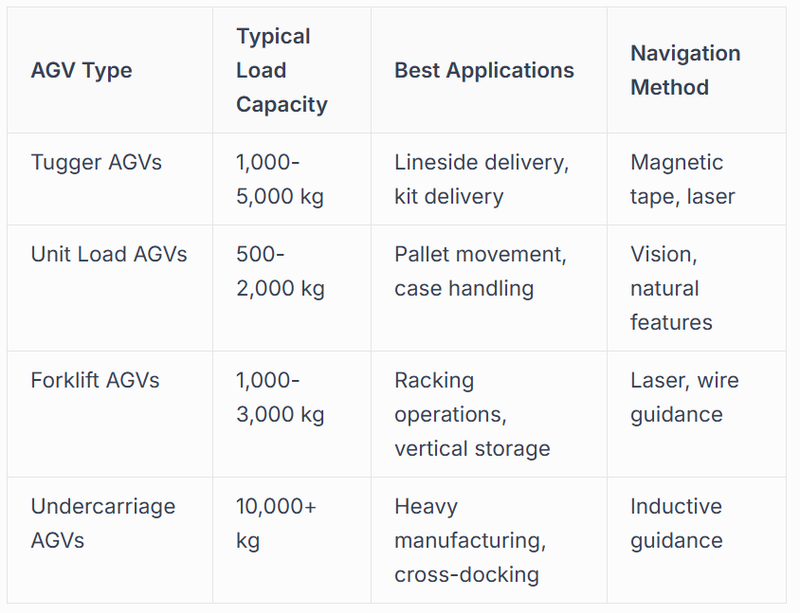
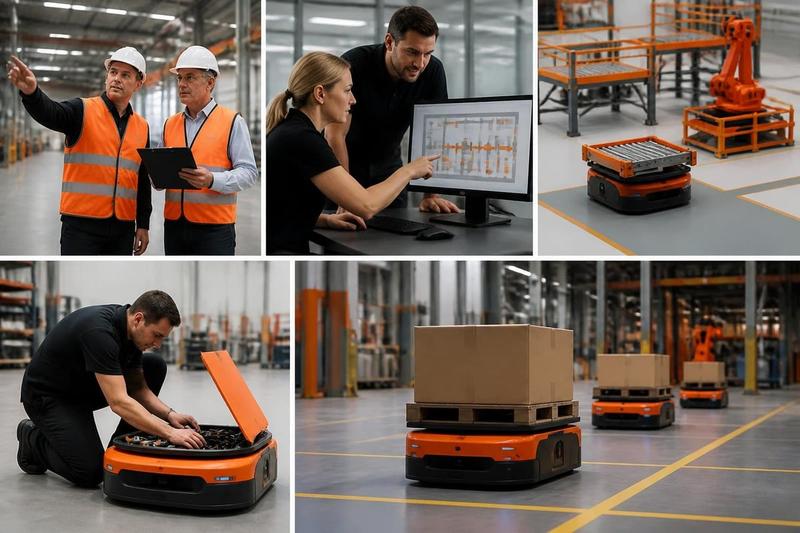
The integration architecture for industrial AGVs demonstrates how modern systems incorporate manual override capabilities, providing operational flexibility whilst maintaining autonomous functionality for standard tasks.
Overcoming Implementation Challenges
Despite clear benefits, agv automation implementations face predictable challenges that can derail projects or limit return on investment. Understanding these obstacles enables proactive mitigation strategies.
Infrastructure and Integration Hurdles
Existing warehouse infrastructure may not accommodate AGV requirements without modification. Floor conditions, doorway widths, elevator capacities, and ceiling heights can all impact system performance. Additionally, legacy warehouse management systems may lack the integration capabilities modern AGV fleet management requires.
Common infrastructure challenges:
- Uneven floors requiring levelling or surface preparation
- Narrow aisles limiting vehicle manoeuvrability
- Inadequate Wi-Fi coverage for real-time communication
- Insufficient electrical capacity for charging infrastructure
Successful implementations address these constraints early, often through phased approaches that upgrade infrastructure progressively whilst maintaining ongoing operations.
Workforce Transition Management
Introducing agv automation naturally raises workforce concerns about job displacement and changing role requirements. Organizations achieving smooth transitions invest heavily in communication, training, and role redesign.
Effective change management strategies include redeploying material handling staff to value-added activities like quality control, exception handling, and process improvement initiatives. This approach maintains employment whilst upgrading skill requirements and job satisfaction.
The dynamic task allocation research exploring coordination between human and AGV workers provides valuable frameworks for optimizing hybrid workforces where automation complements rather than replaces human capabilities.
Industry-Specific Applications and Results
AGV automation delivers particular value in industries with specific operational characteristics. Understanding sector-specific applications helps organizations benchmark against comparable operations.
Food and Beverage Operations
Food production and distribution facilities face unique challenges including strict hygiene requirements, temperature-controlled environments, and high SKU variability. AGV systems designed for these environments incorporate washdown-rated components and operate reliably in cold storage conditions.
The CompactMover AGV integration at Ausnutria showcases how agv automation maintains hygiene-critical standards whilst improving intralogistics efficiency in dairy manufacturing environments.
Similarly, AGV implementations in heavy food manufacturing demonstrate improved safety and efficiency when handling bulk ingredients and finished goods in production facilities.
Pharmaceutical and Healthcare Logistics
Pharmaceutical distribution demands exceptional accuracy, traceability, and compliance with regulatory requirements. AGV automation supports these needs through precise material tracking, contamination-free handling, and comprehensive audit trails.
These operations benefit from AGV capabilities including:
- Batch and serial number tracking throughout transport
- Controlled environment maintenance during movement
- Automated documentation for regulatory compliance
- Reduced human contact minimizing contamination risks
E-commerce and Third-Party Logistics
The explosive growth of e-commerce creates intense pressure on fulfillment operations to process higher order volumes with shorter delivery windows. AGV automation enables 3PL providers and direct retailers to scale capacity without proportional facility expansion or labour increases.
Peak season flexibility represents a crucial advantage, allowing operations to handle volume surges without maintaining excess permanent staff or equipment. Modern agv automation systems can be reconfigured rapidly to support changing workflows as order profiles evolve.
Integration with Warehouse Management Systems
AGV automation achieves maximum value when tightly integrated with broader warehouse management and enterprise systems. This connectivity enables coordinated material flow aligned with actual demand signals and inventory availability.
Real-Time Coordination and Optimization
Advanced fleet management platforms communicate continuously with warehouse management systems, receiving task assignments based on current priorities and dynamically allocating vehicles to optimize throughput. This real-time coordination adapts to changing conditions including unexpected demand spikes, equipment downtime, or inventory discrepancies.
The coordination layer manages:
- Task prioritization based on order urgency and customer service levels
- Vehicle routing considering current facility traffic and congestion
- Charging schedule optimization maintaining operational availability
- Exception handling redirecting vehicles when obstacles or delays occur
Understanding the differences between warehouse AMR technologies helps operations select appropriate automation solutions based on specific navigation and operational flexibility requirements.
Data-Driven Performance Improvement
Integrated AGV systems generate valuable operational data revealing optimization opportunities. Fleet management platforms track detailed metrics including task completion times, route efficiency, vehicle utilization, and system bottlenecks.
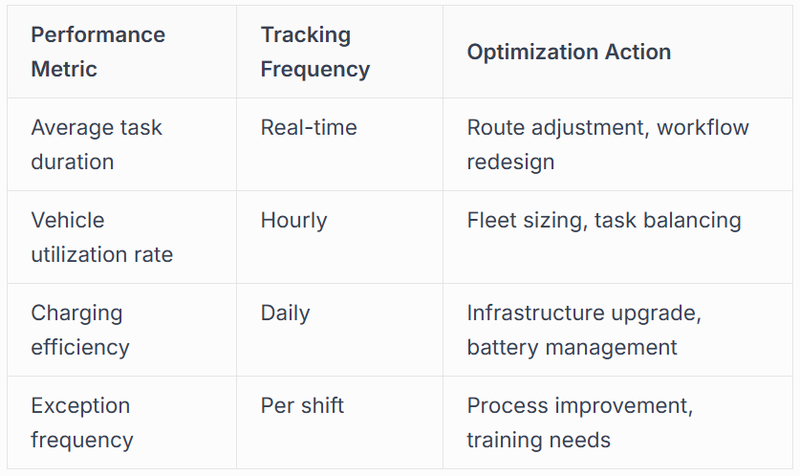
This analytical capability supports continuous improvement initiatives, enabling operations to refine AGV deployment progressively based on empirical performance data rather than theoretical assumptions.
Future Developments in AGV Technology
AGV automation continues evolving rapidly, with emerging technologies promising enhanced capabilities and broader application scenarios. Staying informed about these developments helps organizations plan future-ready implementations.
Artificial Intelligence and Machine Learning
Next-generation AGV systems incorporate AI algorithms that learn from operational patterns, optimizing performance autonomously without constant human reprogramming. These intelligent systems adapt to changing warehouse layouts, traffic patterns, and operational priorities.
Machine learning applications include predictive maintenance forecasting component failures before they cause downtime, traffic flow optimization reducing congestion in high-density areas, and autonomous exception resolution handling routine anomalies without human intervention.
Collaborative Robotics Integration
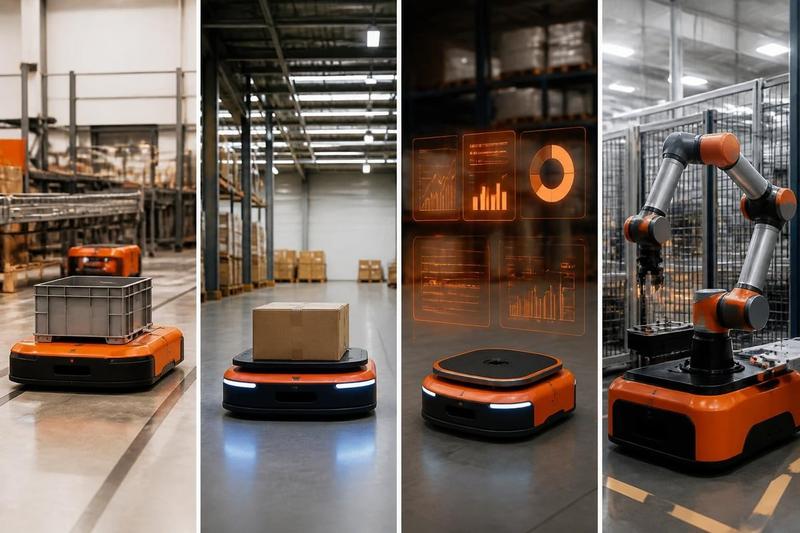
The convergence of AGV automation with collaborative robotic arms creates hybrid systems capable of both transport and manipulation tasks. These combined solutions enable end-to-end automation of complex workflows previously requiring multiple discrete systems.
Applications emerging in 2026 include automated case picking combining AGV transport with collaborative picking robots, quality inspection integration performing automated checks during transit, and packaging operations completing final preparation whilst materials move between workstations.
The development of powerful AGVs for electrified production demonstrates how vehicle capabilities continue expanding to handle heavier loads and more demanding operational environments.
Cost Considerations and ROI Analysis
Understanding the total cost of ownership and realistic return on investment timelines enables informed decision-making about agv automation investments. Whilst upfront costs appear significant, comprehensive analysis often reveals attractive payback periods.
Investment Components
Total implementation costs extend beyond vehicle purchase prices to encompass infrastructure modifications, software licensing, integration services, and ongoing support requirements.
Typical cost breakdown:
- AGV units and fleet equipment: 45-55% of total investment
- Infrastructure modifications: 15-20% of total investment
- Software and integration: 20-25% of total investment
- Training and change management: 5-10% of total investment
- Contingency and project management: 5-10% of total investment
Return on Investment Factors
ROI calculations should incorporate both tangible cost reductions and operational improvements that may not appear directly on financial statements. Comprehensive analysis includes labour cost savings, productivity improvements, accuracy gains reducing errors and returns, safety improvements lowering insurance and compensation costs, and space efficiency enabling delayed facility expansion.
Most operations implementing agv automation achieve payback periods between 18 and 36 months, with ongoing annual savings continuing indefinitely thereafter. Operations running multiple shifts typically see faster returns as AGV utilization increases.
Selecting the Right Implementation Partner
The complexity of agv automation implementations demands experienced partners who understand both technological capabilities and operational realities. Partner selection significantly influences project success and long-term system performance.
Evaluation Criteria for Automation Providers
Organizations should assess potential partners across multiple dimensions including proven experience in similar operational environments, comprehensive support covering installation, training, and ongoing maintenance, scalable solutions accommodating future growth and changing requirements, and integration expertise connecting AGVs with existing warehouse systems and processes.
Reference visits to comparable implementations provide invaluable insights into actual system performance and partner capabilities beyond marketing presentations. Speaking directly with existing customers reveals potential challenges and realistic performance expectations.
Learning about Automate-X's approach to warehouse automation demonstrates how experienced providers combine robotics, software, and integration expertise to deliver comprehensive solutions tailored to specific operational requirements.
AGV automation represents a proven pathway to enhanced warehouse efficiency, improved safety, and scalable growth in increasingly demanding logistics environments. The technology has matured substantially, offering reliable solutions for diverse operational scenarios across multiple industries. For organizations ready to modernize their material handling operations, Automate-X delivers intelligent warehouse automation solutions combining robotics, software, and integration expertise to streamline operations and enable sustainable competitive advantages in logistics and supply chain management.