

Warehouse AMR: Complete Guide to Autonomous Mobile Robots
Share on
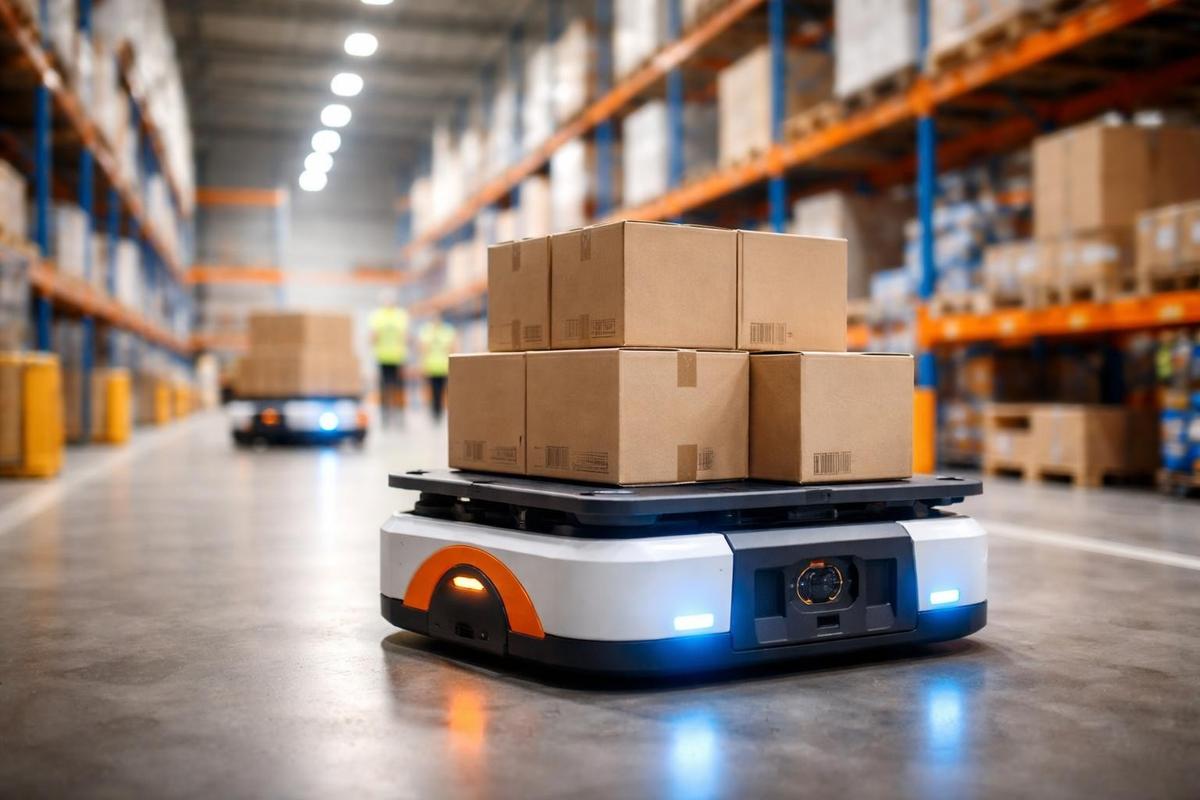
Autonomous mobile robots are reshaping warehouse operations across New Zealand and Australia, delivering unprecedented levels of efficiency and accuracy in material handling. These intelligent machines navigate facilities independently, transporting goods between locations while adapting to changing conditions in real-time. For logistics providers, 3PL operators, and distribution centers facing mounting pressure to process orders faster with fewer errors, warehouse AMR technology represents a transformative solution that addresses both current operational challenges and future scalability requirements.
Understanding Warehouse AMR Technology
Warehouse AMR systems utilize advanced sensors, artificial intelligence, and sophisticated navigation algorithms to move materials throughout facilities without fixed infrastructure or human guidance. Unlike traditional automated guided vehicles (AGVs) that follow predetermined paths marked by magnetic strips or wires, these robots dynamically calculate optimal routes based on their environment and current task requirements.
The fundamental components powering warehouse AMR capabilities include:
- LiDAR sensors that create detailed 3D maps of the surrounding environment
- Computer vision systems enabling obstacle detection and avoidance
- Onboard processing units running path-planning algorithms in real-time
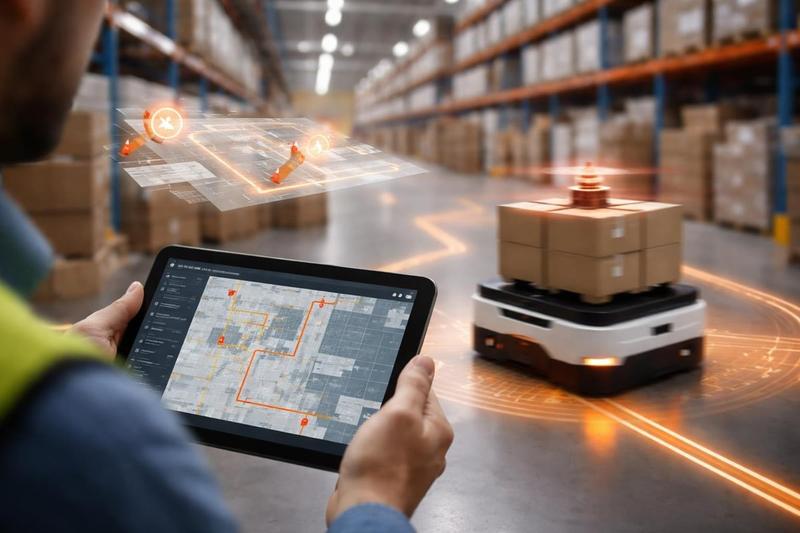
- Fleet management software coordinating multiple units simultaneously
- Wireless connectivity facilitating integration with warehouse management systems
These technologies combine to create robots capable of operating safely alongside human workers while maintaining high throughput rates. The warehouse robotics market is projected to reach $31.34 billion by 2032, reflecting the rapid adoption of AMR solutions across various industries.
Core Operational Capabilities
Modern warehouse AMR units demonstrate remarkable versatility in handling diverse material transport tasks. These robots typically support payload capacities ranging from 100 kilograms to over 1,000 kilograms, depending on model specifications and application requirements.
Navigation accuracy remains critical for operational success. Advanced systems achieve positioning precision within 10 millimeters, ensuring reliable docking at workstations and storage locations. This precision enables seamless integration with conveyor systems, picking stations, and automated storage solutions.
Battery management technology has evolved significantly, with most commercial units supporting 8-16 hour operational periods on single charges. Opportunity charging during brief idle periods extends effective working time, while automated charging stations enable continuous 24/7 operation across multiple shifts without manual intervention.
Types of Warehouse AMR Solutions
Goods-to-Person Transport Robots
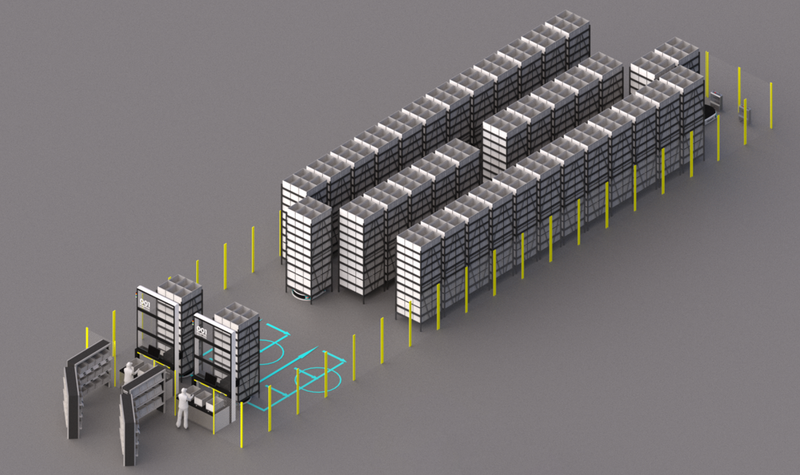
These specialized warehouse AMR units revolutionize order fulfillment by bringing inventory directly to stationary picking stations. Workers remain at ergonomic workstations while robots shuttle storage units or totes containing required items.
Implementation of goods-to-person systems typically delivers impressive productivity gains. Order pickers can process 200-400 lines per hour compared to 60-80 lines per hour with traditional pick-and-pack methods. This threefold increase stems from eliminating unproductive walking time and optimizing pick sequences.
For businesses exploring entry-level automation, the Automate-X GTP Starter Grid provides a scalable foundation that small and medium operations can expand as throughput requirements grow. This modular approach minimizes upfront capital investment while establishing the infrastructure for future automation expansion.
Pallet Transport AMR Systems
Heavy-duty warehouse AMR configurations handle full pallet loads, replacing conventional forklifts and manual pallet jacks. These units typically feature robust construction supporting payloads exceeding 1,200 kilograms while maintaining compact footprints that navigate standard warehouse aisles.
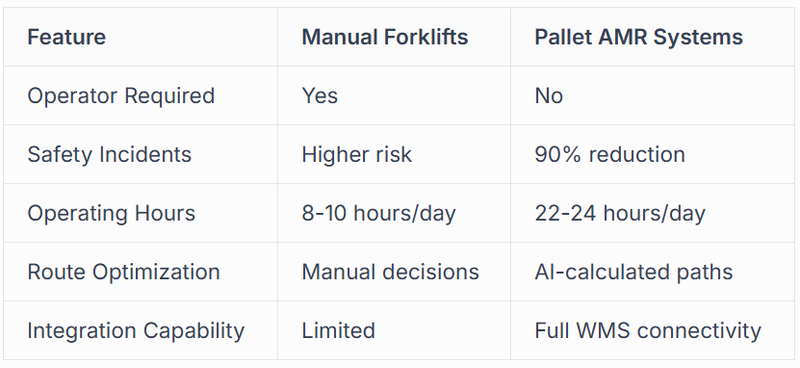
Research from Omron's implementation case study demonstrates how organizations transitioning from manual forklifts to autonomous inventory management achieve substantial improvements in both efficiency and accuracy metrics.
Collaborative Picking AMR Units
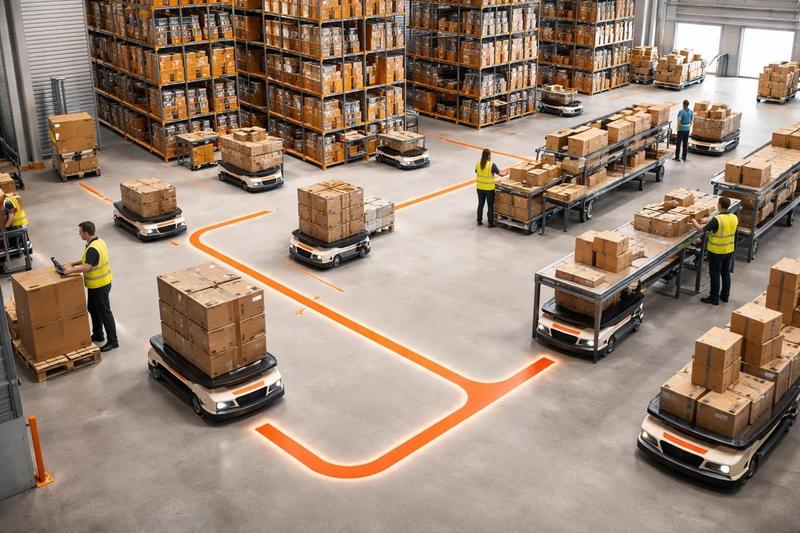
These warehouse AMR variants work alongside human operators during order fulfillment processes. Workers place picked items into mobile robots that follow them through picking routes, eliminating cart pushing and reducing physical strain.
The collaborative model suits operations handling diverse product ranges with varying order profiles. Pharmaceutical distributors and FMCG warehouses particularly benefit from this approach, maintaining human judgment for product selection while automating transport tasks.
Implementation Considerations and Planning
Facility Assessment and Readiness
Successful warehouse AMR deployment begins with comprehensive facility evaluation. Floor conditions require particular attention-smooth, level surfaces ensure optimal navigation accuracy and equipment longevity. Facilities with damaged concrete, significant debris accumulation, or frequent liquid spills may need remediation before implementation.
Aisle width specifications vary by robot model and payload capacity. Most systems require minimum clearances between 2.4 and 3.0 meters for safe bidirectional traffic flow. Narrower aisles may necessitate one-way routing configurations or specialized compact units.
Infrastructure mapping creates the foundation for route planning and workflow optimization. Integration with existing warehouse automation technologies enhances overall system performance, enabling coordinated operations across multiple automation layers.
Wireless network infrastructure must support robust, low-latency connectivity throughout the facility. Modern warehouse AMR fleets require WiFi coverage maintaining signal strength above -70 dBm across all operational areas, with redundant access points preventing communication dropouts.
Process Integration Strategies
Connecting warehouse AMR operations with existing warehouse management systems (WMS) determines ultimate productivity gains. Real-time task assignment based on current inventory locations and order priorities enables dynamic workload balancing across robot fleets.
Three primary integration approaches serve different operational requirements:
- Direct WMS Integration: Fleet management software receives pick lists and inventory movements directly from the WMS, enabling fully automated task orchestration
- Middleware Layer: Independent control systems translate between WMS data formats and robot instructions, providing flexibility for legacy system compatibility
- Standalone Operation: Robots function independently with manual task assignment, suitable for pilot projects or supplementary automation
The sophistication of your integration approach should align with operational complexity and existing technology infrastructure. Organizations operating automated storage and retrieval systems typically benefit from direct integration models that coordinate AMR movements with AS/RS operations.
Operational Benefits and Performance Metrics
Productivity Enhancement
Warehouse AMR implementation consistently delivers measurable throughput improvements across diverse operational contexts. E-commerce logistics providers deploying 200+ AMRs have achieved 340% increases in warehouse throughput, demonstrating the transformative impact of comprehensive automation.
Key productivity metrics include:
- Order fulfillment speed increasing by 200-400%
- Picking accuracy improving to 99.5-99.9%
- Storage density gains of 30-50% through optimized layouts
- Labour reallocation from transport to value-adding activities
These improvements compound over time as operators develop familiarity with automated workflows and optimization opportunities emerge through operational data analysis.
Cost Structure Transformation
Traditional warehouse operations allocate 50-65% of total costs to labour expenses. Warehouse AMR adoption fundamentally reshapes this cost structure, shifting fixed labour expenses toward predictable technology investments with lower ongoing operational costs.
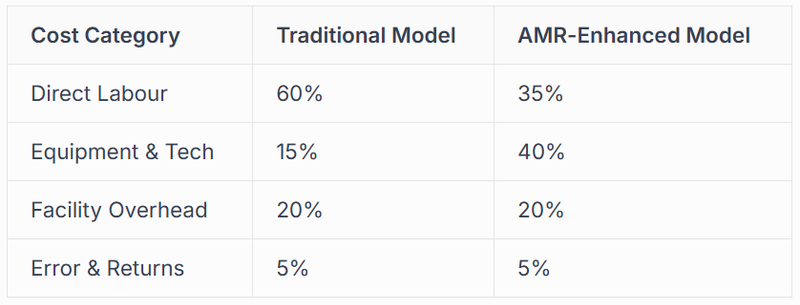
Return on investment timelines typically range from 18 to 36 months, depending on operation scale, current labour costs, and automation sophistication levels. Facilities processing 5,000+ order lines daily generally achieve faster payback periods due to economies of scale.
Safety and Ergonomic Improvements
Workplace safety metrics improve dramatically following warehouse AMR implementation. These robots eliminate high-risk material handling activities that cause musculoskeletal injuries, collision incidents, and repetitive strain conditions.
Statistical analysis from ASUS IoT's warehouse control system implementations shows accident rates declining by 75-90% when autonomous transport replaces manual material handling. Workers previously operating forklifts or manually moving pallets transition to supervisory and quality control roles with reduced physical demands.
The ergonomic benefits extend beyond injury prevention. Collaborative warehouse AMR models reduce walking distances by 60-80%, minimizing physical fatigue and enabling sustained productivity throughout extended shifts.
Advanced Fleet Management Capabilities
Traffic Coordination and Optimization
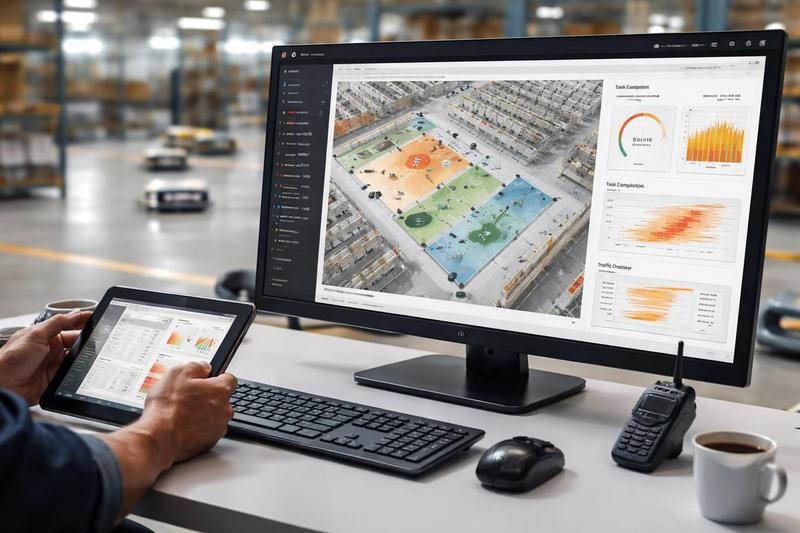
Modern warehouse AMR fleets operate through sophisticated traffic management algorithms that prevent congestion while maximizing throughput. These systems employ several coordination strategies:
Zone-based routing divides facilities into operational sectors with designated entry and exit points. Robots request zone access from the fleet controller, which manages traffic flow to prevent bottlenecks at high-density areas like charging stations or central storage locations.
Dynamic path recalculation enables robots to adapt routes in response to temporary obstacles, spills, or blocked aisles. When initial paths become unavailable, individual units calculate alternatives within milliseconds while maintaining schedule compliance.
Priority-based task scheduling ensures time-sensitive orders receive preferential handling. Express shipments trigger high-priority transport assignments, with lower-priority tasks queuing until capacity becomes available.
Predictive Maintenance and Reliability
Advanced warehouse AMR platforms incorporate condition monitoring that predicts component failures before operational disruptions occur. Sensors track motor temperatures, battery degradation patterns, and wheel wear rates, generating maintenance alerts when parameters approach threshold values.
This predictive approach reduces unplanned downtime by 60-75% compared to reactive maintenance strategies. Scheduled component replacement during planned maintenance windows prevents mid-shift failures that disrupt operations and reduce effective fleet capacity.
Battery management systems optimize charging cycles to extend cell lifespan while maintaining operational availability. Intelligent charging algorithms balance immediate availability requirements against long-term battery health, typically extending replacement intervals by 20-30%.
Industry-Specific Applications
E-commerce and Retail Distribution
High-volume e-commerce fulfillment centers represent the largest warehouse AMR deployment segment globally. These facilities process thousands of diverse SKUs with order profiles ranging from single-item shipments to bulk cases, creating ideal conditions for flexible automation.
Retail warehouse implementations with 50+ AMRs demonstrate order-picking speed improvements of 200-300% while reducing inventory errors by 85%. Peak season scalability particularly benefits from AMR flexibility-fleets can expand or contract based on seasonal demand without permanent staffing changes.
Cold Storage and Temperature-Controlled Environments
Pharmaceutical and food distribution facilities operating in refrigerated or frozen conditions gain substantial benefits from warehouse AMR deployment. These robots operate reliably in temperatures ranging from -30°C to +40°C, eliminating the productivity losses and safety concerns associated with human workers in extreme environments.
Specialized cold-storage AMR models feature sealed enclosures protecting electronics from condensation and temperature cycling. Battery performance optimization maintains operational duration despite cold-temperature capacity reductions that affect standard lithium-ion cells.
Manufacturing and Raw Material Handling
Manufacturing environments utilize warehouse AMR technology for line-side delivery, work-in-process transport, and finished goods movement. Case studies from food and beverage manufacturers show how automated order fulfillment centers improve delivery output while reducing labour requirements by 40-50%.
Just-in-time material delivery coordination with production schedules minimizes line-side inventory while preventing stock-outs that halt assembly operations. Real-time tracking ensures materials arrive precisely when required, reducing working capital tied up in excess inventory.
Scaling AMR Operations
Pilot Program Strategies
Organizations new to warehouse automation benefit from phased implementation approaches that validate technology fit before comprehensive deployment. Successful pilot programs typically focus on high-volume, repetitive transport tasks with clear success metrics.
A structured pilot approach includes:
- Baseline measurement of current productivity, accuracy, and cost metrics
- Limited deployment of 2-5 robots handling specific workflow segments
- Performance monitoring over 8-12 week evaluation periods
- Workflow refinement based on operational learnings and staff feedback
- Business case validation using actual performance data rather than projections
This methodology reduces implementation risk while building organizational confidence in automation technology.
Growth Planning and Capacity Expansion
Modular warehouse AMR architectures enable incremental capacity additions that match business growth trajectories. Cloud-based fleet management platforms accommodate fleet sizes from five units to several hundred robots without infrastructure replacement.
Financial planning should account for both initial capital investment and ongoing operational expenses. Comprehensive total cost of ownership calculations include:
- Robot acquisition or lease costs
- Fleet management software licensing
- Network infrastructure upgrades
- Facility modifications (charging stations, signage)
- Staff training and change management
- Ongoing maintenance and support contracts
Detailed examination of ASRS integration possibilities reveals opportunities for coordinated automation investments that compound efficiency gains beyond individual technology implementations.
Technical Integration Challenges
Legacy System Compatibility
Existing warehouse management systems often lack native warehouse AMR integration capabilities, requiring middleware solutions that bridge communication protocols. REST APIs and standard message formats enable data exchange between disparate systems without comprehensive WMS replacement.
Custom integration development typically requires 6-12 weeks for basic connectivity and an additional 8-16 weeks for advanced features like dynamic task optimization and real-time inventory synchronization. Organizations should budget both time and financial resources for integration work when planning implementation timelines.
Safety Certification and Compliance
Regulatory requirements governing warehouse AMR operations vary by jurisdiction and industry sector. New Zealand and Australian operations must comply with applicable workplace safety standards addressing autonomous machinery operation near human workers.
Key compliance considerations include:
- Emergency stop functionality accessible to all workers
- Audible and visual operation indicators
- Maximum speed limitations in pedestrian areas
- Collision avoidance system validation
- Staff training and certification programs
Research on enhancing safety in warehouse navigation through control barrier functions demonstrates ongoing advancement in collision prevention technologies that exceed baseline regulatory requirements.
Future Technology Developments
Artificial Intelligence and Machine Learning
Next-generation warehouse AMR platforms incorporate deep learning algorithms that continuously improve operational efficiency through experience. These systems identify traffic patterns, predict congestion points, and optimize fleet deployment based on historical task data.
Computer vision enhancements enable robots to recognize product types, assess packaging damage, and verify load stability without barcode scanning. This capability reduces handling errors while accelerating processing speeds.
Collaborative Robot Ecosystems
Emerging warehouse automation strategies coordinate multiple robot types within unified control frameworks. AMR units work alongside robotic picking arms, autonomous pallet shuttles, and packaging line automation systems to create end-to-end automated workflows.
This ecosystem approach maximizes return on automation investment by eliminating manual handoffs between process steps. Material flows continuously from receiving through storage, picking, packing, and dispatch without human intervention for routine operations.
Enhanced Payload Capabilities
Engineering advances continue expanding warehouse AMR payload capacities while maintaining compact footprints. Current development trajectories target 2,000-kilogram capacities in units occupying space equivalent to standard pallet footprints, enabling single-robot handling of previously multi-unit loads.
Dual-robot coordination protocols allow synchronized lifting of oversized or irregularly shaped items exceeding individual unit capabilities. Two or more robots position themselves beneath loads, coordinate lifting sequences, and navigate as a coordinated team to destination points.
Warehouse AMR technology delivers transformative operational improvements across logistics, distribution, and manufacturing environments, combining productivity gains with enhanced safety and scalability. At Automate-X, we help organizations across New Zealand and Australia design, implement, and optimize intelligent warehouse automation solutions tailored to your specific operational requirements and growth objectives. Our team combines deep robotics expertise with proven system integration capabilities to streamline your warehouse operations and enable sustainable competitive advantages through advanced automation technology.