

Agv Warehouse Automation Guide: Expert Insights for 2026
Share on
The warehouse landscape is changing rapidly as 2026 approaches, and leaders must adapt to stay ahead. Agv warehouse automation stands at the forefront of this transformation, offering new paths to resilience and growth.
In this expert-driven guide, you will find actionable strategies, industry insights, and practical steps to future-proof your logistics operations. Discover the core concepts of AGVs, explore the trends set to shape 2026, and learn how to select and deploy the right technology.
Are you ready to unlock greater efficiency, accuracy, and scalability? Dive in for a comprehensive roadmap to lead your warehouse into the future.
Understanding AGV Warehouse Automation: Fundamentals and Key Concepts
Automated Guided Vehicles (AGVs) are transforming the way warehouses operate. AGV warehouse automation is now a core strategy for businesses aiming to keep pace with the evolving demands of logistics and supply chain management. Understanding the technology's fundamentals is essential for leaders seeking to future-proof their operations.
What Are Automated Guided Vehicles (AGVs)?
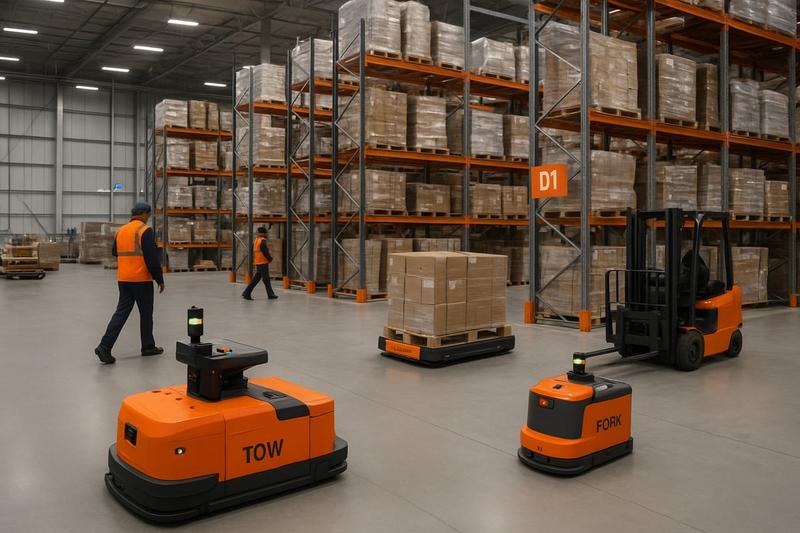
AGVs are self-driving vehicles designed to transport goods within warehouse environments. Their primary functions include moving pallets, containers, and materials between storage, picking, and shipping zones. AGV warehouse automation leverages these vehicles to streamline workflows, reduce manual handling, and boost consistency.
How do AGVs differ from other technologies? Unlike Automated Mobile Robots (AMRs), which use advanced perception and AI to navigate dynamic spaces, AGVs typically follow predefined paths. For a detailed comparison of these technologies, see Comparing AGVs and AMRs. Traditional conveyor systems, in contrast, are fixed and far less flexible.
Types of AGVs:
- Tow vehicles
- Unit load carriers
- Pallet trucks
- Forklift AGVs
- Custom solutions for specific tasks
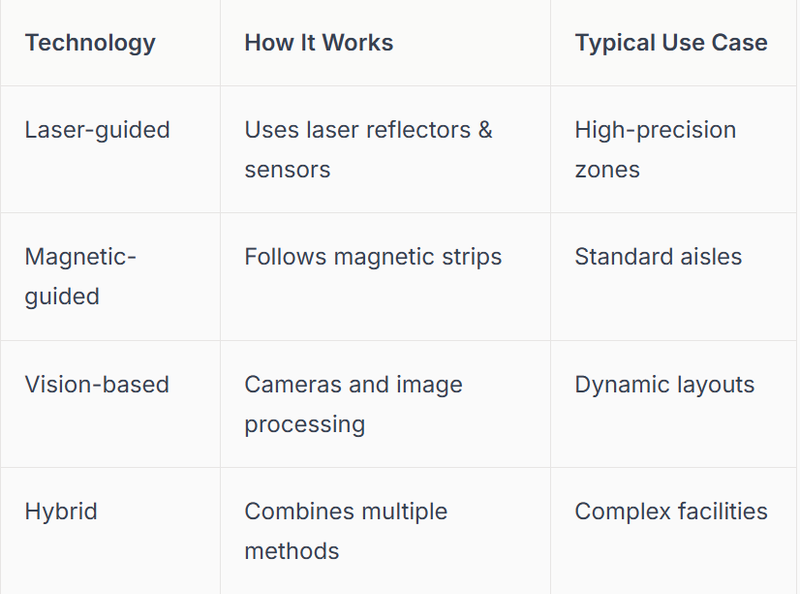
Navigation Technologies Table:
Core components include robust sensors, on-board control systems, and seamless software integration with warehouse management systems (WMS). Safety is paramount, with AGVs adhering to protocols such as ISO 3691-4, ensuring safe operation around people and equipment.
For example, a high-volume distribution centre may deploy a fleet of AGVs to handle pallet movements, resulting in faster throughput and fewer human errors. By 2023, over 30% of new warehouses worldwide had implemented some form of AGV warehouse automation, underscoring the technology's rapid adoption.
The Business Case for AGV Automation
Why are so many organisations investing in AGV warehouse automation? The answer lies in a combination of industry challenges and strategic opportunities.
Labour shortages and rising wage pressures are prompting companies to seek reliable, automated alternatives. AGVs deliver consistent performance, enabling 24/7 operation and reducing reliance on manual labour. With supply chains under pressure to accelerate order fulfilment and improve accuracy, AGV warehouse automation supports real-time inventory movement and rapid response to demand spikes.
Key business drivers:
- Addressing labour scarcity and wage inflation
- Meeting demand for speed, accuracy, and round-the-clock operation
- Enabling scalable, flexible warehouse layouts
- Supporting sustainability goals with energy-efficient AGVs
Environmental considerations are also top of mind. Modern AGVs often feature low-energy consumption and battery management systems that minimise carbon footprint.
AGV warehouse automation is more than a technical upgrade. It’s a strategic response to market disruption, providing the scalability, resilience, and data-driven insights needed to compete in a dynamic logistics landscape.
AGV Trends and Innovations Shaping Warehousing in 2026
Warehousing is entering a new era, with agv warehouse automation at the centre of transformation. As 2026 approaches, the pace of innovation is accelerating, and businesses must stay ahead of these trends to remain competitive. Let us explore the technologies, sector-driven adoption, regulatory shifts, and expert predictions shaping the future of AGVs.
Evolving AGV Technologies
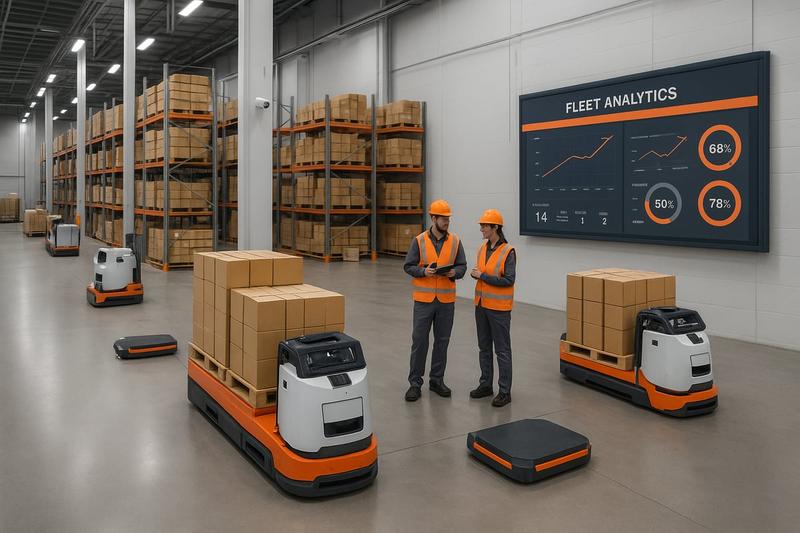
The core of agv warehouse automation is rapid technological evolution. Artificial intelligence now powers AGV navigation, allowing vehicles to learn optimal routes, avoid obstacles, and adapt to dynamic warehouse environments. Fleet management software has become more advanced, enabling real-time optimisation and predictive analytics for smoother operations.
Interoperability is another key trend. AGVs increasingly work alongside AMRs, conveyor belts, and human staff, creating a seamless and flexible logistics ecosystem. Battery technology is also advancing, with fast-charging, wireless, and extended-life solutions minimising downtime.
A leading e-commerce fulfilment centre recently adopted AI-powered AGVs, resulting in significant improvements in picking speed and order accuracy. For a deeper dive into these future-focused trends, see Automation trends reshaping logistics.
Industry-Specific Adoption and Use Cases
The adoption of agv warehouse automation is expanding across sectors. Third-party logistics (3PL) providers, cold storage facilities, and e-commerce companies are leading the charge, drawn by the need for reliable, round-the-clock operations. Pharmaceutical firms also deploy AGVs for secure, temperature-controlled transport.
Customisation is rising in importance, with AGVs now tailored for hazardous materials or extreme environments. According to MarketsandMarkets, the AGV market is projected to reach USD 5.2 billion by 2026, reflecting the growing demand for scalable automation.
In each sector, AGVs provide unique benefits—whether it is reducing manual handling in cold storage or ensuring compliance in pharmaceuticals. These advances are making agv warehouse automation an essential part of modern logistics strategies.
Regulatory and Safety Developments
As agv warehouse automation grows, so does the focus on safety and compliance. Updates to international and regional standards, such as ISO 3691-4, are shaping how AGVs are deployed and operated. Companies must adhere to strict protocols, including emergency stop functions, warning signals, and collision avoidance systems.
Cybersecurity is equally vital. With AGVs increasingly connected to warehouse networks, robust data security protocols are essential to prevent unauthorised access and protect sensitive information. Government incentives and green initiatives further encourage the adoption of energy-efficient, sustainable AGV solutions.
Embracing these regulatory and safety developments is critical to achieving long-term operational success and building trust in automated systems.
Expert Perspectives on the Future
Industry experts agree that agv warehouse automation is only at the beginning of its evolution. Consultants predict deeper integration with IoT devices and smart warehouse ecosystems, where AGVs communicate with sensors, inventory systems, and even building infrastructure.
Early adopters are already seeing a competitive edge, gaining productivity and agility as automation becomes more intelligent and adaptable. The future points to modular, scalable AGVs that can be rapidly deployed and updated as business needs evolve.
Those who invest now in the right AGV solutions will be best positioned to thrive in the smart warehouses of tomorrow.
Step-by-Step Guide to Planning and Deploying AGV Automation
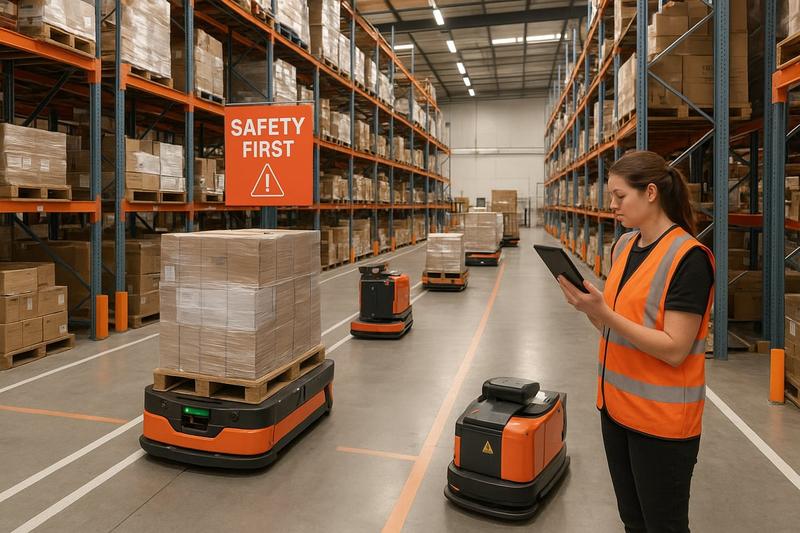
Embarking on an agv warehouse automation project requires a structured and methodical approach. Each phase, from initial assessment to ongoing optimisation, builds the foundation for long-term efficiency and scalability. Below is a comprehensive guide to help logistics and supply chain leaders navigate every critical step.
Step 1: Assessing Warehouse Needs and Readiness
The journey towards agv warehouse automation starts with a thorough analysis of current operations. Mapping out existing workflows is essential to pinpoint bottlenecks and inefficiencies.
Key assessment areas include:
- Identifying high-volume, repetitive tasks suitable for automation
- Engaging stakeholders to align project objectives
- Analysing space constraints, throughput, and SKU diversity
For example, a New Zealand 3PL recently conducted a pre-implementation assessment, revealing that 30% of their manual pallet movements could be automated, leading to significant efficiency gains. This early groundwork ensures that agv warehouse automation aligns with business goals and sets realistic expectations.
Step 2: Selecting the Right AGV System
Choosing the best AGV system for your warehouse involves evaluating several critical factors. Matching the right AGV types to your operational requirements is the first step.
Consider the following:
- Required load capacities and navigation challenges
- Compatibility with existing WMS and ERP systems
- Navigation technology options (laser, magnetic, vision-based)
- Vendor reliability, local support, and scalability
Statistics show that 60% of failed agv warehouse automation projects result from poor technology fit. For a deeper dive into budgeting and ROI, refer to Optimising automation investment, which provides valuable insights for making informed decisions. Careful selection at this stage reduces the risk of costly missteps.
Step 3: Designing and Simulating Workflows
Once the system is chosen, the next step is to design and simulate AGV workflows within your warehouse. Digital twins and simulation software allow you to test layouts, traffic flows, and potential bottlenecks before deployment.
Key considerations include:
- Safety zoning and traffic management to prevent collisions
- Optimising AGV routes for efficiency
- Incorporating fail-safes and backup protocols
Collaborating with automation consultants and engineers during this phase is vital. By modelling real-world scenarios, businesses ensure that agv warehouse automation delivers peak performance from day one.
Step 4: Implementation and Change Management
With a solid plan in place, implementation begins. Site preparation includes upgrading infrastructure, installing Wi-Fi networks, and setting up charging stations for the AGVs.
Deployment strategies:
- Phased rollout for gradual adoption and troubleshooting
- Full deployment for rapid transformation
Staff training and upskilling are crucial to build confidence and reduce resistance to change. A recent phased rollout in a local facility highlighted the value of hands-on training, as staff adapted quickly to new routines. Effective change management is key to unlocking the full benefits of agv warehouse automation.
Step 5: Monitoring, Optimisation, and Scaling
After deployment, continuous monitoring ensures that agv warehouse automation meets performance targets. Establishing clear KPIs—such as uptime, error rates, and throughput—provides a benchmark for success.
Ongoing optimisation steps:
- Analysing operational data for improvement opportunities
- Scheduling regular software updates and maintenance
- Planning for future expansion or multi-site integration
Businesses that invest in continuous improvement not only maximise ROI but also position themselves for future growth. As warehouse needs evolve, scaling agv warehouse automation becomes a strategic advantage in a dynamic market.
Calculating ROI and Measuring Success of AGV Automation
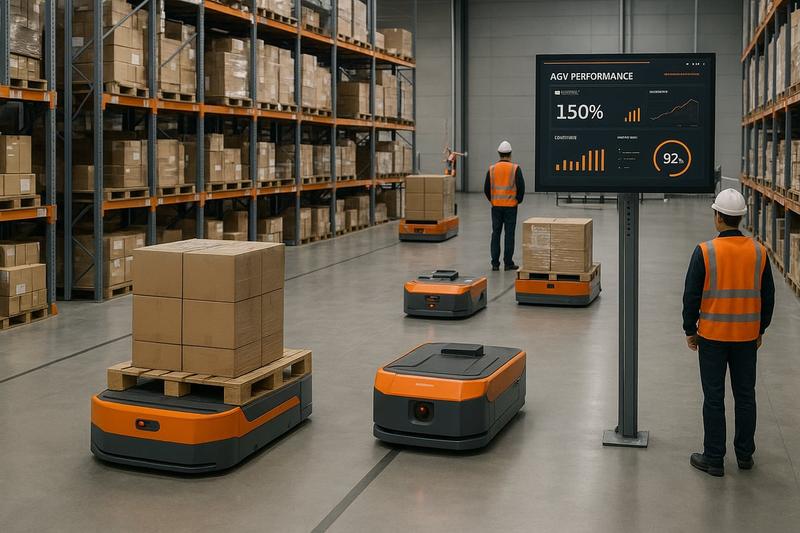
Understanding the return on investment is essential for leaders considering agv warehouse automation. Calculating ROI involves a clear look at both direct costs and hidden factors, as well as the measurable gains automation brings to operations. By evaluating each element, you can make a confident business case and ensure ongoing success.
Key Cost Factors and Investment Considerations
When planning agv warehouse automation, start by identifying all costs involved. The main investment areas are:
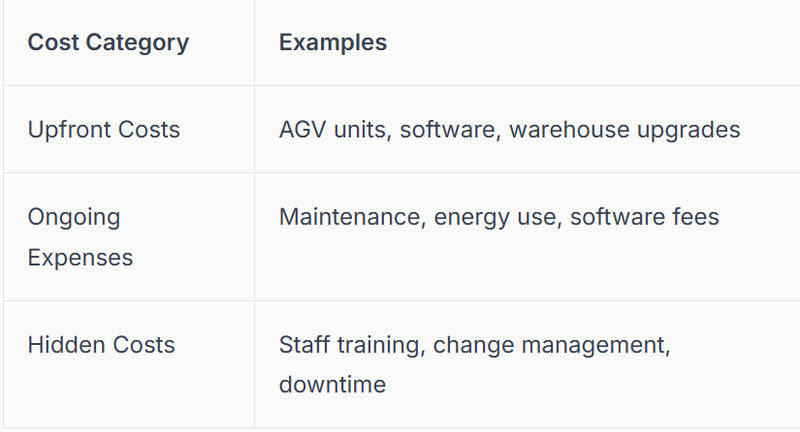
Upfront costs can be significant, including the purchase of AGVs, integration of software, and infrastructure updates. Do not overlook ongoing expenses such as routine maintenance, energy consumption, and licensing fees for management platforms. Hidden costs are just as important—transition periods may cause temporary slowdowns, and staff will need to adapt to new workflows.
For agv warehouse automation projects, understanding total cost of ownership is crucial. This ensures you plan for both immediate and long-term financial impacts.
Quantifying Benefits and Performance Gains
The value of agv warehouse automation becomes clear when assessing its impact on operations. Key benefits include:
- Reduced labour costs, as AGVs take on repetitive or hazardous tasks
- Higher picking accuracy and faster order fulfilment
- Optimised warehouse space and improved inventory accuracy
For example, after implementing agv warehouse automation in a cold storage facility, one company saw a 35 percent reduction in labour costs and a noticeable improvement in order turnaround times. These measurable gains strengthen your business case and help justify the initial investment.
When quantifying benefits, compare pre- and post-automation metrics to demonstrate tangible improvements.
Building a Business Case for Stakeholders
Convincing stakeholders to invest in agv warehouse automation requires a robust business case. Focus on:
- Typical payback periods, often 2 to 4 years
- Total cost of ownership compared to traditional automation
- Industry benchmarking and future market trends
Cite industry research, such as the AGV and AMR Industry Assessment 2026, to support your projections and address questions about scalability and future-readiness. Clear, data-driven arguments will help secure executive buy-in for agv warehouse automation investments.
Tracking KPIs and Continuous Improvement
Success in agv warehouse automation depends on ongoing measurement and optimisation. Essential KPIs include:
- AGV uptime and throughput rates
- Order error rates and downtime events
- Customer satisfaction and service level adherence
Use real-time analytics to monitor performance. Continuous improvement cycles, including regular software updates and process reviews, keep your agv warehouse automation system aligned with business goals.
By tracking these KPIs, you can demonstrate ongoing value and identify areas for further optimisation.
Real-World Success Stories and Lessons Learned from AGV Deployments
Warehouses across New Zealand and beyond are embracing agv warehouse automation to solve complex logistics challenges. Real-world examples offer valuable insights into both the benefits and the hurdles of implementing these advanced systems. By analysing successful deployments and learning from setbacks, supply chain leaders can make informed decisions about their own automation journeys.
Automated Guided Vehicles, Storage and Retrieval Machines, 2XL N.V., Warehouse Automation
Case Study: E-Commerce Fulfilment Centre
One of the most compelling agv warehouse automation stories comes from a leading e-commerce fulfilment centre. Facing high SKU volumes and the need for rapid order turnaround, the business implemented a goods-to-person system powered by AGVs. These vehicles dynamically routed inventory to workstations, significantly reducing manual travel and picking errors.
The result was a 40% reduction in order processing time, directly boosting customer satisfaction and operational throughput. This deployment highlights the value of goods-to-person automation solutions for fast-paced, high-volume environments. By leveraging agv warehouse automation, the centre achieved scalability and flexibility to handle seasonal spikes with ease.
Case Study: Pharmaceutical Distribution
Pharmaceutical distribution demands strict compliance, precision, and temperature control. In one case, a distributor deployed agv warehouse automation with integrated WMS and secure navigation zones. The system ensured that products moved efficiently through temperature-controlled areas while maintaining full traceability.
A key innovation was the use of advanced sensors and AI-powered recognition to prevent errors and unauthorised access. According to the AI-Powered Pallet Recognition Case Study, similar technologies have enabled error rates to drop below 0.1 percent, setting new benchmarks for safety and reliability. The distributor’s investment in agv warehouse automation delivered improved compliance and strengthened their competitive position.
Lessons from Failed or Challenging Projects
While many agv warehouse automation projects succeed, some face significant hurdles. Common pitfalls include underestimating the complexity of change management and failing to ensure robust integration with existing systems. Lack of stakeholder engagement can lead to resistance, delays, and missed objectives.
Lessons learned from these projects stress the importance of clear communication, iterative deployment strategies, and continuous training. Engaging all relevant teams early and providing ongoing support can transform a challenging rollout into a long-term success. For any agv warehouse automation initiative, adaptability and a commitment to learning are critical.
Insights from Industry Leaders
Industry leaders consistently advise that adaptability is the cornerstone of agv warehouse automation success. Warehouse managers note that flexibility in system design, combined with strong vendor partnerships, enables organisations to adjust as needs evolve.
Experts also highlight the necessity of ongoing support and regular performance reviews. Investing in staff upskilling and fostering a culture of innovation ensures that agv warehouse automation continues to deliver value as business requirements change. Ultimately, staying proactive and responsive positions companies to thrive in the rapidly evolving logistics landscape.
Preparing for the Future: AGV Automation and the Smart Warehouse Ecosystem
The smart warehouse of tomorrow is rapidly taking shape, driven by agv warehouse automation and a host of interconnected technologies. As logistics leaders plan for 2026 and beyond, staying ahead means understanding how AGVs fit within a broader digital ecosystem, transforming operations, workforce roles, and sustainability strategies.
Integration with IoT, AI, and Data Analytics
The future of agv warehouse automation lies in seamless connectivity. AGVs are increasingly integrated with IoT devices, allowing real-time data exchange across the warehouse. This connectivity supports predictive maintenance, where AI algorithms analyse sensor data to flag potential issues before they cause downtime.
Advanced analytics also enable self-optimising fleets. For example, AGVs can adjust routes based on traffic, inventory location, or workflow priorities. Research such as AGV Path Planning in 3D Warehouses demonstraes how neural networks and ant colony optimisation can further optimise navigation in complex environments, enabling smarter, more adaptive operations.
Workforce Transformation and Upskilling
As agv warehouse automation evolves, the role of the human workforce is also changing. Manual tasks are increasingly replaced by supervisory, analytical, and technical roles. Staff are now required to monitor AGV systems, interpret data, and manage exceptions rather than perform repetitive picking or transport.
Organisations are investing in training programmes that focus on digital literacy and AGV interaction. Key strategies for successful workforce transformation include:
- Upskilling staff in robotics and automation management
- Encouraging cross-functional teams for smoother change management
- Providing ongoing support to adapt to new technologies
This shift not only boosts productivity, it also enhances job satisfaction and retention.
Sustainability and Green Warehousing
Sustainability is at the forefront of agv warehouse automation strategies. Modern AGVs are equipped with energy-efficient motors and smart charging systems, reducing overall power consumption. These advancements contribute to lower carbon footprints and support compliance with environmental reporting requirements.
Companies are also adopting green warehousing practices such as:
- Using renewable energy sources for AGV charging
- Implementing energy monitoring and optimisation systems
- Selecting recyclable or low-impact materials for AGV construction
By aligning automation with sustainability goals, businesses can meet regulatory standards and appeal to environmentally conscious clients.
Planning for Next-Generation Automation
Looking ahead, agv warehouse automation will become even more modular and scalable. The next wave includes swarm robotics, autonomous supply chains, and dynamic fleet management. Industry forecasts suggest that by 2026, 85% of logistics leaders plan to boost automation investment, with mobile robots set to outpace fixed systems, as covered in Mobile Robots to Outpace Fixed Automation.
To prepare, organisations should:
- Invest in future-ready, interoperable AGV platforms
- Adopt flexible software that supports rapid scaling
- Monitor emerging standards and government incentives
Early adoption of next-generation technology will help secure a competitive edge in an increasingly automated and data-driven world.
As you look ahead to 2026, it’s clear that AGV automation isn’t just about keeping up—it’s about setting your warehouse up for smarter, more scalable growth. We’ve explored the essentials, from technology selection to real-world results, and shown how future-ready solutions can help you overcome labour challenges, boost productivity, and stay competitive. If you’re ready to put these expert insights into action and discover how automation could transform your operations, I invite you to Explore Automation Solutions and take the next step toward a more efficient, resilient warehouse.