

AMR In Warehouse Guide: 2026 Insights For Smarter Operations
Share on
The warehouse landscape is changing at lightning speed, with amr in warehouse technology leading a new era of smart logistics. Businesses are searching for ways to work smarter, not harder, as demands grow.
This guide delivers actionable 2026 insights on how amr in warehouse solutions are transforming operations for greater efficiency, flexibility, and scalability. From understanding what AMRs are to exploring the latest trends, you will uncover practical steps for successful adoption.
Discover how leading warehouses are leveraging AMRs, see real-world examples, and learn strategies to maximise your return on investment. Ready to future-proof your operations? The journey to smarter warehouse automation starts here.
Understanding AMRs: Technology, Types, and Capabilities
The amr in warehouse landscape is rapidly changing as new technologies redefine what is possible. Autonomous Mobile Robots (AMRs) stand at the heart of this evolution, offering a smarter and more flexible approach to warehouse automation. To fully leverage their benefits, leaders must understand the core technologies, types, and future trends shaping AMR adoption.
What Are Autonomous Mobile Robots (AMRs)?
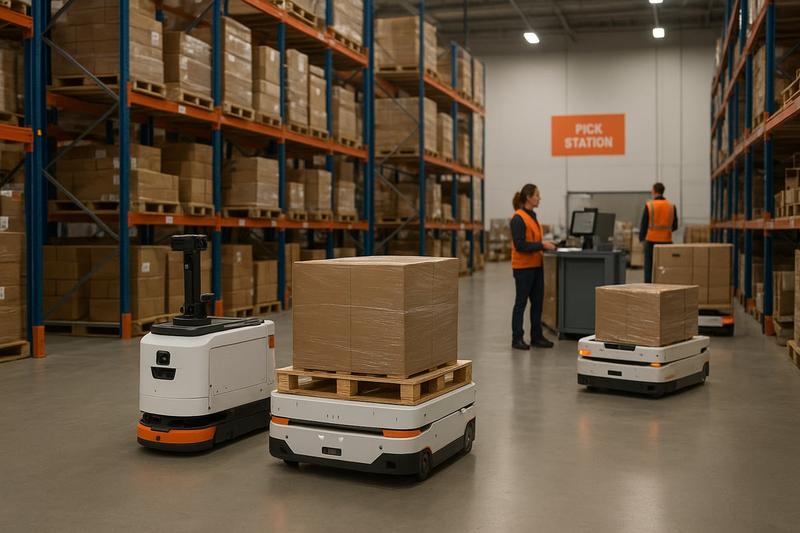
An amr in warehouse setting is a self-navigating robot that uses advanced technologies to transport goods and complete tasks without human intervention. Unlike AGVs or traditional automation, AMRs rely on sensors, cameras, LiDAR, and artificial intelligence for real-time navigation and perception. Their ability to make autonomous decisions in dynamic environments sets them apart.
For example, AMRs excel in goods-to-person and shelf-to-person workflows, quickly delivering items to operators. Studies show AMRs can boost picking productivity by 2 to 10 times over manual methods. Their flexibility and scalability distinguish them from fixed automation systems. For a detailed overview, see What is an AMR?.
Types of AMRs Used in Warehouses
There are several types of amr in warehouse operations, each tailored for specific tasks. Picking and replenishment robots transport goods from storage to operators, while sortation robots handle complex sorting for inbound and outbound logistics. Inventory visibility robots use barcodes or RFID for real-time stock tracking.
Pallet-moving AMRs are ideal for heavy loads, while tote or box AMRs suit smaller items. Some AMRs are designed for racks, pallets, and boxes. Scalability is a key advantage, as fleets can be expanded easily to match demand spikes or seasonal changes.
Core Capabilities and Benefits of AMRs
The core capabilities of amr in warehouse environments drive significant efficiency gains. These robots autonomously navigate busy spaces and avoid obstacles, ensuring safe operations even in mixed human-robot settings.
They collect real-time data for inventory and workflow optimisation and integrate seamlessly with Warehouse Management Systems (WMS) or Warehouse Execution Systems (WES). With 24/7 uptime and opportunity charging, AMRs reduce manual handling, travel time, and order errors. In some cases, order picking errors drop by up to 99 percent, resulting in higher accuracy and customer satisfaction.
How AMRs Work: From Sensing to Execution
The operation of amr in warehouse settings involves several advanced processes. First, AMRs use sensors and vision systems to perceive their environment. Data is processed by WES or WMS platforms, enabling sophisticated decision-making and path planning.
Robot management systems then coordinate the behaviour of the entire fleet. Over time, AMRs learn and adapt using collected data, further improving performance. Solutions like inVia Picker use machine vision and fiducial markers to achieve precise picking and placement.
Key Trends in AMR Technology for 2026
Looking ahead, the future of amr in warehouse environments is shaped by rapid advances in AI and machine learning. Newer AMRs will offer smarter, more adaptive capabilities, making them better collaborators with human workers.
Expect to see versatile robots that can handle multiple tasks, such as picking, sorting, and inventory management. Navigation will improve through advanced LiDAR, computer vision, and mapping technologies. As a result, future AMRs will be ready for more complex environments and challenging workflows.
The Business Case for AMRs: Productivity, ROI, and Competitive Advantage
Adopting amr in warehouse environments is rapidly redefining what’s possible for logistics operations. As automation accelerates, businesses are under increasing pressure to improve productivity, control costs, and stay competitive. This section explores the measurable business benefits of amr in warehouse deployments, from boosting throughput to unlocking scalable growth and maximising return on investment.
Productivity Gains and Cost Efficiency
Implementing amr in warehouse operations drives significant productivity improvements. AMRs work around the clock, reducing downtime and accelerating order fulfilment. Labour costs drop as robots take on repetitive or physically demanding tasks, freeing human workers for value-added roles.
For example, deploying goods-to-person AMR systems can boost picking productivity by up to 10 times compared to manual methods. Fewer picking errors translate to fewer returns and increased customer satisfaction. Flexible deployment means AMRs can be introduced without major changes to facility layout, adapting quickly to evolving workflows.
- Continuous operation with minimal breaks
- Reduced manual handling and travel time
- Lower risk of human errors in order picking
With amr in warehouse settings, cost efficiency and productivity move hand in hand.
Scalability and Flexibility for Growing Warehouses
Growth brings new challenges, and amr in warehouse environments offers unmatched flexibility. Unlike fixed conveyor systems, AMR fleets can be scaled up or down to match seasonal peaks or shifting business needs. There’s no need for major infrastructure changes, as AMRs can adapt to new layouts, SKUs, or process adjustments with ease.
Rapid deployment is possible, allowing warehouses to respond quickly to market changes. Businesses can expand operations without the burden of large, upfront capital investments in static automation, maintaining agility as they grow.
- Fleet size adjusts to demand
- Minimal disruption during expansion
- Supports dynamic business models
Amr in warehouse solutions ensure scalability is never a barrier to success.
Safety and Workforce Enhancement
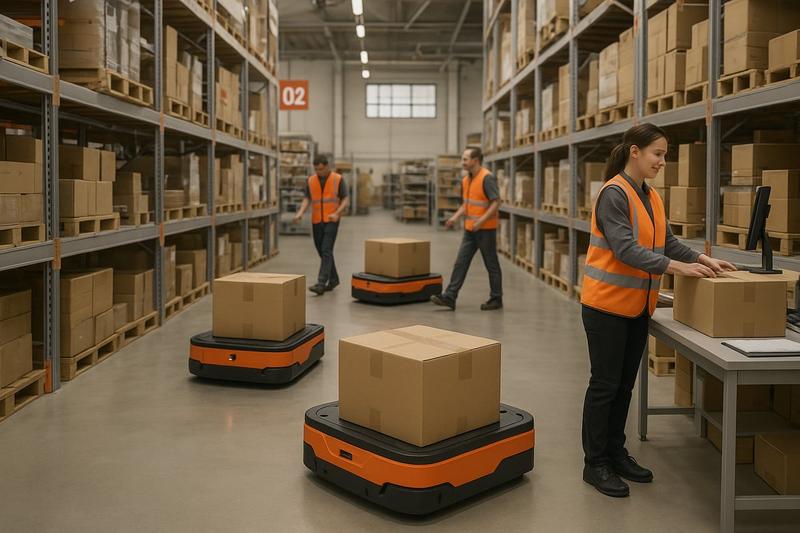
Safety remains a top priority in any warehouse, and amr in warehouse technology significantly contributes to safer workplaces. AMRs handle hazardous, repetitive, or heavy tasks, reducing the risk of workplace injuries. Advanced sensors and navigation systems enable AMRs to detect and avoid obstacles, ensuring safe movement in shared spaces.
Robots and humans can work side by side, with defined zones and real-time monitoring further mitigating risks. Training staff to supervise and interact with AMRs fosters collaboration and builds a safety-first culture.
- Automated collision avoidance
- Reduction in manual lifting and repetitive strain
- Real-time alerts for potential hazards
Amr in warehouse deployments enhance both safety and workforce wellbeing.
Real-Time Data, Analytics, and Process Optimisation
One of the most valuable aspects of amr in warehouse adoption is the wealth of real-time data generated. AMRs continuously track inventory, monitor workflow bottlenecks, and measure performance across the warehouse. This data feeds into analytics platforms, enabling proactive decision-making and targeted process improvements.
Warehouse managers can quickly identify and resolve order fulfilment issues, optimise routes, and allocate resources more effectively. Integration with existing WMS or analytics tools ensures that data-driven optimisation is an ongoing process.
- Live inventory visibility
- Workflow analytics and reporting
- Proactive identification of inefficiencies
With amr in warehouse systems, data becomes a strategic asset for continuous improvement.
ROI and Payback Models
Investing in amr in warehouse solutions delivers rapid returns through innovative financial models. Robotics-as-a-Service (RaaS) and pay-per-productivity options lower the initial investment and reduce financial risk. The total cost of ownership is often significantly less than traditional fixed automation, given the flexibility and scalability of AMRs.
Case studies consistently show fast payback periods, measurable efficiency gains, and substantial cost savings. Businesses can realise ROI within months, not years, especially when combining AMRs with optimised workflows.
- RaaS and pay-per-use models
- Reduced maintenance and downtime costs
- Fast, quantifiable payback
Amr in warehouse investments unlock ongoing value and lasting competitive advantage.
Step-by-Step Guide: Implementing AMRs in Your Warehouse
Adopting amr in warehouse environments is a strategic process that requires careful planning and execution. By following a structured, step-by-step approach, organisations can maximise the benefits of automation while minimising risks and disruption. Here is a practical guide to implementing AMRs, from initial assessment to ongoing optimisation.

Step 1: Assessing Operational Needs and Readiness
Begin by evaluating your current warehouse processes. Identify areas where automation will have the most impact, such as picking, replenishment, or inventory management.
Review order profiles, SKU velocity, and pain points like labour shortages or high error rates. Assess the physical layout and IT infrastructure to determine if amr in warehouse solutions are compatible with your existing setup.
Warehouses with high throughput, complex order profiles, or frequent peaks in demand stand to benefit the most. A thorough needs assessment sets the foundation for successful AMR adoption.
Step 2: Selecting the Right AMR Solution
Select the best-fit amr in warehouse solution by matching robot types to operational tasks. Consider whether your workflow requires picking robots, sortation units, inventory trackers, or pallet movers.
Evaluate key criteria:
- Load capacity and size
- Navigation technology (LiDAR, vision, sensors)
- Integration capability with WMS/WES
- Vendor support for local regulations
For example, pallet AMRs suit bulk movement, while tote AMRs are ideal for e-commerce picking. Choose a solution that aligns with both current needs and future growth.
Step 3: Integrating AMRs with Warehouse Software
Seamless software integration is essential for amr in warehouse success. Connect AMRs to your Warehouse Management System (WMS) or Warehouse Execution System (WES) to enable real-time task allocation and status updates.
Key considerations:
- Ensure robust APIs for communication
- Maintain data security and system resilience
- Plan for real-time monitoring and analytics
For instance, AMRs can receive picking assignments directly from the WMS and update inventory positions instantly. Proper integration reduces manual intervention and supports data-driven operations.
Step 4: Facility Mapping and Initial Deployment
Before launching amr in warehouse operations, allow robots to map the facility using sensors, cameras, or LiDAR. Define zones such as loading docks, restricted areas, and pick stations.
Start with a pilot deployment, using a small AMR fleet to validate workflows and identify bottlenecks.
A virtual mapping approach minimises the need for physical infrastructure changes. This step ensures AMRs can navigate safely and efficiently, adapting to dynamic warehouse environments.
Step 5: Workforce Training and Change Management
Successful amr in warehouse implementation hinges on effective workforce engagement. Upskill staff to supervise, manage, and collaborate with AMRs.
Key training areas:
- Robot safety protocols
- Human-robot interaction guidelines
- AMR system interfaces and dashboards
Address concerns about job roles and highlight opportunities for upskilling. Encourage open communication and provide hands-on training to foster a positive culture around automation.
Step 6: Scaling and Continuous Optimisation
As your amr in warehouse solution proves its value, scale up the fleet to match operational demands. Use performance data to identify areas for workflow refinement and process improvement.
Continuous optimisation involves:
- Monitoring key performance indicators (KPIs)
- Adjusting task allocation for efficiency
- Scaling the system for seasonal peaks or business growth
Leverage analytics to keep your automation aligned with changing needs, ensuring ongoing ROI and adaptability.
Step 7: Monitoring Performance and Ensuring Safety
Ongoing monitoring safeguards the performance and safety of your amr in warehouse operations. Use fleet management dashboards to track productivity, error rates, and incident reports.
Schedule regular software updates and preventive maintenance to ensure optimal function. Advanced AMRs employ sensors and real-time obstacle detection to enhance workplace safety.
For deeper insights into best-practice safety, review research on Safe Human-Robot Navigation in Warehouses, which highlights strategies to minimise risks in shared environments. Proactive monitoring supports a safe, efficient, and sustainable automation journey.
Real-World Applications: AMR Success Stories and Sector Insights
Autonomous mobile robots are redefining operational benchmarks across a wide range of warehouse sectors. The following real-world applications illustrate how the adoption of amr in warehouse environments is transforming efficiency, accuracy, and scalability. From e-commerce fulfilment to highly regulated industries, AMRs are delivering measurable impact.
AMR vs AGV Robotic Solutions in Warehouse Automation
E-Commerce and 3PL Fulfilment Centres
E-commerce and 3PL fulfilment centres are leading the way in amr in warehouse adoption. AMRs facilitate rapid and precise order picking, often achieving up to ten times higher productivity compared to manual methods. These robots excel at goods-to-person and shelf-to-person workflows, efficiently moving inventory from storage to packing zones.
Scalability is a major advantage. AMR fleets can be quickly expanded to handle seasonal spikes or high SKU turnover. For example, the Shiperoo AMR case study demonstrates how implementing AMRs resulted in significant gains in efficiency, accuracy, and throughput for a fast-growing fulfilment provider.
AMRs also minimise walking distances for staff, reduce error rates, and support flexible warehouse layouts. This makes them an ideal solution for businesses facing labour shortages or fluctuating demand.
Manufacturing and FMCG Warehouses
In manufacturing and FMCG warehouses, amr in warehouse solutions are optimising material flow between production lines and storage areas. These robots automate the transport of raw materials, components, and finished goods, supporting just-in-time inventory systems and lean manufacturing principles.
Pallet-moving AMRs are particularly valuable for handling heavy or bulky loads, while smaller robots manage totes and boxes. Data from industry leaders shows that AMRs can deliver up to 60 percent improvement in overall productivity.
Key benefits include reduced manual handling, fewer bottlenecks, and enhanced safety. AMRs enable manufacturers to respond quickly to changes in production schedules or product lines, ensuring a more agile and resilient supply chain.
Cold Storage and Food & Beverage Logistics
The deployment of amr in warehouse settings is rapidly expanding into cold storage and food and beverage logistics. AMRs are engineered to operate reliably in temperature-controlled environments, including freezers and chilled zones where manual work is hazardous and physically demanding.
These robots transport both pallets and totes containing frozen or perishable goods, reducing the need for human exposure to cold and improving operational safety. AMRs also help maintain product integrity by minimising time out of the cold chain.
By automating routine transport tasks, warehouses can reduce labour costs and improve throughput, while ensuring compliance with food safety standards and traceability requirements.
Pharmaceuticals and High-Compliance Environments
Pharmaceutical warehouses and other high-compliance sectors are embracing amr in warehouse technology to enhance accuracy and traceability. AMRs equipped with barcode and RFID scanning capabilities automate inventory tracking, ensuring precise records for each product movement.
This automation supports strict regulatory compliance and helps reduce errors in picking, packing, and shipping processes. In environments where product integrity and documentation are critical, AMRs minimise the risk of human error and provide robust audit trails.
Real-time data collection further enables proactive management of inventory and expiration dates, supporting the highest standards of accuracy and accountability in sensitive supply chains.
Lessons Learned and Best Practices
Successful amr in warehouse projects share several best practices. Tailoring AMR selection to sector-specific needs is critical, as is integrating robots with existing warehouse management systems for seamless operation.
Continuous improvement is achieved by leveraging the data collected by AMRs to refine workflows and identify bottlenecks. Collaboration between robotics, IT, and operations teams ensures that both technology and people are aligned for success.
Key takeaways include:
- Start with a clear understanding of operational goals
- Invest in workforce training and change management
- Use pilot deployments to validate workflows before scaling
These lessons help businesses unlock the full potential of AMRs while future-proofing their warehouses for ongoing change.
Future-Proofing Your Warehouse: 2026 and Beyond
The rapid evolution of amr in warehouse environments is setting new benchmarks for what is possible in logistics. As we look to 2026 and beyond, warehouses must prepare to adopt emerging innovations, integrate seamlessly with new technologies, and plan strategically for long-term success.
Key Innovations Shaping the Next Generation of AMRs
The next wave of amr in warehouse technology will be defined by smarter autonomy and enhanced adaptability. AI-driven robots are now capable of complex decision-making, learning from their environments and adjusting to new challenges in real time.
Robots can now handle multiple workflows, from picking to sorting, all within the same system. Human-robot collaboration is improving, with natural language interfaces enabling seamless interaction. For a deeper dive into global market leadership and the latest innovations, see Geek leads global AMR market.
Advanced sensors and mapping allow AMRs to navigate intricate layouts, making them indispensable for future-proof operations.
Evolving Integration: AMRs and the Smart Warehouse Ecosystem
Integration is key for amr in warehouse success. AMRs are now part of a connected, data-driven ecosystem, working alongside IoT devices and cloud-based WMS platforms.
These robots generate real-time data that powers advanced analytics and process optimisation. With seamless integration, warehouses achieve end-to-end visibility and can respond proactively to shifting demand. According to Autonomous Mobile Robots Market Key Findings, the rapid adoption of integrated AMR solutions is driving substantial market growth through 2026.
Smart warehouses leverage these capabilities to remain agile and competitive.
Overcoming Barriers to Adoption
Implementing amr in warehouse operations is not without challenges. Initial investment, workforce adaptation, and cybersecurity are common concerns for decision makers.
Choosing vendors with strong local support and proven deployment expertise can ease the transition. Robotics-as-a-Service (RaaS) models help reduce upfront costs and risk, making advanced automation more accessible.
Clear communication and change management are essential to gain staff buy-in and ensure a smooth rollout.
Sustainability and Green Logistics
Sustainability is a growing priority for amr in warehouse strategies. AMRs help reduce energy consumption and optimise space, leading to a smaller environmental footprint.
By leveraging data-driven efficiency, warehouses can minimise waste, decrease travel distances, and lower emissions. AMR-enabled facilities contribute directly to corporate sustainability goals, supporting green logistics initiatives.
Optimised routes and smarter workflows also reduce wear and tear on equipment, further enhancing long-term sustainability.
Strategic Planning for Long-Term Success
Long-term success with amr in warehouse operations requires a clear roadmap and ongoing evaluation. Businesses should align their automation strategies with growth projections and market trends.
Continuous learning from AMR-generated data enables ongoing optimisation and adaptation. Investing in scalable solutions ensures that warehouses can expand capacity and capabilities as needed.
Strategic partnerships with technology leaders will help organisations stay ahead of the curve and unlock new levels of efficiency.
How Automate-X Empowers Smarter AMR Integration
Automate-X leads the way in intelligent warehouse automation, specialising in amr in warehouse deployment for businesses across New Zealand and Australia. Their solutions blend advanced robotics, AMRs, conveyor systems, and seamless WMS integration to streamline logistics, reduce costs, and boost efficiency.
You can trust Automate-X for:
- Goods-to-person and ASRS systems for faster, more accurate order fulfilment
- Scalable automation tailored to logistics, e-commerce, manufacturing, FMCG, pharma, and cold storage sectors
- Local expertise with rapid deployment and hands-on support throughout your automation journey
Automate-X’s end-to-end approach tackles labour shortages and rising operational costs, while future-proofing your warehouse with proven improvements in productivity, safety, and space utilisation. For organisations ready to unlock the full potential of amr in warehouse operations, Automate-X delivers the technology and expertise you need for sustainable growth.
As you’ve seen throughout this guide, adopting AMRs is about more than technology—it’s about reimagining how your warehouse operates for long-term efficiency and growth. By combining modern robotics, smart software, and a clear strategy, you can streamline processes, boost productivity, and set your business up for future success. If you’re ready to move beyond manual workflows and start building a smarter, scalable operation, now is the perfect time to take the next step. Let’s work together to future-proof your warehouse—Automate Your Warehouse