

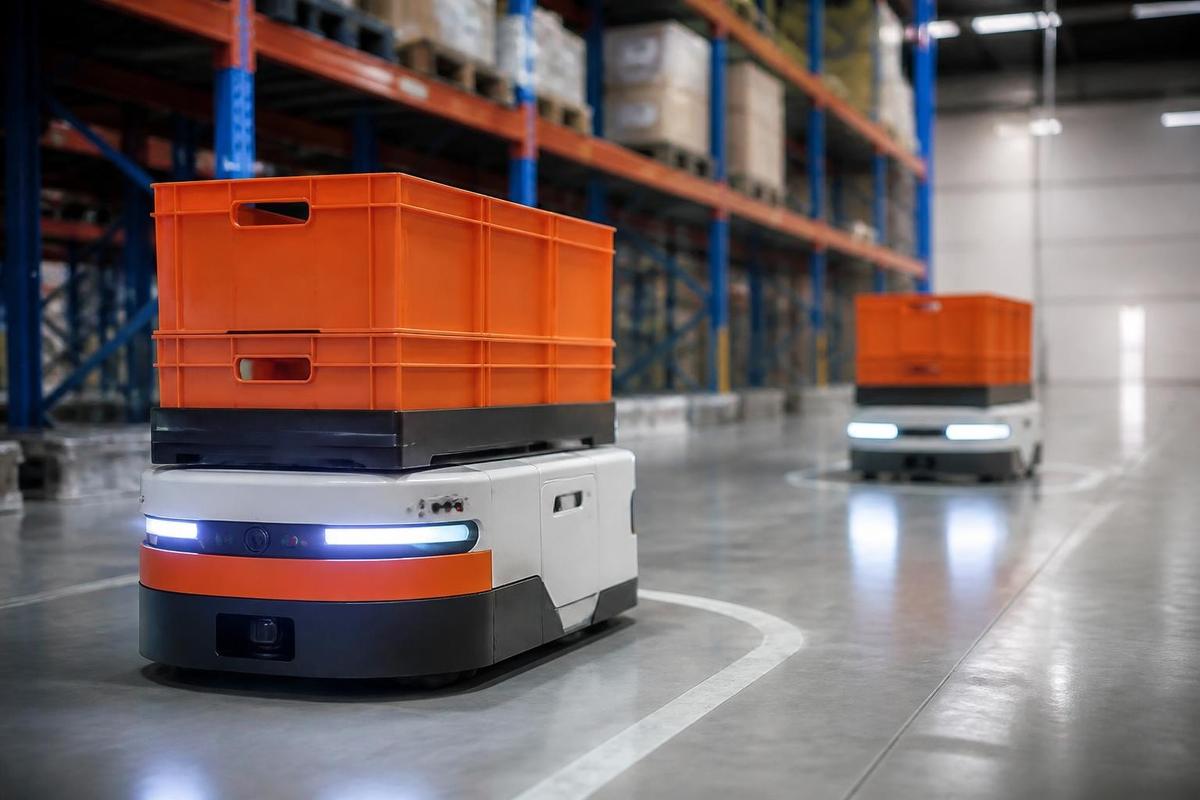
Automated Guided Vehicles: Modern Warehouse Solutions
Share on
The evolution of warehouse operations has brought sophisticated technologies to the forefront of logistics management, with automated guided vehicles emerging as critical infrastructure for modern distribution centres and fulfillment operations. These intelligent material handling systems have transformed how businesses approach inventory movement, labour allocation, and operational scalability. As warehouses face increasing pressure to process higher volumes with greater accuracy, automated guided vehicles offer a proven pathway to sustainable efficiency gains whilst maintaining the flexibility required in dynamic logistics environments.
Understanding Automated Guided Vehicle Technology
Automated guided vehicles represent a category of material handling equipment designed to transport goods throughout warehouse and manufacturing facilities without direct human operation. These vehicles follow predetermined paths using various navigation technologies, enabling consistent and reliable movement of inventory across operations.
The foundation of AGV technology lies in its sophisticated navigation and control systems that allow vehicles to operate safely within busy warehouse environments. Modern systems integrate seamlessly with warehouse management software, enabling real-time task assignment and route optimization based on operational priorities.
Core Navigation Technologies
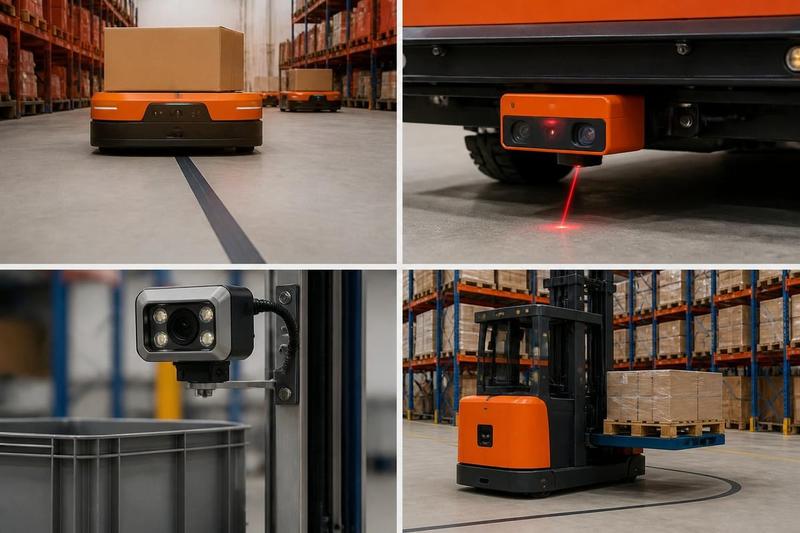
Different automated guided vehicle navigation methods suit various warehouse configurations and operational requirements:
- Magnetic tape guidance offers cost-effective installation with clear path definition
- Laser triangulation provides flexible routing without fixed infrastructure
- Vision-based navigation enables dynamic obstacle avoidance and adaptable pathways
- Inductive wire guidance delivers precise positioning for repetitive routes
- Natural feature navigation uses existing warehouse structures for orientation
Selection of the appropriate navigation technology depends on factors including warehouse layout complexity, required flexibility for future modifications, initial capital investment, and the operating environment's characteristics. Many operations deploy hybrid approaches, combining multiple technologies to optimize performance across different warehouse zones.
Operational Applications Across Warehouse Environments
Automated guided vehicles serve diverse functions within logistics operations, each addressing specific material handling challenges. Understanding these applications across different industries helps organizations identify opportunities for automation within their specific workflows.
Inbound Receiving and Put-Away Operations
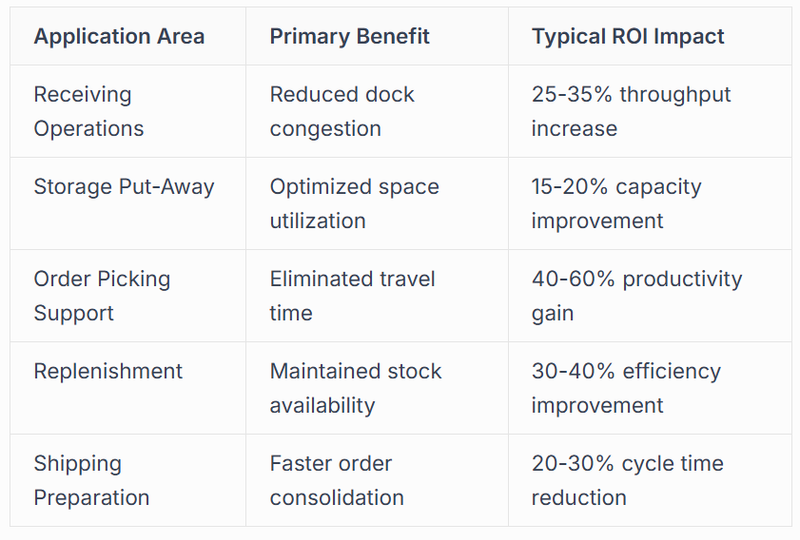
AGVs streamline receiving processes by transporting incoming goods from unloading docks to designated storage locations. This eliminates manual pallet jack operation and reduces congestion in receiving areas during peak delivery periods. The vehicles work continuously throughout shifts, maintaining consistent throughput regardless of labour availability constraints.
For put-away operations, automated guided vehicles integrate with warehouse management systems to receive optimal storage location assignments. They transport goods to appropriate zones based on inventory characteristics, turnover rates, and picking requirements, ensuring efficient space utilization whilst building organized inventory structures.
Picking and Replenishment Support
Modern picking strategies increasingly rely on goods-to-person automation principles, where automated guided vehicles play pivotal roles in transporting inventory to stationary picking stations. This approach eliminates travel time for warehouse staff, dramatically improving pick rates and reducing physical strain on workers.
Replenishment operations benefit significantly from AGV deployment, as vehicles monitor inventory levels and automatically transport stock from bulk storage to forward picking locations. This ensures optimal product availability at picking faces whilst minimizing manual intervention in replenishment workflows.
Shipping and Cross-Docking Functions
In shipping operations, automated guided vehicles coordinate the movement of completed orders from packing stations to staging areas and loading docks. This orchestration ensures orders arrive at correct dock doors according to carrier schedules, reducing sorting errors and improving on-time dispatch performance.
Cross-docking operations particularly benefit from AGV implementation, as these vehicles can rapidly transfer goods from receiving to shipping without intermediate storage. The speed and accuracy of automated guided vehicles make high-velocity cross-docking feasible for operations previously constrained by manual handling limitations.
Integration with Warehouse Management Systems
The true potential of automated guided vehicles emerges through effective integration with broader warehouse technology ecosystems. This connectivity transforms individual vehicles into coordinated fleet resources that respond intelligently to operational demands.
Real-Time Task Assignment and Fleet Coordination
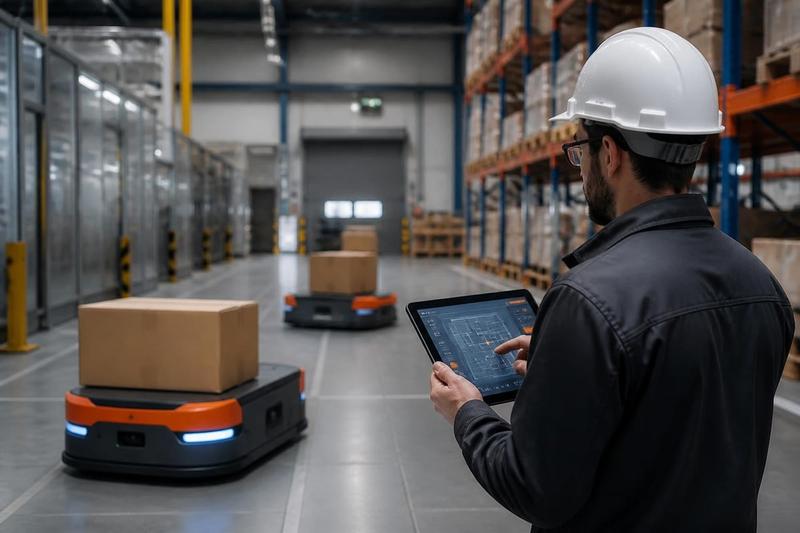
Advanced warehouse automation technologies enable centralized fleet management that optimizes vehicle utilization across competing operational priorities. When new tasks arise, the system evaluates vehicle locations, current assignments, and battery status to allocate work efficiently.
Fleet coordination algorithms prevent congestion by managing vehicle routing through shared pathways and intersections. This traffic management ensures smooth operations even during peak activity periods when multiple vehicles operate simultaneously in confined spaces.
Key integration capabilities include:
- Dynamic task prioritization based on order urgency
- Automatic battery management and charging scheduling
- Predictive maintenance alerts to prevent downtime
- Performance analytics for continuous optimization
- Exception handling for blocked paths or obstacles
Data Exchange and Operational Visibility
The bidirectional communication between automated guided vehicles and warehouse management systems creates comprehensive operational visibility. Managers access real-time information about material movements, task completion status, and potential bottlenecks affecting throughput.
This data foundation supports informed decision-making for both immediate operational adjustments and strategic planning initiatives. Historical performance data reveals patterns that guide process improvements and capacity planning for future growth requirements.
Economic Considerations and Return on Investment
Implementing automated guided vehicles requires careful financial analysis that extends beyond initial capital expenditure to encompass total cost of ownership and projected operational benefits.
Capital Investment Components
The financial commitment for AGV systems encompasses several distinct elements that collectively determine project feasibility. Vehicle acquisition represents the most visible cost component, with pricing varying based on load capacity, navigation sophistication, and operational features.
Infrastructure requirements add significant expense, particularly for navigation systems requiring physical installations. Magnetic tape systems demand floor preparation and marker installation, whilst laser-based solutions require reflector positioning throughout the facility. Software licensing for fleet management and WMS integration constitutes an ongoing expense that scales with fleet size and system complexity.
Cost Category
Typical Range (NZD)
Key Variables
Vehicle Units
$45,000-$150,000 each
Capacity, navigation type, features
Navigation Infrastructure
$15,000-$75,000
Technology choice, facility size
Software and Integration
$30,000-$100,000
Fleet size, customization needs
Installation and Commissioning
$20,000-$60,000
Complexity, downtime requirements
Training and Change Management
$8,000-$25,000
Staff size, system complexity
Operational Savings and Productivity Gains
The economic impact of AGV systems manifests through multiple value streams that accumulate over the system lifecycle. Labour cost reduction typically represents the most substantial benefit, as automated guided vehicles eliminate positions whilst enabling remaining staff to focus on higher-value activities requiring human judgment.
Energy efficiency improvements contribute to ongoing savings, particularly when replacing traditional forklift fleets consuming fossil fuels. Electric AGVs operate with lower energy costs per ton-mile moved, whilst regenerative braking systems in advanced models further reduce power consumption.
Safety improvements deliver tangible financial benefits through reduced accident rates and associated costs. Automated guided vehicles operate with consistent awareness of their surroundings, eliminating common forklift accidents caused by visibility limitations or operator error. Workers' compensation premiums often decrease following successful AGV implementation due to improved safety records.
Product damage reduction emerges as an often-underestimated benefit category. Automated guided vehicles handle inventory with programmed precision, eliminating the rough handling and impacts that cause product damage in manual operations. For businesses handling high-value goods or fragile products, this damage prevention can justify AGV investment independently of other benefits.
Implementation Considerations for Logistics Operations
Successful deployment of automated guided vehicles demands thorough planning that addresses both technical requirements and organizational change management dimensions.
Facility Assessment and Workflow Analysis
Implementation begins with comprehensive facility assessment examining floor conditions, aisle widths, ceiling heights, and environmental factors affecting vehicle operation. Automated guided vehicles require smooth, level floors free from significant cracks or debris that could interfere with navigation systems.
Workflow analysis identifies optimal integration points where AGVs deliver maximum impact relative to implementation complexity. Starting with repetitive, high-volume transport routes allows operations to demonstrate value quickly whilst building organizational competence with the technology before expanding to more complex applications.
Critical assessment factors include:
- Floor load capacity for vehicle weight plus maximum payload
- Turning radius requirements for selected vehicle types
- Charging infrastructure locations and power availability
- Wi-Fi coverage quality for wireless communication needs
- Environmental conditions affecting electronic components
Scalability and Future Expansion Planning
Leading warehouse operations view initial AGV deployment as the foundation for broader automation strategies rather than isolated projects. This perspective shapes implementation decisions to ensure systems accommodate growth and technological evolution.
Modular system architecture allows incremental fleet expansion as operational volumes increase or automation extends to additional warehouse zones. Selecting platforms with established upgrade pathways protects initial investments whilst enabling continuous capability enhancement as technology advances.
For businesses starting their automation journey, solutions like the Automate-X GTP Starter Grid provide accessible entry points that establish automation foundations whilst remaining adaptable to evolving operational requirements. This approach reduces implementation risk whilst building organizational capabilities that support more sophisticated automation over time.
Safety Standards and Operational Protocols
The integration of automated guided vehicles into active warehouse environments creates shared spaces where machines and humans work in proximity, requiring comprehensive safety frameworks that protect personnel whilst maintaining operational efficiency.
Built-In Safety Systems
Modern automated guided vehicles incorporate multiple redundant safety mechanisms that detect and respond to potential collision risks. Laser scanners create protective fields around vehicles, automatically reducing speed or stopping when obstacles enter defined zones. Emergency stop buttons provide immediate manual override capabilities accessible from multiple vehicle positions.
Audible warnings alert nearby workers to vehicle presence and movement intentions. Visual indicators communicate operational status, with distinct signals for normal operation, charging status, and fault conditions requiring attention. These multilayered safety systems work collectively to prevent accidents whilst minimizing unnecessary operational interruptions.
Operating Protocols and Personnel Training
Effective AGV integration requires establishing clear operating protocols that define appropriate human interaction with automated systems. Designated crossing points with visibility enhancements allow safe pedestrian movement across AGV routes without compromising efficiency.
Training programs ensure all warehouse personnel understand AGV operational principles, safety features, and appropriate responses to various system states. This knowledge builds confidence amongst staff whilst establishing the behavioral patterns necessary for harmonious human-machine collaboration.
Personnel working directly with AGVs receive specialized training covering task assignment procedures, exception handling protocols, and basic troubleshooting techniques. This capability development creates operational resilience by distributing system knowledge throughout the organization rather than concentrating expertise with limited individuals.
Performance Optimization and Continuous Improvement
Automated guided vehicle systems generate extensive operational data that supports ongoing performance enhancement when properly analyzed and acted upon. Organizations maximizing AGV value treat implementation as the beginning of continuous improvement journeys rather than completed projects.
Key Performance Indicators and Monitoring
Establishing relevant metrics provides visibility into system performance and highlights optimization opportunities. Vehicle utilization rates reveal whether fleet sizing appropriately matches operational demands or whether adjustments could improve efficiency. Task completion times expose process bottlenecks that may require workflow modifications or infrastructure enhancements.
Essential performance metrics include:
- Average utilization rate per vehicle and shift
- Task completion time by operation type
- Empty travel distance as percentage of total movement
- Battery cycle efficiency and charging time requirements
- System availability excluding planned maintenance
- Near-miss frequency and safety incident tracking
Adaptive Route Optimization
Advanced fleet management systems continuously refine vehicle routing based on accumulated operational data. Machine learning algorithms identify patterns in task sequences and warehouse congestion, progressively improving route selection to minimize travel time and energy consumption.
This adaptive optimization extends to charging schedule management, where systems learn operational rhythm patterns and schedule battery replenishment during natural activity lulls. Intelligent charging coordination maintains fleet readiness whilst avoiding charging queue formation that would constrain vehicle availability during peak periods.
Industry-Specific Applications and Adaptations
Different industry sectors leverage automated guided vehicles with unique configurations and operational strategies aligned to their specific material handling challenges and regulatory requirements.
Cold Storage and Temperature-Controlled Environments
Pharmaceutical and food distribution operations operating temperature-controlled facilities benefit substantially from AGV deployment due to harsh environmental conditions that challenge human workers. Automated guided vehicles equipped for freezer operation eliminate personnel exposure to extreme temperatures whilst maintaining consistent material flow through refrigerated zones.
Specialized AGVs designed for cold storage incorporate heating elements for critical components, sealed enclosures protecting electronics from condensation, and materials selected for brittleness resistance at low temperatures. These adaptations ensure reliable performance in environments where conventional equipment fails and human productivity suffers dramatically.
E-Commerce and High-Velocity Fulfillment
The rapid order processing demands of e-commerce fulfillment create ideal environments for automated guided vehicles supporting intensive picking operations. AGVs transport picked orders from picking zones to packing stations, maintaining continuous material flow that prevents workstation starvation during peak order periods.
High-SKU count operations deploy AGVs to support dynamic slotting strategies, frequently repositioning inventory based on velocity changes and seasonal demand patterns. This inventory mobility would prove impractical through manual handling but becomes operationally feasible when automated guided vehicles execute repositioning tasks during off-peak hours.
Manufacturing Line Support and Sequencing
Manufacturing environments utilize automated guided vehicles for just-in-time component delivery that synchronizes with production schedules. Vehicles deliver precisely sequenced materials to assembly stations according to manufacturing execution system instructions, eliminating line-side inventory whilst ensuring component availability matches assembly progression.
This manufacturing integration supports lean production principles by minimizing work-in-process inventory whilst maintaining production flow continuity. Automated guided vehicles become physical extensions of manufacturing control systems, translating digital production schedules into coordinated material movements.
Future Developments in AGV Technology
The automated guided vehicle landscape continues evolving rapidly as technological advances expand capabilities whilst reducing implementation barriers that previously limited adoption to large-scale operations.
Artificial Intelligence and Autonomous Decision-Making
Emerging AGV platforms incorporate artificial intelligence capabilities that enable vehicles to make independent navigation decisions rather than following predetermined paths. These autonomous mobile robots adapt to changing warehouse configurations without reprogramming, learning optimal routes through experience and adjusting to temporary obstacles or layout modifications.
Computer vision systems allow vehicles to identify products, read labels, and verify load accuracy without external verification systems. This perception capability creates opportunities for error detection and quality assurance functions integrated directly into material handling workflows.
Collaborative Fleet Operations
Advanced coordination algorithms enable heterogeneous vehicle fleets comprising different AGV types and capabilities to work cooperatively toward shared operational objectives. Heavy-duty units handle pallet movements whilst smaller vehicles manage case picking support, with centralized orchestration optimizing task allocation across the diverse fleet.
This multi-vehicle collaboration extends to human-robot teaming scenarios where automated guided vehicles and warehouse staff work interchangeably on tasks based on real-time capability matching. The system recognizes when human judgment adds value and when automation provides superior efficiency, dynamically assigning work to optimize combined human-machine performance.
Enhanced Connectivity and 5G Integration
The emergence of 5G-based positioning technologies promises enhanced accuracy and reliability for AGV navigation whilst supporting higher vehicle densities through improved communication bandwidth. Ultra-reliable low-latency communication enables faster response to dynamic conditions and tighter coordination between multiple vehicles operating in proximity.
Enhanced connectivity facilitates deeper integration with enterprise systems, enabling automated guided vehicles to access broader operational data informing intelligent decision-making. Vehicles consider factors including order priority, inventory availability, and downstream capacity constraints when executing tasks, creating true operational intelligence rather than simple task execution.
Automated guided vehicles have matured from specialized industrial equipment into foundational warehouse automation infrastructure that delivers measurable improvements across safety, efficiency, and operational flexibility dimensions. Success requires thoughtful implementation that considers technical requirements alongside organizational readiness and change management capabilities. Automate-X combines deep expertise in robotics, warehouse software, and system integration to design and deploy automated guided vehicle solutions tailored to your specific operational requirements, creating sustainable competitive advantages through intelligent automation that scales with your business growth.