

Automated Warehouse Management System: Complete Guide
Share on
The logistics landscape has shifted dramatically over the past decade, driven by surging e-commerce demand, labour shortages, and mounting pressure for faster fulfillment cycles. An automated warehouse management system represents the convergence of sophisticated software platforms, robotics technology, and intelligent workflows designed to orchestrate every facet of warehouse operations. These systems eliminate manual processes, reduce error rates, and enable businesses to scale operations without proportional increases in workforce requirements. For logistics providers, 3PL operators, and distribution-focused enterprises across Australia and New Zealand, implementing automation has transitioned from competitive advantage to operational necessity.
Understanding Modern Warehouse Automation Architecture
An automated warehouse management system functions as the central nervous system coordinating multiple technological layers within distribution facilities. The architecture typically comprises three distinct operational tiers that work in concert.
The foundation consists of the warehouse management system (WMS), which handles inventory tracking, order processing, and resource allocation. This software layer maintains real-time visibility across stock levels, locations, and movement histories while generating picking instructions and managing replenishment workflows.
Above this sits the warehouse execution system layer, which translates high-level instructions into specific task assignments for equipment and personnel. This middleware orchestrates the physical flow of goods, dynamically prioritizing activities based on order urgency, resource availability, and throughput optimization algorithms.
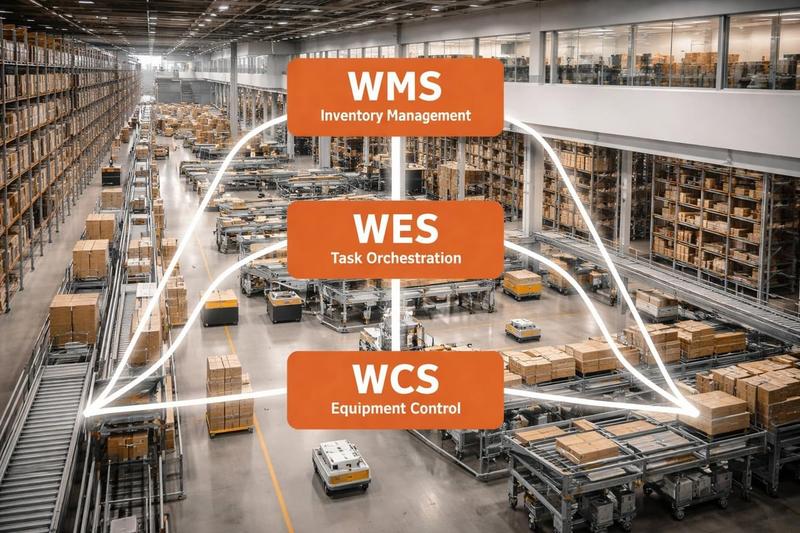
The third tier comprises warehouse control systems that interface directly with material handling equipment. These systems manage conveyors, sortation systems, automated storage and retrieval systems, and robotic units at the machine-control level.
Integration Points Across Supply Chain Systems
Modern automated warehouse management systems must communicate seamlessly with upstream and downstream platforms. Enterprise resource planning (ERP) systems feed demand forecasts and purchase orders into warehouse operations, whilst transportation management systems coordinate inbound receipts and outbound shipments.
Key integration requirements include:
- Real-time inventory synchronization with e-commerce platforms
- Automated advance shipping notice (ASN) processing from suppliers
- Order management system connectivity for multi-channel fulfillment
- Carrier integration for shipping label generation and tracking
- Returns management automation with quality inspection workflows
The quality of these integrations directly impacts operational efficiency. Companies that achieve seamless data flow between systems reduce manual intervention points, eliminate duplicate data entry, and maintain accurate inventory positions across all sales channels. E-commerce businesses particularly benefit from this connectivity, with companies like Ecom Automation Prep leveraging integrated systems to provide streamlined fulfillment services for fast-growing brands.
Core Capabilities That Define System Performance
When evaluating an automated warehouse management system, specific functional capabilities separate adequate platforms from transformative solutions. These features determine how effectively the system can handle complexity, scale operations, and deliver measurable returns.
Inventory Management and Visibility
Accurate inventory tracking forms the foundation of warehouse automation. Advanced systems employ multiple verification methods including barcode scanning, RFID technology, and computer vision to maintain real-time accuracy across millions of SKUs.
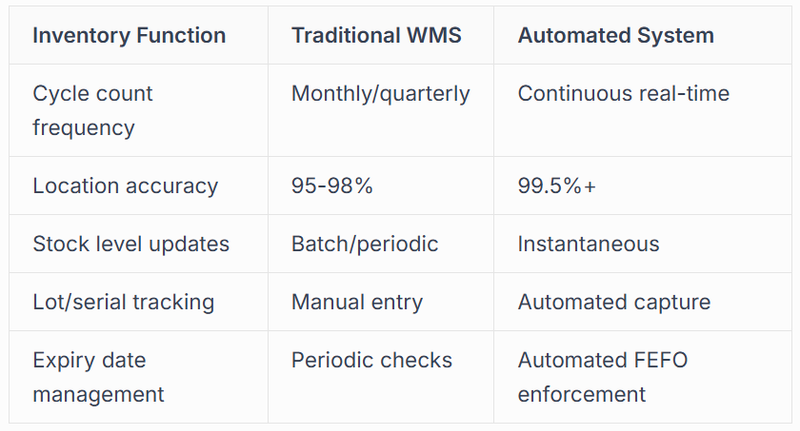
The system automatically enforces first-expired-first-out (FEFO) logic for perishable goods, critical for food and beverage operations and pharmaceutical distribution. Advanced inventory algorithms also predict stock-outs before they occur, triggering automated replenishment orders based on consumption patterns and lead times.
Intelligent Order Fulfillment Optimization
Order picking represents the most labour-intensive warehouse activity, consuming approximately 55-60% of operational costs. An automated warehouse management system transforms this process through algorithmic optimization.
Wave planning algorithms group orders based on multiple variables including shipping deadlines, customer priority levels, SKU locations, and resource availability. The system calculates optimal pick paths that minimize travel distance whilst balancing workload across the workforce.
Goods-to-person systems eliminate picker travel entirely by bringing inventory directly to stationary picking stations. When integrated with warehouse automation software, these systems can increase picking productivity by 250-400% compared to traditional walk-and-pick methodologies.
Batch picking strategies allow workers to collect multiple orders simultaneously, whilst zone picking divides the warehouse into sectors with dedicated personnel. The automated warehouse management system orchestrates these strategies dynamically, selecting the most efficient approach based on current order profiles and operational constraints.
Technology Components Driving Automation
The physical automation within modern warehouses relies on sophisticated robotics and material handling equipment coordinated by intelligent software platforms. Understanding these technologies helps businesses make informed investment decisions.
Automated Storage and Retrieval Systems
Automated storage and retrieval systems (AS/RS) maximize vertical space utilization whilst eliminating manual reaching, climbing, and searching activities. These systems employ computer-controlled cranes, shuttles, or robotic units that rapidly retrieve requested items from high-density storage configurations.
The automated warehouse management system calculates optimal storage locations using slotting algorithms that consider SKU velocity, order frequency patterns, and product relationships. Fast-moving items receive assignments closer to shipping areas, whilst slow movers occupy deeper storage positions.
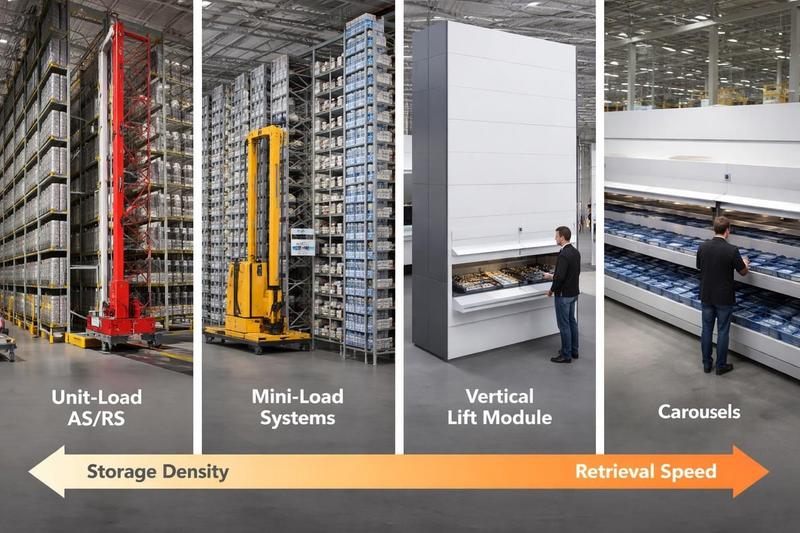
Research into warehouse layout optimization demonstrates that proper configuration of automated storage systems can reduce congestion points by 40% and improve throughput capacity significantly. The Automate-X Goods-to-person Starter Grid offers small and medium businesses an accessible entry point into this technology, providing a scalable foundation that grows with operational demands.
Autonomous Mobile Robots and AGVs
Autonomous mobile robots (AMRs) and automated guided vehicles (AGVs) transport materials throughout facilities without human drivers. The automated warehouse management system dispatches these units dynamically, assigning tasks based on priority, location, and battery status.
Modern AMRs navigate using simultaneous localization and mapping (SLAM) technology, allowing flexible deployment without fixed infrastructure. They adapt routes in real-time to avoid obstacles, optimize traffic flow, and maintain productivity during peak operational periods.
- Task assignment: System identifies picking, replenishment, or transfer requirement
- Route calculation: Algorithm determines optimal path considering traffic and obstacles
- Robot dispatch: Nearest available unit receives instruction and navigates to location
- Execution confirmation: System updates inventory and task status upon completion
- Battery management: Low-charge units automatically route to charging stations
Implementation Strategies for Maximum ROI
Deploying an automated warehouse management system requires careful planning, phased execution, and continuous optimization. Businesses that approach implementation strategically achieve faster time-to-value and minimize operational disruption.
Assessment and Technology Selection
The initial phase involves comprehensive operational analysis to identify automation opportunities with highest return potential. This assessment examines current throughput levels, error rates, labour costs, space utilization, and growth projections.
Critical evaluation criteria include:
- Order volume and seasonal variability patterns
- SKU count, dimensions, and handling characteristics
- Existing infrastructure and building constraints
- Integration requirements with current systems
- Budget parameters and ROI expectations
- Scalability needs for projected growth
SAP Extended Warehouse Management and similar enterprise platforms offer extensive functionality but require significant implementation resources. Mid-market solutions provide faster deployment timelines with modular capabilities that expand as operations mature.
Phased Deployment Approaches
Rather than attempting complete automation overnight, successful implementations follow staged rollouts that progressively build capabilities whilst maintaining operational continuity.
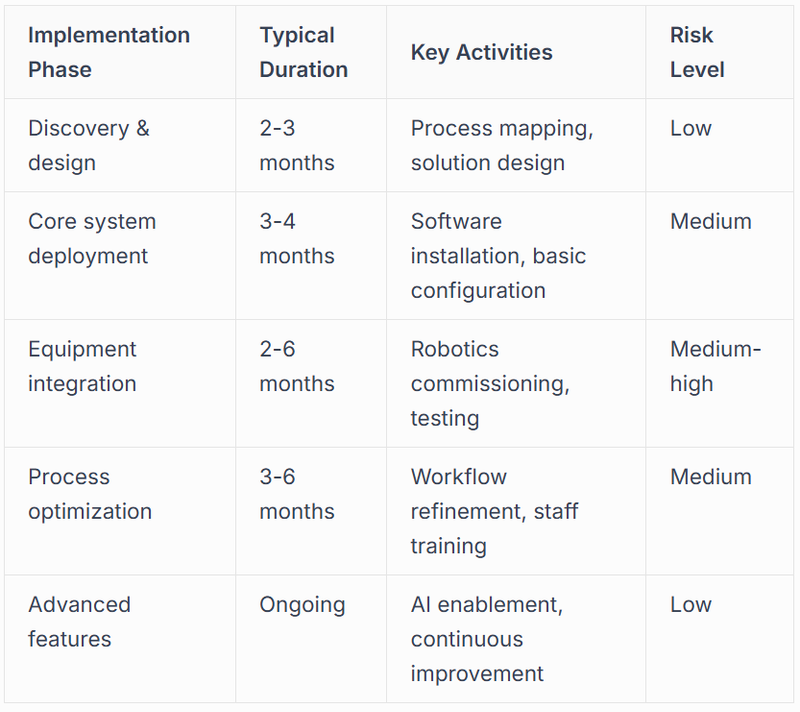
Businesses operating in pharmaceuticals, cold storage, and food distribution face additional complexity around compliance requirements, temperature control, and traceability regulations. The automated warehouse management system must accommodate these specialized needs through configurable business rules and validation checkpoints.
Performance Metrics and Continuous Improvement
Implementing automation technology represents only the beginning of the transformation journey. Sustained value delivery requires ongoing monitoring, analysis, and refinement of operational parameters.
Key Performance Indicators
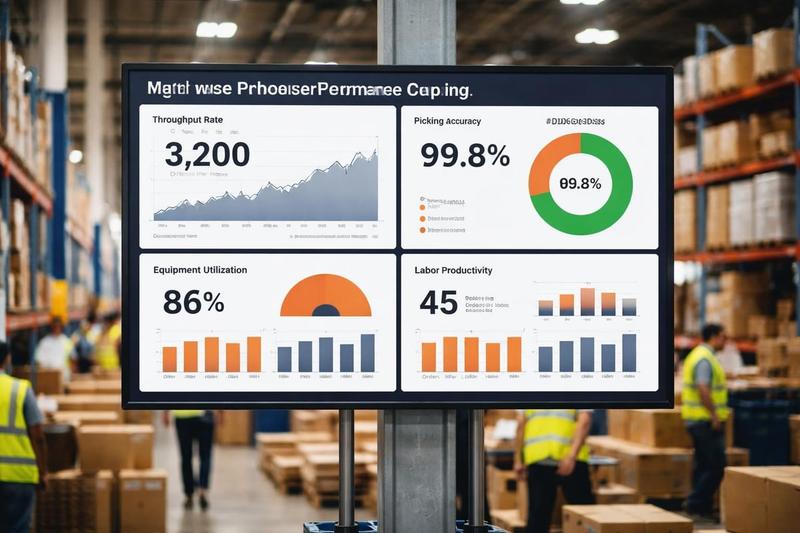
An automated warehouse management system generates comprehensive analytics that quantify operational performance across multiple dimensions. These metrics guide management decisions and highlight improvement opportunities.
Throughput and productivity measurements:
- Orders processed per labour hour
- Lines picked per hour by method (manual, semi-automated, fully automated)
- Receiving and putaway cycle times
- Shipping dock-to-truck duration
Accuracy and quality indicators:
- Inventory accuracy percentages by location and SKU
- Order fulfillment accuracy rates
- Shipment damage and returns due to warehouse error
- Cycle count variance trends
Resource utilization metrics:
- Space utilization by zone and cubic capacity
- Equipment utilization rates for robotics and material handling systems
- Labour productivity variance across shifts and teams
- Peak capacity headroom for demand surge accommodation
The application of artificial intelligence to warehouse operations enables predictive analytics that anticipate bottlenecks, forecast resource requirements, and recommend process adjustments. These machine learning capabilities continuously improve as the system accumulates operational data.
Adaptation to Evolving Business Requirements
Markets shift, customer expectations evolve, and product portfolios expand. An effective automated warehouse management system accommodates these changes through flexible configuration rather than expensive customization projects.
Successful automation implementations maintain agility by standardizing processes where appropriate whilst preserving configurability for unique business rules. This balance prevents technical debt accumulation whilst supporting competitive differentiation.
Strategic Considerations for Different Industry Verticals
While core warehouse automation principles apply universally, specific sectors face unique operational challenges that influence system requirements and implementation priorities.
E-commerce and Direct-to-Consumer Fulfillment
E-commerce operations contend with high SKU counts, small order quantities, and demanding delivery timeframes. An automated warehouse management system supporting this vertical must excel at managing individual item picks, variable order profiles, and returns processing.
Peak season capacity fluctuations require systems that scale efficiently without permanent infrastructure investments. Cloud-based platforms and robotics-as-a-service models provide flexibility to expand capacity temporarily during holiday periods or promotional events.
Third-Party Logistics and Multi-Client Operations
3PL providers manage inventory for multiple clients within shared facilities, requiring rigorous segregation, billing accuracy, and client-specific workflow support. The automated warehouse management system must maintain separate inventory pools, apply customer-specific business rules, and generate detailed activity-based billing reports.
Advanced 3PL case implementations demonstrate how automation enables providers to serve diverse client requirements efficiently whilst maintaining profitability. The technology allows smaller 3PLs to compete effectively against larger competitors through superior operational efficiency.
Manufacturing and Production Support
Manufacturing-focused warehouses coordinate raw material supply, work-in-process staging, and finished goods distribution. The automated warehouse management system integrates tightly with production schedules, triggering material kitting and line-side delivery based on manufacturing execution system signals.
Just-in-time and lean manufacturing philosophies demand precise timing and quantity accuracy. Automation eliminates variability in material delivery, supporting consistent production flow and reducing buffer inventory requirements.
Investment Analysis and Business Case Development
Warehouse automation represents significant capital expenditure requiring thorough financial justification. A comprehensive business case examines both quantifiable returns and strategic benefits that strengthen competitive positioning.
Direct Financial Returns
Labour cost reduction typically provides the most immediate and measurable return. Automation reduces headcount requirements whilst redirecting remaining workers toward higher-value activities requiring human judgment and problem-solving capabilities.
The automated storage and retrieval systems market demonstrates strong investment momentum driven by demonstrable ROI in labor productivity and space optimization. Companies frequently achieve 18-36 month payback periods on automation investments.
Space optimization generates ongoing savings by increasing storage density and reducing facility footprint requirements. Vertical AS/RS installations can triple effective storage capacity within existing buildings, deferring or eliminating expensive facility expansion projects.
Error reduction delivers value through decreased product damage, fewer mis-ships requiring correction, and improved customer satisfaction metrics. Each prevented error avoids direct correction costs plus potential customer relationship damage.
Strategic Competitive Advantages
Beyond direct cost savings, an automated warehouse management system enables capabilities that strengthen market position. Same-day and next-day delivery commitments become operationally feasible with automation supporting extended operating hours and consistent productivity.
Scalability without proportional cost increases allows businesses to pursue growth opportunities confidently. Traditional operations require near-linear workforce expansion to accommodate volume growth, whilst automated facilities absorb substantial volume increases with minimal incremental labour.
Data-driven decision-making capabilities improve continuously as the system accumulates operational intelligence. Historical performance data enables accurate demand forecasting, optimal safety stock calculations, and evidence-based process improvements.
Modern warehouse operations demand precision, speed, and scalability that manual processes simply cannot deliver consistently. An automated warehouse management system provides the technological foundation for logistics excellence, combining intelligent software with advanced robotics to transform distribution operations. Automate-X specializes in designing and implementing tailored automation solutions that address the unique challenges facing logistics providers, manufacturers, and supply chain businesses across Australia and New Zealand. Whether you're managing cold storage operations, pharmaceutical distribution, or high-volume e-commerce fulfillment, our team combines industry expertise with proven technology to deliver measurable operational improvements and sustainable competitive advantage.