

Fully Automated Warehouse: Technology & Implementation
Share on
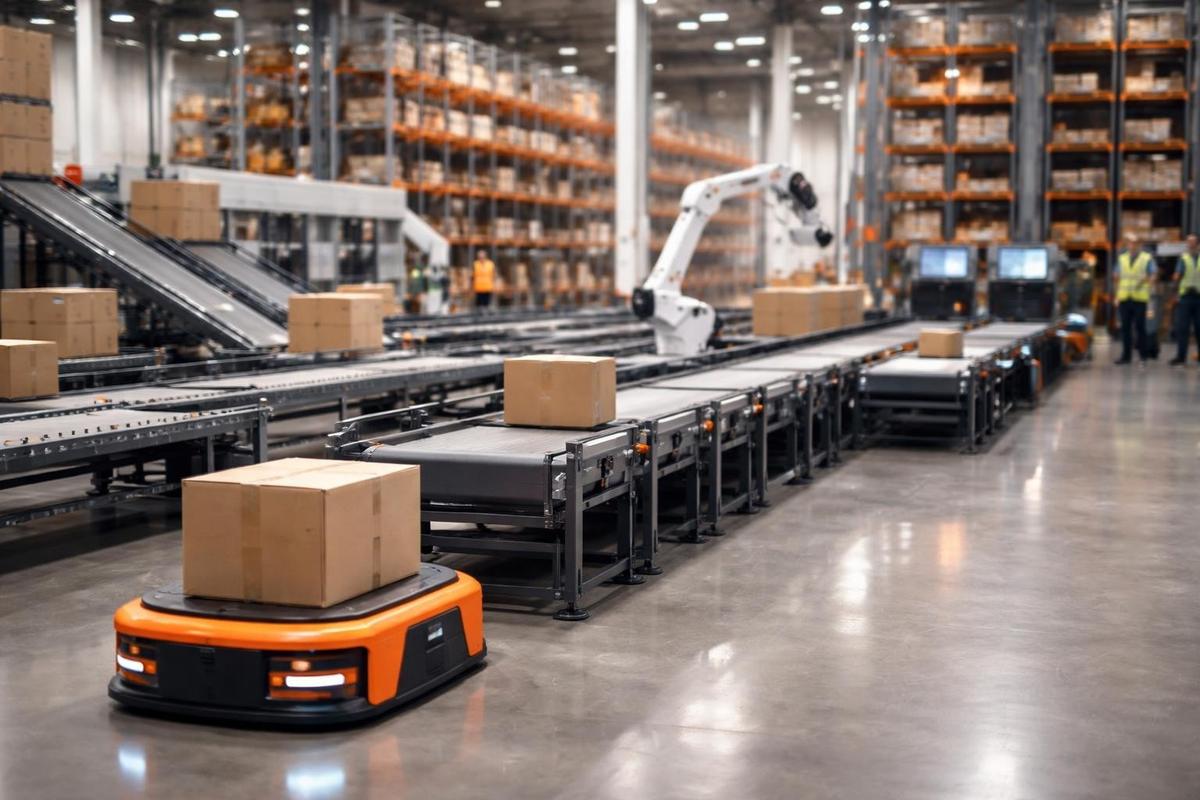
The modern warehouse has evolved far beyond traditional manual processes and basic mechanisation. Today's logistics operations demand unprecedented speed, accuracy, and efficiency to meet customer expectations and remain competitive. A fully automated warehouse represents the pinnacle of this evolution, leveraging robotics, intelligent software, and integrated systems to orchestrate every aspect of material handling with minimal human intervention. As businesses across Australia and New Zealand face mounting pressure to optimise supply chains whilst managing labour costs and space constraints, understanding the capabilities and implementation of warehouse automation has become essential for long-term operational success.
Understanding the Fully Automated Warehouse Ecosystem
A fully automated warehouse operates through the seamless integration of multiple technologies working in concert to manage inventory from inbound receiving through to outbound dispatch. Unlike partially automated facilities that may incorporate isolated automation solutions, a comprehensive automated environment connects every operational touchpoint.
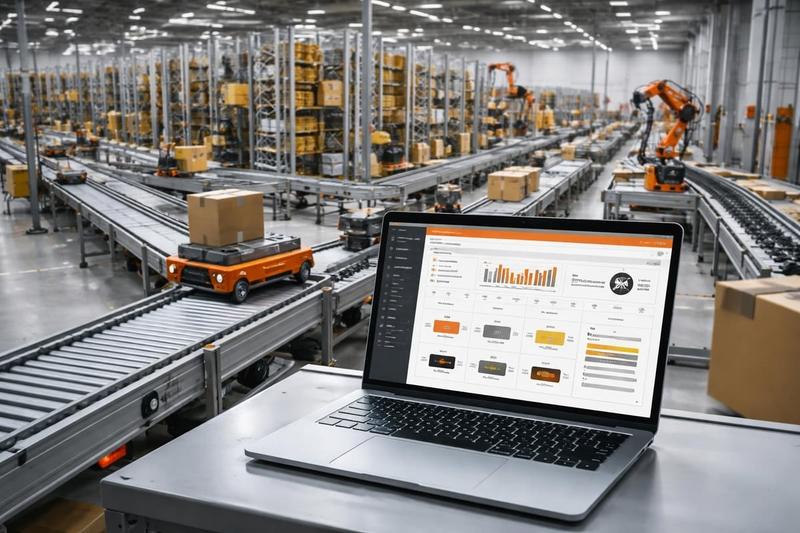
The foundation of any fully automated warehouse begins with the warehouse management system (WMS) that serves as the central nervous system. This software coordinates all automated equipment, tracks inventory in real-time, optimises storage locations, and orchestrates order fulfilment workflows. Advanced WMS platforms incorporate artificial intelligence and machine learning algorithms to continuously improve operational efficiency based on historical data and predictive analytics.
Core Technologies Driving Full Automation
Several key technologies form the backbone of warehouse automation:
- Automated Storage and Retrieval Systems (AS/RS) utilise computer-controlled mechanisms to automatically place and retrieve loads from defined storage locations
- Autonomous Mobile Robots (AMRs) navigate warehouse environments independently, transporting goods without fixed infrastructure
- Automated Guided Vehicles (AGVs) follow predetermined paths using magnetic strips, lasers, or vision systems to move materials
- Robotic picking systems employ various gripper technologies to select individual items or cases
- Conveyor and sortation systems transport products between zones and direct items to appropriate destinations
- Automated packaging equipment sizes, seals, and labels shipments without manual intervention
The research on automated guided vehicles demonstrates how these technologies integrate with Industry 4.0 principles to create flexible, responsive automation frameworks that adapt to changing operational requirements.
Business Benefits and Operational Advantages
Implementing a fully automated warehouse delivers measurable improvements across multiple operational dimensions. Understanding these benefits helps justify the substantial capital investment required for comprehensive automation projects.
Productivity and Throughput Enhancement
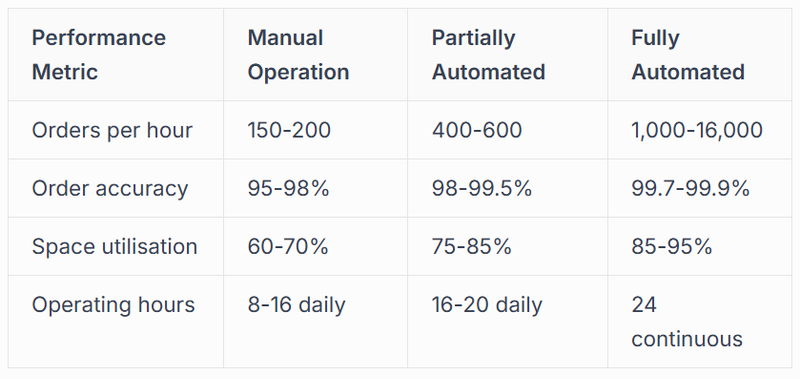
Automated systems operate continuously without fatigue, breaks, or shift changes. This constant productivity enables facilities to process significantly higher volumes within existing footprints. JD.com's fully automated warehouse in Shanghai processes up to 16,000 orders per hour with robots handling all functions from storage through packing and sorting.
The velocity advantages extend beyond raw throughput numbers. Automated systems reduce order cycle times dramatically, enabling same-day and next-day delivery promises that drive competitive advantage in e-commerce and third-party logistics operations.
Labour Optimisation and Cost Management
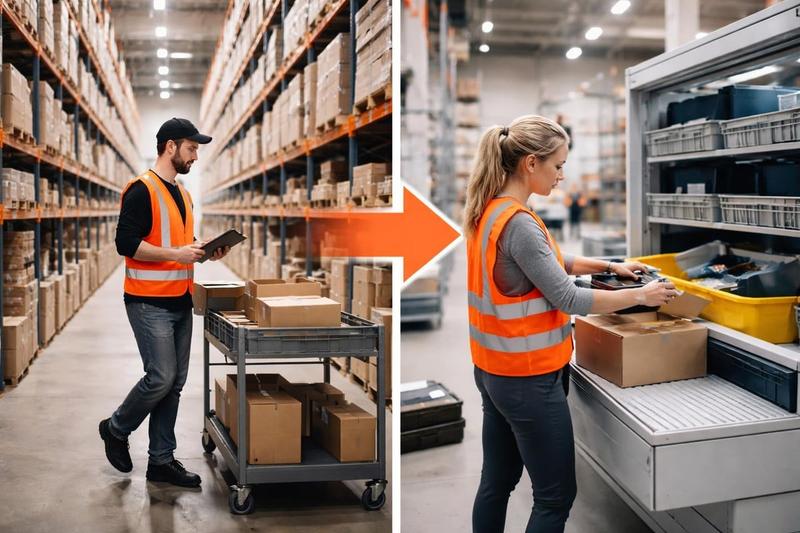
Whilst automation doesn't eliminate the need for human workers, it fundamentally reshapes labour requirements. A fully automated warehouse shifts workforce focus from repetitive manual tasks to higher-value activities including system monitoring, exception handling, maintenance, and continuous improvement initiatives.
This transformation proves particularly valuable in markets experiencing labour shortages or high turnover rates. Automated systems provide consistency and reliability independent of hiring challenges or employee availability fluctuations. Productivity solutions that incorporate automation technologies enable businesses to achieve more with existing teams whilst creating safer, more engaging work environments.
Industry-Specific Applications and Use Cases
Different sectors implement warehouse automation with varying priorities and configurations based on their unique operational requirements.
E-commerce and Third-Party Logistics
The explosive growth of online retail has made warehouse automation essential for 3PL providers serving e-commerce clients. These operations face extreme variability in order volumes, SKU proliferation, and compressed delivery windows. This e-commerce 3PL case study illustrates how a fulfilment centre transformed operations through AMRs and robotic arms, improving efficiency whilst reducing labour dependency.
E-commerce-focused automated warehouses typically prioritise:
- Rapid order processing to meet same-day and next-day promises
- High SKU density to support diverse product catalogues
- Flexible capacity to handle seasonal demand fluctuations
- Returns processing automation for reverse logistics
- Multi-channel integration connecting marketplace, direct, and retail channels
Food, Beverage, and Cold Storage
Temperature-controlled environments present unique automation challenges and opportunities. Cold storage operations face higher energy costs, challenging working conditions, and strict food safety requirements that make automation particularly valuable.
Automated cold storage facilities minimise door openings, reduce temperature fluctuations, and eliminate prolonged human exposure to extreme temperatures. Coop's zero-touch chilled and freezer operation demonstrates how robotics enable efficient picking across various temperature zones whilst maintaining product integrity and worker safety.
Pharmaceutical and Healthcare
Pharmaceutical distribution demands exceptional accuracy, complete traceability, and compliance with stringent regulatory requirements. A fully automated warehouse in this sector incorporates additional verification layers, serialisation tracking, and environmental monitoring.
Automation supports pharmaceutical operations through:
- Batch and expiry date management with first-expired-first-out (FEFO) logic
- Serialisation compliance for track-and-trace regulations
- Controlled substance security and audit trails
- Temperature and humidity monitoring integration
- Quarantine management for quality control holds
Implementation Strategies and Planning Considerations
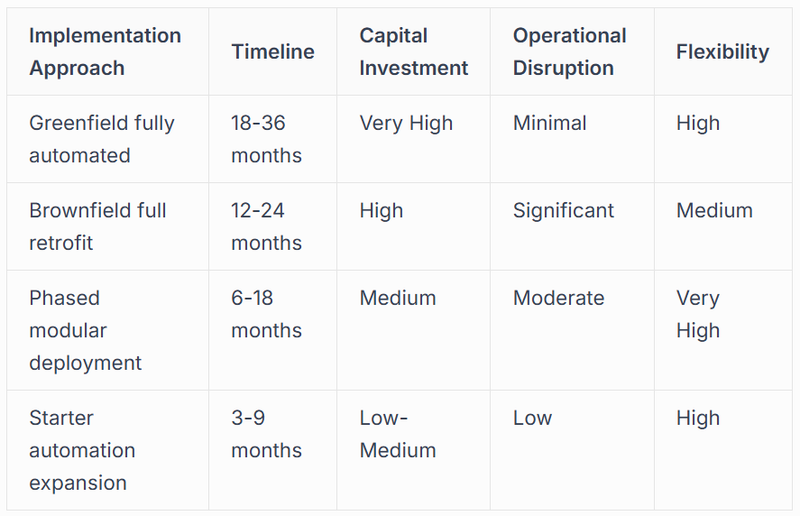
Transitioning to a fully automated warehouse requires careful planning, substantial investment, and strategic phasing to minimise operational disruption.
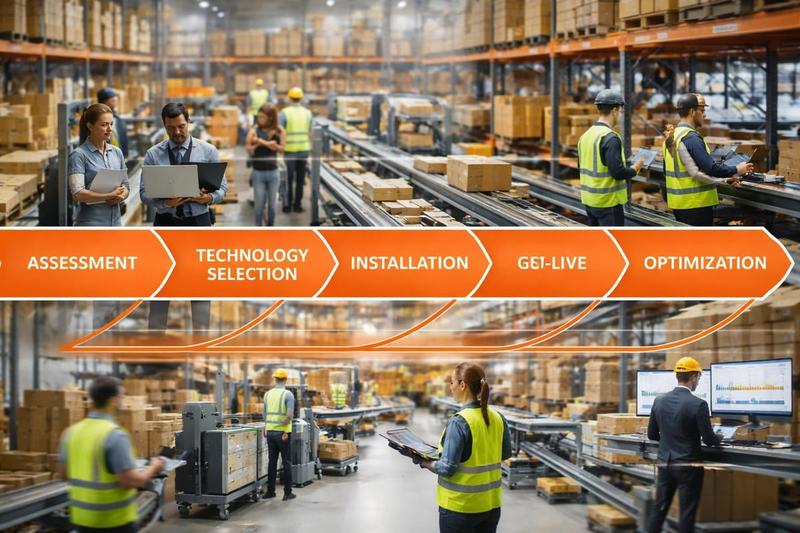
Assessment and Readiness Evaluation
Successful automation projects begin with comprehensive operational assessments examining current processes, volume patterns, SKU characteristics, and facility constraints. This analysis identifies automation opportunities, quantifies expected returns, and establishes realistic implementation timelines.
Critical evaluation factors include:
- Current and projected order volumes and growth trajectories
- Product dimensions, weights, and handling characteristics
- Order profile analysis (lines per order, units per line, pick concentration)
- Facility layout, ceiling heights, floor loading capacity, and infrastructure
- Integration requirements with existing enterprise systems
- Budget parameters and acceptable return-on-investment timeframes
Technology Selection and System Design
Choosing appropriate automation technologies requires matching capabilities to operational requirements rather than implementing technology for its own sake. The market landscape includes over 275 companies providing diverse automation solutions, making careful vendor evaluation essential.
For businesses beginning their automation journey, entry-level solutions provide valuable stepping stones toward comprehensive automation. The Automate-X GTP Starter Grid offers small and medium businesses an accessible goods-to-person approach that delivers immediate picking productivity improvements whilst establishing the foundation for future expansion.
System design must balance current needs with future scalability. Modular automation architectures enable incremental capacity additions without complete system overhauls, protecting technology investments whilst accommodating business growth.
Integration and Change Management
Technical integration represents only one dimension of successful automation implementation. Organisational change management proves equally critical, requiring workforce training, process redesign, and cultural adaptation to technology-enabled operations.
Danfoss Power Solutions' implementation of AMRs and automated storage demonstrates the importance of creating fully automated logistics flows that enhance both efficiency and workplace safety. Their experience highlights how proper implementation improves employee satisfaction by eliminating hazardous tasks and creating more engaging roles.
Overcoming Common Implementation Challenges
Even well-planned automation projects encounter obstacles that require proactive management and mitigation strategies.
Managing Capital Investment and ROI Expectations
The substantial upfront investment required for a fully automated warehouse often creates financial hesitation despite compelling operational benefits. Typical automation projects for mid-sized operations range from $2 million to $10 million, whilst large-scale implementations may exceed $50 million.
Developing realistic financial models requires accounting for both direct automation costs and ancillary expenses including facility modifications, system integration, project management, training, and contingency reserves. Conservative volume projections and extended payback periods help ensure projects deliver expected returns even if growth assumptions prove optimistic.
Space Constraints and Facility Limitations
Many businesses operate in existing facilities not originally designed for automation. Ceiling heights, floor loading capacity, column spacing, and available footprint may constrain technology options. One UK distributor's expansion project achieved a 44% storage capacity increase through automated systems whilst maintaining ongoing operations, demonstrating how creative design overcomes space limitations.
Brownfield automation projects often require:
- Structural engineering assessments for floor loading and rack seismic calculations
- Electrical infrastructure upgrades to support automated equipment power demands
- Network connectivity enhancements for real-time system communication
- Fire suppression system modifications meeting automated storage requirements
- Workflow redesign accommodating automation within existing building envelopes
Technology Integration Complexity
A fully automated warehouse relies on seamless data flow between the WMS, enterprise resource planning (ERP) systems, transportation management systems (TMS), and automated equipment controllers. Integration complexity increases exponentially with the number of systems and vendors involved.
Establishing clear integration standards, selecting technologies with robust application programming interfaces (APIs), and engaging experienced system integrators mitigate technical integration risks. Comprehensive testing protocols validate system interactions before go-live, reducing post-implementation issues.
Operational Excellence in Automated Environments
Achieving sustained value from warehouse automation requires ongoing optimisation, preventive maintenance, and continuous improvement discipline.
Performance Monitoring and Analytics
Automated systems generate vast quantities of operational data that enable unprecedented visibility into warehouse performance. Sophisticated analytics platforms transform this data into actionable insights regarding system utilisation, throughput bottlenecks, inventory positioning, and labour productivity.
Key performance indicators for fully automated warehouses include:
- System uptime and availability measuring equipment reliability
- Throughput velocity tracking units, orders, or lines processed per hour
- Order cycle time from order release to ship confirmation
- Inventory accuracy comparing system records to physical counts
- Pick accuracy measuring error rates and quality metrics
- Space utilisation assessing storage density and cube optimisation
Preventive Maintenance and System Reliability
Automated equipment requires disciplined maintenance programmes to sustain performance and prevent costly unplanned downtime. Predictive maintenance approaches leverage sensor data and machine learning to identify potential failures before they occur, enabling scheduled interventions during planned maintenance windows.
Maintenance strategies must address mechanical components, electrical systems, software updates, and operator training refreshers. Spare parts inventory management ensures critical components remain available for rapid repairs without excessive capital tied up in rarely-needed items.
Future Trends Shaping Warehouse Automation
The warehouse automation landscape continues evolving rapidly as emerging technologies create new capabilities and operational models.
Artificial intelligence and machine learning increasingly optimise automated warehouse operations through dynamic slotting, predictive demand positioning, and autonomous decision-making that adapts to changing conditions without human intervention. These intelligent systems learn from operational patterns to continuously improve performance.
Collaborative robotics blurs the line between fully automated and human-operated zones, enabling flexible automation that augments worker capabilities rather than replacing them entirely. This hybrid approach suits operations with high variability or specialised handling requirements not easily automated with current technology.
Sustainability considerations drive automation design as businesses prioritise energy efficiency, packaging waste reduction, and carbon footprint minimisation. Automated systems optimise travel paths, reduce lighting requirements in dark warehouses, and enable higher-density storage that decreases building energy consumption per unit stored.
The transition to a fully automated warehouse represents a transformative journey that fundamentally reshapes logistics operations, delivering substantial productivity gains, accuracy improvements, and scalability for growing businesses. Whether you're exploring initial automation steps or planning comprehensive transformation, Automate-X combines robotics expertise, warehouse software capabilities, and system integration experience to design and implement intelligent automation solutions tailored to your specific operational requirements and growth objectives.