

Design Robotics: Engineering Intelligent Warehouse Systems
Share on
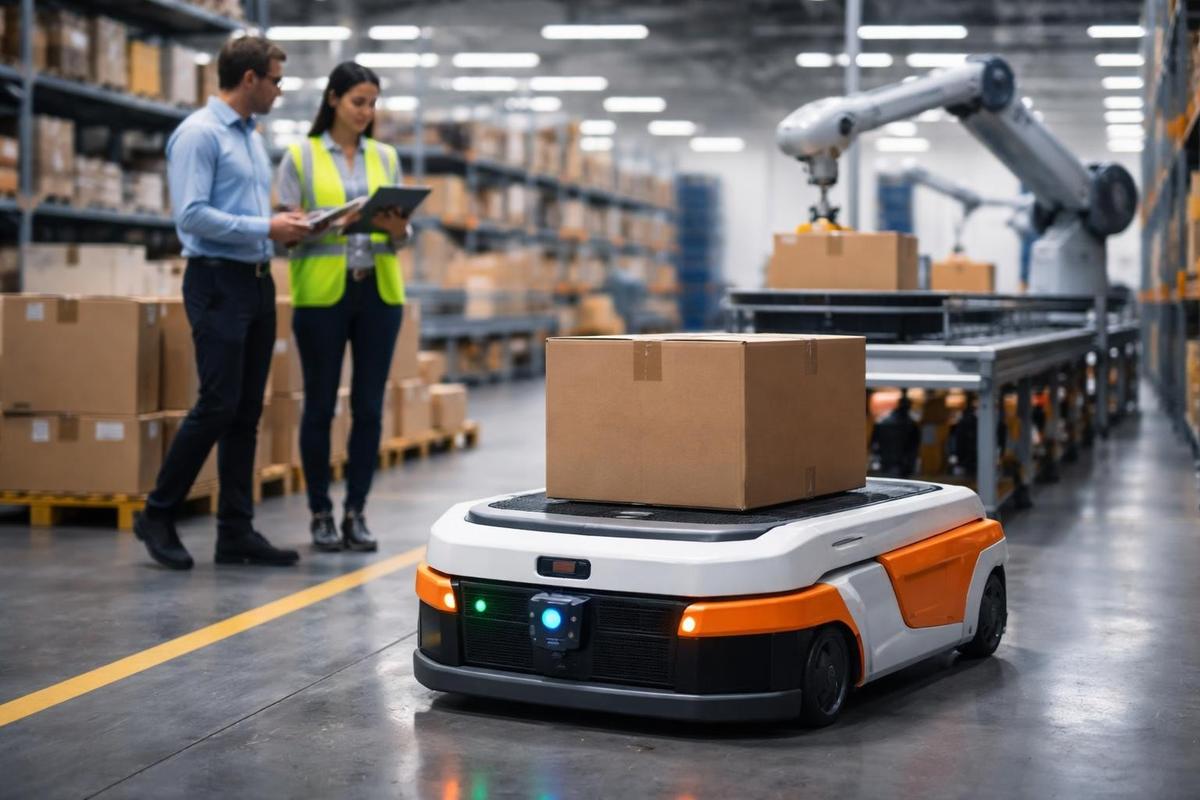
The convergence of engineering discipline and robotic innovation has fundamentally transformed how warehouses operate in 2026. Design robotics represents a systematic approach to creating intelligent automated systems that address specific operational challenges within logistics environments. This methodology combines mechanical engineering, software architecture, sensor integration, and human-centred design to deliver warehouse solutions that scale with business demands whilst maintaining reliability and efficiency across diverse applications.
Understanding Design Robotics Fundamentals
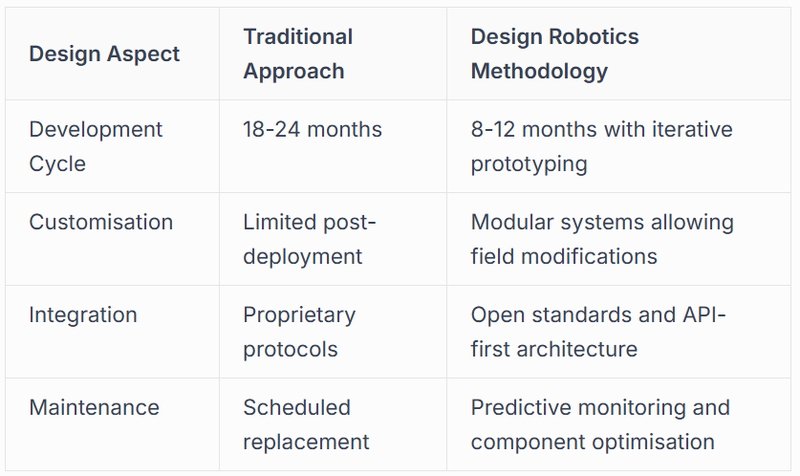
Design robotics encompasses the complete lifecycle of robotic system development, from initial concept through deployment and ongoing optimisation. Unlike traditional automation approaches, this discipline prioritises adaptability, modularity, and integration capabilities that align with complex warehouse environments.
The foundation of design robotics rests on three interconnected pillars: mechanical design, control systems, and environmental adaptation. Each element must work harmoniously to create systems capable of handling varied tasks across different warehouse configurations.
Core Components of Robotic Design:
- Kinematic architecture defining movement patterns and workspace requirements
- Sensor arrays for environmental perception and object recognition
- Control algorithms enabling autonomous decision-making
- Safety systems ensuring operational reliability alongside human workers
- Integration protocols connecting with existing warehouse management infrastructure
Modern design robotics methodology draws inspiration from biological concepts to enhance adaptability in industrial applications. This biomimetic approach enables robots to navigate complex warehouse layouts, adapt to product variations, and recover from unexpected situations without requiring constant human intervention.
Mechanical Design Considerations for Warehouse Applications
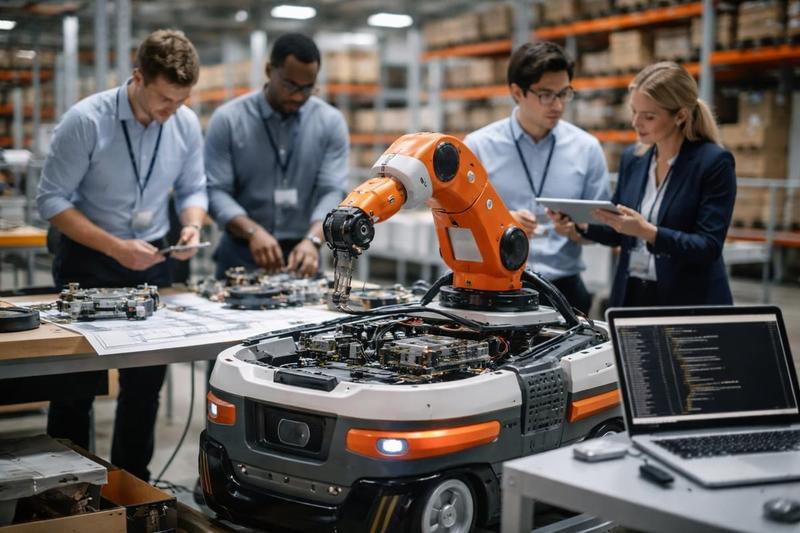
The physical architecture of warehouse robots directly influences their operational effectiveness and longevity. Design robotics professionals must balance precision requirements with durability demands whilst accounting for the harsh realities of industrial environments.
Structural Engineering Priorities
Warehouse robotics require robust mechanical designs capable of withstanding continuous operation across multiple shifts. Load-bearing components must exceed standard safety margins whilst maintaining precise movement tolerances measured in millimetres.
Material selection significantly impacts both performance and total cost of ownership. Advanced composites offer weight advantages, yet traditional steel fabrication provides proven reliability in high-duty-cycle applications common throughout distribution centres.
The emergence of soft robotics principles has influenced warehouse automation design, particularly for handling delicate products in sectors like pharmaceuticals and food & beverage. Compliant grippers and flexible end-effectors reduce product damage whilst accommodating packaging variations that challenge rigid mechanical systems.
Motion Control Systems
Precise motion control separates functional warehouse robotics from truly optimised systems. Design robotics engineers employ sophisticated feedback loops that continuously adjust positioning, velocity, and acceleration parameters based on real-time sensor data.
Contemporary warehouse robots incorporate multiple control methodologies simultaneously. Position control ensures accurate placement, force control enables gentle product handling, and impedance control allows safe human collaboration in shared work zones.
Software Architecture in Design Robotics
The intelligence layer transforms mechanical platforms into autonomous warehouse systems capable of complex decision-making. Software architecture within design robotics extends beyond simple programming to encompass artificial intelligence, machine learning, and distributed computing frameworks.
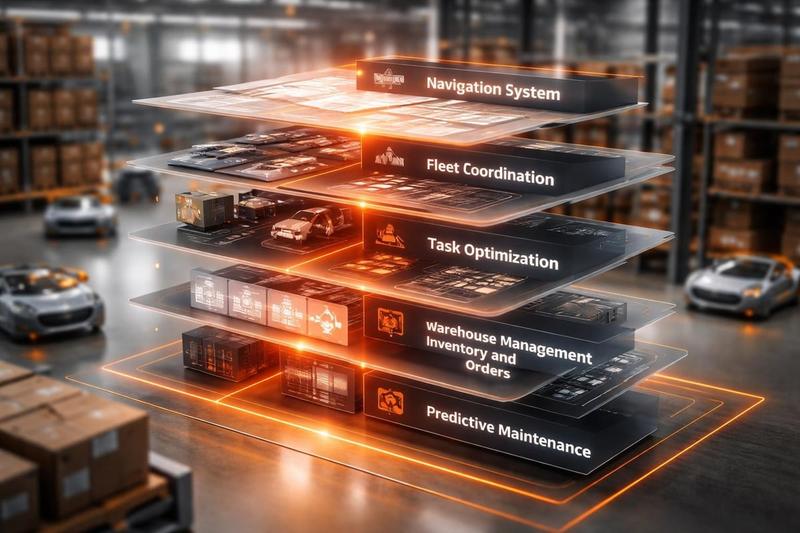
Navigation algorithms enable robots to traverse warehouse environments whilst avoiding obstacles, optimising path selection, and coordinating with other automated systems. These algorithms process data from LIDAR sensors, vision systems, and inertial measurement units to construct real-time environmental maps.
Essential Software Components:
- Fleet management systems coordinating multiple robots simultaneously
- Task allocation algorithms optimising work distribution
- Predictive maintenance modules monitoring component health
- Integration middleware connecting with automated warehouse management systems
- Safety monitoring protocols ensuring compliant operation
Machine learning models continuously improve robotic performance through operational experience. Vision systems become more accurate at product identification, path planning algorithms discover more efficient routes, and picking systems adapt to seasonal inventory variations without manual reprogramming.
Human-Centred Design Robotics Methodology
Successful warehouse automation recognises that robots augment rather than replace human capabilities. Design robotics incorporates human factors engineering to create systems that enhance worker productivity, safety, and job satisfaction.
Interface design determines how effectively warehouse staff can supervise, redirect, and collaborate with robotic systems. Intuitive control panels, clear status indicators, and accessible emergency stops enable workers to confidently interact with automation regardless of technical background.
Ergonomic considerations extend to how robots modify warehouse workflows. Goods-to-person systems eliminate repetitive walking and reaching motions, reducing musculoskeletal injuries whilst increasing picking accuracy and throughput. For businesses exploring warehouse automation, solutions like the Automate-X GTP Starter Grid provide accessible entry points that demonstrate these ergonomic benefits without requiring complete facility redesigns.
Safety Integration
Design robotics embeds safety throughout the development process rather than adding it as an afterthought. Collaborative robots operating in shared spaces incorporate multiple redundant safety systems including emergency stop circuits, presence detection sensors, and force-limiting controls.
Risk assessment methodologies evaluate potential failure modes across mechanical, electrical, and software domains. This comprehensive approach identifies hazards ranging from pinch points in mechanical joints to cybersecurity vulnerabilities in network-connected systems.
The educational robotics community has contributed valuable frameworks for teaching safe robot operation, which translate effectively to warehouse training programmes ensuring staff understand both capabilities and limitations of automated systems.
Scalability and Modularity Principles
Design robotics for warehouse applications must accommodate business growth without requiring complete system replacement. Modular architecture enables incremental capacity expansion as order volumes increase or product lines diversify.
Scalable systems employ standardised interfaces allowing additional robots to join existing fleets seamlessly. This plug-and-play approach contrasts sharply with legacy automation requiring extensive reconfiguration when operational requirements change.
Scalability Enablers:
- Distributed control architecture preventing single points of failure
- Cloud-based fleet management supporting unlimited robot additions
- Standardised charging infrastructure accommodating mixed robot types
- Flexible workspace design allowing layout modifications
- Vendor-neutral integration protocols preventing technology lock-in
The open-source robotics movement has accelerated innovation by enabling collaborative development of common frameworks. Warehouse operators benefit from shared development costs whilst retaining flexibility to customise systems for specific operational requirements.
Environmental Adaptation in Design Robotics
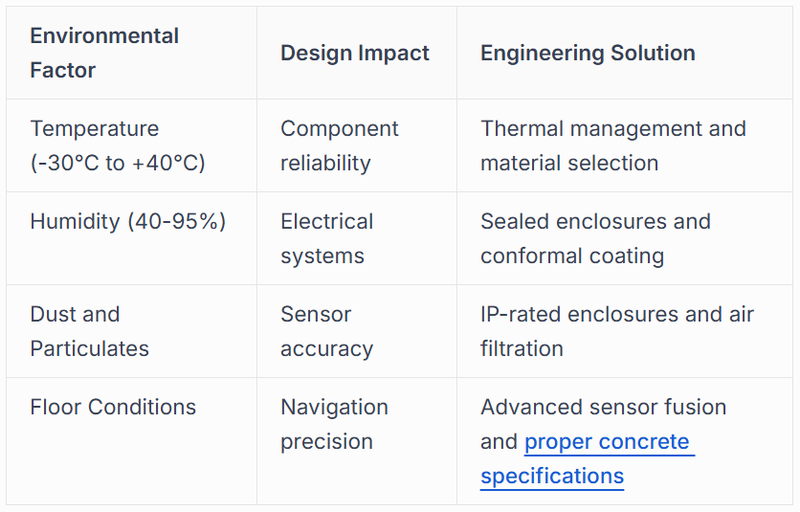
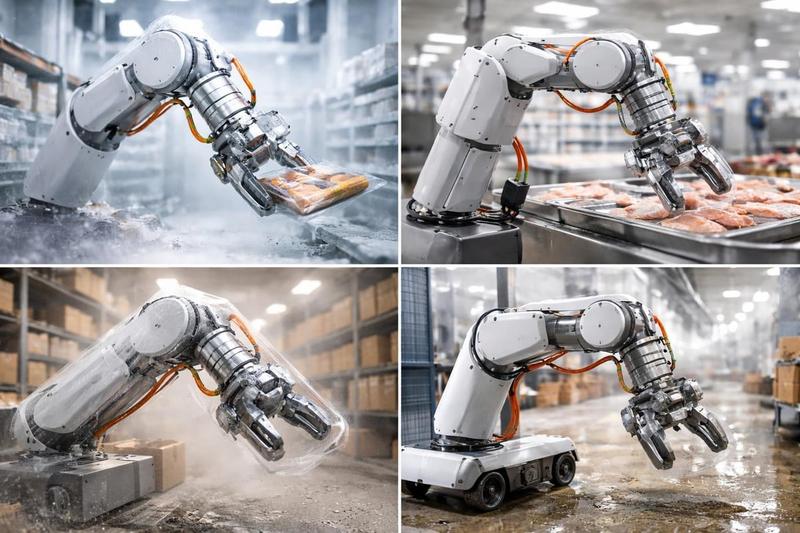
Warehouse environments present unique challenges requiring adaptive robotic designs. Temperature extremes in cold storage facilities, dust and debris in manufacturing operations, and moisture in food processing areas all demand specialised engineering solutions.
Cold Storage Considerations
Frozen and refrigerated warehouses operate at temperatures reaching -30°C, challenging standard robotic components. Design robotics for these environments employs specialised lubricants, heated enclosures for sensitive electronics, and materials selected for low-temperature performance.
Battery performance degrades significantly in cold conditions, requiring thermal management systems or alternative power delivery methods. Some advanced designs incorporate supercapacitors providing consistent performance across extreme temperature ranges.
Food-Safe Design Requirements
Pharmaceutical and food & beverage operations demand robots meeting strict hygiene standards. Stainless steel construction, IP69K wash-down ratings, and antimicrobial coatings enable regular cleaning protocols without compromising mechanical or electrical systems.
Design robotics engineers eliminate crevices where contaminants accumulate, specify food-grade lubricants, and ensure all materials comply with relevant regulatory frameworks. These considerations directly impact mechanical design choices, often requiring custom solutions rather than commercial off-the-shelf components.
Integration with Existing Infrastructure
Successful design robotics implementation recognises that warehouse automation rarely occurs in greenfield facilities. Most projects require integration with legacy systems, existing building constraints, and established operational workflows.
Sensor integration enables robots to communicate with warehouse infrastructure including conveyor systems, sortation equipment, and automated storage retrieval systems. Standardised protocols facilitate data exchange whilst proprietary interfaces connect with specialised equipment when necessary.
The evolutionary robotics approach enables continuous system improvement through operational data analysis. Robots learn optimal behaviours for specific warehouse configurations, gradually improving performance without manual algorithm adjustments.
Integration Success Factors:
- Comprehensive site survey documenting physical constraints and infrastructure
- Stakeholder workshops aligning automation goals with operational realities
- Phased deployment minimising disruption to ongoing operations
- Parallel operation periods validating performance before full transition
- Comprehensive training programmes building internal expertise
Performance Optimisation Through Design Robotics
Continuous improvement distinguishes effective design robotics from static automation systems. Telemetry data collected during operation reveals optimisation opportunities spanning mechanical adjustments, software refinements, and workflow modifications.
Predictive maintenance algorithms analyse vibration patterns, power consumption trends, and error frequencies to schedule component replacement before failures occur. This proactive approach maximises uptime whilst controlling maintenance costs through strategic parts inventory management.
Fleet analytics identify performance variations between individual robots, highlighting exceptional performers whose configurations can be replicated across the broader system. This data-driven optimisation accelerates improvement beyond what individual engineering observation could achieve.
Energy Efficiency Considerations
Power consumption directly impacts operational costs and environmental sustainability. Design robotics incorporates energy optimisation from initial concept through operational refinement, addressing both immediate power draw and charging infrastructure requirements.
Regenerative braking systems capture kinetic energy during deceleration, returning power to battery systems or facility electrical grids. Route optimisation algorithms minimise unnecessary travel whilst task scheduling ensures robots operate during off-peak electricity pricing periods when feasible.
Battery management systems extend cell lifetime through intelligent charging profiles that balance rapid availability with long-term capacity preservation. Some advanced implementations employ battery swapping systems eliminating charging downtime entirely in high-throughput operations.
Innovation Drivers in Contemporary Design Robotics
Current research directions signal future capabilities that will transform warehouse automation. Bio-inspired legged robotics may enable operations in facilities unsuitable for wheeled systems, whilst advances in computer vision promise more sophisticated product handling capabilities.
Collaborative intelligence frameworks enable robot swarms to solve complex optimisation problems collectively, discovering solutions beyond individual system capabilities. These emergent behaviours could revolutionise warehouse layout optimisation and dynamic task allocation in response to changing order patterns.
The application of crowdsourced biomimetic design accelerates innovation by engaging diverse perspectives in solving warehouse automation challenges. This democratisation of design robotics development broadens the solution space beyond traditional engineering approaches.
Artificial Intelligence Integration
Machine learning models now handle tasks previously requiring explicit programming, from product classification through anomaly detection. Deep learning vision systems achieve human-level accuracy identifying damaged packaging, incorrect labels, and quality control issues during automated handling.
Natural language processing enables warehouse staff to interact with robotic systems through voice commands, reducing training requirements and improving operational flexibility. Conversational interfaces lower barriers to adoption whilst providing audit trails documenting human-robot interactions.
Reinforcement learning allows robots to optimise complex behaviours through trial-and-error in simulated environments before deploying to production facilities. This approach discovers innovative solutions to picking, packing, and palletising challenges that human designers might not intuitively develop.
Practical Implementation Frameworks
Transitioning from design robotics concepts to operational warehouse systems requires structured implementation methodologies. Successful deployments follow proven frameworks that manage technical complexity whilst maintaining business continuity throughout automation journeys.
Pilot projects validate core assumptions before full-scale investment, testing robot performance with representative product mixes and order profiles. These controlled trials identify integration challenges, training requirements, and operational adjustments necessary for broader deployment.
Change management protocols address the human dimension of warehouse automation. Transparent communication about automation goals, retraining opportunities, and role evolution builds workforce support essential for successful implementation. Organisations that recognise this expertise have earned industry recognition, as demonstrated by innovation awards in warehouse automation.
Implementation Phases:
- Requirements definition documenting operational goals and constraints
- Conceptual design exploring alternative approaches and technologies
- Detailed engineering specifying exact components and configurations
- System integration connecting robotic and warehouse management systems
- Commissioning validating performance against defined acceptance criteria
- Optimisation refining operations based on real-world performance data
Return on investment calculations must account for both direct costs and operational benefits. Design robotics systems typically demonstrate value through increased throughput, reduced labour costs, improved accuracy, enhanced safety, and expanded operational hours beyond single-shift limitations.
Supplier Selection and Partnership Models
Choosing design robotics partners significantly influences project outcomes. Evaluation criteria should extend beyond initial capital costs to encompass long-term support capabilities, upgrade paths, and cultural alignment between organisations.
Proven warehouse automation experience within your specific industry sector reduces implementation risk. Suppliers familiar with cold storage challenges, pharmaceutical compliance requirements, or e-commerce velocity understand operational nuances that generic robotics providers might overlook.
Technology roadmaps reveal supplier innovation trajectories and investment priorities. Partners committed to continuous improvement through research and development protect your automation investment against premature obsolescence whilst providing access to emerging capabilities as they mature.
Partnership models range from equipment purchase through robotics-as-a-service subscriptions. Operating expense models reduce initial capital requirements whilst aligning supplier incentives with your operational success, as providers retain ownership and performance responsibility.
Design robotics methodology provides the systematic frameworks necessary to transform warehouse operations through intelligent automation that adapts to business requirements whilst maintaining reliability across demanding logistics environments. By combining mechanical precision, software intelligence, and human-centred design principles, organisations can implement scalable automation solutions addressing today's operational challenges whilst accommodating tomorrow's growth. Automate-X specialises in translating design robotics concepts into practical warehouse automation systems tailored to your specific logistics environment, operational requirements, and growth trajectory. Our integrated approach combines proven robotics platforms with intelligent software and comprehensive support, enabling logistics, 3PL, e-commerce, and distribution operations to achieve measurable productivity improvements and sustainable competitive advantages through warehouse automation.