


Increase in Production: A Warehouse Automation Guide
Share on
Achieving an increase in production remains a critical challenge for warehouse and logistics operations across Australia and New Zealand. As e-commerce demands surge and customer expectations for rapid fulfillment intensify, warehouse managers face mounting pressure to deliver more throughput without compromising accuracy or service quality. The solution lies not in simply working harder or hiring more staff, but in strategically implementing intelligent automation technologies that fundamentally transform operational capacity. Modern warehouse automation provides the pathway to sustainable production growth while simultaneously improving efficiency, reducing errors, and creating scalable foundations for future expansion.
Understanding Production Capacity in Warehouse Operations
Production capacity in warehouse environments encompasses multiple dimensions beyond simple volume metrics. It represents the total throughput achievable within a given timeframe across receiving, storage, picking, packing, and dispatch functions. True capacity measurement must account for accuracy rates, order complexity, SKU diversity, and seasonal fluctuation patterns.
Many logistics operations struggle with accurately assessing their current capacity utilization. Without proper visibility into bottlenecks and constraint points, efforts to drive an increase in production often fail to deliver expected results. Warehouse management systems provide the data foundation necessary for identifying where capacity improvements will generate the greatest impact.
The Hidden Constraints Limiting Throughput
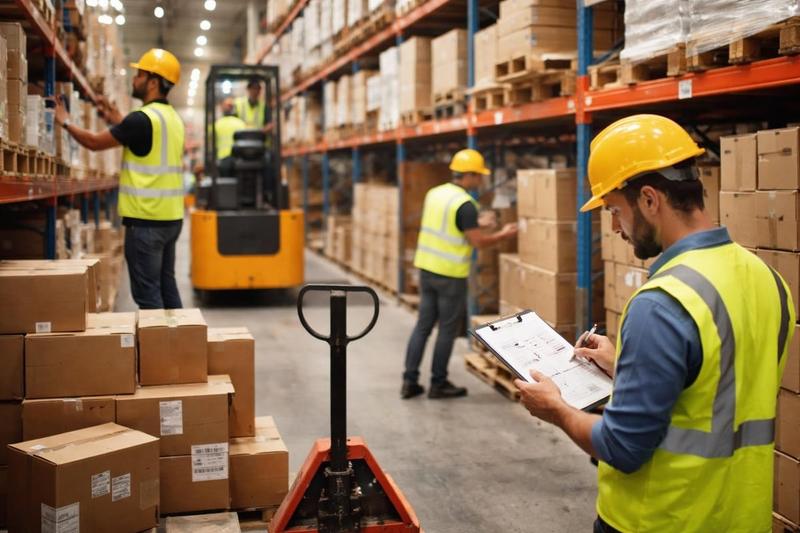
Several factors commonly restrict warehouse production capacity:
- Manual picking processes that scale linearly with labor hours
- Inefficient storage layouts requiring excessive travel time
- Paper-based systems introducing delays and errors
- Inventory inaccuracies causing picking delays and mis-ships
- Equipment limitations during peak demand periods
- Training gaps reducing worker productivity
Addressing these constraints requires systematic analysis rather than ad-hoc solutions. Understanding production scaling strategies helps warehouse leaders develop comprehensive approaches that tackle multiple bottlenecks simultaneously.
Automation Technologies Driving Production Increases
Modern warehouse automation encompasses a spectrum of technologies, each addressing specific capacity constraints. The most impactful solutions integrate multiple technologies into cohesive systems that optimize entire workflows rather than isolated tasks.
Goods-to-Person Systems
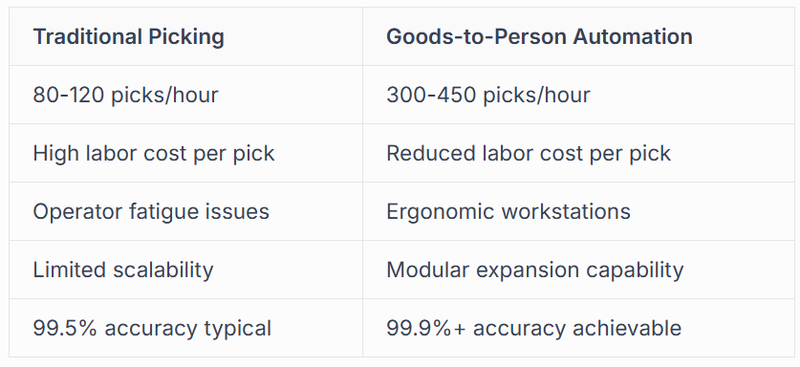
Goods-to-person (GTP) automation fundamentally transforms picking operations by eliminating worker travel time. Instead of operators walking kilometers daily to retrieve items, automated systems deliver required inventory directly to ergonomic picking stations. This approach can deliver a 300-400% increase in production compared to traditional pick-to-light or paper-based methods.
The Automate-X GTP Starter Grid offers small and medium-sized businesses an accessible entry point into goods-to-person automation, providing scalable solutions that grow alongside operational demands without requiring massive upfront capital investment.
Warehouse Management System Integration
An automated warehouse management system serves as the intelligence layer coordinating all warehouse activities. These systems optimize task allocation, inventory placement, and picking sequences in real-time based on current conditions and predicted demand patterns.
Modern WMS platforms leverage artificial intelligence and machine learning algorithms to continuously improve performance. They analyze historical data to predict optimal slotting strategies, anticipate demand surges, and proactively rebalance inventory positioning. This intelligence enables sustained production increases without proportional increases in operational complexity.
Process Optimization Strategies
Technology alone cannot guarantee an increase in production. Successful implementations combine automation investments with systematic process improvements that eliminate waste and streamline workflows.
Lean Principles in Warehouse Operations
Applying lean management methodologies helps identify and eliminate non-value-adding activities. Techniques for uncovering untapped production potential emphasize waste reduction across seven categories:
- Overproduction through batch optimization
- Waiting time via balanced workload distribution
- Transportation waste through layout redesign
- Over-processing by eliminating redundant steps
- Inventory excess using demand-driven replenishment
- Motion waste via ergonomic workstation design
- Defects through automated quality verification
Each waste category represents potential capacity that remains locked within existing operations. Systematic elimination of these inefficiencies delivers compound production gains that complement automation investments.
Data-Driven Capacity Planning
Achieving sustainable production growth requires moving beyond reactive capacity management toward predictive planning approaches. Advanced analytics platforms aggregate data from WMS, transportation management systems, order management platforms, and external market signals to forecast capacity requirements weeks or months in advance.

This forward visibility enables proactive resource allocation, staff scheduling optimization, and strategic automation deployment. Operations can prepare for seasonal peaks, product launches, or promotional events with confidence rather than scrambling to respond as demand materializes.
Measuring and Sustaining Production Improvements
Implementing automation and process improvements represents only the first step toward achieving an increase in production. Sustaining and building upon initial gains requires robust measurement frameworks and continuous improvement cultures.
Key Performance Indicators for Production Capacity
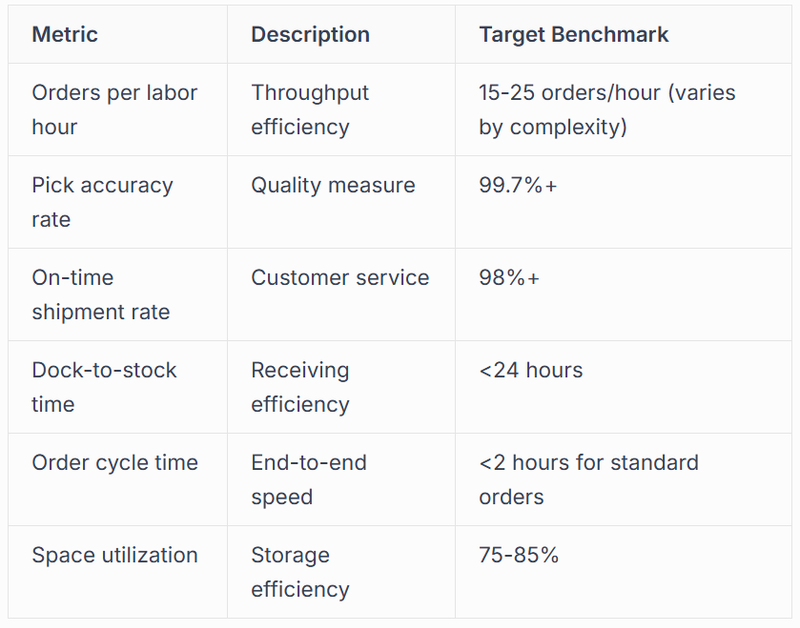
These metrics provide multidimensional visibility into capacity performance. Rather than focusing exclusively on volume, balanced scorecards ensure that production increases maintain or improve service quality, accuracy, and cost efficiency.
Continuous Improvement Methodologies
Warehouse operations benefit from structured improvement frameworks that systematically identify and implement incremental enhancements. Daily management systems incorporating visual performance boards, team huddles, and rapid problem-solving create cultures where every team member contributes to capacity optimization.
Digital performance monitoring dashboards provide real-time visibility into key metrics, enabling immediate intervention when performance deviates from targets. This responsiveness prevents small issues from cascading into major capacity constraints during critical operational periods.
Safety Considerations in High-Production Environments
As warehouse operations pursue production increases, maintaining rigorous safety standards becomes increasingly critical. Automation technologies introduce new hazard categories requiring comprehensive risk assessment and mitigation strategies.
Human-Robot Collaboration Safety
Modern warehouse automation frequently involves collaborative environments where human workers and robotic systems operate in shared spaces. Machine safety protocols must account for movement patterns, interaction zones, and emergency stop procedures that protect personnel while maintaining operational throughput.
Safety considerations include:
- Zone-based access control limiting human entry during automated operations
- Visual and audible warnings signaling robot movement
- Emergency stop accessibility throughout the facility
- Comprehensive training programs for all automation users
- Regular safety audits identifying emerging risks
Investing in robust safety infrastructure prevents incidents that can dramatically reduce productive capacity while protecting the most valuable warehouse asset – skilled personnel.
Scalability and Future-Proofing Production Capacity
Achieving immediate production increases addresses current capacity constraints, but strategic planning must account for future growth trajectories and evolving operational requirements.
Modular Automation Approaches
Traditional warehouse automation projects often required complete facility overhauls with multi-million-dollar capital investments and extended implementation timelines. Modern modular approaches enable incremental automation deployment that matches investment pace with business growth and proven ROI.
Modular systems offer several advantages:
- Initial deployments addressing highest-impact bottlenecks
- Expansion capability without disrupting existing operations
- Technology updates without full system replacement
- Risk mitigation through phased implementation
- Budget flexibility aligning capex with revenue growth
This approach makes sophisticated automation accessible to operations that previously considered such technology beyond reach. Strategies for increasing capacity without major capital expenditure emphasize maximizing existing infrastructure before pursuing large-scale investments.
Preparing for Demand Volatility
The e-commerce era has introduced unprecedented demand volatility into warehouse operations. Seasonal peaks, promotional events, and market disruptions can generate 300-500% capacity swings within short timeframes. Traditional labor-scaling approaches struggle to accommodate these fluctuations economically.
Automated systems provide the flexibility to absorb demand surges without proportional cost increases. A properly designed automation implementation maintains high efficiency across broad capacity ranges, from off-peak minimum throughput to peak maximum volumes.
Industry-Specific Production Challenges
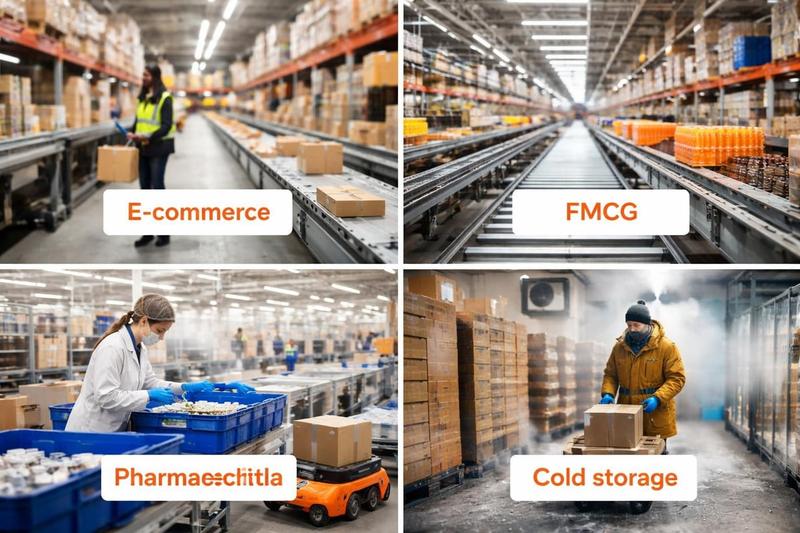
Different warehouse sectors face unique constraints and opportunities when pursuing an increase in production. Understanding industry-specific requirements ensures automation investments deliver maximum impact.
E-commerce and 3PL Operations
E-commerce fulfillment demands rapid processing of high-volume, small-parcel orders with extensive SKU diversity. Peak efficiency requires order batching intelligence, wave optimization, and zone-based picking strategies that minimize congestion while maximizing throughput.
Third-party logistics providers face additional complexity from managing multiple client requirements, varying packaging specifications, and different quality standards within shared infrastructure. Flexible automation systems that accommodate diverse workflows without extensive reconfiguration provide competitive differentiation.
FMCG and Food & Beverage Distribution
Fast-moving consumer goods distribution emphasizes case-level picking, pallet building, and strict rotation management. Case studies demonstrate how process optimization within these environments achieves substantial production improvements without additional capital investment.
Temperature-controlled and cold-storage operations introduce environmental constraints limiting labor productivity and equipment performance. Automation reduces human exposure to extreme temperatures while maintaining consistent throughput regardless of environmental conditions.
Pharmaceutical and Healthcare Logistics
Pharmaceutical warehousing requires rigorous tracking, lot traceability, and regulatory compliance alongside production efficiency. Automated systems provide the documentation accuracy and serialization capabilities that manual processes struggle to maintain at high throughput levels.
Healthcare distribution increasingly demands same-day or next-day delivery windows for critical medications and medical supplies. Achieving these service levels while managing thousands of SKUs requires automation sophistication that balances speed with absolute accuracy.
Implementation Planning for Production Growth
Transitioning from current capacity to enhanced production levels requires structured implementation planning that minimizes operational disruption while accelerating time-to-value.
Phased Deployment Strategies
Successful automation implementations typically follow phased approaches:
- Assessment phase establishing baseline performance and identifying constraints
- Design phase developing tailored solutions addressing specific bottlenecks
- Pilot implementation validating technology performance in live environment
- Optimization phase fine-tuning configurations and processes
- Full deployment expanding proven solutions across broader operations
- Continuous improvement ongoing refinement and capability enhancement
This structured progression manages risk while building organizational capability and confidence in new technologies. Each phase delivers measurable production improvements that fund subsequent expansion.
Change Management and Workforce Development
Technology implementation represents only one dimension of achieving sustainable production increases. Equally important is developing organizational capabilities, managing workforce transition, and creating cultures that embrace continuous improvement.
Effective change management addresses:
- Transparent communication about automation objectives and workforce impact
- Comprehensive training programs developing new skill requirements
- Career pathway definition showing advancement opportunities
- Performance incentive alignment rewarding productivity improvements
- Feedback mechanisms capturing frontline insights and concerns
Operations that invest in human development alongside technology deployment achieve faster implementation timelines, higher adoption rates, and better long-term performance outcomes.
Cost-Benefit Analysis of Production Enhancement Investments
Warehouse automation investments require rigorous financial analysis balancing capital expenditure against operational savings and capacity value. Comprehensive ROI models account for multiple benefit categories beyond simple labor reduction.
Financial Impact Categories
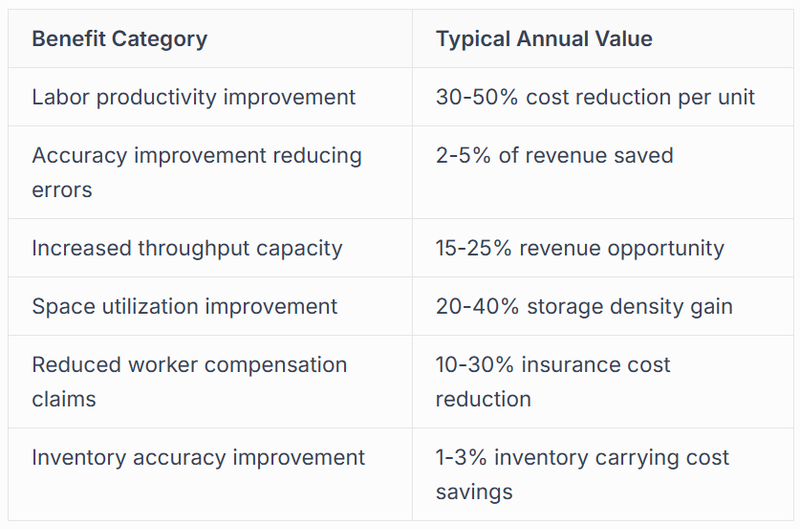
These benefits compound to generate payback periods typically ranging from 18-36 months for comprehensive automation implementations. Modular approaches often achieve even faster returns by targeting highest-impact opportunities first.
Achieving a sustained increase in production requires strategic integration of intelligent automation, process optimization, and workforce development. The warehouse operations that will thrive in coming years recognize that capacity growth stems not from working harder but from deploying smarter systems that amplify human capability while eliminating waste and inefficiency. Automate-X partners with logistics, 3PL, e-commerce, and distribution operations throughout Australia and New Zealand to design, implement, and optimize warehouse automation solutions that deliver measurable production improvements and create scalable foundations for continued growth.