

Robotic Warehouse Automation: 2026 Implementation Guide
Share on
The logistics landscape has fundamentally shifted. Traditional warehouses struggling with labour shortages, rising operational costs, and increasing customer expectations are turning to robotic warehouse automation as their competitive advantage. As we navigate 2026, intelligent robotics combined with advanced software systems have become essential infrastructure for distribution centers, fulfillment operations, and supply chain facilities across Australia and New Zealand. This transformation isn't just about replacing manual tasks; it's about creating adaptive, scalable systems that respond to real-time demand fluctuations whilst maintaining exceptional accuracy and efficiency.
The Business Case for Automated Warehouse Solutions
Implementing robotic warehouse automation requires significant capital investment, yet the return on investment continues to accelerate as technology matures and labour challenges intensify. Modern automated systems deliver measurable improvements across multiple operational metrics that directly impact profitability.
Primary ROI drivers include:
- Labour cost reduction of 40-60% in picking and putaway operations
- Order accuracy improvements reaching 99.5% or higher
- Throughput increases of 200-300% compared to manual processes
- Space utilisation gains of 50-85% through vertical storage optimization
- Reduced workplace injuries and associated compensation costs
According to research on robotic automation's growing dominance, Gartner predicts that by 2030, half of all new warehouses in developed markets will be robot-centric. This projection reflects both technological maturity and economic necessity.
Financial Planning and Investment Timelines
Most organizations achieve full payback within 24-36 months when implementing robotic warehouse automation at scale. However, entry-level systems designed for smaller operations can deliver positive returns in 12-18 months.
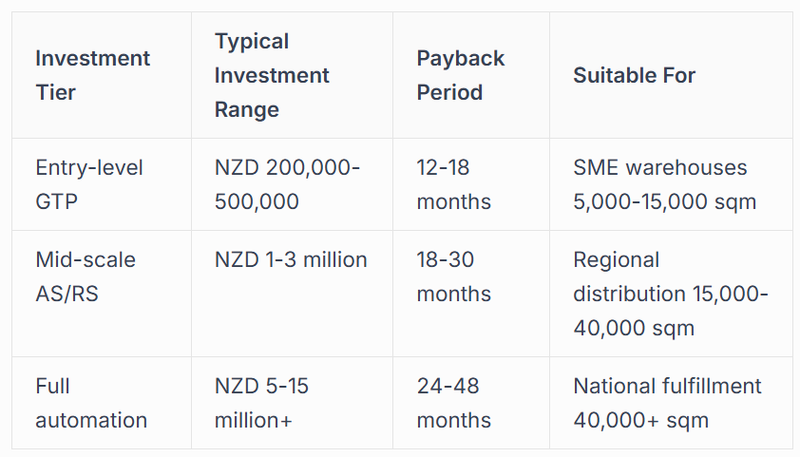
The initial capital expenditure represents only part of the total cost equation. Successful implementations require budgeting for software integration, change management, staff retraining, and ongoing maintenance contracts.

Core Technologies Driving Warehouse Robotics
Modern robotic warehouse automation encompasses multiple interconnected technologies working in concert. Understanding these components helps businesses make informed decisions about which solutions best address their specific operational challenges.
Autonomous Mobile Robots (AMRs) and AGVs
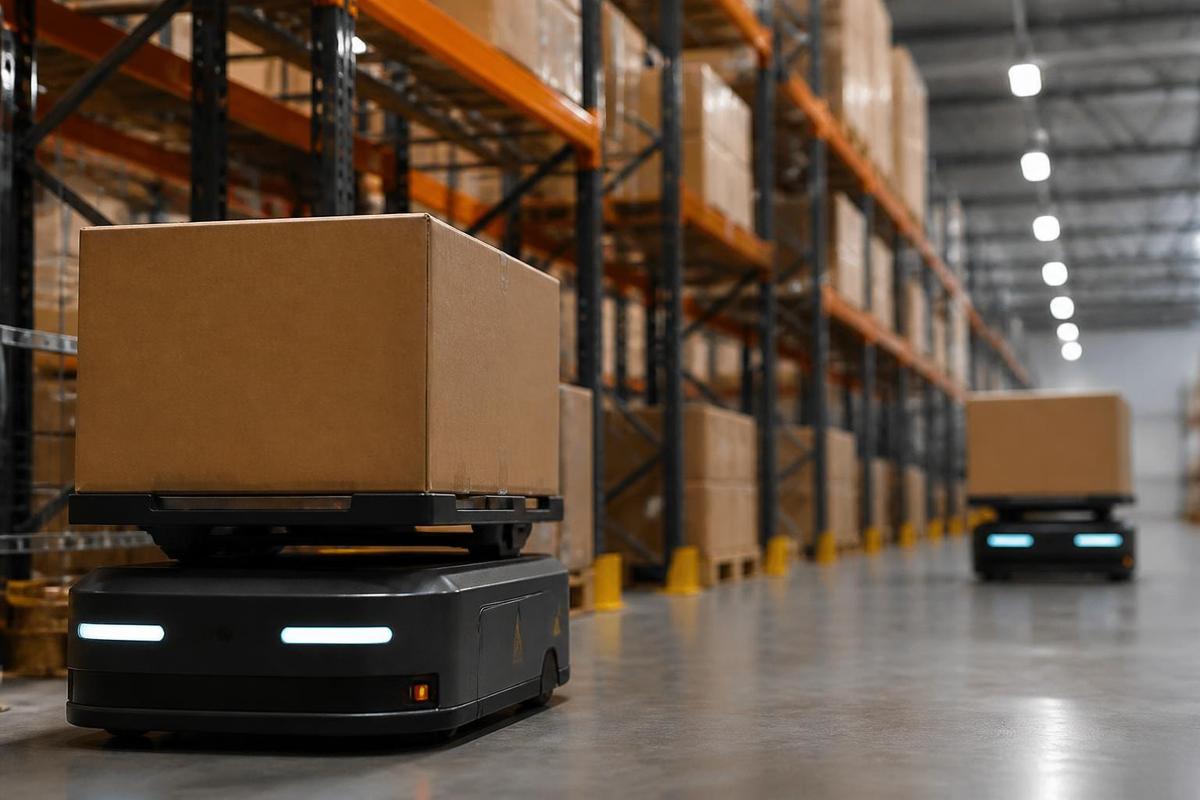
Autonomous Mobile Robots navigate warehouse environments using sophisticated sensors, cameras, and artificial intelligence. Unlike their predecessors, Automated Guided Vehicles requiring fixed infrastructure, AMRs adapt to changing floor layouts and dynamically optimize travel paths.
Recent research on AGV integration demonstrates how these systems create flexible automation frameworks within Industry 4.0 warehouses. AMRs handle horizontal transportation tasks including goods-to-person retrieval, replenishment, and cross-docking operations.
Performance characteristics vary significantly:
- Payload capacities range from 50kg for collaborative units to 1,500kg for pallet movers
- Navigation accuracy within 10mm for precision docking
- Fleet sizes scalable from 5-500+ units depending on facility requirements
- Operating speeds of 1.5-2.5 meters per second in populated environments
Automated Storage and Retrieval Systems
ASRS systems represent the vertical dimension of robotic warehouse automation, maximizing cubic space utilisation whilst enabling rapid, accurate inventory access. These systems range from simple vertical lift modules to sophisticated crane-based configurations handling full pallets.
Implementation considerations include:
- Storage density requirements determining system height and configuration
- Throughput demands influencing crane quantity and speed specifications
- Inventory characteristics including SKU count, turnover rates, and product dimensions
- Building infrastructure assessing floor loading capacity and seismic requirements
- Future scalability planning for capacity expansion and technology upgrades
A compelling ASRS implementation case study showcases how integrated systems achieved 24/7 autonomous operations whilst tripling storage capacity and enhancing workplace safety.
Goods-to-Person Systems Revolutionising Fulfillment
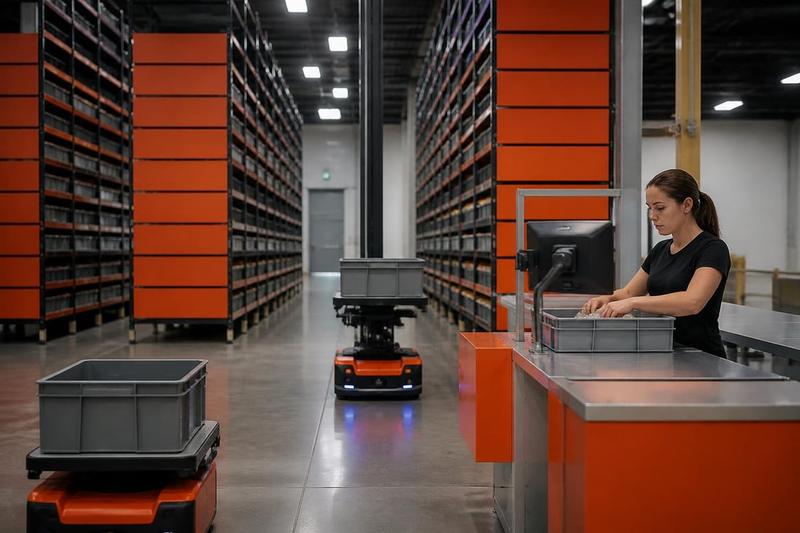
Goods-to-person (GTP) technology has emerged as the cornerstone of efficient e-commerce fulfillment, eliminating unproductive travel time and enabling extraordinary picking rates. Rather than workers navigating aisles, robotic warehouse automation brings inventory directly to ergonomic workstations.
Modern GTP systems achieve picking rates of 300-600 items per hour per operator, compared to 60-100 items in traditional pick-and-pack environments. Ocado's pioneering robotic warehouse system demonstrates this technology at scale, deploying over 3,000 robots to achieve 99.5% order accuracy whilst reducing fulfillment time to just five minutes.
Selecting the Right GTP Technology
AutoStore: Grid-based system with robots moving atop stacked bins, ideal for high-density storage of small-to-medium items. Delivers exceptional space utilisation with relatively lower throughput compared to shuttle systems.
Shuttle systems: Multi-level automated racking with shuttles retrieving totes or cartons. Offers superior throughput scalability and easier expansion compared to grid systems.
Robotic picking arms: Advanced systems incorporating computer vision and machine learning to handle individual item picking. Currently specialized for specific product categories but rapidly improving in versatility.
For smaller operations beginning their automation journey, entry-level solutions provide accessible pathways to robotic warehouse automation without requiring multi-million dollar commitments. The Automate-X GTP Starter Grid offers a unique approach specifically designed for small and medium businesses across Australia and New Zealand, providing an affordable entry point to goods-to-person automation that can scale as operations grow.
Software Integration and Warehouse Management Systems
Hardware capabilities mean little without intelligent software orchestrating every movement, decision, and optimization. Successful robotic warehouse automation depends on seamless integration between robotics, warehouse management systems (WMS), and enterprise resource planning platforms.
Critical Software Components
The warehouse control system (WCS) serves as the intermediary layer between high-level WMS instructions and low-level robotic equipment. It translates order priorities into specific robot tasks, manages traffic flow, optimizes travel paths, and handles exception scenarios.
Modern implementations increasingly incorporate artificial intelligence for:
- Predictive inventory positioning based on demand forecasting
- Dynamic slotting optimization adjusting storage locations based on velocity changes
- Autonomous exception handling resolving common issues without human intervention
- Continuous learning improving efficiency through accumulated operational data
Integration complexity varies significantly based on existing infrastructure. Legacy WMS platforms may require custom middleware development, whilst modern cloud-based systems offer standardized APIs facilitating faster implementation.
Real-World Implementation Success Stories
Examining practical implementations provides valuable insights into both opportunities and challenges associated with robotic warehouse automation deployment.
Yusen Logistics Singapore's transformation through AutoStore implementation demonstrates impressive results, achieving 200% increases in order fulfillment rates. This third-party logistics provider faced space constraints and growing e-commerce volumes, making high-density automation essential for continued competitiveness.
Similarly, MESH Automation's robotic order fulfillment system showcases flexibility in handling complex requirements, processing imported goods into made-to-order pallets whilst maintaining cost-effectiveness. This implementation highlights how robotic warehouse automation adapts to specialized workflows beyond standard picking operations.
In the food sector, Zippy Ice transformed its bagging operations with robotic palletizing, doubling production rates whilst enhancing workplace safety by removing employees from repetitive, physically demanding tasks.
Common Implementation Challenges
- Integration timelines exceeding estimates due to unforeseen software compatibility issues
- Change management resistance from warehouse staff uncertain about technology adoption
- Process redesign requirements as automation demands different workflows than manual operations
- Accuracy validation periods ensuring systems meet specification before full deployment
- Maintenance capability development building internal expertise for ongoing system support
Planning Your Automation Roadmap
Strategic planning separates successful implementations from disappointing underperformance. Robotic warehouse automation requires methodical assessment, phased deployment, and continuous optimization.
Assessment Phase Components
Begin with comprehensive operational auditing examining current performance across all warehouse functions. Document baseline metrics including order accuracy, picking rates, space utilisation, labour allocation, and throughput patterns across daily, weekly, and seasonal cycles.
Critical data collection areas:
- SKU velocity analysis identifying fast, medium, and slow movers
- Order profile characterization measuring lines per order, unit quantities, and value distribution
- Labour time studies quantifying how staff allocate hours across different activities
- Space utilisation mapping identifying underutilized vertical and horizontal areas
- Technology infrastructure assessment evaluating network capacity, power availability, and structural capabilities
This data-driven foundation enables accurate ROI modeling and appropriate technology selection. Many organizations discover that targeted automation in high-impact areas delivers better returns than comprehensive facility-wide implementations.
Phased Implementation Strategy
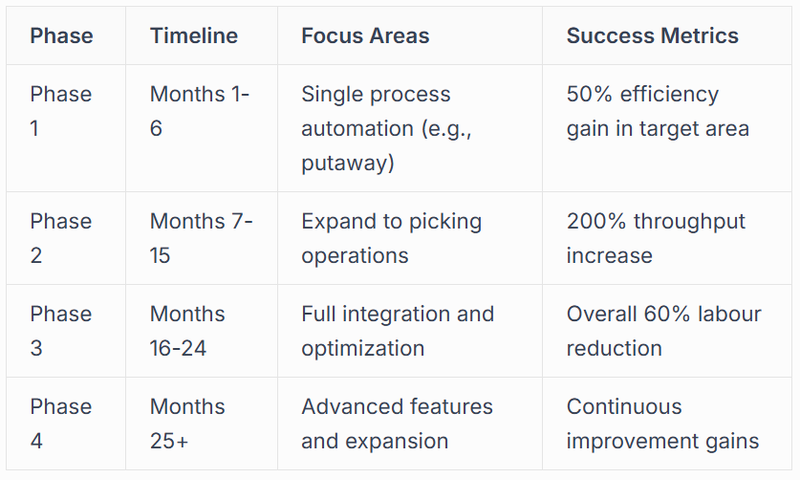
Phased approaches reduce implementation risk, enable learning between stages, and maintain operational continuity throughout deployment. They also distribute capital expenditure across multiple budget cycles, easing financial constraints.
Specialized Applications Across Industries
Different sectors face unique operational requirements that influence robotic warehouse automation design and configuration.
E-commerce and 3PL Operations
High SKU counts, small order sizes, and extreme peak seasonality characterize e-commerce fulfillment. Robotic systems must handle thousands of different products whilst scaling capacity during peak periods without proportional labour increases. Goods-to-person systems excel in these environments, providing the flexibility to manage diverse inventory whilst maintaining rapid fulfillment speeds.
Cold Storage and Food Distribution
Temperature-controlled environments present additional challenges including condensation management, specialized materials, and reduced human productivity in harsh conditions. Robotic warehouse automation becomes particularly valuable in cold storage, where labor retention proves difficult and equipment operates more reliably than workers in sub-zero temperatures.
Pharmaceutical and healthcare logistics demand exceptional accuracy, regulatory compliance, and traceability. Automated systems provide the precision and documentation capabilities required whilst reducing human error risks in environments where mistakes carry serious consequences.
Workforce Transformation and Change Management
Contrary to common fears, robotic warehouse automation typically creates more fulfilling employment rather than eliminating jobs entirely. Roles evolve from physically demanding, repetitive tasks toward technical positions requiring problem-solving and system management capabilities.
Successful implementations invest heavily in workforce development through:
- Comprehensive training programs preparing staff for new responsibilities
- Clear communication about automation objectives and individual impacts
- Involvement of frontline workers in system design and optimization
- Career pathway development from operator to technician to system administrator
- Performance incentives aligned with automation success metrics
Organizations implementing logistics automation must recognize that technology adoption succeeds or fails based on people engagement. The most sophisticated robotic warehouse automation delivers disappointing results when workforce resistance undermines operational execution.
Future Developments Shaping 2026 and Beyond
Warehouse automation technology continues rapid evolution. Anticipated advancements in autonomous robotics focus on practical improvements in flexibility, deployment speed, and system interoperability.
Emerging Technology Trends
Collaborative robots working safely alongside humans without safety cages enable hybrid workflows combining human dexterity with robotic consistency. These systems prove particularly valuable for operations requiring frequent reconfiguration or handling unpredictable product variations.
Computer vision and AI-powered picking continues improving, with systems now successfully handling previously challenging items including soft goods, irregular shapes, and mixed-SKU cases. Research benchmarks for robotic manipulation demonstrate progress toward general-purpose picking capabilities.
Digital twin technology creates virtual warehouse replicas enabling simulation-based optimization, predictive maintenance, and risk-free testing of operational changes. These platforms accelerate continuous improvement by identifying enhancement opportunities without disrupting live operations.
Multi-robot coordination research demonstrates how optimized warehouse layouts combined with intelligent robot coordination algorithms reduce congestion whilst improving overall throughput, suggesting significant headroom for performance gains in existing installations.
Vendor Selection and Partnership Considerations
Choosing the right technology partner significantly influences implementation success and long-term satisfaction. Robotic warehouse automation represents multi-year commitments requiring ongoing support, software updates, and system evolution.
Evaluation Criteria
Technical capabilities: Assess whether the vendor's technology genuinely addresses your specific operational challenges rather than offering generic solutions requiring extensive customization.
Implementation experience: Prioritize vendors with proven track records in your industry segment and facility size category. Request references from comparable operations and conduct site visits to observe systems in production.
Financial stability: Automation systems require decades of support. Evaluate vendor financial health, ownership structure, and long-term viability to ensure ongoing parts availability and software maintenance.
Integration ecosystem: Examine compatibility with your existing WMS, ERP, and material handling equipment. Vendors offering open APIs and proven integration methodologies reduce implementation complexity.
Local support infrastructure: Consider service response times, spare parts availability, and technician proximity. Downtime costs accumulate rapidly, making responsive support essential.
Measuring Success and Continuous Improvement
Implementation completion represents the beginning rather than the end of your robotic warehouse automation journey. Exceptional operators continuously refine systems, optimize configurations, and expand capabilities.
Key Performance Indicators
Establish comprehensive monitoring across operational, financial, and strategic dimensions:
- Throughput metrics: Units per hour, orders per day, lines per operator hour
- Accuracy measures: Pick accuracy, shipping accuracy, inventory accuracy
- Asset utilisation: Robot operating hours, system uptime percentage, capacity utilisation
- Financial performance: Labour cost per unit, operating cost per order, ROI progression
- Service levels: Order cycle time, on-time shipping performance, backorder rates
Regular performance reviews comparing actual results against baseline data and projected targets identify optimization opportunities whilst validating investment decisions. Many operations discover that initial automation benefits represent only 60-70% of ultimate performance potential, with continuous refinement unlocking additional gains.
Accessing expertise through resources like the Automate-X knowledge hub provides ongoing learning opportunities, industry insights, and best practice guidance supporting continuous improvement initiatives.
Robotic warehouse automation has matured from experimental technology into essential infrastructure for competitive logistics operations in 2026. Organizations that strategically implement these systems whilst investing in workforce development position themselves for sustainable operational excellence and scalable growth. Automate-X combines proven robotics, intelligent software, and comprehensive integration expertise to help logistics, 3PL, e-commerce, and distribution businesses across Australia and New Zealand transform their warehouse operations. Our team partners with you from initial assessment through implementation and ongoing optimization, ensuring your automation investment delivers measurable results and positions your operation for long-term success.