

Robotics and Automation: Warehouse Solutions 2026
Share on
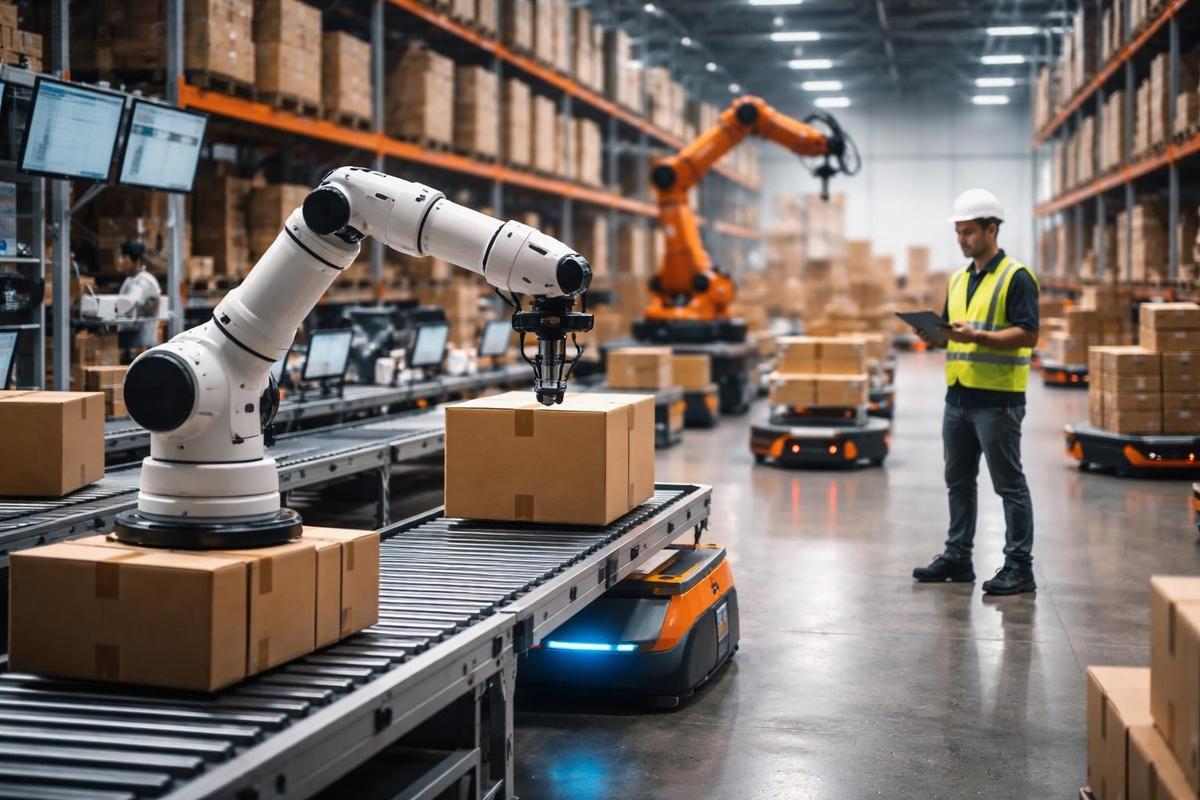
The landscape of warehouse operations has undergone a dramatic transformation over the past decade, with robotics and automation emerging as critical enablers of competitive advantage. What was once considered a future-state technology is now an operational necessity for businesses seeking to meet rising customer expectations, manage labour constraints, and maintain profitable margins in an increasingly complex supply chain environment. Modern warehouse automation combines advanced robotics, intelligent software systems, and seamless integration capabilities to create environments where efficiency, accuracy, and scalability work in harmony.
The Evolution of Warehouse Robotics and Automation
Robotics and automation in warehouse environments have progressed significantly beyond simple conveyor systems and basic material handling equipment. Today's solutions incorporate artificial intelligence, machine learning, computer vision, and sophisticated sensor arrays to create truly intelligent operations.
From Fixed Systems to Flexible Intelligence
Traditional warehouse automation relied heavily on fixed infrastructure that required substantial capital investment and long implementation timelines. Modern approaches leverage mobile robotics, modular systems, and cloud-based software platforms that can adapt to changing business requirements.
Key developments shaping current warehouse automation:
- Autonomous mobile robots (AMRs) that navigate dynamically using real-time mapping
- Collaborative robots (cobots) designed to work safely alongside human operators
- AI-powered warehouse management systems that optimize operations continuously
- Vision-guided systems for item identification and quality control
- Integrated platforms connecting robotics, software, and existing warehouse infrastructure
The IEEE Robotics and Automation Society's research demonstrates how automation science continues to advance, creating new possibilities for warehouse operations.
Strategic Benefits Across Warehouse Operations
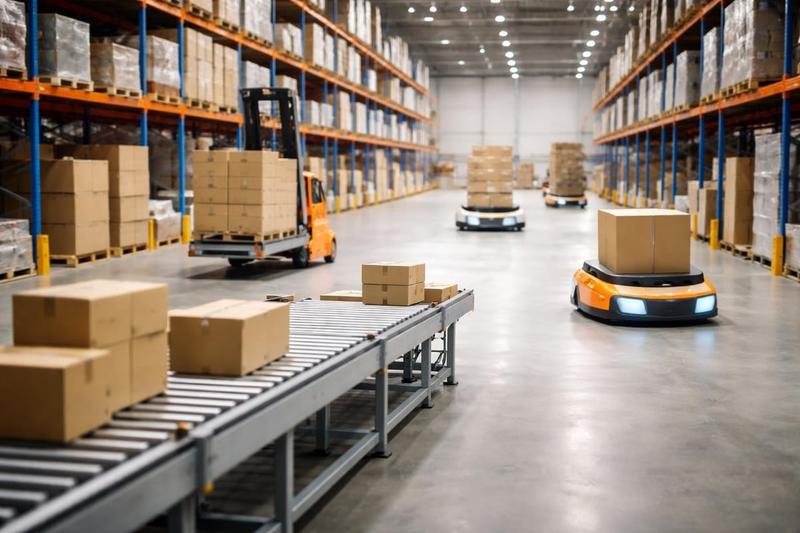
Implementing robotics and automation delivers measurable improvements across multiple operational dimensions. The value extends beyond simple productivity gains to encompass strategic capabilities that position businesses for sustainable growth.
Operational Efficiency and Accuracy
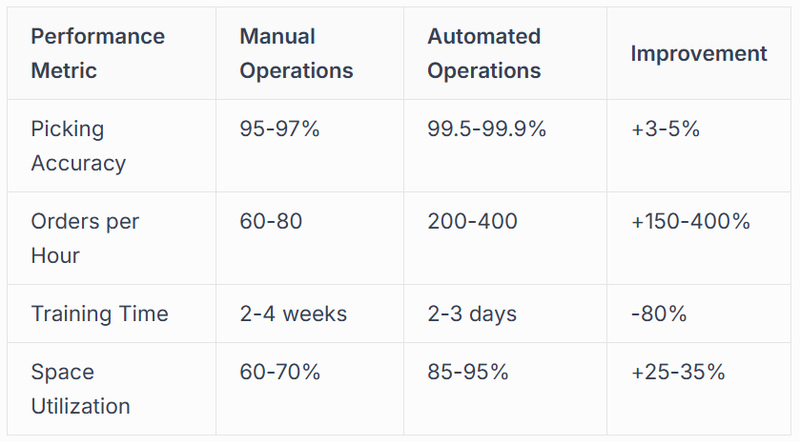
Automated systems dramatically reduce picking errors, accelerate order fulfillment cycles, and enable consistent performance regardless of volume fluctuations. Warehouse operations utilizing modern robotics typically achieve accuracy rates exceeding 99.9%, compared to 95-97% for manual operations.
Labour management represents another critical advantage. With workforce availability challenges affecting operations globally, robotics and automation enable businesses to maintain consistent output while reducing dependence on manual labour for repetitive, physically demanding tasks.
Scalability and Growth Enablement
Perhaps the most strategic benefit lies in the scalability modern automation provides. Businesses can respond to seasonal peaks, business expansion, or market changes without the traditional constraints of recruiting, training, and managing proportional increases in warehouse staff.
The modular nature of current automation solutions allows incremental deployment aligned with business growth trajectories. Companies can start with targeted automation in high-value areas and expand systematically as returns justify additional investment.
Implementation Frameworks for Successful Deployment
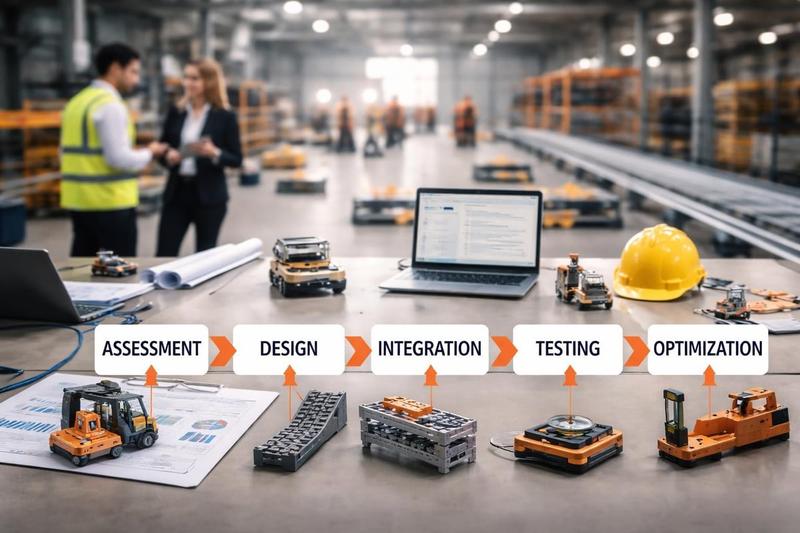
Successful robotics and automation implementation requires methodical planning, cross-functional collaboration, and realistic expectation setting. The most effective deployments follow structured frameworks that minimize disruption while maximizing value capture.
Assessment and Design Phase
Critical analysis components:
- Current state mapping of workflows, throughput volumes, and operational bottlenecks
- Future state requirements based on growth projections and strategic objectives
- Technology evaluation against specific operational requirements and constraints
- Financial modeling incorporating total cost of ownership and expected returns
- Risk assessment covering technical, operational, and organizational factors
Understanding your specific operational characteristics is essential. A pharmaceutical distribution centre operating under strict regulatory requirements faces different automation priorities than an e-commerce fulfillment facility optimizing for rapid throughput.
Integration and Change Management
Integration extends beyond technical connectivity between systems. Successful deployments address organizational readiness, workforce transition, and operational process redesign.
Research from the Encyclopedia of Robotics emphasizes that human factors remain critical in automated environments. Workers transitioning from manual operations to supervisory roles require targeted training and support.
Integration success factors:
- Phased deployment approach that maintains operational continuity
- Comprehensive testing protocols validating system performance under realistic conditions
- Clear communication strategies addressing workforce concerns and expectations
- Documented procedures covering normal operations and exception handling
- Continuous improvement mechanisms capturing operational learning
The connection between automation systems and existing warehouse management software determines how effectively the technology delivers operational value. Robust integration ensures data flows seamlessly across platforms, enabling real-time visibility and informed decision-making.
Technology Components in Modern Warehouse Automation
Contemporary warehouse automation comprises multiple technology layers working in concert. Understanding these components helps businesses make informed decisions about solution selection and deployment strategies.
Robotics Hardware and Mobility Systems
Autonomous mobile robots have become foundational elements in flexible warehouse operations. These systems navigate independently, transport materials efficiently, and coordinate activities without requiring fixed infrastructure modifications.
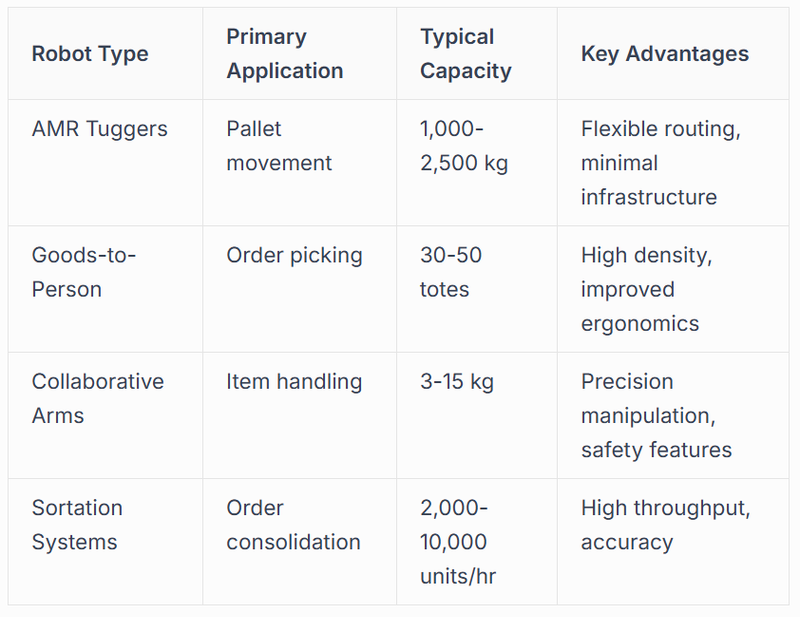
Goods-to-person systems represent a particularly effective automation approach for operations seeking to maximize picking productivity while minimizing worker movement. These solutions bring inventory directly to ergonomically optimized workstations where operators complete picks efficiently.
For businesses beginning their automation journey, solutions like the Automate-X GTP Starter Grid provide accessible entry points. This approach offers a structured pathway for small and medium operations to implement goods-to-person automation without overwhelming capital requirements or operational disruption.

Software Intelligence and Control Systems
The intelligence layer orchestrating warehouse robotics and automation determines system effectiveness. Modern warehouse control systems utilize sophisticated algorithms optimizing task allocation, routing, inventory positioning, and resource utilization continuously.
Essential software capabilities:
- Real-time inventory visibility across all storage locations and zones
- Dynamic task prioritization based on order characteristics and service commitments
- Predictive analytics identifying optimization opportunities and potential issues
- Integration frameworks connecting robotics, WMS, ERP, and order management systems
- Performance monitoring dashboards providing operational insights
Cloud-based platforms offer particular advantages for growing operations, delivering enterprise-grade capabilities without requiring extensive on-premise infrastructure investment. These systems update automatically, incorporate latest algorithms, and scale seamlessly with business growth.
Industry-Specific Applications and Use Cases
Different warehouse environments benefit from tailored automation approaches addressing their unique operational requirements, product characteristics, and regulatory constraints.
E-commerce and Third-Party Logistics
E-commerce fulfillment demands rapid order processing, high accuracy, and flexible capacity to manage demand volatility. Robotics and automation enable these operations to maintain service levels during peak periods while controlling labour costs during slower periods.
Successful e-commerce automation typically emphasizes goods-to-person picking systems, automated sortation, and intelligent storage optimization. The combination delivers the throughput density required for competitive fulfillment economics.
Temperature-Controlled and Pharmaceutical Distribution
Cold storage operations face unique challenges combining demanding environmental conditions with strict quality requirements. Automation reduces human exposure to harsh temperatures while ensuring consistent product handling and traceability.
Pharmaceutical distribution requires validated systems maintaining comprehensive audit trails and supporting regulatory compliance. Automated solutions provide the control, documentation, and consistency these environments demand. Resources like Shippensburg University's guide on AI and robotics offer valuable research foundations for specialized applications.
Manufacturing and FMCG Operations
Manufacturing warehouses balancing raw material receiving, work-in-process staging, and finished goods distribution benefit from automation that synchronizes material flow with production schedules. Automated storage and retrieval systems (AS/RS) maximize vertical space utilization while delivering precise inventory control.
FMCG operations handling high-volume, fast-moving products leverage automation for replenishment efficiency and stock rotation management. The combination of robust throughput and operational visibility supports the tight margins and service requirements characterizing this sector.
Financial Considerations and Return on Investment
Understanding the economic dimensions of robotics and automation investment enables realistic business case development and appropriate solution selection aligned with financial constraints and return expectations.
Total Cost of Ownership Analysis
Comprehensive financial assessment extends beyond initial capital expenditure to encompass operational costs, maintenance requirements, and system lifecycle considerations.
Cost components requiring evaluation:
- Hardware acquisition including robotics, control systems, and integration equipment
- Software licensing covering WMS, control systems, and analytics platforms
- Installation and commissioning services ensuring proper deployment
- Training programs preparing teams for automated operations
- Ongoing maintenance, support, and system optimization services
- Facility modifications if required for optimal system performance
Modern automation solutions increasingly offer flexible commercial models including robotics-as-a-service (RaaS) arrangements. These approaches reduce upfront capital requirements while aligning costs with operational benefits.
Value Quantification and Payback Periods
Return calculations should capture both direct savings and strategic value creation. Direct benefits include reduced labour costs, decreased error rates, and improved space utilization. Strategic advantages encompass capacity flexibility, service level improvements, and competitive positioning.
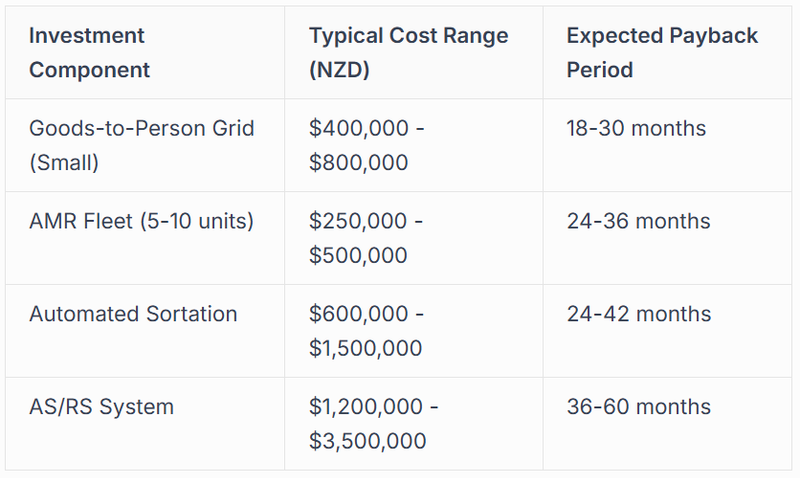
Most warehouse automation investments deliver positive returns within 2-4 years when properly scoped and implemented. Operations with higher labour costs, significant growth trajectories, or acute accuracy requirements typically achieve faster payback.
Security and Safety in Robotic Systems
As warehouse operations become increasingly automated, ensuring system security and operational safety becomes paramount. These considerations protect both people and business continuity.
Cybersecurity for Connected Automation
Modern robotics and automation systems connect to enterprise networks, cloud platforms, and third-party services, creating potential security vulnerabilities. The Robot Security Framework provides standardized methodologies for assessing and strengthening robotic system security.
Essential security measures:
- Network segmentation isolating automation systems from general corporate networks
- Access controls restricting system configuration to authorized personnel
- Encryption protocols protecting data transmission and storage
- Regular security audits identifying and addressing vulnerabilities
- Incident response plans addressing potential security breaches
Physical Safety and Human-Robot Collaboration
Safety systems ensuring secure human-robot interaction represent critical automation components. Modern collaborative robots incorporate multiple safety layers including proximity sensors, speed limitations, and force monitoring preventing injury during normal operations or unexpected interactions.
Comprehensive safety programs combine technology safeguards with operational procedures, training protocols, and continuous monitoring. Regulatory compliance requirements vary by jurisdiction but universally emphasize worker protection and system reliability.
Future Trajectories in Warehouse Automation
The robotics and automation landscape continues evolving rapidly, with emerging technologies promising further operational improvements and new capabilities.
Artificial Intelligence and Machine Learning Integration
AI and machine learning increasingly enhance automation effectiveness through continuous system optimization, predictive maintenance, and adaptive operations. Research on human-centered AI in autonomous systems explores how these technologies can improve human-robot collaboration and operational outcomes.
Emerging AI applications:
- Computer vision enabling robots to identify and manipulate diverse products without programming
- Predictive analytics optimizing inventory positioning based on demand patterns
- Reinforcement learning improving robot navigation and task execution efficiency
- Natural language interfaces simplifying system interaction and programming
- Anomaly detection identifying operational issues before they impact performance
Sustainability and Environmental Considerations
Warehouse automation increasingly addresses environmental objectives alongside operational efficiency. Energy-efficient robotics, optimized space utilization reducing facility footprints, and precise inventory management minimizing waste all contribute to sustainability goals.
The construction industry's experience with robotics and automation for sustainability offers relevant insights for warehouse applications. Automated systems enable consistent processes that reduce material waste and energy consumption.
Selecting the Right Automation Partner
Successful automation outcomes depend significantly on partner selection. The right technology provider brings not just equipment but expertise, support, and collaborative problem-solving throughout the implementation journey and operational lifecycle.
Evaluation Criteria for Automation Providers
Critical partner capabilities:
- Deep industry experience understanding sector-specific requirements and challenges
- Comprehensive solution portfolios addressing diverse automation needs
- Proven integration expertise connecting systems seamlessly
- Robust support infrastructure ensuring ongoing operational success
- Financial stability supporting long-term partnership relationships
- Customer references demonstrating successful deployments in similar environments
Providers specializing in warehouse automation understand the unique requirements of logistics operations versus general industrial automation. This sector knowledge accelerates implementation and improves solution effectiveness.
Implementation Support and Training
The transition to automated operations requires significant organizational change. Effective partners provide structured training programs, detailed documentation, and accessible support resources helping teams maximize automation value.
Ongoing optimization support ensures systems evolve with business requirements. Regular performance reviews, software updates, and operational consulting maintain competitive advantage over extended periods.
Understanding how automation integrates with broader operational processes, including connections to automated packaging lines, ensures comprehensive workflow optimization across the entire fulfillment process.
Operational Excellence in Automated Environments
Achieving sustainable value from robotics and automation requires deliberate operational management. The most successful automated warehouses combine technology capabilities with disciplined processes and engaged teams.
Performance Management and Continuous Improvement
Automation generates comprehensive operational data enabling fact-based management and systematic improvement. Establishing relevant metrics, regular review cadences, and improvement protocols captures ongoing value from automated systems.
Key performance indicators for automated operations:
- System utilization rates measuring productive time versus available capacity
- Task completion times tracking efficiency across different operation types
- Error rates monitoring accuracy performance and identifying improvement opportunities
- Throughput volumes validating capacity assumptions and growth trajectories
- System availability percentages ensuring reliability expectations are met
Continuous improvement methodologies leverage automation data identifying optimization opportunities. Small incremental enhancements compound over time, delivering substantial performance improvements beyond initial implementation benefits.
Workforce Development and Role Evolution
Automation transforms workforce requirements rather than eliminating them. Successful operations develop team members into higher-value roles focused on exception handling, system supervision, and operational optimization.
Evolving skill requirements:
- Technical troubleshooting capabilities maintaining system performance
- Data analysis skills interpreting operational metrics and identifying improvements
- Process optimization expertise fine-tuning automated workflows
- Cross-functional collaboration coordinating across systems and departments
- Change management abilities supporting ongoing operational evolution
Investment in workforce development creates organizations capable of extracting maximum value from automation while building capabilities supporting future advancement. The combination of technological capability and human expertise delivers competitive advantages difficult for competitors to replicate.
Modern warehouse operations demand the efficiency, accuracy, and scalability that robotics and automation uniquely provide, with successful implementations delivering measurable improvements across productivity, cost management, and service levels. Whether you're exploring your first automation deployment or expanding existing capabilities, Automate-X combines advanced robotics, intelligent software, and deep warehouse expertise to design, implement, and optimize solutions that transform logistics operations. Our team understands the unique requirements of New Zealand and Australian businesses, delivering tailored automation strategies that drive sustainable competitive advantage in evolving supply chain environments.