

Automated Packaging Line: Complete Guide for 2026
Share on
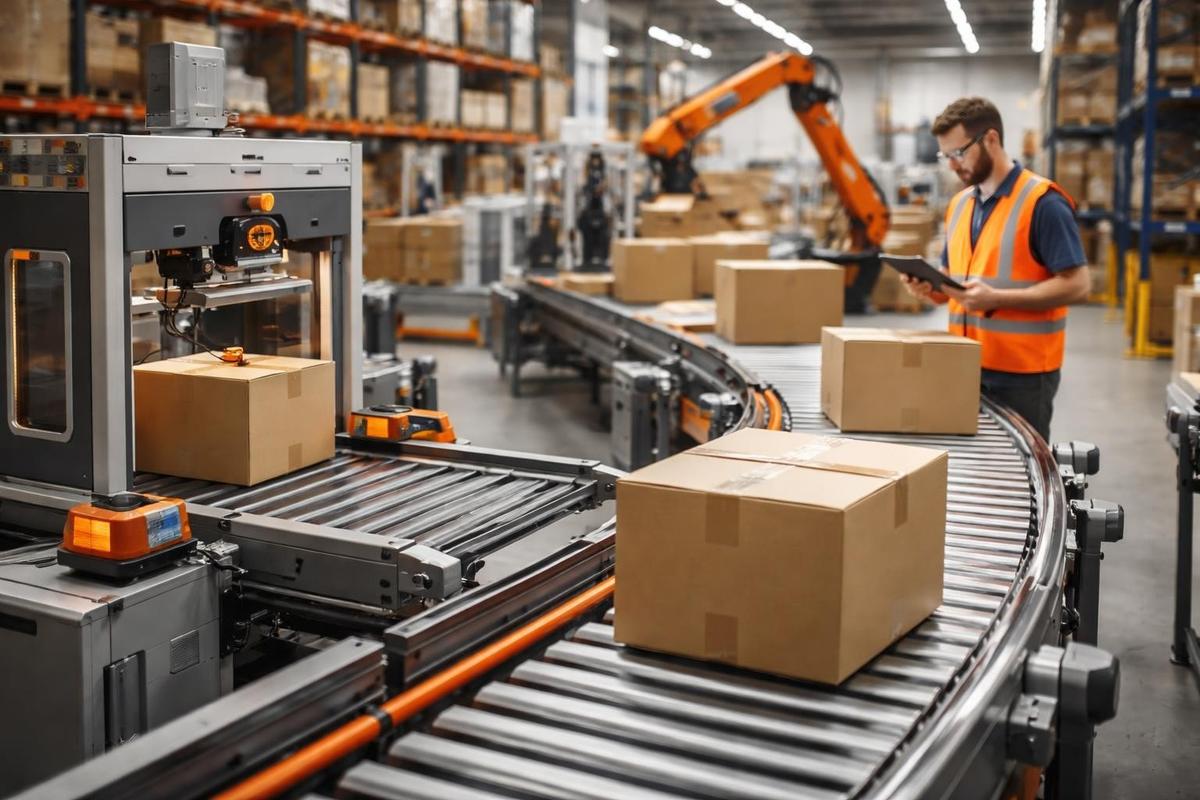
The final stage of your warehouse operation often determines whether your business meets customer expectations or falls short. An automated packaging line represents the critical junction where products transition from storage to shipment, and inefficiencies here can undermine the productivity gains achieved throughout your entire fulfillment process. Modern packaging automation has evolved far beyond simple box-sealing machines to encompass sophisticated systems that coordinate robotics, vision inspection, labeling, and data integration. For logistics providers, e-commerce fulfillment centres, and manufacturing operations across New Zealand and Australia, implementing the right packaging automation solution has become essential for maintaining competitive advantage in 2026.
Understanding Automated Packaging Line Components
The foundation of any effective automated packaging line consists of several interconnected subsystems working in harmony. Primary components include product handling mechanisms, packaging material feeders, sealing equipment, labeling systems, and quality verification stations.
Core system elements typically include:
- Robotic pick-and-place units for product positioning
- Automatic box erectors and formers
- Thermal or ultrasonic sealing mechanisms
- Vision inspection cameras for quality control
- Print-and-apply labeling equipment
- Weight verification scales
- Integration with warehouse management systems
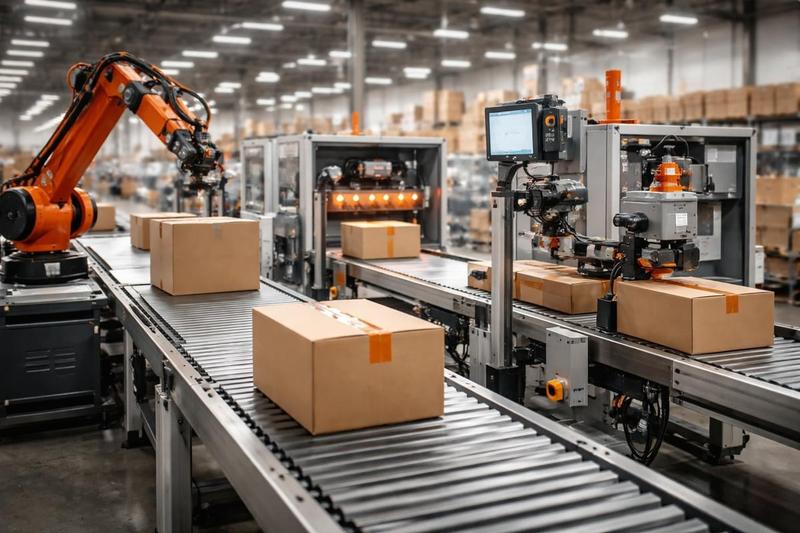
These components must communicate seamlessly through control systems that often follow industry standards like PackML, which promotes consistency and interoperability across different equipment manufacturers. The standardization of control interfaces has significantly reduced integration complexity in recent years.
Control Architecture and Integration Points
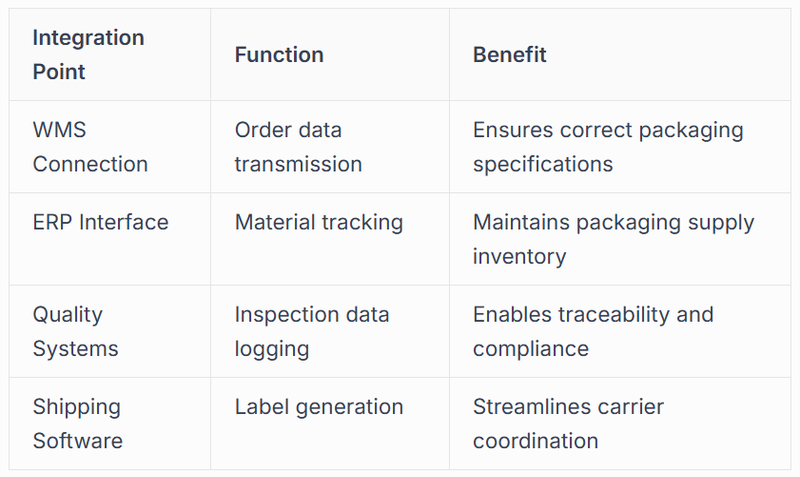
Modern packaging lines rely on programmable logic controllers (PLCs) and industrial PCs that coordinate timing, sequencing, and error handling across all stations. These controllers interface with your existing warehouse management system (WMS) to receive order data, track packaging materials inventory, and report completion metrics.
The integration between an automated packaging line and upstream warehouse processes represents a critical design consideration. Systems must accommodate variable product flows from goods-to-person automation or conventional picking zones, adjusting throughput dynamically based on real-time demand.
Research into IoT-enabled packaging recognition systems demonstrates how data collection throughout the packaging process can identify optimization opportunities and predict maintenance requirements before failures occur.
Technology Selection for Different Operation Scales
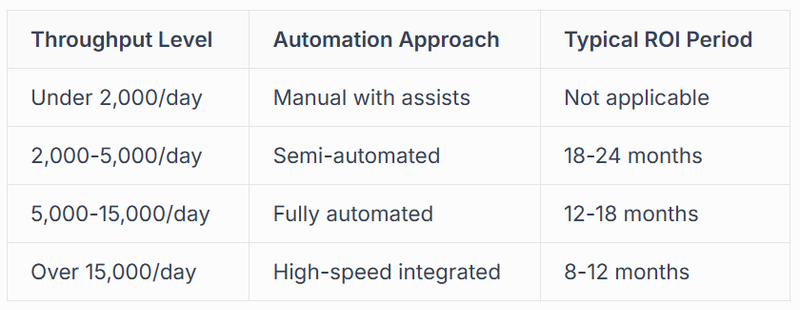
Choosing the appropriate automation level depends on your throughput requirements, product variability, available capital, and operational flexibility needs. Not every operation requires a fully automated packaging line; matching technology to actual requirements prevents over-investment while ensuring adequate capacity.
Small to Medium Operations
For warehouses processing 2,000-10,000 orders daily, semi-automated solutions often provide the optimal balance between investment and return. These systems typically combine manual product loading with automated sealing, labeling, and verification.
Recommended technologies for this scale:
- Semi-automatic case erectors with manual product loading
- Automatic tape or hot-melt sealing heads
- Integrated print-and-apply labeling
- Basic vision systems for label verification
- Manual carton size selection
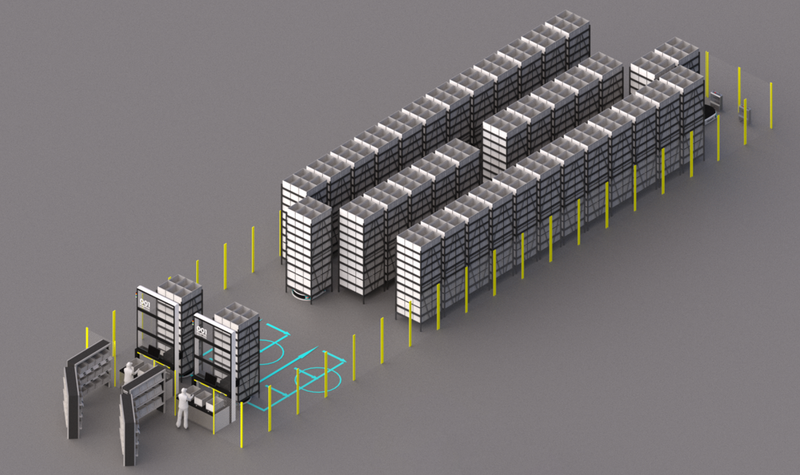
Small and medium businesses seeking to transition from manual packing can benefit from modular approaches that allow incremental automation expansion. The Automate-X GTP Starter Grid provides an accessible entry point for operations ready to begin their automation journey, offering scalable picking automation that seamlessly feeds into downstream packaging processes.
High-Volume Distribution Centers
Operations exceeding 10,000 daily shipments require fully integrated systems with minimal human intervention. These environments demand robust equipment capable of continuous operation with quick changeover capabilities for varying product dimensions.
Advanced facilities incorporate artificial intelligence for carton size optimization, reducing material waste by automatically selecting the smallest appropriate container for each order. Research into robotic bagging with constraint-aware planning illustrates how sophisticated systems can handle even deformable packaging materials with minimal human oversight.
Implementation Planning and Workflow Design
Successful automated packaging line deployment requires methodical planning that extends beyond equipment selection. Understanding your current processes, identifying bottlenecks, and designing for future scalability are essential prerequisites.
Begin by mapping your existing packaging workflow, documenting every touchpoint, decision point, and quality verification step. This baseline assessment reveals opportunities for consolidation and identifies non-value-adding activities that automation can eliminate.
Space and Layout Optimization
Physical constraints often determine feasible automation configurations. An automated packaging line typically requires 20-40% more floor space than equivalent manual operations when accounting for equipment footprint, maintenance access, and material staging areas.
Critical layout considerations include:
- Product infeed buffer zones to accommodate variable upstream flow
- Packaging material storage positioned for efficient replenishment
- Reject handling stations for failed quality checks
- Maintenance access corridors around all major equipment
- Outbound conveyor routing to shipping dock assignments
Integration with existing conveyor systems requires careful attention to height transitions, merge points, and accumulation zones that prevent system-wide stoppages when downstream processes experience temporary delays.

Modern facilities increasingly incorporate flexible line designs that can handle multiple product categories without extensive changeover procedures. This adaptability becomes particularly valuable for operations serving diverse customer bases or managing seasonal volume fluctuations.
Quality Control and Verification Systems
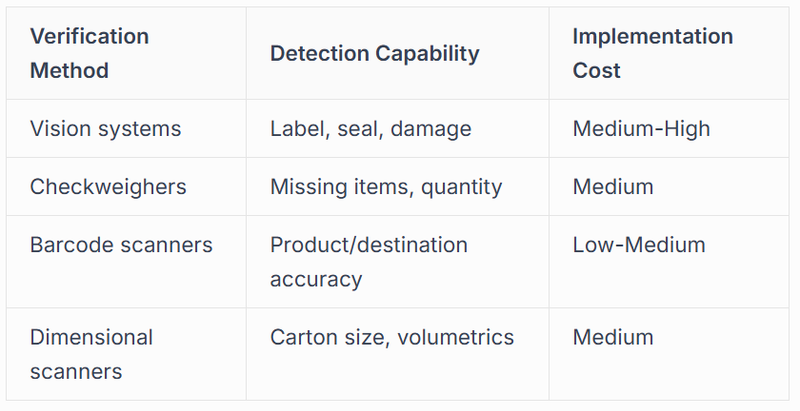
Automated packaging introduces new quality assurance opportunities while requiring different verification approaches than manual operations. Vision inspection systems can verify package integrity, label accuracy, and proper product placement with consistency impossible for human operators maintaining similar throughput.
Vision-Based Inspection Technologies
Contemporary machine vision systems employ high-resolution cameras coupled with sophisticated image processing algorithms to detect packaging defects in real-time. These systems can identify unsealed flaps, misaligned labels, damaged cartons, and incorrect product orientation before packages enter the shipping stream.
The implementation of warehouse automation technologies that include advanced vision capabilities has reduced shipping errors by 60-80% in facilities that previously relied on manual verification sampling.
Common vision inspection applications:
- Barcode verification and quality grading
- Label presence and position confirmation
- Seal integrity assessment
- Carton damage detection
- Product count verification through weight correlation
Research exploring unsupervised anomaly detection for predictive maintenance demonstrates how packaging machinery can self-monitor performance parameters, flagging potential failures before they cause line stoppages or quality issues.
Weight Verification and Compliance
Checkweighers integrated within the packaging line provide both quality assurance and regulatory compliance verification. These systems confirm that packages contain the expected products while ensuring adherence to carrier weight limits and trade measurement requirements.
Modern checkweighers operate at line speeds exceeding 200 packages per minute while maintaining accuracy within ±0.1% of target weights. This precision enables detection of missing items, incorrect quantities, or unauthorized additions before shipping.
Robotic Integration for Complex Packaging Tasks
The incorporation of industrial robotics within packaging lines addresses the most challenging aspects of package preparation: handling irregular products, creating mixed SKU shipments, and managing fragile items requiring specific orientation.
Collaborative robots (cobots) have transformed packaging automation by enabling safe human-robot interaction in space-constrained environments. These systems can handle product placement tasks while human operators manage exception processing and material replenishment.
Advanced Robotic Capabilities
Six-axis articulated robots equipped with adaptive grippers can manipulate products of varying sizes, shapes, and fragility levels without requiring mechanical changeovers. Vision-guided robotics select appropriate handling strategies based on product identification, ensuring delicate items receive gentle treatment while robust products benefit from faster handling.
Current research into automated box folding processes addresses one of the remaining packaging challenges where manual dexterity has traditionally outperformed automation. Solutions emerging in 2026 demonstrate that even complex folding sequences can be reliably automated.
Robotic packaging applications include:
- Product picking from bulk containers into shipping cartons
- Mixed-SKU order assembly with optimal packing density
- Fragile item cushioning material placement
- Carton flap folding for irregular box sizes
- Pallet loading of completed packages
End-of-Arm Tooling Selection
The gripper or end-effector represents the critical interface between robot and product. Vacuum grippers excel with flat, non-porous items, while parallel jaw grippers handle boxed products effectively. Soft robotic grippers using pneumatic actuation provide gentle handling for delicate or irregular items.
Multi-modal grippers that combine several manipulation methods on a single tool eliminate the need for changeovers when product mix varies. This flexibility proves essential in e-commerce fulfillment where order composition changes continuously.
Sustainability and Material Optimization
Environmental considerations increasingly influence automated packaging line design decisions. Systems that minimize packaging material usage, accommodate recyclable materials, and reduce energy consumption deliver both operational savings and improved corporate sustainability metrics.
Right-sizing automation selects the smallest appropriate carton for each order, eliminating void fill requirements while reducing dimensional weight charges from carriers. This technology can reduce packaging material consumption by 20-30% compared to fixed carton size approaches.
Eco-Friendly Packaging Materials
Automated packaging lines must accommodate evolving material specifications as businesses transition from plastic-based to paper-based packaging solutions. Equipment flexibility to handle varying material thicknesses, strengths, and sealing requirements prevents premature obsolescence.
Sustainable packaging considerations:
- Paper tape compatibility for recyclable carton sealing
- Compostable void fill material dispensing systems
- Reduced film gauge capabilities for stretch wrapping
- Reusable container handling for closed-loop systems
- Energy-efficient motors and compressed air optimization
The future of packaging lines reflects growing emphasis on circular economy principles, with equipment designed for easy material recovery and reduced environmental impact throughout the packaging process lifecycle.
Maintenance Strategies and System Reliability
An automated packaging line typically operates as the final process before shipping, making reliability paramount. Downtime here immediately impacts customer delivery commitments regardless of upstream operational efficiency.
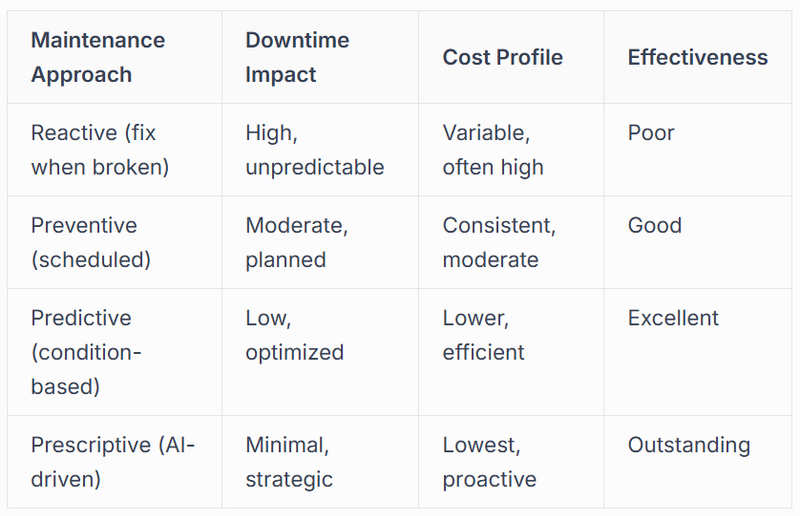
Preventive maintenance programmes should address wear components on predictable intervals, typically scheduled during off-shift periods to minimize throughput impact. Critical spares inventory for high-failure-rate components prevents extended downtime awaiting replacement parts.
Predictive Maintenance Technologies
Modern packaging equipment incorporates sensors monitoring vibration, temperature, current draw, and cycle times to identify developing problems before catastrophic failures occur. These systems learn normal operational parameters and flag deviations that indicate impending component failure.
Integration with custom automation solutions enables centralized monitoring across multiple packaging lines, allowing maintenance teams to prioritize interventions based on actual equipment condition rather than fixed schedules.
Data Integration and Performance Analytics
The digital connectivity of modern packaging systems transforms them from simple mechanical processors into intelligent data sources that inform broader operational decisions. Real-time performance metrics enable immediate intervention when efficiency degrades while historical trends guide capacity planning.
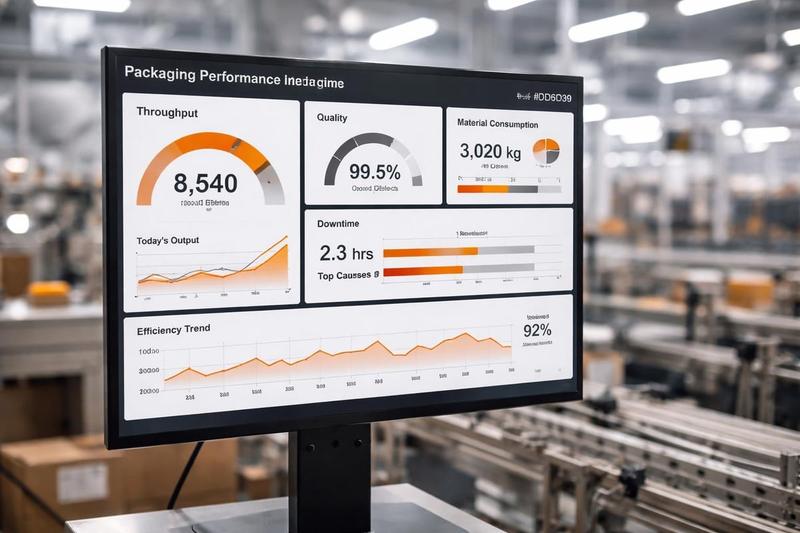
Key performance indicators (KPIs) tracked by sophisticated packaging lines include packages per hour, defect rates, material waste percentages, energy consumption per package, and overall equipment effectiveness (OEE). These metrics should integrate with enterprise systems to provide complete visibility from order receipt through shipment.
Cloud-Based Monitoring Solutions
Contemporary packaging lines often incorporate cloud connectivity that enables remote monitoring, troubleshooting, and even software updates without on-site intervention. This capability proves particularly valuable for multi-site operations seeking to standardize processes and share performance benchmarks.
The integration between packaging automation and warehouse management systems creates closed-loop feedback enabling dynamic adjustment of upstream picking and sorting processes based on packaging capacity constraints.
Workforce Transition and Training Requirements
Implementing an automated packaging line fundamentally changes workforce requirements, shifting emphasis from repetitive manual tasks to equipment monitoring, maintenance, and exception handling. Successful deployments include comprehensive change management addressing both technical skills development and organizational culture adaptation.
Essential training components include:
- Equipment operation and mode selection procedures
- Material loading and changeover protocols
- Basic troubleshooting and error recovery techniques
- Safety system understanding and compliance
- Quality verification and exception processing
The reduction in physically demanding repetitive tasks often improves workplace safety metrics while enabling existing staff to focus on higher-value activities requiring judgment and problem-solving capabilities. This transition typically requires 3-6 months for full workforce adaptation.
Understanding how automation transforms logistics operations helps organizations prepare for these workforce changes and develop appropriate training programmes that ensure successful technology adoption.
Return on Investment Considerations
Justifying automated packaging line investment requires comprehensive financial analysis extending beyond simple labour displacement calculations. Tangible benefits include reduced packaging material costs through right-sizing, decreased shipping expenses via dimensional weight optimization, and improved order accuracy reducing returns and customer service contacts.
Calculating Total Cost of Ownership
Initial capital expenditure represents only one component of true system cost. Ongoing expenses include maintenance contracts, spare parts inventory, energy consumption, and software licensing fees for advanced control systems.
Financial impact factors:
- Labour cost reduction from headcount optimization
- Material savings from packaging optimization algorithms
- Shipping cost reduction through dimensional weight management
- Quality improvement reducing returns and re-ships
- Throughput increase enabling revenue growth without facility expansion
- Energy efficiency compared to manual operation climate control requirements
Most medium-to-high volume operations achieve return on investment within 12-24 months when accounting for the full spectrum of benefits. The analysis should also consider avoided costs of facility expansion that increased manual packaging capacity would require.
Regulatory Compliance and Industry Standards
Automated packaging lines serving pharmaceutical, food and beverage, or other regulated industries must incorporate capabilities ensuring consistent compliance with applicable standards. These requirements often drive specific design features beyond those needed for general merchandise packaging.
Traceability requirements in pharmaceutical automation demand serialization capabilities, tamper-evident sealing, and comprehensive data logging that manual processes cannot consistently achieve. Vision systems verify that regulatory markings, expiration dates, and safety warnings appear correctly on every package.
Food packaging automation must accommodate sanitary design principles with equipment constructed from approved materials, featuring sealed enclosures preventing contamination, and enabling efficient cleaning protocols. These specialized requirements increase initial investment but prove essential for compliance and consumer safety.
Scalability and Future-Proofing Strategies
Business growth should enhance rather than constrain automated packaging line capabilities. Modular system architectures allow capacity expansion through parallel line addition rather than requiring complete system replacement as volumes increase.
Scalability design principles include:
- Standardized control interfaces enabling equipment from multiple vendors
- Flexible conveyor routing accommodating additional packaging stations
- Software platforms supporting unlimited transaction volumes
- Expandable vision systems accepting additional camera inputs
- Network infrastructure designed for future sensor integration
Organizations implementing automation should consider how packaging requirements might evolve with changing product portfolios, customer expectations, and carrier requirements. Systems accommodating new package formats, materials, and labeling standards without major reconstruction provide superior long-term value.
The examination of how automation reshapes the packaging sector reveals that successful implementations balance current operational needs with anticipated future requirements, avoiding both over-engineering and premature obsolescence.
Modern packaging automation represents a critical investment for operations seeking to maintain competitiveness in increasingly demanding logistics environments. The technologies discussed here demonstrate that appropriate automated packaging line implementation delivers measurable improvements in efficiency, accuracy, and scalability while supporting sustainability objectives. Automate-X combines expertise in robotics, warehouse software, and system integration to design packaging automation solutions tailored to your specific operational requirements, enabling you to optimize this crucial final step in your fulfillment process and achieve sustainable growth across your warehouse operations.