


System Automation: A Complete Guide for Warehouses
Share on
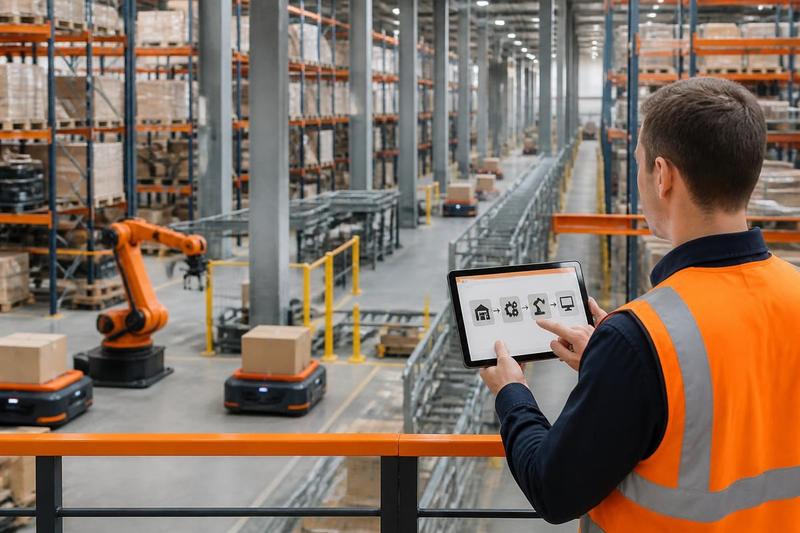
Modern warehouses face unprecedented pressure to process higher volumes, reduce errors, and meet faster delivery expectations. System automation has emerged as the critical solution that enables logistics operations to meet these demands while controlling costs and improving accuracy. By integrating hardware, software, and control systems into unified automated workflows, warehouses can transform manual processes into intelligent, self-managing operations that scale with business growth.
Understanding System Automation in Warehouse Environments
System automation refers to the integration of multiple technologies, control systems, and software platforms to create coordinated workflows that operate with minimal human intervention. Unlike standalone automation tools, system automation creates an interconnected ecosystem where warehouse management systems, robotics, conveyor networks, and inventory tracking communicate seamlessly.
The foundation of effective system automation lies in establishing what experts call a source of truth for your operational data. This centralised information architecture ensures that all automated systems work from consistent, accurate data about inventory locations, order priorities, and resource availability.
Core Components of Automated Warehouse Systems
Hardware Layer
- Automated storage and retrieval systems (AS/RS)
- Conveyor and sortation equipment
- Robotic picking and palletising units
- Automated guided vehicles (AGVs) and autonomous mobile robots (AMRs)
- Scanning and vision systems
Software Layer
- Warehouse management systems (WMS)
- Warehouse execution systems (WES)
- Enterprise resource planning (ERP) integration
- Transportation management systems (TMS)
- Analytics and reporting platforms
Control Layer
- Programmable logic controllers (PLCs)
- Supervisory control and data acquisition (SCADA) systems
- Application programming interfaces (APIs)
- Middleware and integration platforms
The Business Case for System Automation
Implementing system automation delivers measurable returns across multiple operational dimensions. Warehouses that successfully deploy integrated automation typically see productivity improvements of 30-50% while simultaneously reducing picking errors by up to 90%.
Quantifiable Benefits
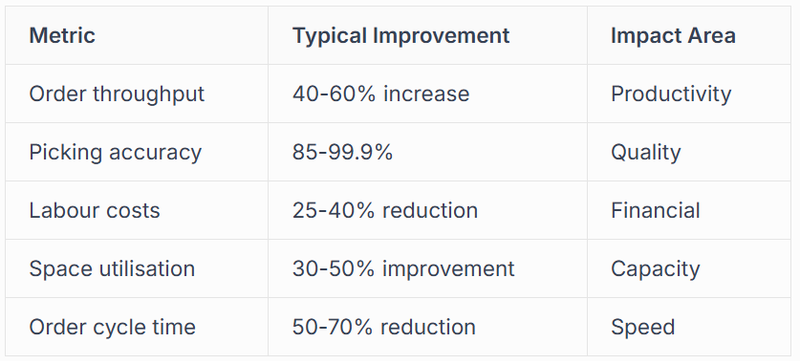
Beyond these direct operational gains, system automation provides strategic advantages that position warehouses for long-term competitiveness. Automated systems generate detailed performance data that enables continuous improvement and predictive maintenance, preventing costly downtime before it occurs.
The scalability factor cannot be overstated. Manual operations require linear increases in labour to handle volume growth, while automated systems can often absorb 50-100% volume increases without proportional cost increases.
Risk Mitigation and Consistency
System automation reduces dependence on increasingly scarce warehouse labour whilst eliminating the variability inherent in manual processes. Automated systems perform the same task identically thousands of times daily, creating consistency that manual operations cannot match.
For industries like pharmaceuticals and food & beverage where regulatory compliance is critical, system automation provides the documentation, traceability, and process control required to meet stringent standards. Understanding data warehouse automation helps operations leverage automated data collection for compliance reporting.
Designing Effective Automation Architecture
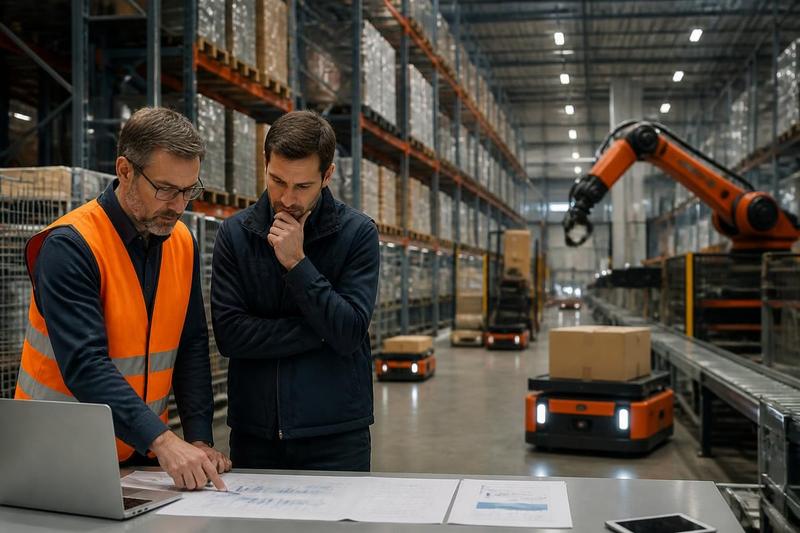
Successful system automation begins with comprehensive process analysis. Before automating any workflow, operations must map current processes, identify bottlenecks, and determine which activities deliver the highest return when automated.
The International Society of Automation provides industry standards that guide proper system design and implementation. Following established frameworks ensures compatibility, safety, and long-term maintainability.
Phased Implementation Strategy
- Assessment and Planning: Analyse current operations, define objectives, and establish ROI requirements
- Pilot Deployment: Implement automation in a contained area to validate approach and refine processes
- Integration Development: Build connections between automated systems and existing enterprise software
- Expansion: Roll out successful automation patterns to additional areas
- Optimisation: Continuously refine parameters based on performance data
This staged approach minimises risk whilst building organisational capability. Case studies like PPP Industries demonstrate how phased implementation enables warehouses to validate benefits before full-scale investment.
Critical Design Considerations
Flexibility Requirements: Modern warehouse automation must accommodate product variety, seasonal fluctuations, and changing customer requirements. Rigid systems that optimise for today's products may become liabilities as your business evolves.
Integration Complexity: System automation succeeds or fails based on how well disparate technologies communicate. Investing in robust middleware and API development prevents the creation of isolated automation islands that cannot share data effectively.
Maintenance Accessibility: Automated systems require ongoing maintenance and occasional troubleshooting. Design layouts that provide technicians adequate access to equipment without disrupting operations.
System Integration and Data Flow
The true power of system automation emerges through intelligent integration. When your WMS detects an incoming order, it should automatically trigger picking instructions to your robotics, reserve inventory in your tracking system, and update your ERP without manual intervention.
Research on process automation system architectures reveals that modern systems increasingly adopt service-oriented architectures (SOA) that enable flexible, modular integration between components.
Building Seamless Information Flow
Effective data integration requires careful attention to several technical factors:
- Real-time synchronisation: Inventory data must update instantaneously across all systems to prevent allocation conflicts
- Error handling: Automated systems need robust exception management to address unexpected conditions without halting operations
- Data validation: Integration points should verify data integrity before passing information between systems
- Audit trails: Complete logging enables troubleshooting and provides compliance documentation
For operations just beginning their automation journey, solutions like the Automate-X GTP Starter Grid provide an accessible entry point that demonstrates integration benefits without requiring complete warehouse transformation. This goods-to-person system shows how automated storage, retrieval, and presentation can integrate with existing WMS platforms to deliver immediate productivity gains.
API Development and Middleware
Modern system automation relies heavily on application programming interfaces (APIs) that allow different software platforms to exchange information. Well-designed APIs enable your automation systems to receive instructions from your WMS, report status back to supervisory systems, and log performance data to analytics platforms.
Middleware platforms serve as translation layers that help disparate systems communicate despite different data formats and protocols. Investing in quality middleware reduces the custom development required for each new integration.
Robotics and Physical Automation Systems
The physical components of system automation handle the movement, storage, and manipulation of goods throughout your facility. Modern robotics technology has advanced dramatically, offering solutions for virtually every warehouse function.
Autonomous Mobile Robots (AMRs)
Unlike traditional AGVs that follow fixed paths, AMRs navigate dynamically using sensors and mapping technology. These intelligent robots adjust routes based on obstacles, traffic patterns, and changing priorities. AMRs excel at goods-to-person retrieval, internal transportation, and sortation applications.
Key advantages:
- Flexible deployment without infrastructure modifications
- Easy scaling by adding or removing units
- Safe operation alongside human workers
- Rapid ROI through productivity gains
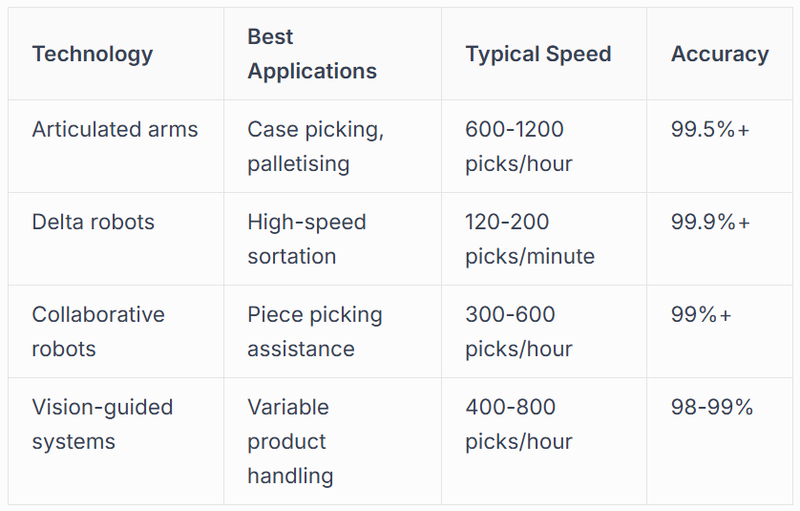
Robotic Picking Technologies
Automated picking represents one of the most challenging automation domains due to product variety and packaging inconsistencies. Recent advances in machine vision, gripper technology, and artificial intelligence have made robotic picking viable for an expanding range of applications.
Control Systems and Operational Management
System automation requires sophisticated control systems that orchestrate activities across multiple technologies. Warehouse execution systems (WES) have emerged as the central intelligence layer that optimises task allocation, balances workloads, and adapts to changing conditions.
Real-time Decision Making
Advanced WES platforms continuously analyse current warehouse state and make intelligent decisions about:
- Which orders to release to fulfillment based on priority and resource availability
- How to batch picks for maximum efficiency
- Which automated equipment to assign to specific tasks
- When to rebalance inventory to optimise storage density
These decisions occur hundreds or thousands of times per hour, creating efficiency gains impossible through manual management.
Performance Monitoring and Analytics
System automation generates vast quantities of operational data. Modern analytics platforms transform this raw data into actionable insights about equipment utilisation, throughput bottlenecks, quality trends, and maintenance requirements.
Establishing key performance indicators (KPIs) aligned with business objectives ensures your automation systems contribute to strategic goals rather than simply optimising isolated metrics. Successful operations monitor balanced scorecards covering productivity, accuracy, cost, and customer service dimensions.
Standards, Safety, and Compliance
Implementing system automation requires adherence to numerous industry standards governing equipment safety, system integration, and operational practices. The ISA standards and publications provide globally recognised guidelines for automation system design and implementation.
Safety System Integration
Automated warehouses must protect workers from moving equipment whilst maintaining operational efficiency. Modern safety systems employ multiple technologies:
- Laser scanners that create protective zones around automated equipment
- Vision systems that detect human presence and adjust equipment behaviour
- Emergency stop systems accessible throughout the facility
- Safety-rated control systems with redundant protection layers
Formal methods for building dependable automation systems help engineers design safety-critical components with mathematical verification of correct operation.
Regulatory Considerations by Industry
Different industries impose specific requirements on warehouse automation:
Pharmaceuticals: Serialisation tracking, temperature monitoring, chain of custody documentation
Food & Beverage: Temperature control, allergen segregation, first-expired-first-out management
Cold Storage: Environmental monitoring, energy efficiency, condensation management
E-commerce: Returns handling, multi-channel integration, peak season flexibility
System automation must accommodate these requirements through appropriate sensors, tracking systems, and reporting capabilities.
Change Management and Workforce Development
Technical implementation represents only half the challenge of successful system automation. Organisations must simultaneously manage the human side of automation, helping workers adapt to new roles and processes.
Evolving Role Definitions
Automation eliminates low-value repetitive tasks whilst creating demand for higher-skilled positions. Successful implementations include:
- Technical training programmes that develop automation operation skills
- Clear career pathways showing advancement opportunities
- Transparent communication about how automation changes roles
- Involvement of frontline workers in system design and optimisation
Operations like Easysteel demonstrate how automation can enhance rather than replace human capability when implemented thoughtfully.
Building Internal Capability
Rather than creating permanent dependence on external vendors, forward-thinking organisations develop internal expertise in automation systems. This includes training maintenance technicians on robotic systems, developing IT staff capabilities in integration technologies, and building operational understanding of automation optimisation.
Investment in ISA technical libraries and ongoing professional development ensures your team maintains current knowledge as automation technologies evolve.
Future Trends in System Automation
Warehouse automation continues evolving rapidly as new technologies mature and integration approaches advance. Several trends will shape system automation over the coming years.
Artificial Intelligence Integration: Machine learning algorithms will increasingly optimise warehouse operations by predicting demand patterns, identifying efficiency opportunities, and autonomously adjusting system parameters.
Digital Twin Technology: Virtual replicas of physical warehouse systems enable simulation-based optimisation, predictive maintenance, and risk-free testing of operational changes before implementation.
Edge Computing: Processing data locally on automated equipment reduces latency, enables faster decision-making, and reduces dependence on network connectivity for critical operations.
Sustainability Focus: Energy-efficient automation systems, optimised routing to reduce equipment travel, and intelligent lighting and climate control will address growing environmental priorities.
Calculating Return on Investment
System automation requires significant capital investment, making rigorous ROI analysis essential. Comprehensive financial models should capture both direct and indirect benefits across multiple dimensions.
Cost Components
Capital Expenditure:
- Equipment and robotics
- Software licences and customisation
- Installation and commissioning
- Facility modifications
- Integration development
Ongoing Operational Costs:
- Maintenance and spare parts
- Software subscriptions and support
- Energy consumption
- Technical staff
- System upgrades and enhancements
Benefit Quantification
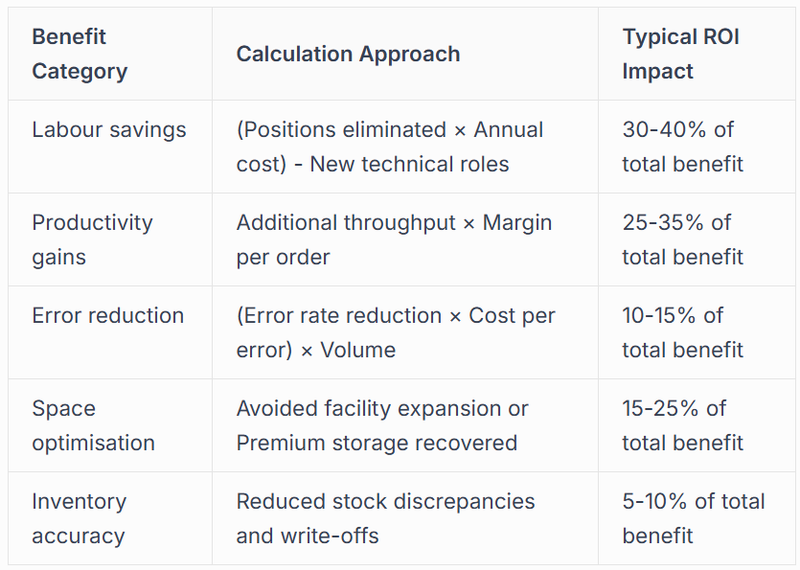
Most warehouse automation projects achieve payback periods between 2-4 years, though specific returns vary based on volume, labour costs, and operational complexity.
System automation transforms warehouse operations by integrating robotics, software, and control systems into intelligent workflows that dramatically improve productivity, accuracy, and scalability. Whether you're exploring your first automation project or expanding existing capabilities, Automate-X combines proven robotics, advanced warehouse software, and expert integration services to design solutions tailored to your specific operational requirements and growth objectives.