

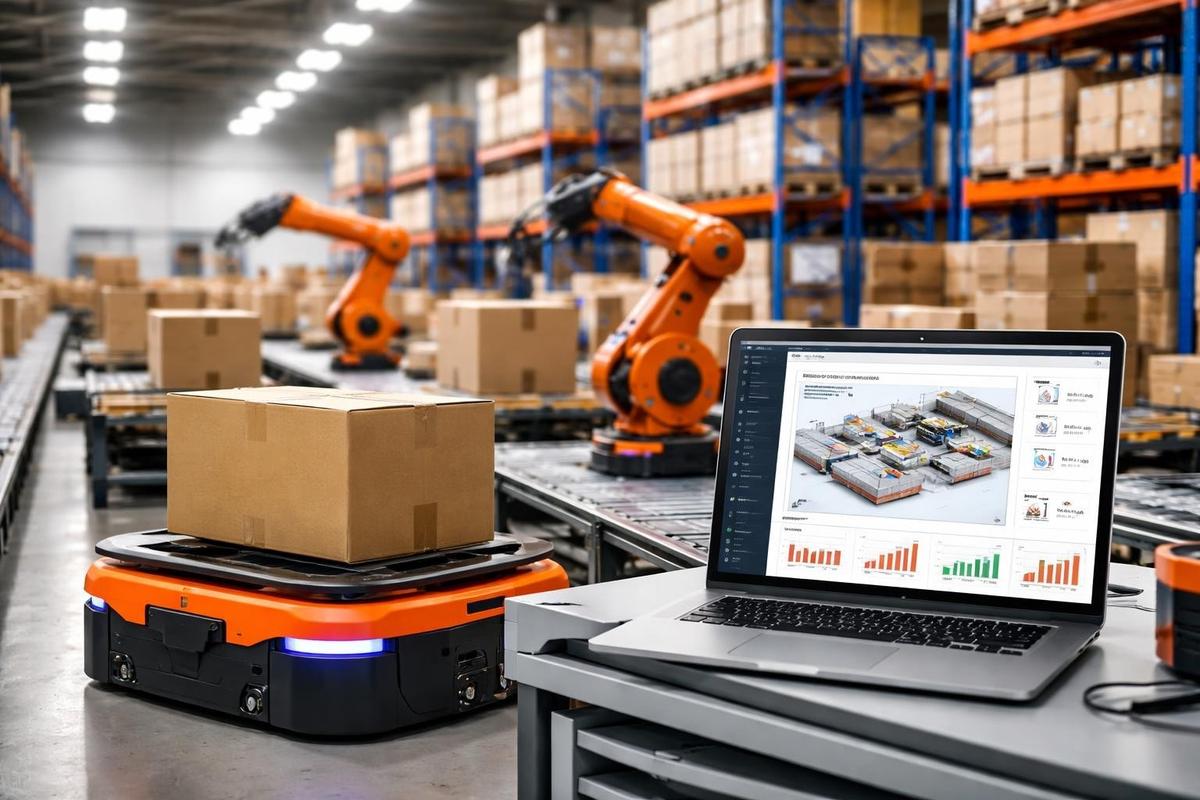
Automation Design Principles for Warehouse Success
Share on
The success of warehouse automation projects depends less on individual technologies and more on how those systems are designed, integrated, and deployed. Automation design represents the strategic blueprint that transforms disconnected equipment into cohesive, intelligent systems capable of scaling alongside business growth. For logistics providers, 3PLs, and distribution operations, understanding the principles behind effective automation design separates transformative investments from costly implementations that fail to deliver promised returns.
The Foundation of Intelligent Automation Design
Automation design encompasses far more than selecting equipment vendors or mapping conveyor routes. It represents a holistic approach to reimagining warehouse operations through the lens of technology-enabled efficiency.
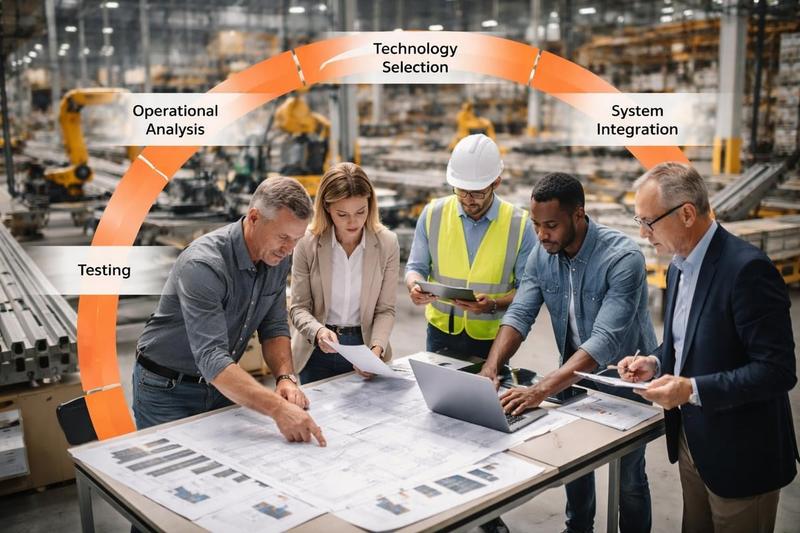
At its core, warehouse automation design addresses three fundamental questions: which processes should be automated, how systems will integrate with existing operations, and what infrastructure supports long-term scalability. These considerations shape everything from physical layouts to software architectures.
Key foundation elements include:
- Process analysis and bottleneck identification
- Technology selection aligned with operational requirements
- Integration planning for existing warehouse management systems
- Scalability provisions for future growth
- Change management strategies for workforce adaptation
The best automation design balances immediate operational needs with long-term strategic goals. A distribution centre processing 10,000 orders daily today might handle 25,000 within three years, requiring systems that accommodate that growth without complete redesigns.
Applying Core Design Principles to Warehouse Automation
Successful automation design follows established engineering principles adapted for warehouse environments. The six principles of automation provide excellent guidance, emphasising visibility, accuracy, and user experience alongside traditional efficiency metrics.
Visibility and Transparency
Every automated system requires comprehensive monitoring capabilities. Warehouse operators need real-time insights into system performance, throughput rates, error conditions, and maintenance requirements. This visibility enables proactive management rather than reactive firefighting.
Modern automation design incorporates dashboards that display key performance indicators across all integrated systems. When a goods-to-person robot experiences reduced efficiency, operators should immediately identify whether the issue stems from battery levels, navigation obstacles, or task allocation algorithms.
Simplicity Through Modularity
Complex systems built from simple, modular components outperform monolithic designs. This principle proves especially valuable in warehouse automation, where operational requirements evolve constantly.
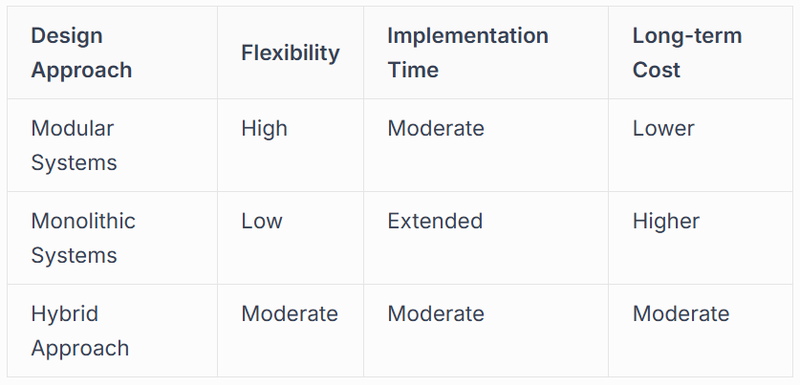
Modular automation design allows warehouses to add capacity incrementally. Rather than installing 50 autonomous mobile robots simultaneously, operations might deploy 10 units initially, validate performance, and scale gradually based on demonstrated results.
Single Responsibility Architecture
The Single Responsibility Principle applies directly to warehouse automation design. Each system component should perform one function exceptionally well rather than attempting multiple tasks adequately.
Automated storage and retrieval systems excel at dense storage and rapid retrieval. Conveyor networks handle transportation efficiently. Robotic picking systems manage item selection and placement. When automation design assigns each technology its optimal role, overall system performance improves dramatically.
Reliability and Failure Recovery in Automation Design
Warehouse operations cannot afford extended downtime. Effective automation design incorporates redundancy, graceful degradation, and rapid recovery mechanisms from the initial planning stages.
The AWS reliability design principles translate well to physical automation systems. Automated recovery from component failures, horizontal scaling to handle demand spikes, and regular testing of recovery procedures all apply to warehouse environments.
Critical reliability considerations include:
- Redundant pathways for material flow preventing single points of failure
- Battery management systems ensuring automated equipment maintains operational capacity
- Fallback procedures allowing manual operation during system maintenance
- Predictive maintenance schedules minimising unexpected breakdowns
- Hot-swappable components reducing mean time to repair
A well-designed automated warehouse continues functioning at reduced capacity even when individual components fail. If one robotic shuttle requires maintenance, others compensate by handling additional workload until repairs complete.
Human-Centred Automation Design
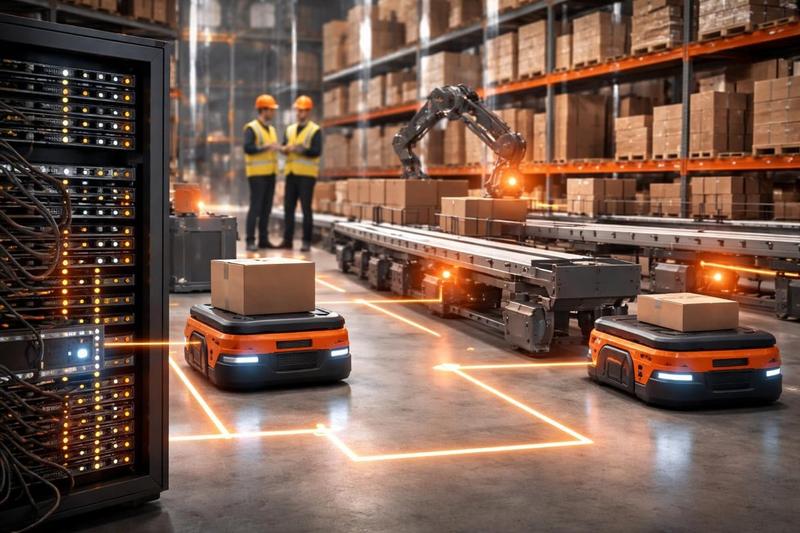
Despite increasing technological sophistication, warehouse automation succeeds or fails based on human acceptance and effective collaboration. The Principle of Least Astonishment suggests systems should behave as users expect, minimising confusion and errors.
Automation design must consider operator interfaces, training requirements, and ergonomic factors. Collaborative robots working alongside human pickers require intuitive controls and predictable movement patterns. Warehouse management software needs clear visualisations that operators understand immediately.
The guidelines for trustworthy automation emphasise calibrated trust between humans and automated systems. Operators should neither blindly trust automation nor constantly second-guess system decisions. Proper automation design builds this balanced relationship through transparent operation and appropriate autonomy levels.
Ergonomics and Safety Integration
Physical automation design prioritises worker safety and comfort. Seven principles for automation equipment design include Poka-Yoke (error-proofing), ergonomics, and safety as foundational elements rather than afterthoughts.
Automated picking stations should position items within comfortable reach zones. Collaborative robots must incorporate sensors preventing collisions with human workers. Emergency stops need placement within immediate access from all workstations. These design choices directly impact both safety records and productivity metrics.
Scalability and Future-Proofing Through Design
Warehouse automation represents significant capital investment. Effective automation design ensures those investments remain valuable as operational requirements evolve.
Scalable designs accommodate volume increases, SKU proliferation, and changing order profiles without requiring complete system replacements. This flexibility stems from careful planning during initial design phases.
Scalability factors include:
- Infrastructure capacity exceeding current requirements by 30-50%
- Software architectures supporting additional modules and integrations
- Physical layouts allowing expansion without disrupting active operations
- Standardised interfaces enabling technology upgrades
- Cloud-based control systems scaling computational resources dynamically
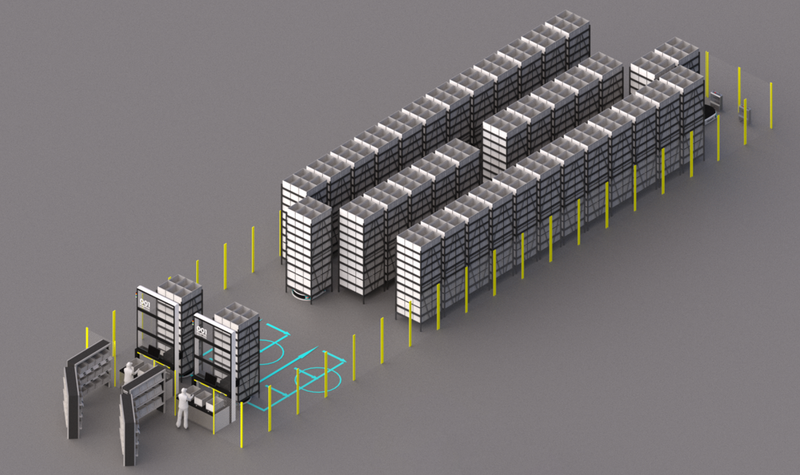
For businesses starting their automation journey, solutions like the Automate-X GTP Starter Grid demonstrate how thoughtful design enables growth from initial implementation through enterprise-scale operations. The modular approach allows warehouses to begin with core goods-to-person capabilities and expand systematically as volumes increase.
Integration Strategies in Modern Automation Design
No warehouse automation system operates in isolation. Integration with warehouse management systems, enterprise resource planning platforms, and transport management software forms essential automation design requirements.
The automation by default principle suggests automating well-defined tasks to improve consistency and reliability. Data exchange between systems represents exactly this type of well-defined task, making API-based integration central to automation design.
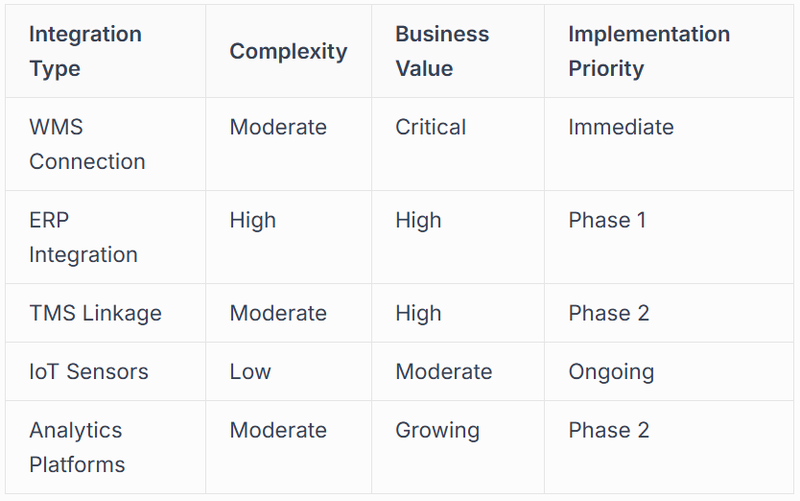
Modern automation design employs middleware platforms that manage data flows between disparate systems. When an automated storage system retrieves inventory, the WMS updates stock levels, the ERP system adjusts financial records, and the analytics platform captures performance metrics-all through standardised integration protocols.
Operational Automation Design Principles
Alibaba Cloud's design principles for automated operations recommend starting small, proving value, then scaling systematically. This phased approach reduces implementation risk while building organisational confidence.
Warehouse automation design should identify high-impact processes suitable for initial automation. Pick-and-pack operations consuming 60% of labour hours represent better starting points than receiving processes occupying 10% of workforce time.
Continuous Improvement Through Design
Static automation designs quickly become obsolete. The most effective approaches incorporate feedback loops enabling continuous refinement.
Performance monitoring systems should capture granular data about throughput rates, error frequencies, and efficiency metrics. This information feeds back into automation design, identifying optimisation opportunities and informing expansion decisions.
Many custom automation solutions evolve significantly from initial specifications as operators discover inefficiencies and improvement opportunities during daily use. Design flexibility accommodating these refinements maximises long-term value.
Technology Selection Within Automation Design
Choosing specific technologies represents a crucial automation design decision. The warehouse automation landscape includes autonomous mobile robots, automated storage and retrieval systems, conveyor networks, robotic picking solutions, and numerous specialised equipment categories.
Effective automation design matches technologies to specific operational challenges rather than pursuing trendy solutions. A pharmaceutical warehouse prioritising accuracy and traceability requires different automation approaches than an FMCG distribution centre emphasising throughput velocity.
Technology selection criteria:
- Operational requirements and performance targets
- Existing infrastructure and integration complexity
- Total cost of ownership including maintenance
- Vendor stability and support capabilities
- Scalability and upgrade pathways
- Industry-specific compliance requirements
Cold storage operations face unique automation design challenges due to temperature constraints affecting battery performance and human comfort. Solutions designed for ambient warehouses often require significant modifications for frozen environments, making specialised design expertise essential.
Design for Maintainability and Support
Long-term automation success depends heavily on maintenance accessibility and support efficiency. Automation design should prioritise easy access to components requiring regular service.
Robotic systems need clear pathways for technician access. Conveyor drives should allow replacement without dismantling entire networks. Software platforms require intuitive diagnostic tools enabling rapid troubleshooting.
The productivity design principles emphasise automation, integration, and continuous learning. Maintenance-friendly automation design reduces downtime, lowers support costs, and extends equipment lifecycles.
Environmental and Sustainability Considerations
Modern automation design increasingly incorporates environmental objectives alongside operational efficiency. Energy-efficient motors, regenerative braking systems, and optimised routing algorithms reduce power consumption while maintaining productivity.
Warehouse automation systems operating continuously consume substantial electricity. Design choices regarding equipment selection, control algorithms, and operational scheduling directly impact energy costs and carbon footprints.
Battery-powered autonomous mobile robots require charging infrastructure designed for minimal energy waste. Automated storage systems benefit from LED lighting activated only when humans enter specific zones. These design decisions accumulate into meaningful sustainability improvements.
Measuring Automation Design Success
Effective automation design establishes clear success metrics before implementation begins. These measurements validate design decisions and guide continuous improvement efforts.
Key performance indicators include:
- Throughput rates versus baseline manual operations
- Order accuracy and error reduction percentages
- Labour productivity improvements
- Space utilisation efficiency gains
- Return on investment timelines
- System uptime and availability metrics
Successful warehouse automation projects like the DHL's new automated warehouse demonstrate measurable improvements across multiple KPIs simultaneously. Proper automation design targets balanced advancement rather than optimising single metrics at the expense of overall performance.
Effective automation design transforms warehouse operations through strategic technology integration, human-centred planning, and scalable architectures that evolve alongside business needs. By applying proven design principles adapted for logistics environments, operations achieve sustainable efficiency improvements that justify automation investments. Automate-X combines modern robotics, warehouse software, and system integration expertise to deliver intelligent automation solutions tailored to your operational requirements, helping logistics and supply chain businesses streamline operations and enable scalable growth across distribution and fulfilment environments.