

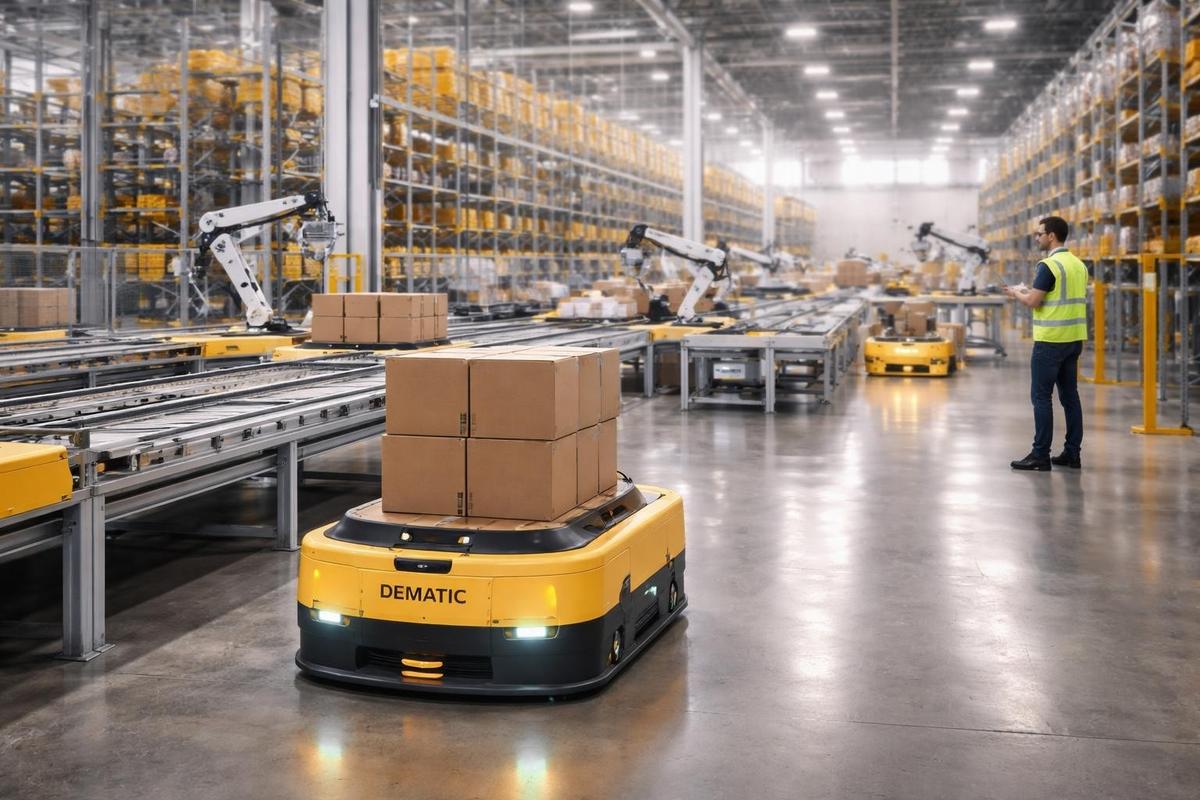
Dematic Warehouse Automation: Solutions & Insights
Share on
Dematic warehouse automation represents a comprehensive approach to transforming logistics and distribution operations through intelligent technology integration. As one of the leading providers globally, Dematic has established itself as a pioneer in developing sophisticated automation solutions that address the complex challenges facing modern supply chains. Understanding the technologies, methodologies, and strategic considerations behind dematic warehouse automation provides valuable insights for businesses evaluating automation investments or seeking to optimize existing systems. This exploration examines how these solutions reshape warehouse operations across diverse industries and operational scales.
Understanding Dematic's Automation Philosophy
Dematic warehouse automation follows a holistic framework that extends beyond individual mechanical systems. The company's approach centers on creating intelligent, interconnected environments where hardware, software, and data analytics work in harmony.
At its core, Dematic's automation solutions encompass material handling equipment, warehouse management systems, and control software designed to orchestrate complex workflows. This integration ensures that automated storage and retrieval systems, conveyor networks, and sortation technologies function as unified components rather than isolated installations.
The Technology Stack
The technical foundation of dematic warehouse automation comprises several interconnected layers:
- Physical automation layer: Robotics, conveyors, automated storage and retrieval systems (AS/RS), and material handling equipment
- Control systems layer: Warehouse control systems (WCS) that manage real-time equipment operations
- Management layer: Warehouse management systems (WMS) that optimize inventory and order fulfillment strategies
- Intelligence layer: Analytics platforms and AI-enhanced decision support tools
This layered architecture enables scalability and flexibility, allowing businesses to implement automation incrementally while maintaining operational continuity. The modular nature ensures that organizations can start with foundational automation and progressively add sophisticated capabilities as operational demands evolve.
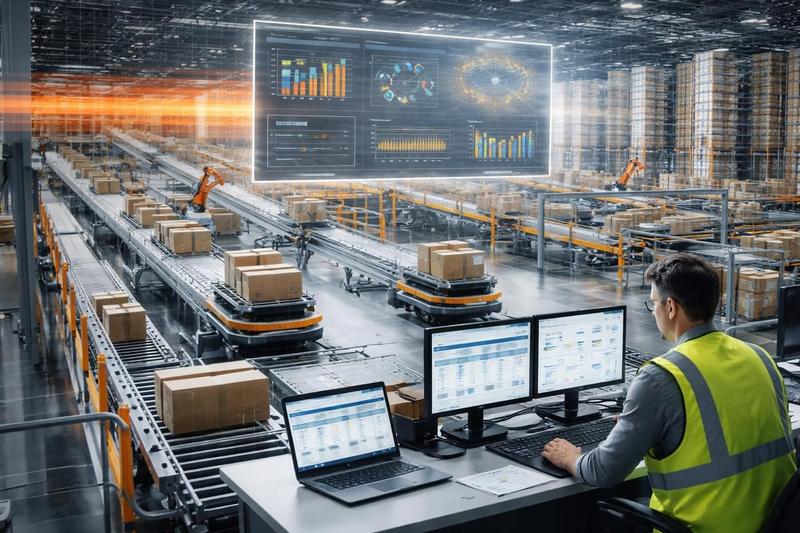
Key Technologies in Dematic Warehouse Automation
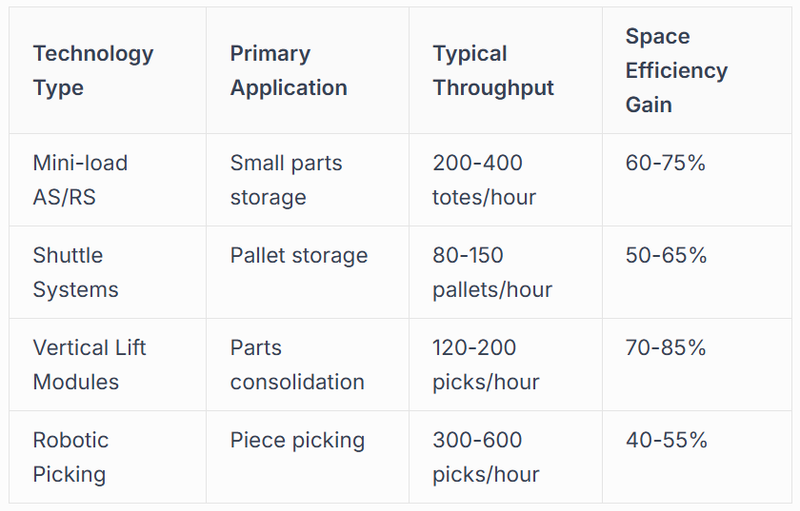
Modern dematic warehouse automation deploys an extensive portfolio of technologies tailored to specific operational requirements. Each technology addresses distinct challenges within the warehouse environment.
Automated Storage and Retrieval Systems
AS/RS technologies form the backbone of many dematic warehouse automation implementations. These systems maximize storage density while enabling rapid, accurate inventory access. Dematic's AS/RS solutions range from mini-load systems for small parts to pallet-handling configurations for bulk storage.
The efficiency gains stem from eliminating manual travel time, reducing picking errors, and optimizing cube utilization. Warehouses implementing these systems frequently achieve storage density improvements exceeding 60% compared to traditional racking arrangements.
Goods-to-Person Picking Systems
Dematic warehouse automation extensively utilizes goods-to-person methodologies that bring products to stationary operators rather than requiring workers to traverse warehouse aisles. This approach dramatically reduces unproductive walking time while improving picking accuracy.
These systems incorporate various technologies including automated shuttle systems, robotic retrieval mechanisms, and intelligent conveyor networks. The integration ensures that items arrive at picking stations in optimal sequence, supporting batch picking strategies and order consolidation processes. Similar approaches are being adopted across the industry, as seen in AGV warehouse automation implementations that focus on reducing manual handling.
Sortation and Distribution Technologies
High-speed sortation systems represent another critical component of dematic warehouse automation. These solutions process thousands of items hourly, routing products to designated destinations with exceptional accuracy.
Modern sortation technologies include cross-belt sorters, tilt-tray systems, and sliding shoe sorters, each optimized for specific item characteristics and throughput requirements. The selection depends on factors including item fragility, dimensional variability, and required sort destinations.
Software Intelligence Driving Automation
The physical automation infrastructure only delivers its full potential when coordinated by sophisticated software systems. Dematic's software solutions provide the intelligence that transforms mechanical systems into responsive, adaptive operations.
Warehouse Management Systems
Dematic's warehouse management technology forms the strategic decision-making engine within automated environments. These systems manage inventory allocation, optimize order fulfillment sequences, and coordinate labor resources alongside automated equipment.
The WMS determines which inventory locations to replenish, which picking strategies to employ, and how to batch orders for maximum efficiency. This intelligence ensures that automation investments deliver measurable operational improvements rather than simply mechanizing existing inefficient processes. For comprehensive integration strategies, exploring automated warehouse management system approaches provides additional perspective.
Recognition within the industry validates Dematic's software capabilities. The company was named a Niche Player in the 2025 Gartner Magic Quadrant for Warehouse Management Systems, reflecting its specialized strengths in automated environments.

The Command Center Revolution
Recent innovations in dematic warehouse automation include the introduction of centralized intelligence platforms. Dematic's Command Center represents a significant advancement in warehouse operational visibility.
This platform unifies data streams from warehouse management systems, warehouse control systems, and equipment monitoring tools into a single interface. The integration provides operations managers with comprehensive visibility across all warehouse functions, enabling proactive intervention before issues impact productivity.
Key capabilities include:
- Real-time performance dashboards aggregating metrics across systems
- AI-enhanced anomaly detection identifying operational deviations
- Predictive maintenance alerts reducing unplanned equipment downtime
- Resource optimization recommendations balancing labor and automation
- Historical trend analysis supporting strategic planning initiatives
The Command Center's intelligence framework demonstrates how operational insight powers end-to-end warehouse automation, transforming raw data into actionable intelligence.
Industry Applications and Case Studies
Dematic warehouse automation serves diverse industry sectors, each with specialized requirements and operational challenges. Understanding these applications illustrates the technology's versatility and adaptability.
Manufacturing and Automotive
Manufacturing operations leverage dematic warehouse automation to manage component inventories, support just-in-time production schedules, and coordinate finished goods distribution. The automation ensures precise inventory tracking essential for production continuity.
A notable implementation involved automating a small parts warehouse for Siemens, where the solution improved storage density and reduced picking errors. This case study demonstrates how automation addresses space constraints while enhancing accuracy in high-SKU-count environments.
E-commerce and Retail Fulfillment
E-commerce operations face unique challenges including order variability, peak season demands, and rapid delivery expectations. Dematic warehouse automation addresses these requirements through flexible systems supporting both high-volume batch processing and individual order fulfillment.
The systems accommodate multiple order profiles simultaneously, processing bulk replenishment shipments alongside single-unit consumer orders. This flexibility proves essential for businesses managing omnichannel distribution networks.
Food and Beverage Operations
Temperature-controlled environments present specialized automation challenges. Dematic warehouse automation solutions designed for cold-storage applications incorporate equipment rated for low-temperature operation and optimize layouts to minimize energy consumption.
These implementations often feature high-density storage maximizing insulated warehouse space while maintaining precise inventory rotation to manage product shelf life. The automation reduces human exposure to cold environments, improving worker safety and comfort.
Implementation Considerations and Best Practices
Successful dematic warehouse automation deployment requires careful planning and strategic consideration of numerous operational factors. These considerations significantly influence project outcomes and return on investment timelines.
Capacity Planning and Scalability
Automation investments must align with both current operational requirements and anticipated growth trajectories. Under-specifying capacity leads to premature system saturation, while over-building creates unnecessary capital expenditure.
Critical planning factors include:
- Peak throughput requirements including seasonal variations
- SKU proliferation rates and inventory complexity trends
- Order profile evolution and fulfillment time expectations
- Expansion capabilities within existing facility constraints
- Integration requirements with existing enterprise systems
For businesses exploring entry-level automation, the Automate-X Goods-to-Person Starter Grid offers a unique approach that helps small and medium operations begin their automation journey with manageable investment and scalable architecture.
System Integration Complexity
Dematic warehouse automation rarely operates in isolation. Integration with enterprise resource planning systems, transportation management platforms, and customer order systems determines how effectively automation investments deliver business value.
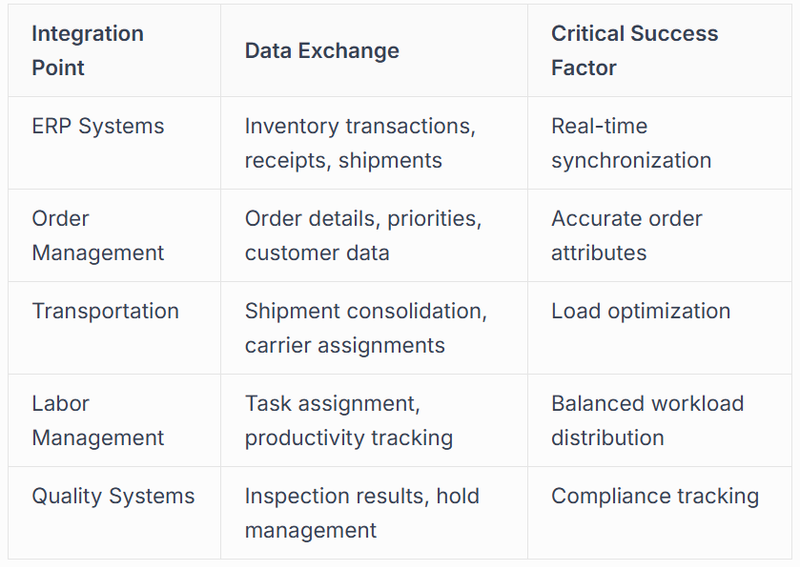
The integration architecture requires careful design to ensure data consistency, minimize latency, and maintain system reliability across all connected platforms.
Operational Insight and Performance Optimization
Implementing dematic warehouse automation represents just the beginning of the optimization journey. Continuous improvement methodologies extract maximum value from automation investments through systematic performance analysis.
Data-Driven Decision Making
Modern automation generates extensive operational data providing unprecedented visibility into warehouse performance. The challenge lies in transforming this data volume into actionable insights that drive measurable improvements.
At the upcoming LogiMAT 2026 exhibition, Dematic plans to demonstrate how operational insight powers end-to-end warehouse automation, emphasizing the critical role of analytics in modern operations.
Effective performance optimization focuses on several key metric categories:
- Throughput efficiency: Orders processed per hour, units picked per labor hour, shipments completed per shift
- Accuracy measurements: Picking accuracy rates, inventory accuracy percentages, shipping error frequencies
- Equipment utilization: System uptime percentages, throughput against capacity, maintenance frequency
- Space optimization: Inventory density ratios, cube utilization percentages, aisle efficiency metrics
- Labor productivity: Tasks completed per operator, travel time percentages, idle time analysis
Predictive Maintenance Strategies
Equipment reliability directly impacts warehouse automation effectiveness. Dematic warehouse automation incorporates predictive maintenance capabilities that monitor equipment health and forecast component failures before they cause operational disruptions.
These systems analyze vibration patterns, temperature variations, cycle counts, and performance degradation indicators. Maintenance teams receive alerts enabling proactive component replacement during planned downtime rather than responding to unexpected failures during peak operational periods.
The transition from reactive to predictive maintenance typically reduces unplanned downtime by 40-60% while extending equipment service life through optimal maintenance timing.
Technology Trends Shaping Future Automation
The warehouse automation landscape continues evolving rapidly as emerging technologies create new operational possibilities. Understanding these trends helps businesses plan automation investments with appropriate future-proofing considerations.
Artificial Intelligence and Machine Learning
AI integration within dematic warehouse automation extends beyond basic optimization algorithms. Advanced machine learning models now predict demand patterns, optimize inventory placement dynamically, and automate decision-making previously requiring human intervention.
These capabilities include demand forecasting that adjusts storage strategies, visual recognition systems supporting quality control, and autonomous navigation enabling flexible robotic systems. The AI layer continuously learns from operational patterns, progressively improving performance without manual reprogramming.
Robotics Evolution
Robotic technologies continue advancing in capability, flexibility, and cost-effectiveness. Modern warehouse robots handle increasingly diverse tasks including piece picking, palletizing, and inventory counting.
Collaborative robots work safely alongside human operators, combining automation efficiency with human adaptability. This collaboration proves particularly valuable in operations requiring variable item handling or managing SKU diversity exceeding current fully-automated capabilities. Technologies like robotic truck loading and unloading demonstrate expanding applications for autonomous systems.
Cloud-Based Architecture
The migration toward cloud-native software platforms represents a significant shift in dematic warehouse automation deployment models. Cloud architecture offers advantages including reduced infrastructure investment, simplified software updates, and enhanced scalability.
These platforms enable centralized management of multi-site operations, facilitate data analytics across warehouse networks, and support integration with cloud-based enterprise systems. The subscription-based pricing models also transform automation from capital expenditure to operational expense, improving financial flexibility.
Strategic Value Beyond Operational Efficiency
While throughput improvements and labor optimization deliver measurable ROI, dematic warehouse automation provides strategic advantages extending beyond immediate operational metrics.
Supply Chain Resilience
Automated warehouses demonstrate superior adaptability during disruptions. The systems quickly reconfigure to accommodate changing priorities, reallocate resources to address bottlenecks, and maintain operations despite labor availability challenges.
This resilience proved particularly valuable during recent global supply chain disruptions, where automated facilities maintained higher service levels compared to manual operations facing workforce constraints.
Competitive Differentiation
Automation capabilities increasingly influence customer selection criteria, particularly in third-party logistics relationships. The ability to offer rapid fulfillment, exceptional accuracy, and real-time inventory visibility creates competitive advantages in crowded market segments.
Organizations leveraging advanced automation technologies position themselves as preferred partners for demanding customers expecting sophisticated supply chain capabilities.
Sustainability Impact
Modern dematic warehouse automation contributes to environmental sustainability objectives through multiple mechanisms. High-density storage reduces facility footprints, optimized routing minimizes energy consumption, and precise inventory management reduces waste from product obsolescence.
These environmental benefits align with growing corporate sustainability commitments while often delivering cost reductions through resource efficiency. The dual benefit makes automation investments increasingly attractive from both financial and environmental perspectives.
Selecting the Right Automation Partner
The complexity of warehouse automation projects demands experienced implementation partners capable of delivering integrated solutions. Several factors distinguish successful automation partnerships from problematic implementations.
Critical selection criteria include:
- Proven industry experience: Track record in similar operational environments and industry sectors
- Technology breadth: Comprehensive solution portfolio avoiding single-technology limitations
- Software capabilities: Robust warehouse management and control systems
- Service network: Local support presence ensuring responsive maintenance and optimization
- Integration expertise: Demonstrated capability connecting automation with existing enterprise systems
- Scalability planning: Solutions designed to accommodate operational growth and evolution
Understanding Dematic's comprehensive approach to intralogistics provides valuable context for evaluating automation providers and their methodologies.
The partnership extends well beyond initial installation, encompassing ongoing optimization, system expansions, and technology upgrades as operational requirements evolve and new capabilities emerge.
Dematic warehouse automation demonstrates how integrated technology platforms transform traditional distribution operations into intelligent, adaptive environments delivering measurable competitive advantages. The combination of sophisticated material handling equipment, advanced software intelligence, and comprehensive data analytics creates warehouse operations capable of meeting demanding modern supply chain requirements. Automate-X brings similar expertise to businesses across Australia and New Zealand, combining modern robotics, warehouse software, and system integration to help logistics, e-commerce, manufacturing, and cold-storage operations achieve streamlined workflows, improved productivity, and scalable growth.