


Logistics Automation Solutions for Modern Warehouses
Share on
The global logistics landscape has undergone a profound transformation in recent years, with businesses across distribution, fulfillment, and supply chain sectors embracing automation to meet escalating customer demands. Modern logistics automation solutions represent far more than simple mechanisation-they integrate robotics, intelligent software platforms, and sophisticated system architectures to create cohesive operational ecosystems. As e-commerce growth continues to accelerate and labour challenges persist, organisations are discovering that strategic automation investments deliver measurable improvements in accuracy, throughput, and scalability. Understanding the components, implementation strategies, and real-world applications of logistics automation has become essential for businesses aiming to maintain competitive advantage in 2026.
Understanding the Core Components of Modern Automation Systems
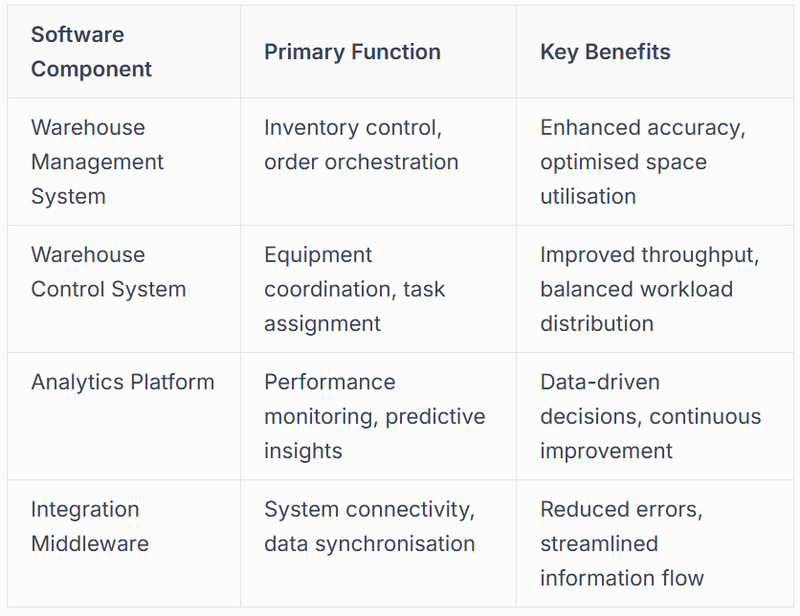
Logistics automation solutions comprise several interconnected technologies working in harmony to eliminate manual processes and optimise material flow. The foundation typically includes warehouse management systems (WMS) that orchestrate inventory visibility, order processing, and resource allocation across the facility.
Robotics and Material Handling Technologies
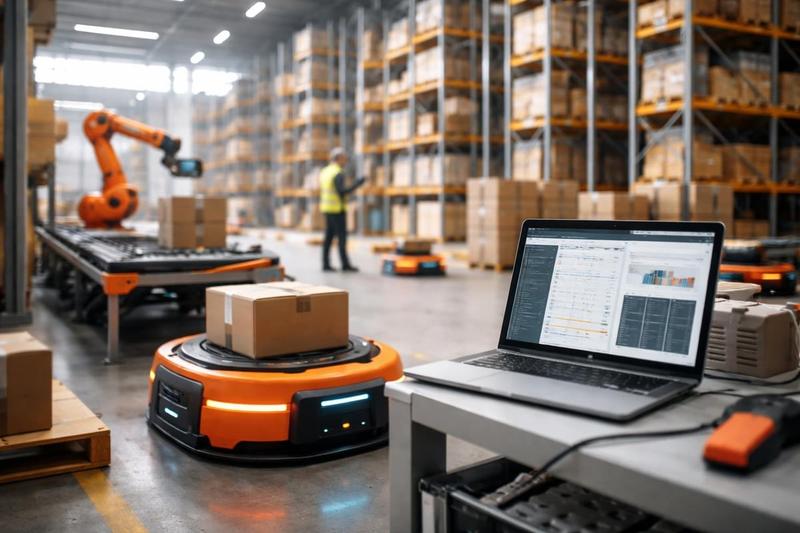
Automated storage and retrieval systems form the backbone of many advanced warehouse operations. These systems utilise robotic shuttles, cranes, or autonomous mobile robots to transport goods between storage locations and picking stations with minimal human intervention. Goods-to-person technologies have gained particular prominence, reducing picker travel time by bringing inventory directly to ergonomic workstations.
Different operational requirements demand different robotic solutions:
- Autonomous mobile robots (AMRs) navigate dynamically through facilities, adapting to changing layouts and obstacles
- Automated guided vehicles (AGVs) follow predetermined paths using magnetic strips or wire guidance systems
- Robotic picking systems employ vision systems and artificial intelligence to identify and grasp individual items
- Automated sortation systems direct parcels to appropriate destinations based on destination, priority, or customer specifications
The selection between these technologies depends on facility layout, product characteristics, throughput requirements, and budget constraints. Many operations benefit from hybrid approaches that combine multiple automation technologies to address varied operational zones.
Software Intelligence and Data Integration
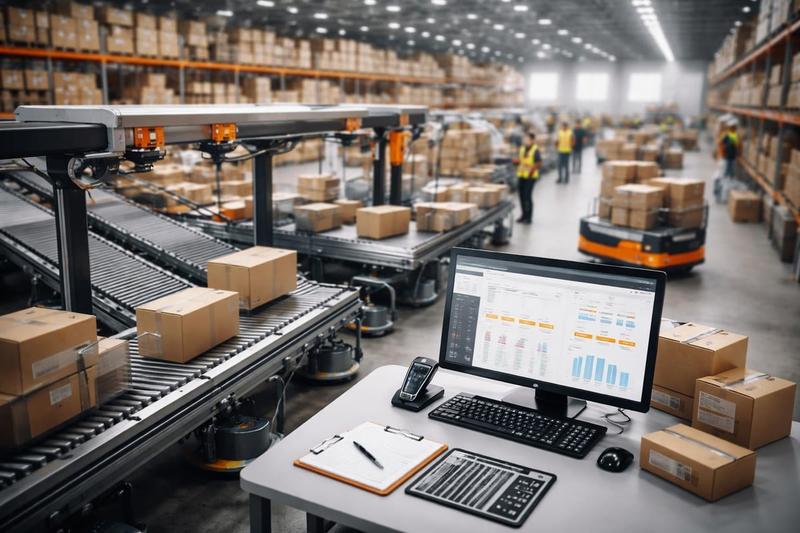
Beyond physical automation, software platforms provide the intelligence that coordinates complex warehouse activities. Modern logistics automation solutions rely on sophisticated algorithms to optimise picking sequences, allocate inventory across storage zones, and predict demand patterns. These systems integrate with enterprise resource planning (ERP) platforms, transportation management systems (TMS), and order management platforms to maintain data consistency across the supply chain.
Data automation capabilities ensure information flows seamlessly between systems, eliminating manual data entry and reducing errors that compromise operational efficiency. Real-time visibility into inventory positions, order status, and resource utilisation enables proactive decision-making rather than reactive problem-solving.
Strategic Benefits Driving Automation Adoption
Organisations implementing logistics automation solutions report substantial improvements across multiple performance dimensions. These benefits extend beyond simple cost reduction to encompass strategic capabilities that reshape competitive positioning.
Operational Efficiency and Productivity Gains
Automation eliminates the variability inherent in manual processes, delivering consistent performance regardless of shift, season, or workload volume. Automated systems operate continuously without fatigue, enabling facilities to maintain high throughput during peak periods without proportional increases in labour costs.
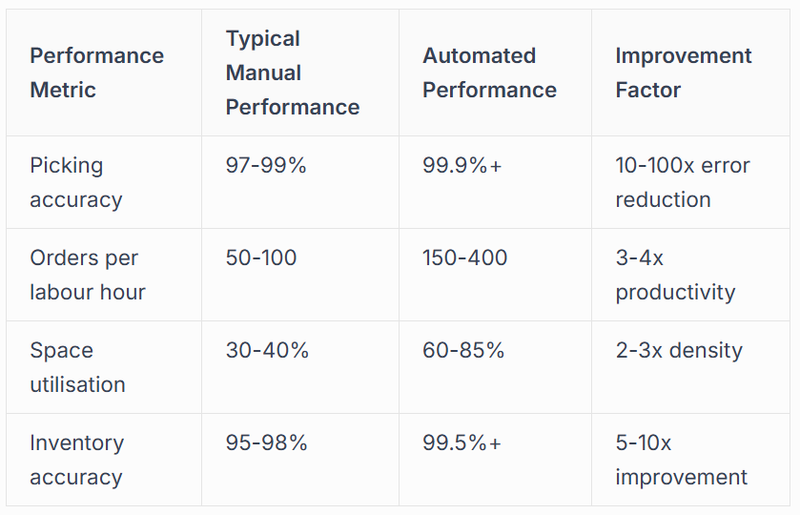
Picking accuracy represents one of the most significant improvements, with automated solutions routinely achieving error rates below 0.1% compared to 1-3% for manual operations. This precision reduces costly returns, improves customer satisfaction, and minimises the labour required for quality control and exception handling.
Space utilisation improves dramatically when ASRS systems replace traditional shelving. Dense storage configurations maximise vertical space and eliminate wide aisles required for manual picking, potentially doubling or tripling storage capacity within existing facilities.
Scalability and Flexibility Advantages
Modern logistics automation solutions offer modular architectures that grow alongside business requirements. Rather than requiring complete facility redesigns, businesses can implement automation incrementally-starting with high-volume processes and expanding to additional areas as ROI materialises.
This scalability proves particularly valuable for businesses experiencing seasonal demand fluctuations or rapid growth trajectories. Automated systems accommodate volume increases without the delays, costs, and uncertainties associated with workforce expansion.
Key scalability features include:
- Modular grid systems that expand through additional storage or picking modules
- Software-defined workflows that adapt to changing operational requirements
- Cloud-based platforms that scale computing resources based on transaction volumes
- Robotic fleets that grow incrementally without infrastructure modifications
Industry-Specific Applications and Considerations
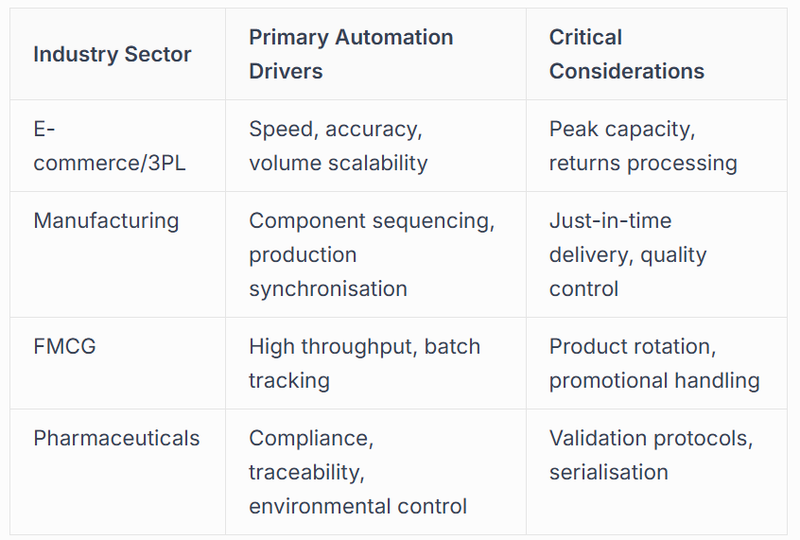
Different sectors face unique operational challenges that influence automation strategy and technology selection. Understanding these nuances ensures logistics automation solutions address specific requirements rather than applying generic approaches.
E-commerce and Third-Party Logistics
E-commerce fulfillment demands exceptional speed and accuracy across vast product assortments. Single-unit picking predominates, with customers expecting same-day or next-day delivery across diverse geographic regions. Logistics automation solutions for this sector emphasise high-speed sortation, efficient order consolidation, and seamless integration with carrier systems.
Third-party logistics providers face additional complexity managing multiple client requirements, inventory ownership structures, and billing arrangements within shared facilities. Flexible automation architectures that support client-specific workflows and transparent cost allocation become essential considerations.
Pharmaceutical and Cold Storage Operations
Regulated industries require automation solutions that maintain compliance with stringent quality and traceability requirements. Pharmaceutical automation must accommodate lot tracking, expiration date management, and temperature-controlled environments whilst maintaining audit trails that satisfy regulatory inspections.
Cold storage facilities present unique challenges including harsh operating environments, energy efficiency considerations, and safety concerns for human workers. Automation reduces personnel exposure to extreme temperatures whilst improving inventory rotation to minimise product spoilage.
Food and Beverage Distribution
Food distribution combines high-volume throughput with strict quality requirements. First-in-first-out (FIFO) inventory management prevents spoilage whilst ensuring product freshness. Automated solutions track batch numbers, production dates, and temperature exposure throughout the storage and fulfillment cycle.
Many food distributors operate multi-temperature facilities requiring coordination across ambient, chilled, and frozen zones. Logistics automation solutions must optimise picking sequences to minimise temperature excursions whilst maintaining efficient order assembly.
Implementation Strategies for Successful Automation Projects
Successful automation initiatives require careful planning, realistic expectations, and structured approaches to change management. Organisations that treat automation as a technology project rather than a business transformation often struggle to realise anticipated benefits.
Assessment and Requirements Definition
Comprehensive operational assessments identify processes delivering maximum automation value. Data analysis reveals throughput patterns, SKU velocity distributions, order profiles, and bottlenecks constraining current performance. This evidence-based approach ensures automation investments target genuine operational constraints rather than perceived problems.
Requirements definition must extend beyond current operational volumes to accommodate anticipated growth and potential business model changes. Building flexibility into automation specifications prevents premature obsolescence as market conditions evolve.
For businesses beginning their automation journey, starting with proven, scalable solutions minimises risk whilst delivering measurable improvements. The Automate-X GTP Starter Grid provides an accessible entry point for small and medium enterprises in Australia and New Zealand, offering goods-to-person technology at manageable cost levels that demonstrate automation value before major capital commitments.
System Integration and Testing
Integration complexity often exceeds initial estimates, particularly when connecting automation equipment with legacy enterprise systems. Establishing clear data protocols, testing scenarios, and rollback procedures mitigates implementation risks.
Comprehensive testing protocols should include:
- Functional validation confirming equipment performs specified operations
- Integration testing verifying data flows correctly between systems
- Performance testing demonstrating throughput targets under realistic conditions
- Exception handling ensuring graceful degradation when errors occur
- User acceptance testing validating workflow usability for operational personnel
Parallel operations during transition periods allow organisations to validate automation performance whilst maintaining operational continuity. Gradual cutover approaches reduce disruption compared to immediate full-scale deployment.
Emerging Technologies Shaping Future Capabilities
The logistics automation landscape continues evolving as emerging technologies mature and integration capabilities advance. Forward-thinking organisations monitor these developments to identify opportunities for competitive differentiation.
Artificial Intelligence and Machine Learning
AI applications in logistics automation solutions extend beyond simple task automation to encompass predictive capabilities and adaptive optimisation. Machine learning algorithms analyse historical patterns to forecast demand, optimise inventory positioning, and predict equipment maintenance requirements before failures occur.
Computer vision enables robotic systems to identify products without barcode scanning, handle irregularly shaped items, and detect quality defects during fulfillment processes. Natural language processing facilitates voice-directed workflows and conversational interfaces for warehouse personnel.
Recent developments in AI-driven logistics platforms demonstrate how artificial intelligence streamlines documentation, compliance verification, and cross-border logistics coordination.
Internet of Things and Real-Time Visibility
IoT sensors embedded throughout warehouse environments provide granular visibility into asset locations, environmental conditions, and equipment performance. This real-time data enables proactive interventions, precise inventory tracking, and evidence-based process optimisation.
Connected devices facilitate:
- Asset tracking monitoring equipment utilisation and identifying underutilised resources
- Environmental monitoring ensuring temperature-sensitive products remain within specification
- Predictive maintenance scheduling interventions based on actual equipment condition rather than fixed intervals
- Worker safety detecting hazardous conditions and alerting personnel to potential dangers
Measuring Return on Investment and Performance
Quantifying automation benefits requires establishing clear metrics, baseline measurements, and attribution methodologies. Comprehensive performance frameworks track financial returns alongside operational improvements and strategic capabilities.
Financial Metrics and Cost Analysis
Direct cost comparisons between automated and manual operations provide straightforward ROI calculations. Labour cost reductions, error elimination, and space optimisation typically drive financial justification. However, these immediate savings represent only partial benefits.
Broader financial impacts include:
- Revenue protection through improved order accuracy and customer satisfaction
- Growth enablement by removing capacity constraints that limit sales
- Risk mitigation reducing dependence on tight labour markets
- Asset optimisation improving inventory turns and reducing working capital requirements
Payback periods for logistics automation solutions typically range from two to five years depending on operational scale, technology sophistication, and labour market conditions. Modular implementations allow organisations to realise returns on initial phases whilst planning subsequent expansions.
Operational Performance Indicators
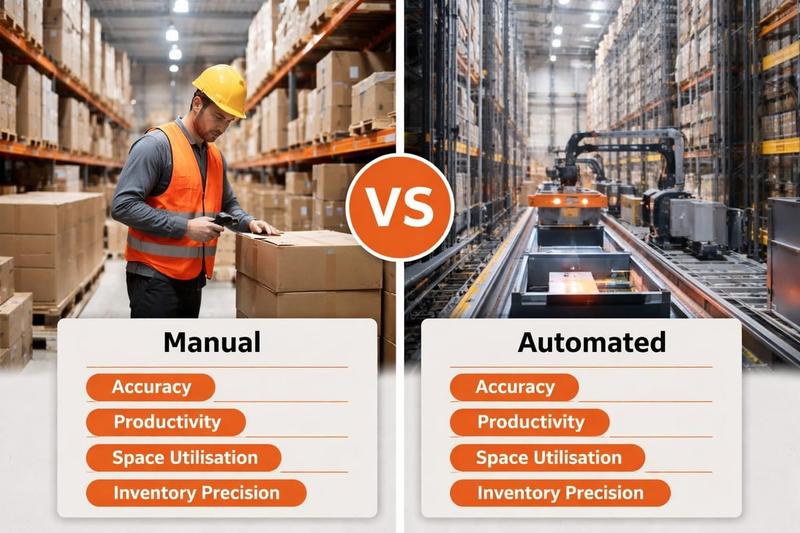
Beyond financial metrics, operational KPIs demonstrate automation's impact on daily performance. Order accuracy, fulfillment cycle time, inventory accuracy, and throughput per labour hour provide tangible evidence of capability improvements.
Addressing Common Implementation Challenges
Despite compelling benefits, automation projects encounter obstacles that require proactive management. Understanding common challenges and proven mitigation strategies improves implementation success rates.
Change Management and Workforce Adaptation
Employee concerns about job security and role changes can undermine automation initiatives. Transparent communication emphasising how automation eliminates repetitive, physically demanding tasks whilst creating opportunities for skilled positions helps build workforce support.
Comprehensive training programmes prepare personnel for new responsibilities operating and maintaining automated systems. Organisations that invest in workforce development typically achieve faster adoption and superior long-term performance compared to those treating automation purely as technology deployment.
Technical Integration Complexity
Legacy systems, proprietary data formats, and limited API capabilities complicate integration efforts. Middleware platforms and integration specialists bridge these gaps, though projects should budget adequate time and resources for connectivity challenges.
Engaging automation providers with proven track records across diverse technology environments reduces integration risks. Reference visits to similar operations provide realistic perspectives on implementation requirements and potential complications.
Partner Selection and Vendor Evaluation
Choosing appropriate automation partners significantly influences project outcomes. Evaluation criteria should extend beyond equipment capabilities to encompass implementation expertise, long-term support capabilities, and cultural alignment.
Critical Evaluation Factors
Comprehensive vendor assessments consider multiple dimensions:
- Industry experience with similar operational profiles and scale
- Technology roadmap ensuring continued innovation and product evolution
- Local support presence providing responsive maintenance and troubleshooting
- Reference customers offering unfiltered implementation insights
- Financial stability ensuring long-term parts availability and support continuity
- Integration capabilities demonstrating compatibility with existing systems
The importance of address validation and data accuracy within logistics automation solutions highlights how seemingly minor technical capabilities significantly impact operational performance.
Partnership Models and Service Agreements
Automation relationships extend well beyond initial equipment purchase. Service level agreements defining response times, parts availability, and system uptime guarantees protect operational continuity. Some organisations prefer comprehensive managed service arrangements where providers assume ongoing operational responsibility.
Modular upgrade paths and technology refresh programmes ensure facilities maintain competitive capabilities as automation technologies evolve. Partnerships structured around continuous improvement rather than one-time implementations deliver superior long-term value.
Logistics automation solutions have evolved from niche applications in high-volume facilities to essential capabilities for businesses across the supply chain spectrum. The convergence of mature robotics, intelligent software platforms, and proven implementation methodologies makes automation accessible and financially viable for operations of varied scales. Automate-X combines modern robotics, warehouse software, and system integration expertise to help logistics, 3PL, e-commerce, manufacturing, and distribution businesses streamline operations, improve productivity, and build scalable warehouse capabilities. Contact our team to explore how intelligent automation solutions can transform your warehouse performance and position your operation for sustainable growth.