

Swisslog AutoStore: Leading Warehouse Automation Solutions
Share on
Modern warehouses face unprecedented pressure to deliver faster, more accurately, and with greater efficiency than ever before. As e-commerce continues to reshape consumer expectations and supply chains grow increasingly complex, businesses require automation solutions that can scale, adapt, and deliver measurable returns. The swisslog autostore partnership represents one of the most successful collaborations in warehouse automation, combining AutoStore's innovative cube storage technology with Swisslog's deep expertise in system integration and warehouse optimization. This powerful combination has transformed operations across industries, from pharmaceutical distribution to e-commerce fulfillment, delivering exceptional space utilization and throughput improvements.
Understanding the Swisslog AutoStore Partnership
The collaboration between Swisslog and AutoStore has created a distinctive position in the warehouse automation market. AutoStore's grid-based storage system provides the technological foundation, while Swisslog brings decades of integration experience, sophisticated software control, and comprehensive service capabilities.
Swisslog operates as a premier AutoStore integrator, having completed hundreds of installations worldwide. The company's approach extends beyond simply installing hardware. Their data-driven and robotic solutions encompass site analysis, system design, software integration, project management, and ongoing support throughout the system lifecycle.
The Technology Behind AutoStore
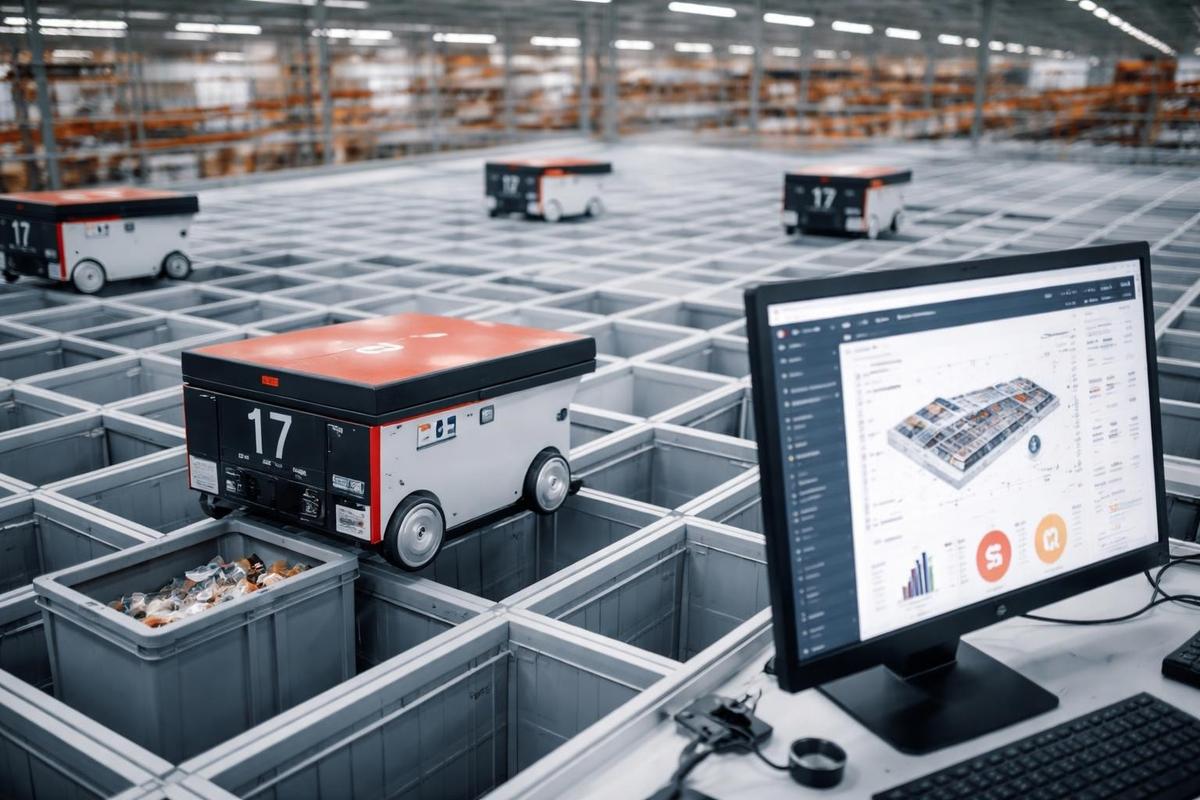
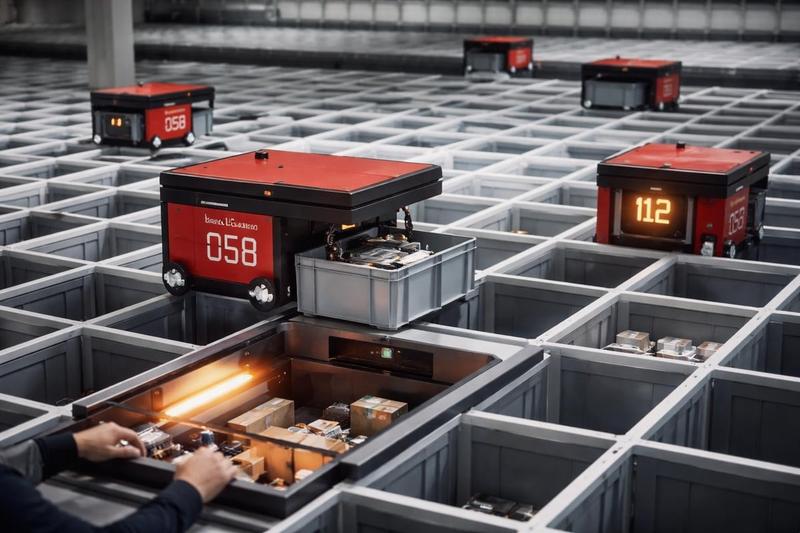
At its core, the AutoStore system employs a cubic storage grid where robots travel across the top, retrieving bins from below and delivering them to workstations. This seemingly simple concept delivers remarkable results:
- Space efficiency: Systems achieve up to 4 times the storage density of conventional racking
- Scalability: Grids expand incrementally without disrupting operations
- Reliability: Redundant robot fleets ensure continuous operation even during maintenance
- Energy efficiency: Electric robots consume minimal power compared to traditional material handling equipment
- Flexibility: Bins accommodate diverse product types and sizes
The swisslog autostore implementation typically includes multiple components working in concert. The aluminum grid structure houses storage bins, while autonomous robots navigate the grid surface. Ports positioned around the grid perimeter serve as interfaces where robots deliver bins to human operators or automated picking solutions.
SynQ Software: The Intelligence Layer
Swisslog's proprietary SynQ warehouse management software distinguishes their swisslog autostore installations from competitors. This sophisticated control system orchestrates every aspect of warehouse operations, from inventory management to order fulfillment optimization.
SynQ provides real-time visibility across the entire operation. Warehouse managers access comprehensive dashboards showing system performance, order status, inventory levels, and productivity metrics. The software employs advanced algorithms to optimize bin placement within the grid, positioning frequently accessed items near the surface for faster retrieval.
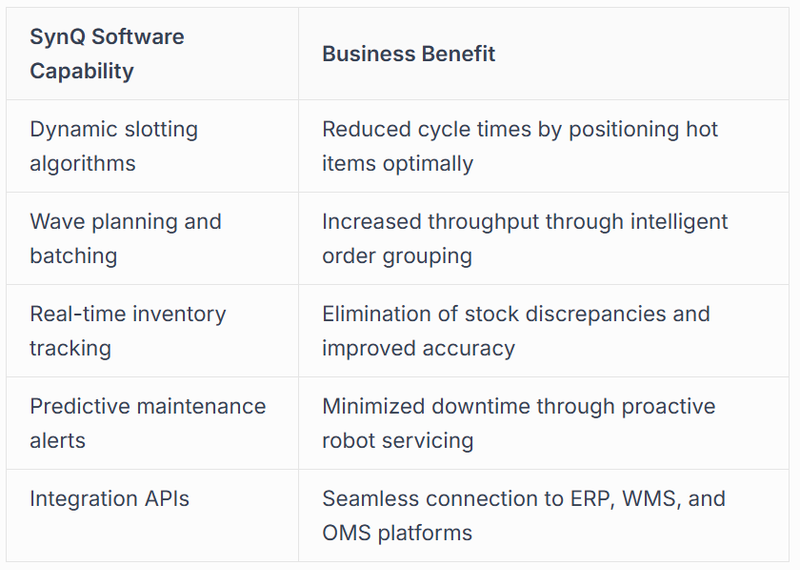
The software continuously learns from operational patterns, adjusting bin positions and robot assignments to maximize efficiency. This intelligent orchestration enables Swisslog's AutoStore systems to achieve industry-leading throughput rates while maintaining exceptional accuracy.
Industry Applications and Use Cases
The versatility of swisslog autostore solutions enables deployment across remarkably diverse industries. Each sector benefits from the core technology while requiring specialized configurations and integration approaches.
Pharmaceutical and Healthcare Distribution
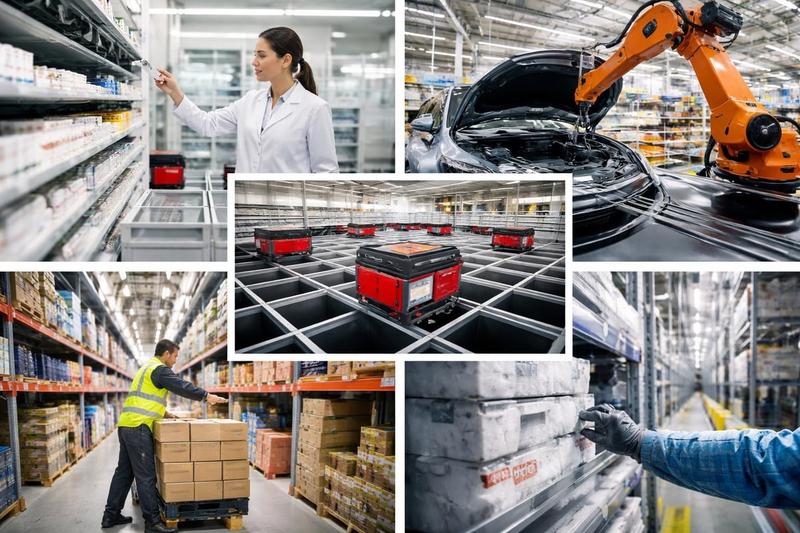
Pharmaceutical operations demand absolute accuracy, traceability, and security. The enclosed grid structure provides climate-controlled storage for temperature-sensitive medications, while the system's precision delivery eliminates picking errors that could have serious consequences.
Medline's Aurora facility showcases how swisslog autostore enhances healthcare distribution. The installation processes thousands of orders daily with near-perfect accuracy, crucial when medical supplies must reach hospitals and care facilities reliably.
Automotive Parts Distribution
Automotive aftermarket operations handle vast SKU counts with unpredictable demand patterns. The swisslog autostore system excels in these environments by providing dense storage for slow-moving parts while ensuring rapid access to high-velocity items.
Komatsu's Tennessee distribution center implemented AutoStore to streamline parts distribution across their dealer network. The system handles complex orders combining fast and slow-moving components, significantly reducing fulfillment time while improving accuracy.
E-commerce and Retail Fulfillment
Online retailers face extreme volume fluctuations, especially during peak seasons. The modular nature of swisslog autostore allows businesses to scale capacity precisely, adding robots and grid extensions as demand grows.
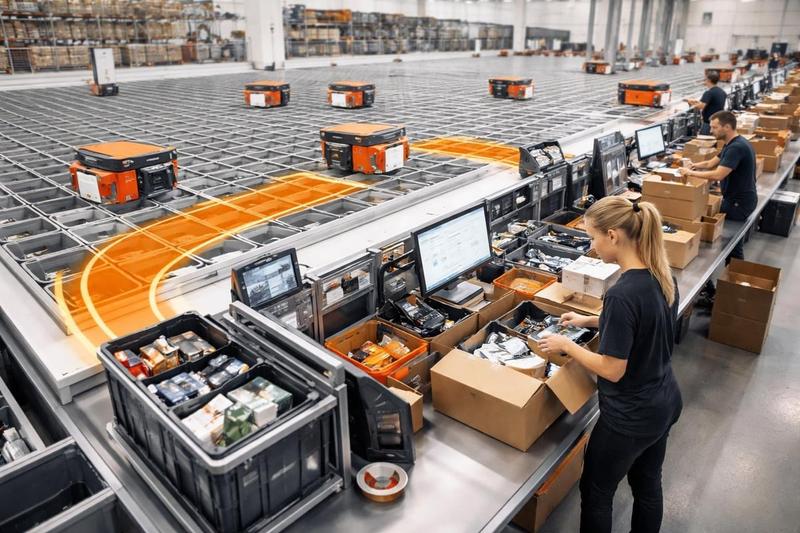
The retail sector benefits particularly from Swisslog's e-commerce automation solutions, which integrate AutoStore with picking stations, packing automation, and shipping sorters for end-to-end fulfillment.
Manufacturing and Industrial Supply
Manufacturers deploying swisslog autostore gain efficient storage for production components, maintenance supplies, and finished goods. Sumitomo Drive Technologies invested significantly in AutoStore technology to automate their warehouse operations, demonstrating the system's value in industrial environments.
The integration capabilities prove essential in manufacturing contexts, where warehouse systems must communicate seamlessly with production scheduling, quality management, and manufacturing automation systems to maintain efficient operations.
Performance Metrics and Operational Benefits
Organizations implementing swisslog autostore consistently report substantial improvements across multiple performance dimensions. Understanding these benefits helps businesses evaluate the technology's potential impact on their operations.
Space Optimization
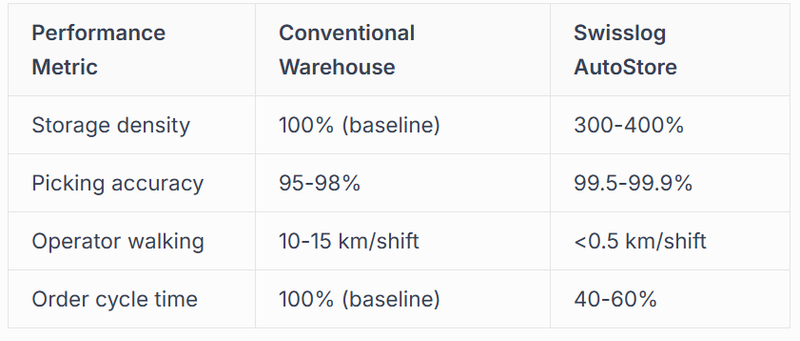
Traditional warehouse layouts waste considerable space on aisles, infrastructure, and inefficient stacking. The cubic grid eliminates aisles entirely, storing bins in a continuous three-dimensional matrix.
A typical swisslog autostore installation occupies 25-30% of the footprint required for conventional racking while storing equivalent inventory. This density advantage delivers multiple benefits:
- Reduced real estate costs through smaller facility requirements
- Improved climate control efficiency in smaller enclosed volumes
- Flexibility to repurpose freed space for value-added activities
- Delayed facility expansion as businesses grow within existing footprints
Throughput and Productivity
Asda's distribution center case study demonstrated how swisslog autostore doubled picking rates while achieving 99.8% accuracy. These improvements stem from eliminating operator travel time and optimizing task sequencing.
Operators remain stationary at ergonomic workstations while robots deliver required items. This goods-to-person approach fundamentally transforms warehouse labor productivity compared to traditional pick-to-cart or zone picking methodologies.
Workforce Considerations
Automation naturally raises workforce questions. The swisslog autostore model typically maintains or increases employment while dramatically improving working conditions. Operators transition from physically demanding picking roles to ergonomic workstation positions requiring different skills.
The system creates new technical positions for robot maintenance, system monitoring, and process optimization. Many organizations report improved employee retention as repetitive strain injuries decline and jobs become more engaging.
Implementation and Integration Considerations
Successful swisslog autostore deployment requires careful planning, realistic timeline expectations, and comprehensive change management. The implementation journey typically spans 12-18 months from initial concept to full operational capacity.
Assessment and Design Phase
Swisslog begins engagements with thorough operational analysis. Engineers study SKU profiles, order patterns, throughput requirements, and growth projections. This data informs grid sizing, robot quantities, port configurations, and integration requirements.
The design phase addresses critical questions:
- How many bins and grid levels optimize storage for the product mix?
- What robot fleet size achieves target throughput during peak periods?
- Which port types (carousel, conveyor, manual) best suit order profiles?
- How will the system integrate with existing WMS, ERP, and transportation systems?
Installation and Commissioning
Grid installation proceeds systematically, often in phases allowing partial operation while expansion continues. Swisslog's project management methodology minimizes disruption, frequently enabling parallel operation of legacy systems during transition periods.
Commissioning involves extensive testing of mechanical systems, software integration, and operator training. The SynQ software undergoes configuration and tuning to match specific operational requirements, with algorithms adjusted based on actual order patterns.
Staff Training and Change Management
Operators require training on new workstation interfaces, quality procedures, and exception handling. Maintenance teams learn robot servicing, grid inspection, and preventive maintenance protocols.
Successful implementations invest heavily in change management, helping teams understand how automation enhances rather than replaces their contributions. Clear communication about role evolution and skill development reduces resistance and accelerates adoption.
Global Adoption and Market Leadership
The swisslog autostore partnership has achieved remarkable market penetration, with over 300 completed projects demonstrating the technology's proven reliability and versatility. This extensive installation base spans every continent and virtually every warehouse-intensive industry.
Swisslog's experience across diverse applications creates significant knowledge advantages. Implementation teams apply lessons learned from hundreds of previous projects, avoiding common pitfalls and accelerating time-to-value for new deployments.
The company maintains comprehensive case study documentation showcasing over 2,500 implemented projects worldwide. These real-world examples provide valuable insights into system capabilities, implementation approaches, and achievable results across different operational contexts.
Cost-Benefit Analysis and ROI
Investment in swisslog autostore technology represents substantial capital commitment, requiring rigorous financial justification. Organizations typically evaluate return on investment across multiple dimensions beyond simple payback calculations.
Direct Cost Savings
Quantifiable savings emerge from several sources:
- Labor cost reduction through improved productivity and reduced headcount requirements
- Real estate savings from smaller facility footprints or delayed expansion
- Inventory accuracy improvements reducing shrinkage and obsolescence
- Error reduction eliminating costly mis-ships and returns
- Energy efficiency compared to traditional material handling equipment
Strategic Value Creation
Beyond direct savings, swisslog autostore enables strategic capabilities that drive competitive advantage:
Scalability: Incremental capacity additions match business growth without major disruption or redundant investment. Businesses add robots and grid sections as throughput requirements increase, maintaining capital efficiency throughout expansion.
Flexibility: The system accommodates dramatic product mix changes without reconfiguration. Seasonal businesses shift inventory profiles seamlessly, while companies entering new markets adapt quickly to different SKU characteristics.
Service Level Enhancement: Faster, more accurate fulfillment improves customer satisfaction and enables competitive service commitments. E-commerce businesses offer same-day delivery, while B2B distributors guarantee order accuracy that builds customer loyalty.
Integration with Emerging Technologies
The swisslog autostore platform continues evolving through integration with complementary technologies. Swisslog actively incorporates artificial intelligence, machine learning, and advanced analytics to enhance system intelligence and performance.
AI implementation in warehouses extends beyond basic automation to predictive capabilities. Machine learning algorithms analyze historical patterns to forecast demand, optimize inventory positioning, and prevent potential bottlenecks before they impact operations.
Computer vision systems enhance quality control at picking stations, verifying items against order requirements and detecting packaging damage. These AI-powered verification layers add additional accuracy safeguards while maintaining high throughput rates.
The platform's open architecture facilitates integration with robotics innovations as they emerge. Collaborative picking robots, autonomous mobile robots for goods transport, and automated packaging systems connect seamlessly to create comprehensive fulfillment ecosystems.
Considerations for Australian and New Zealand Markets
Regional considerations influence swisslog autostore implementation in Australia and New Zealand markets. Distance from manufacturing centers, skilled labor availability, and local regulatory requirements all impact deployment strategies.
Local businesses benefit from understanding successful regional implementations, such as DHL's automated warehouse opening in Auckland, which demonstrates automation's growing importance in the region.
Businesses in Australia and New Zealand often face unique challenges including:
- Geographic isolation requiring higher inventory holdings
- Smaller market sizes necessitating flexible, scalable solutions
- Specialized requirements for cold storage and temperature-controlled environments
- Labour market constraints driving automation adoption
For small to medium enterprises exploring warehouse automation, entry-level solutions provide accessible starting points. The Automate-X GTP Starter Grid offers businesses in Australia and New Zealand an approachable pathway to begin their automation journey with goods-to-person technology, helping operations experience the productivity benefits of automated picking before committing to full-scale implementations.
Future Developments and Innovation Roadmap
The swisslog autostore ecosystem continues advancing through both incremental improvements and breakthrough innovations. Swisslog's research and development efforts focus on several key areas that will shape the technology's evolution.
Enhanced robot capabilities represent one innovation frontier. Next-generation robots featuring improved speed, extended battery life, and advanced navigation algorithms will further boost system throughput. Development efforts also explore specialized robots for specific tasks like heavy bin handling or integrated picking operations.
Software intelligence continues advancing through deeper AI integration. Predictive algorithms will anticipate demand shifts, automatically adjusting inventory positioning hours before order patterns change. Autonomous optimization will reduce manual tuning requirements, allowing systems to self-configure for peak efficiency.
Sustainability initiatives drive innovation in energy management, materials selection, and circular economy principles. Future swisslog autostore systems will incorporate renewable energy sources, recyclable components, and sophisticated power management that minimizes environmental impact while reducing operating costs.
Maintenance and Long-Term Support
Successful swisslog autostore operation extends decades beyond initial installation. Comprehensive maintenance programs ensure sustained performance, minimize downtime, and protect investment value throughout the system lifecycle.
Preventive maintenance schedules address routine robot servicing, grid inspection, and component replacement before failures occur. Swisslog's service teams employ predictive maintenance approaches, monitoring system telemetry to identify emerging issues and schedule interventions during planned downtime windows.
Remote monitoring capabilities enable proactive support. Swisslog's service centers continuously analyze system performance data, detecting anomalies that might indicate developing problems. This remote oversight allows rapid response when issues arise, often resolving problems before operators notice any impact.
Parts availability and technical support infrastructure prove critical for long-term success. Swisslog maintains comprehensive spare parts inventories and trained service technicians across regions, ensuring rapid response when maintenance needs arise.
Upgrade Pathways and Modernization
Technology evolution creates opportunities to enhance existing installations through retrofits and upgrades. Software updates deliver new functionality without hardware changes, while mechanical enhancements boost capacity or capabilities as requirements grow.
Organizations with older swisslog autostore installations can incrementally modernize systems, incorporating new robot models, advanced picking technologies, or expanded grid sections. This modular upgrade approach protects initial investment while ensuring operations benefit from latest innovations.
The swisslog autostore partnership exemplifies how specialized technology combined with deep integration expertise delivers transformative warehouse automation results. Understanding system capabilities, implementation requirements, and operational benefits enables informed decisions about automation investments that will shape logistics operations for decades.
At Automate-X, we specialise in delivering intelligent warehouse automation solutions that combine modern robotics, warehouse software, and system integration to streamline operations and enable scalable growth. Whether you're exploring your first automation project or expanding existing capabilities, our team brings the expertise to design, implement, and support solutions tailored to your specific operational requirements across distribution, fulfillment, and logistics environments.