

Automated Picking Systems: A Complete Guide for 2026
Share on
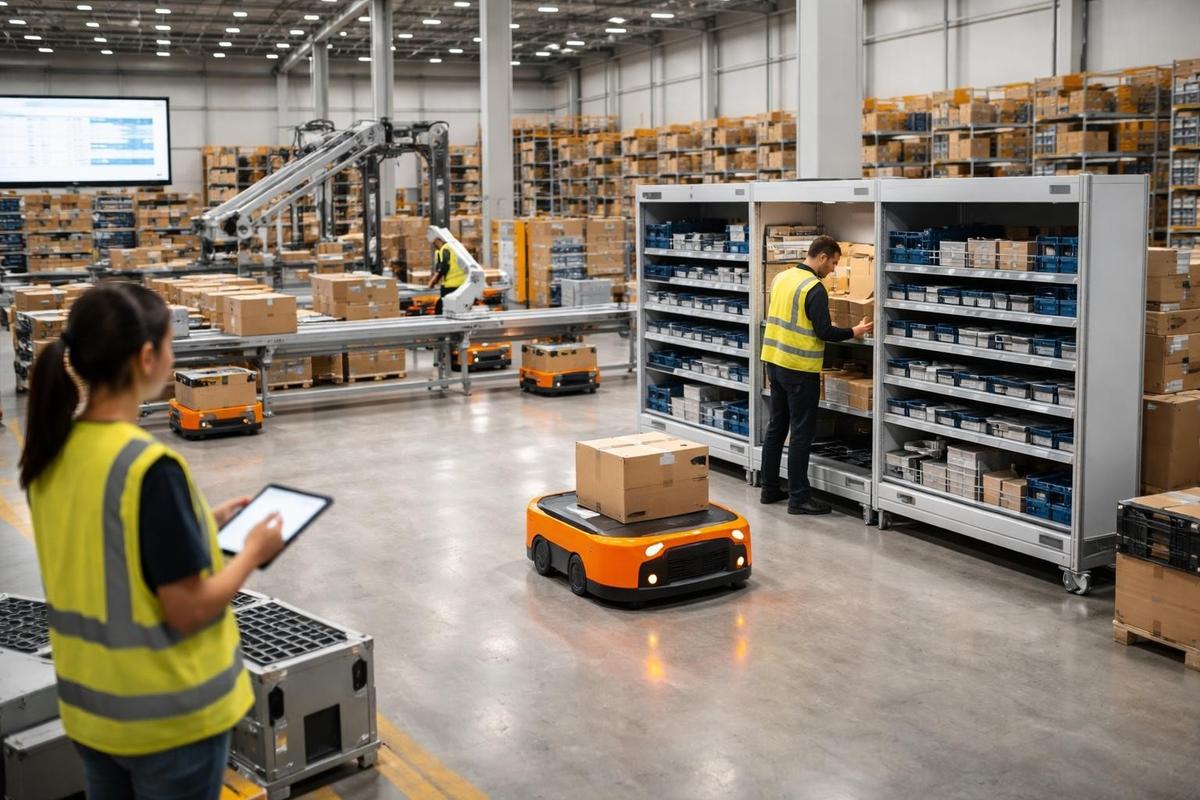
The warehouse automation landscape has reached a critical inflection point in 2026, where automated picking systems have become essential rather than optional for competitive logistics operations. These sophisticated solutions combine robotics, artificial intelligence, and warehouse management software to transform how businesses fulfil orders, manage inventory, and scale their operations. For organisations across e-commerce, 3PL, manufacturing, and cold-storage sectors, understanding the capabilities and deployment strategies of automated picking technology is crucial for maintaining operational excellence and meeting customer expectations in an increasingly demanding marketplace.
Understanding Automated Picking Systems Architecture
Automated picking systems represent a comprehensive integration of hardware, software, and process redesign that fundamentally changes warehouse workflows. These solutions eliminate or significantly reduce manual intervention in the order fulfillment process, leveraging technology to identify, retrieve, and prepare products for shipment with unprecedented speed and accuracy.
Core Technology Components
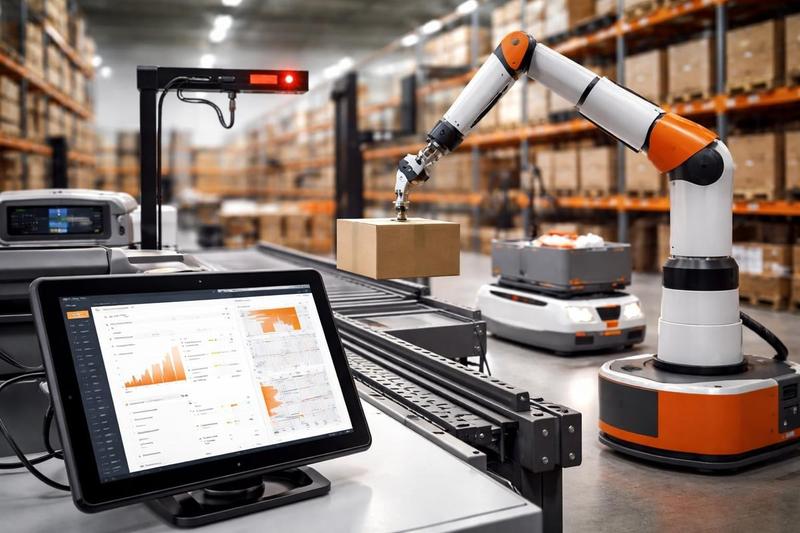
Modern automated picking systems consist of several interconnected layers working in harmony. The foundation includes warehouse management systems (WMS) and warehouse control systems (WCS) that orchestrate all picking activities, optimize routing, and manage inventory allocation. Above this software layer, physical automation takes various forms depending on facility requirements and product characteristics.
Key technological elements include:
- Robotic arms with advanced vision systems and gripper technology
- Autonomous mobile robots (AMRs) for transportation and retrieval
- Conveyor networks for product movement and sorting
- Pick-to-light and put-to-light guidance systems
- Voice-directed picking technology
- Radio frequency identification (RFID) and barcode scanning infrastructure
The integration of machine learning techniques to optimize warehouse robot performance has dramatically improved the accuracy and adaptability of these systems, allowing them to handle increasingly diverse product portfolios.
Goods-to-Person versus Person-to-Goods
The fundamental architectural decision in automated picking systems centres on whether products travel to stationary pickers or pickers travel to static inventory locations. Goods-to-person (GTP) systems bring inventory to ergonomic picking stations, eliminating travel time and reducing physical strain on workers. These systems typically employ automated storage and retrieval systems (ASRS), shuttle systems, or mobile robots to deliver totes, bins, or cases to picking workstations.
Person-to-goods configurations maintain traditional warehouse layouts but enhance efficiency through technology. Pick-to-light systems, voice picking, and mobile robots that follow workers represent common implementations. The choice between these approaches depends on factors including order profiles, SKU velocity distribution, available space, and capital investment capacity.
Primary Categories of Automated Picking Solutions
The automated picking systems market has evolved into distinct categories, each optimized for specific operational requirements and product characteristics. Understanding these classifications enables better decision-making when evaluating automation investments.
Unit and Case Picking Automation
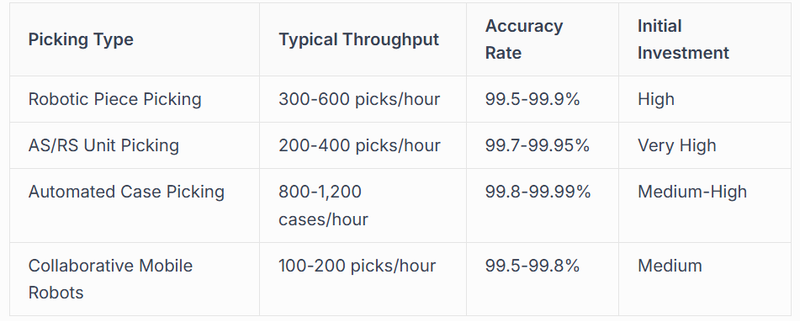
Unit picking, also known as piece picking or each picking, addresses the most labour-intensive warehouse function. Automated solutions for this category include robotic piece-picking systems with sophisticated vision and manipulation capabilities, AS/RS with integrated picking stations, and light-directed picking systems that guide operators through optimized pick sequences.
Case picking automation handles full-case selection for distribution to retail locations or secondary fulfillment centres. Automated case picking systems range from layer pickers and robotic palletizers to automated case conveyors and sortation systems. These solutions typically achieve higher throughput rates than piece picking due to larger handling units and more predictable product dimensions.
Pallet and Layer Picking Technologies
Full pallet selection has achieved near-complete automation in many facilities through automated guided vehicles (AGVs) and autonomous mobile robots. These systems navigate warehouse environments, identify pallet locations, and transport loads to shipping or staging areas without human intervention. Advanced vision systems enable precise positioning and load verification.
Layer picking presents unique technical challenges that recent innovations have begun to address. Robotic systems equipped with specialized end-effectors can now select multiple items simultaneously, building mixed pallets according to store-specific requirements. This capability is particularly valuable for FMCG and food & beverage operations where store replenishment often requires precise layer configurations.
Implementation Considerations and ROI Analysis
Deploying automated picking systems requires careful evaluation of operational, financial, and strategic factors. The decision framework extends beyond simple cost-benefit analysis to encompass long-term scalability, workforce implications, and competitive positioning.
Operational Readiness Assessment
Successful automation begins with understanding current warehouse performance and identifying improvement opportunities. Key metrics include picks per hour per worker, order accuracy rates, training time for new employees, and seasonal volume fluctuations. Facilities with high SKU counts, significant growth trajectories, or labour recruitment challenges typically see the strongest automation cases.
Critical readiness factors:
- Data quality and WMS capabilities
- Product standardization and packaging consistency
- Available floor space and ceiling height
- Power and network infrastructure
- Existing material handling equipment compatibility
- Order profile characteristics and seasonality patterns
For businesses beginning their automation journey, solutions like the Automate-X GTP Starter Grid provide accessible entry points that deliver immediate productivity improvements while establishing foundations for expanded automation. This modular approach allows organisations to validate assumptions, train teams, and refine processes before committing to comprehensive facility-wide systems.

Financial Modeling and Payback Periods
Automated picking systems require substantial upfront investment, with total project costs ranging from hundreds of thousands to tens of millions of dollars depending on system complexity and facility scale. However, the deployment of learned pick quality estimation and other advanced technologies has improved system performance, accelerating payback periods.
Financial analysis should incorporate both direct and indirect benefits. Direct savings include reduced labour costs, decreased overtime expenses, and lower recruitment and training expenditures. Indirect benefits encompass improved accuracy reducing returns and customer service costs, increased throughput enabling revenue growth, and enhanced workplace safety reducing insurance and workers' compensation claims.
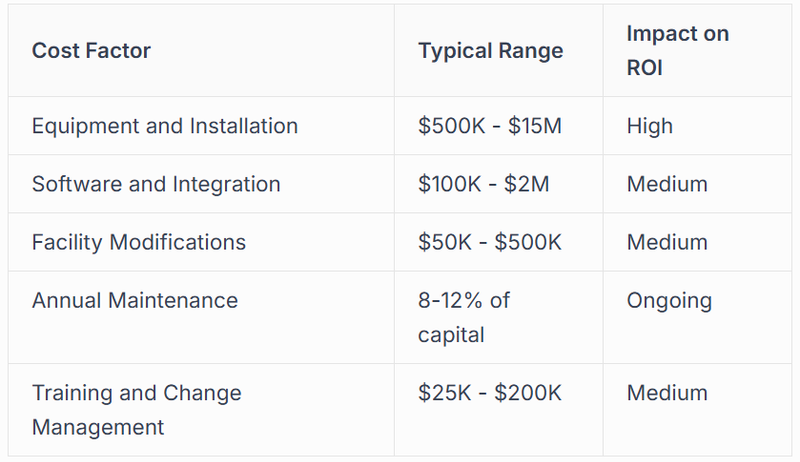
Most automated picking systems achieve payback within two to four years when properly specified and implemented. Operations with high labour costs, severe recruitment challenges, or rapid growth trajectories often see faster returns.

Advanced Technologies Shaping Future Development
The automated picking systems landscape continues evolving rapidly, with several emerging technologies poised to expand capabilities and accessibility. Understanding these developments helps organisations plan for long-term competitiveness and avoid premature technological obsolescence.
Artificial Intelligence and Machine Learning Integration
Modern automated picking systems increasingly incorporate AI and machine learning to optimize performance continuously. These technologies enable predictive maintenance, reducing unexpected downtime by identifying equipment issues before failures occur. Machine learning algorithms analyze historical order data to optimize inventory placement, ensuring high-velocity items occupy the most accessible locations.
Computer vision advances have dramatically improved robotic picking capabilities, allowing systems to handle previously impossible items. Deep learning models trained on millions of picking scenarios enable robots to adapt to new products with minimal programming. The integrated multi-arm bin-picking pipeline demonstrates how collaborative robotics can achieve unprecedented efficiency through real-time coordination.
Collaborative Robotics and Human-Machine Partnerships
Rather than complete automation, many organisations pursue collaborative approaches where robots augment human capabilities. Collaborative mobile robots (cobots) work alongside warehouse staff, handling transportation while humans perform complex picking tasks requiring dexterity and judgment. This hybrid model preserves employment while eliminating the most physically demanding and repetitive tasks.
Benefits of collaborative automation include:
- Lower initial investment compared to full automation
- Flexibility to scale during peak periods
- Reduced change management challenges
- Preservation of human expertise for exception handling
- Faster deployment timelines
The six key factors shaping robotic picking's future highlight the growing importance of collaborative approaches, particularly for facilities with diverse product mixes or variable demand patterns.
Industry-Specific Applications and Considerations
Automated picking systems must be tailored to industry-specific requirements, with pharmaceutical, food and beverage, and cold-storage operations presenting unique challenges that influence technology selection and system design.
Pharmaceutical and Healthcare Logistics
Pharmaceutical distribution demands exceptional accuracy, complete traceability, and strict environmental controls. Automated picking systems in this sector incorporate serialization tracking, expiry date management, and controlled substance handling protocols. Temperature-sensitive products require integration with cold chain monitoring, while regulatory compliance necessitates comprehensive audit trails.
Robotic systems excel at the repetitive accuracy required for prescription fulfillment, where even single-unit errors can have serious consequences. Vision systems verify product selection against digital images, while integrated scales confirm correct quantities. These quality controls, combined with automated documentation, significantly reduce regulatory risk.
Food, Beverage, and Cold Storage Environments
Food and beverage operations face unique challenges including variable product weights, fragile packaging, and short shelf lives. Automated picking systems in these environments must handle products gently while maintaining strict first-expired, first-out (FEFO) protocols. Cold storage facilities require specialized equipment capable of operating reliably in sub-zero temperatures, with components designed to prevent ice buildup and maintain performance in harsh conditions.
The integration of automation and industrial robotics in temperature-controlled environments delivers dual benefits: improved efficiency and enhanced food safety through reduced human contact with products. However, equipment specifications must account for temperature ranges, condensation issues, and the physical challenges of working in protective clothing.
E-commerce and Third-Party Logistics
E-commerce fulfillment presents perhaps the most demanding environment for automated picking systems, with high SKU counts, small order sizes, and extreme volume fluctuations. Systems must handle diverse product types ranging from apparel to electronics to cosmetics, each with different handling requirements. Peak season capacity can exceed average volumes by 300-400%, requiring scalable solutions.
Third-party logistics providers face additional complexity from serving multiple clients with different requirements, SKU portfolios, and service level agreements. Automated picking systems in 3PL environments require exceptional flexibility and rapid reconfiguration capabilities. The ability to quickly onboard new clients or adjust to changing customer requirements becomes a competitive differentiator.
Integration with Broader Warehouse Automation Ecosystems
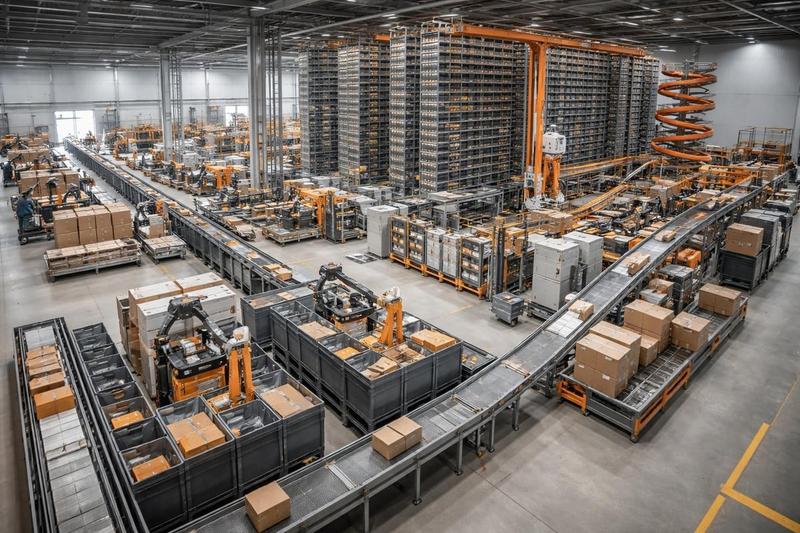
Automated picking systems function most effectively when integrated within comprehensive warehouse automation strategies. Isolated picking automation without supporting infrastructure for receiving, storage, and shipping often creates bottlenecks that limit overall performance gains.
ASRS and Storage System Coordination
The relationship between automated storage and retrieval systems and picking automation represents a critical design consideration. ASRS warehouse solutions provide the high-density storage and rapid retrieval capabilities that maximize automated picking system throughput. Coordinating these systems through unified control software ensures optimal inventory positioning and minimal wait times at picking stations.
Shuttle-based storage systems, vertical lift modules, and horizontal carousels each offer different performance characteristics suited to specific operational profiles. The selection and integration of storage technology directly impacts picking system effectiveness, influencing throughput rates, space utilization, and scalability potential.
Packaging and Sortation Integration
Downstream processes must keep pace with automated picking capabilities to avoid creating new bottlenecks. Packaging automation systems that automatically select carton sizes, apply dunnage, and seal packages ensure picking productivity translates to shipping throughput. Similarly, automated sortation systems route completed orders to appropriate shipping lanes based on carrier, destination, or service level.
This end-to-end integration extends to returns processing, where automated picking systems can be leveraged for reverse logistics. Products returned by customers can be inspected, restocked, and made available for new orders with minimal manual handling, reducing cycle times and improving inventory accuracy.
Performance Optimization and Continuous Improvement
Deploying automated picking systems marks the beginning rather than the end of the optimization journey. Realizing full potential requires ongoing monitoring, analysis, and refinement of system parameters, operational processes, and integration points.
Data Analytics and Performance Monitoring
Modern automated picking systems generate vast quantities of operational data that provide insights for continuous improvement. Key performance indicators include picks per hour, order cycle time, picking accuracy, system utilization rates, and maintenance intervals. Advanced analytics platforms identify patterns, anomalies, and optimization opportunities that may not be apparent through casual observation.
Essential metrics for picking system optimization:
- Throughput rates by product category, time of day, and operator
- Error rates and root cause analysis
- Equipment utilization and idle time
- Energy consumption patterns
- Order profile changes and seasonal variations
Predictive analytics enable proactive interventions, from inventory rebalancing to preventive maintenance scheduling. Machine learning models can forecast demand patterns, allowing systems to pre-position inventory for anticipated orders, reducing pick times during peak periods.
Workforce Training and Change Management
The human element remains critical even in highly automated environments. Successful implementations invest heavily in workforce training, ensuring operators understand system capabilities, can troubleshoot common issues, and recognize when to escalate problems. The transition from manual to automated picking often changes job roles from physical labor to system monitoring and exception handling.
Change management strategies that involve employees early in the planning process, communicate transparently about implementation timelines, and provide clear career development paths reduce resistance and accelerate adoption. Facilities that position automation as a tool to enhance rather than replace human capabilities typically achieve smoother transitions and better long-term outcomes.
Vendor Selection and Project Implementation
Choosing the right technology partner and managing the implementation process effectively determines whether automated picking systems deliver promised benefits or become expensive disappointments. A structured approach to vendor evaluation and project management mitigates risks and increases success probability.
Evaluation Criteria for Solution Providers
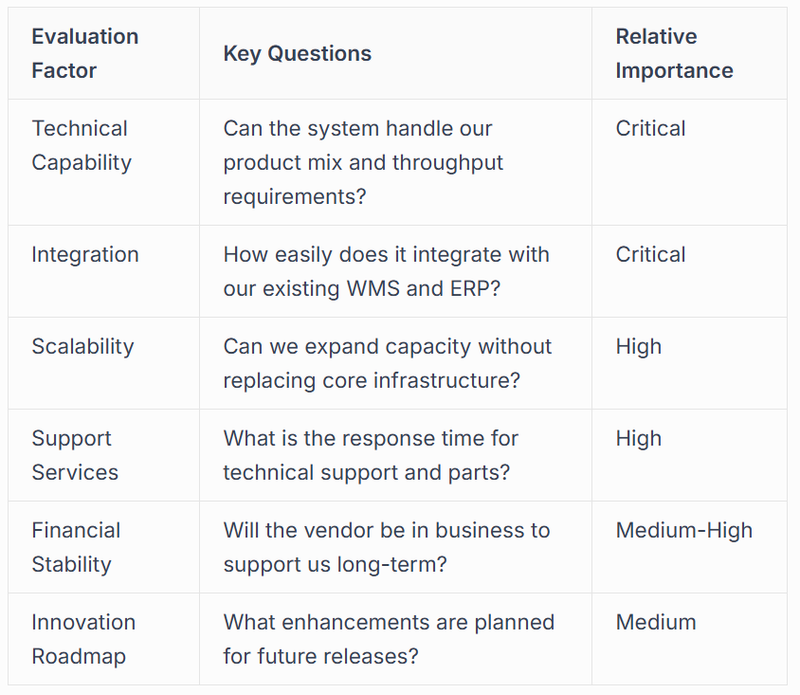
Technology selection should balance current requirements with future scalability needs. Proven track records in similar applications, demonstrated financial stability, and comprehensive service capabilities represent foundational criteria. The vendor's approach to software integration, willingness to customize solutions, and quality of technical support distinguish superior partners from commodity suppliers.
Case studies from implementations in comparable environments provide valuable insights. Reviewing real-world applications helps validate vendor claims and understand practical challenges that may emerge during deployment. Site visits to operating installations reveal system performance under real-world conditions and provide opportunities to speak with existing customers about their experiences.
Implementation Planning and Risk Mitigation
Successful automated picking system deployments follow structured project management methodologies with clearly defined phases, milestones, and success criteria. Detailed facility assessments identify potential obstacles before equipment arrives, while comprehensive testing protocols verify system performance before go-live. Parallel operations, where automated and manual systems operate simultaneously during transition periods, reduce disruption risks.
Common implementation challenges include underestimating integration complexity, inadequate testing of edge cases, and insufficient training time. Building contingency periods into project timelines, maintaining fallback manual processes, and establishing clear escalation procedures help manage these risks. Post-implementation support should extend well beyond initial commissioning, with regular performance reviews and optimization sessions ensuring systems continue meeting evolving requirements.
Automated picking systems represent transformative investments that fundamentally reshape warehouse operations, delivering substantial improvements in productivity, accuracy, and scalability when properly specified and implemented. Success requires careful analysis of operational requirements, realistic financial modeling, and commitment to ongoing optimization. Automate-X combines deep expertise in warehouse automation with proven implementation methodologies to help logistics and supply chain businesses navigate this transformation, from initial assessment through deployment and continuous improvement, ensuring your automation investment delivers measurable results that support sustainable growth.