

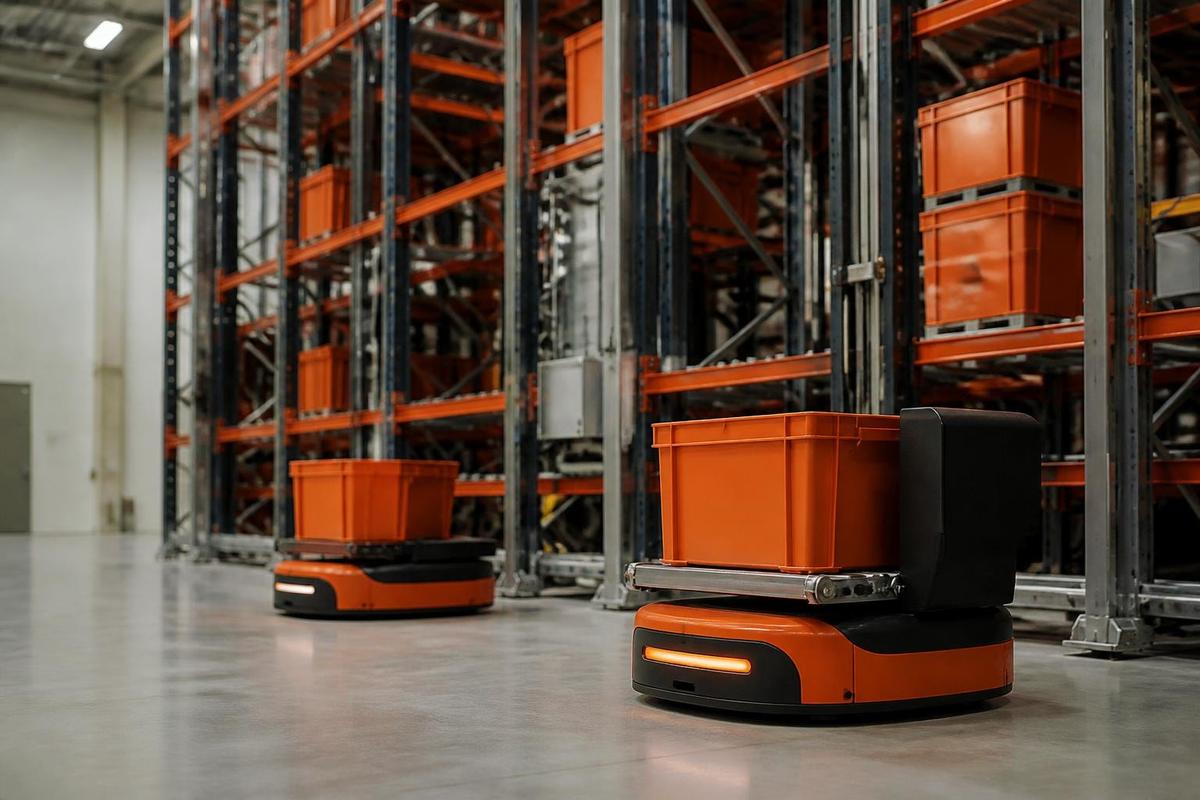
Automated Storage Companies: The 2026 Industry Guide
Share on
The warehouse automation landscape has evolved dramatically over the past decade, with automated storage companies emerging as critical partners for logistics and supply chain operations seeking competitive advantages. These specialised firms design, implement, and maintain sophisticated storage systems that combine robotics, intelligent software, and mechanical infrastructure to maximise space utilisation whilst accelerating order fulfillment. As businesses face mounting pressure to reduce operational costs, improve accuracy, and scale efficiently, automated storage companies have become indispensable providers of solutions that address these complex challenges.
Understanding Automated Storage Companies and Their Core Technologies
Automated storage companies specialise in delivering integrated systems that mechanise the storage and retrieval of inventory within warehouse and distribution environments. Unlike traditional storage providers, these companies focus on technologies that minimise manual intervention whilst maximising throughput and density.
The foundation of most automated storage solutions rests on several key technologies. Automated Storage and Retrieval Systems (AS/RS) form the backbone of many implementations, utilising computer-controlled mechanisms to automatically place and retrieve loads from defined storage locations. These systems range from simple unit-load configurations to complex mini-load systems designed for small parts handling.
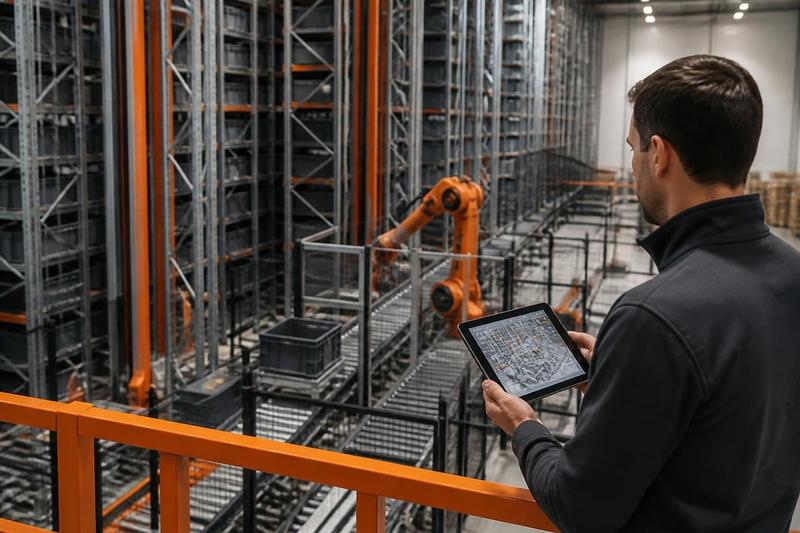
Technology Categories Offered by Leading Providers
Different automated storage companies often specialise in specific technology categories based on application requirements and industry focus:
- Unit-Load AS/RS: Designed for pallet-level storage with high-speed cranes operating in narrow aisles
- Mini-Load Systems: Optimised for tote and carton handling in fast-moving environments
- Vertical Lift Modules (VLMs): Space-efficient solutions that deliver items to ergonomic picking heights
- Horizontal Carousels: Rotating inventory systems that bring products to stationary operators
- Vertical Carousels: Similar principle to horizontal systems but optimised for vertical space
- Cube-Based Storage: Grid systems like AutoStore that use robots to retrieve bins from high-density cubic structures
The automation and industrial robotics sector has witnessed remarkable advancement in these technologies, with newer systems incorporating artificial intelligence and machine learning capabilities to optimise storage allocation and retrieval sequences dynamically.
Market Landscape and Industry Growth Patterns
The automated storage sector has experienced substantial growth driven by e-commerce expansion, labour challenges, and the increasing complexity of supply chain operations. According to comprehensive market analysis from Fact.MR, the AS/RS market continues its upward trajectory with double-digit growth rates projected through 2030.
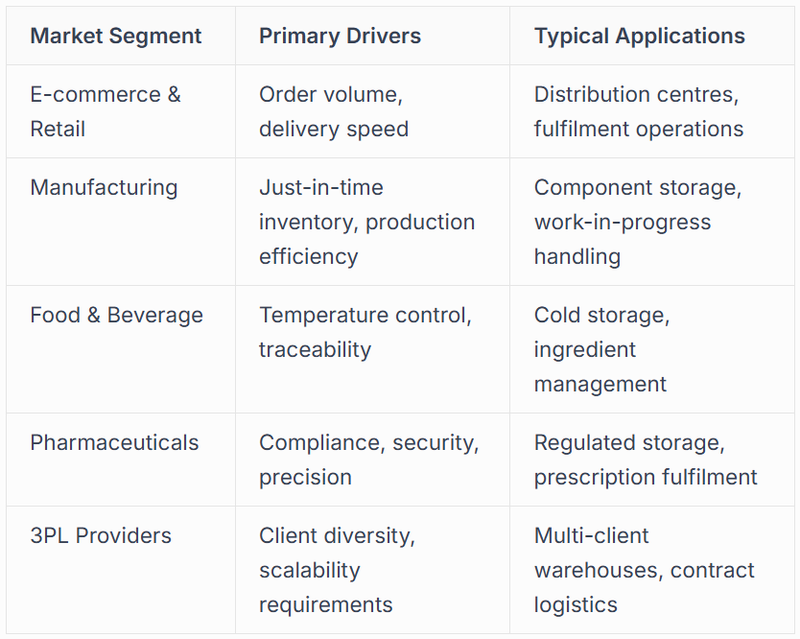
Automated storage companies serving the Asia-Pacific region, including Australia and New Zealand, have benefited from increased investment in logistics infrastructure and the maturation of regional e-commerce markets. The shift toward omnichannel retail strategies has particularly accelerated demand for flexible automation solutions.
Investment Trends Shaping Provider Strategies
Capital allocation within the automated storage industry reflects several strategic priorities. Companies are investing heavily in modular systems that allow customers to scale incrementally rather than requiring massive upfront commitments. This approach has democratised access to automation, enabling mid-sized operations to implement sophisticated storage technologies previously reserved for enterprise-scale facilities.
Software development represents another major investment area. Modern automated storage companies recognise that hardware capabilities mean little without intelligent software orchestration. Warehouse management systems (WMS), warehouse execution systems (WES), and warehouse control systems (WCS) have become increasingly sophisticated, with providers developing proprietary algorithms that optimise storage density, picking routes, and inventory positioning based on demand patterns.
Selecting the Right Automated Storage Partner
Choosing among automated storage companies requires careful evaluation of multiple factors beyond simple cost comparisons. The decision fundamentally impacts operational efficiency, scalability potential, and long-term flexibility.
Assessment criteria should encompass:
- Technical compatibility with existing warehouse infrastructure and systems
- Scalability options to accommodate future growth without complete system replacement
- Industry expertise relevant to specific operational requirements and compliance needs
- Service capabilities including installation, maintenance, and ongoing support
- Software integration ability to connect with existing enterprise resource planning (ERP) and WMS platforms
- Return on investment timeline based on realistic throughput improvements and labour savings
The most successful implementations typically involve automated storage companies that adopt a consultative approach, conducting thorough operational assessments before recommending specific technologies. This process should include detailed analysis of order profiles, SKU characteristics, throughput requirements, and seasonal variation patterns.
Real-World Implementation Success Stories
Examining case studies provides valuable insight into how automated storage companies deliver tangible results. Yusen Logistics' implementation of AutoStore technology in Singapore demonstrates the dramatic impact automation can achieve, with order fulfilment rates increasing by 200% whilst reducing the required storage footprint by approximately 50%.
Similarly, RoboVault's partnership with Westfalia Technologies showcases how automated storage companies address specialised requirements. The ultra-secure, high-density storage solution developed for valuables storage demonstrates that automation extends beyond traditional warehouse applications into niche markets requiring unique security and access control features.
For businesses beginning their automation journey, entry-level solutions provide accessible pathways to improved efficiency. The Automate-X GTP Starter Grid offers small and medium businesses in Australia and New Zealand a low-cost approach to automating picking processes without requiring massive capital investment or extensive facility modifications.
Integration Challenges and Technical Considerations
Automated storage companies must navigate complex technical integration challenges when implementing systems within existing facilities. The integration extends far beyond physical installation, encompassing software connectivity, process redesign, and workforce adaptation.
Software Integration Architecture
Modern automated warehouse systems rely on sophisticated software layers that communicate across multiple platforms. The typical integration architecture includes:
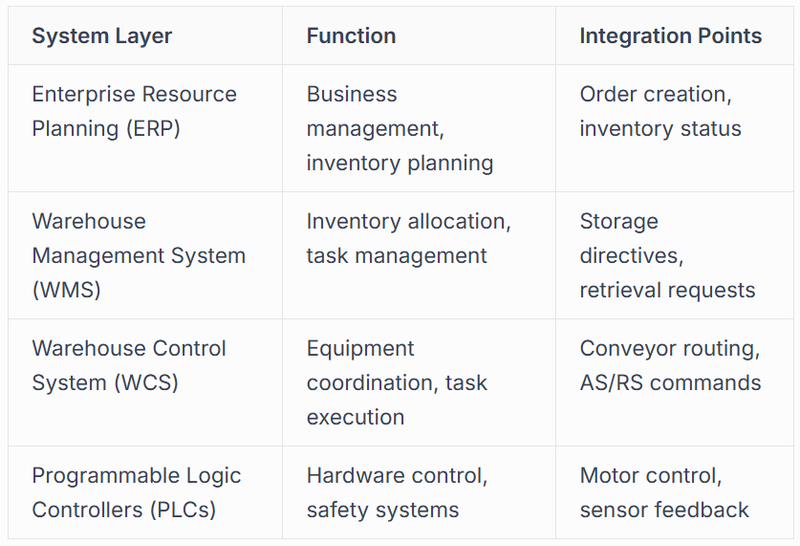
The most capable automated storage companies employ experienced integration specialists who understand the nuances of connecting these disparate systems whilst maintaining data integrity and real-time synchronisation. Software automation capabilities have become as critical as hardware performance in determining overall system effectiveness.
Physical Infrastructure Requirements
Facility considerations significantly impact implementation success. Automated storage companies must evaluate floor loading capacity, ceiling heights, column spacing, and environmental conditions before finalising system designs. High-density storage systems can concentrate significant weight in small footprints, potentially exceeding floor load ratings in older facilities.
Temperature and humidity control present additional challenges, particularly for cold-storage applications common in food and pharmaceutical operations. Automated storage companies serving these sectors must specify equipment designed to operate reliably in extreme conditions whilst maintaining energy efficiency.
Service Models and Ongoing Support Structures
The relationship with automated storage companies extends well beyond initial installation. Long-term operational success depends heavily on the service and support infrastructure providers maintain.
Common service models include:
- Preventive maintenance programmes with scheduled inspections and component replacement
- Remote monitoring services using IoT sensors and predictive analytics to identify potential failures
- Spare parts management with strategic inventory positioning to minimise downtime
- Performance optimisation through software updates and configuration adjustments
- Operator training covering normal operations, troubleshooting, and emergency procedures
- 24/7 technical support with tiered response structures based on issue severity
Leading automated storage companies increasingly offer performance-based service agreements where compensation ties directly to system availability and throughput metrics. This alignment of interests ensures providers remain invested in operational success beyond the initial sale.
Emerging Technologies Reshaping Automated Storage
The automated storage industry continues evolving rapidly, with automated storage companies investing in next-generation technologies that promise further efficiency gains and expanded capabilities.
Artificial intelligence and machine learning applications have progressed from experimental to practical deployment. Automated storage companies now implement AI algorithms that analyse historical order data to predict future demand patterns, automatically repositioning inventory to optimise retrieval times. These systems continuously learn and adapt, improving performance over time without manual intervention.
Autonomous mobile robots (AMRs) represent another significant development. Unlike traditional fixed-path automation, AMRs navigate dynamically using vision systems and sensors, providing flexibility that matches changing operational requirements. White Systems' diverse case studies illustrate how mobile robotics integrate with traditional automated storage to create hybrid solutions that combine the density of AS/RS with the flexibility of mobile systems.
Digital Twin Technology and Simulation
Progressive automated storage companies now employ digital twin technology throughout the design, implementation, and optimisation phases. These virtual replicas of physical systems enable testing configuration changes, throughput scenarios, and process modifications without disrupting actual operations.
Digital twins facilitate continuous improvement by providing a safe environment for experimentation. Operators can evaluate the impact of adding new product lines, changing order profiles, or reconfiguring storage zones before committing resources to physical changes.
Industry-Specific Applications and Customisation
Automated storage companies increasingly specialise in vertical markets, developing deep expertise in industry-specific requirements and regulations. This specialisation enables more effective solutions that address unique operational challenges.
Pharmaceutical and Healthcare Applications
The pharmaceutical sector demands rigorous compliance with regulatory requirements governing storage conditions, traceability, and security. Automated storage companies serving this market must incorporate features such as lot tracking, expiration date management (FEFO), environmental monitoring, and access controls that create complete audit trails.
Temperature-controlled storage presents particular complexity, with some medications requiring precise maintenance within narrow ranges. Kardex's customised AS/RS solution for WEG Electric demonstrates how automated storage companies engineer bespoke systems addressing specific operational challenges whilst maximising space utilisation.
Food and Beverage Cold Storage
Cold-storage operations face the dual challenges of maintaining product quality whilst managing energy costs in refrigerated or frozen environments. Automated storage companies have responded by developing systems specifically engineered for extreme temperatures, incorporating insulation, specialised lubricants, and climate-appropriate materials.
The density advantages of automated storage prove particularly valuable in cold storage, where reducing refrigerated footprint directly translates to energy savings. Systems that maximise vertical space utilisation and minimise aisle requirements can cut energy consumption by 30-40% compared to conventional cold-storage layouts.
Measuring Return on Investment and Performance Metrics
Evaluating the financial performance of automated storage investments requires comprehensive analysis extending beyond simple payback calculations. Automated storage companies should provide detailed ROI modelling that accounts for both direct and indirect benefits.
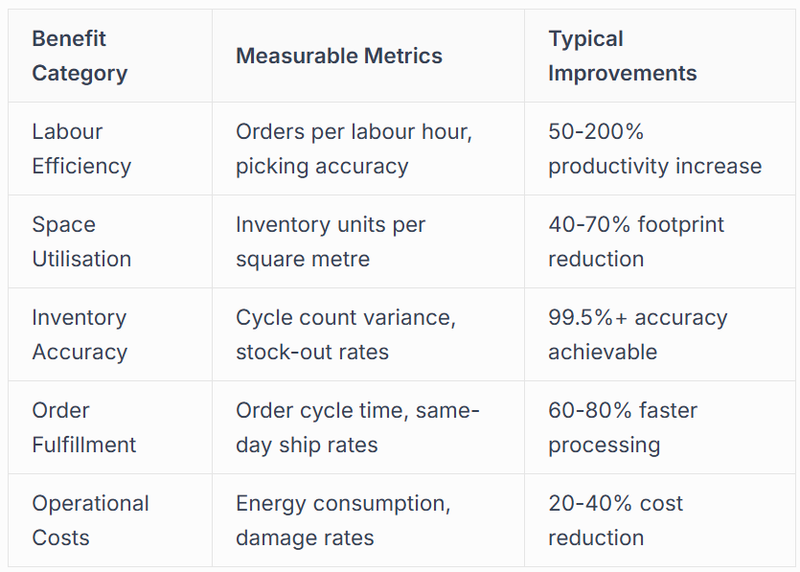
Beyond quantitative metrics, automated storage companies should help customers recognise qualitative benefits including improved workplace safety, enhanced employee satisfaction from elimination of tedious tasks, and increased capacity to handle business growth without proportional headcount expansion.
The transformation of logistics through automation continues accelerating in 2026, with companies that embrace these technologies gaining decisive competitive advantages in increasingly demanding markets.
Regional Considerations for Australia and New Zealand
Automated storage companies operating in the Australia-New Zealand market face unique considerations shaped by geographic isolation, relatively small population concentrations, and evolving e-commerce expectations. The tyranny of distance that has historically challenged logistics operations in these markets makes automation particularly valuable for maximising efficiency within distributed networks.
Local regulatory frameworks, including workplace safety standards and building codes, influence system design and implementation approaches. Automated storage companies with regional experience navigate these requirements more effectively, ensuring compliance whilst optimising performance.
The growing emphasis on logistics automation in New Zealand reflects broader recognition that automation provides essential capabilities for competing effectively despite geographic challenges. Companies implementing automated storage solutions position themselves to service demanding customers whilst maintaining cost structures that support sustainable growth.
Labour Market Dynamics
Persistent labour shortages across the region have accelerated automation adoption, with businesses recognising that automated storage companies offer solutions to workforce availability challenges that won't resolve through traditional recruitment strategies. The demographic trends suggest these pressures will intensify, making automation investments increasingly strategic rather than optional.
Forward-thinking operations view automation not as workforce replacement but as workforce enhancement, redeploying personnel from physically demanding, repetitive tasks to higher-value activities requiring human judgment and problem-solving capabilities.
Future Outlook for Automated Storage Companies
The trajectory for automated storage companies remains strongly positive through the remainder of this decade. Market forces including continued e-commerce growth, supply chain resilience priorities, and sustainability imperatives all favour increased automation adoption.
Technological convergence represents a particularly significant trend. Automated storage companies increasingly integrate multiple automation technologies within unified solutions. Advanced integration of AGV systems with vertical reciprocating conveyors exemplifies how automated storage companies combine complementary technologies to create more capable, flexible systems than any single technology could provide independently.
Sustainability considerations are reshaping how automated storage companies design and position their solutions. Energy-efficient systems that reduce warehouse footprints, minimise heating and cooling requirements, and optimise material handling routes deliver environmental benefits that align with corporate sustainability commitments whilst reducing operational costs.
The automation landscape will continue evolving rapidly, with successful automated storage companies maintaining agility to incorporate emerging technologies whilst delivering proven reliability that operations demand.
Automated storage companies have become essential partners for logistics operations seeking to remain competitive in increasingly demanding markets. The technologies, expertise, and ongoing support these specialised providers deliver enable transformative improvements in efficiency, accuracy, and scalability that manual operations simply cannot match. Automate-X combines advanced robotics, intelligent software, and comprehensive system integration expertise to deliver warehouse automation solutions tailored to the unique requirements of logistics, 3PL, e-commerce, and manufacturing operations across Australia and New Zealand.