

Goods to Person System: Warehouse Automation Guide 2026
Share on
Modern warehouses face mounting pressure to fulfil orders faster, more accurately, and with fewer resources. Traditional pick-to-goods operations, where workers walk kilometres daily to retrieve items from static shelving, create inefficiencies that compound as order volumes grow. The goods to person system represents a fundamental shift in warehouse operations, reversing the conventional approach by bringing inventory directly to stationary pickers. This automation methodology has transformed logistics operations across e-commerce, third-party logistics, manufacturing, and distribution environments, delivering measurable improvements in productivity, accuracy, and space utilisation while addressing the ongoing challenge of labour shortages.
Understanding Goods to Person Systems
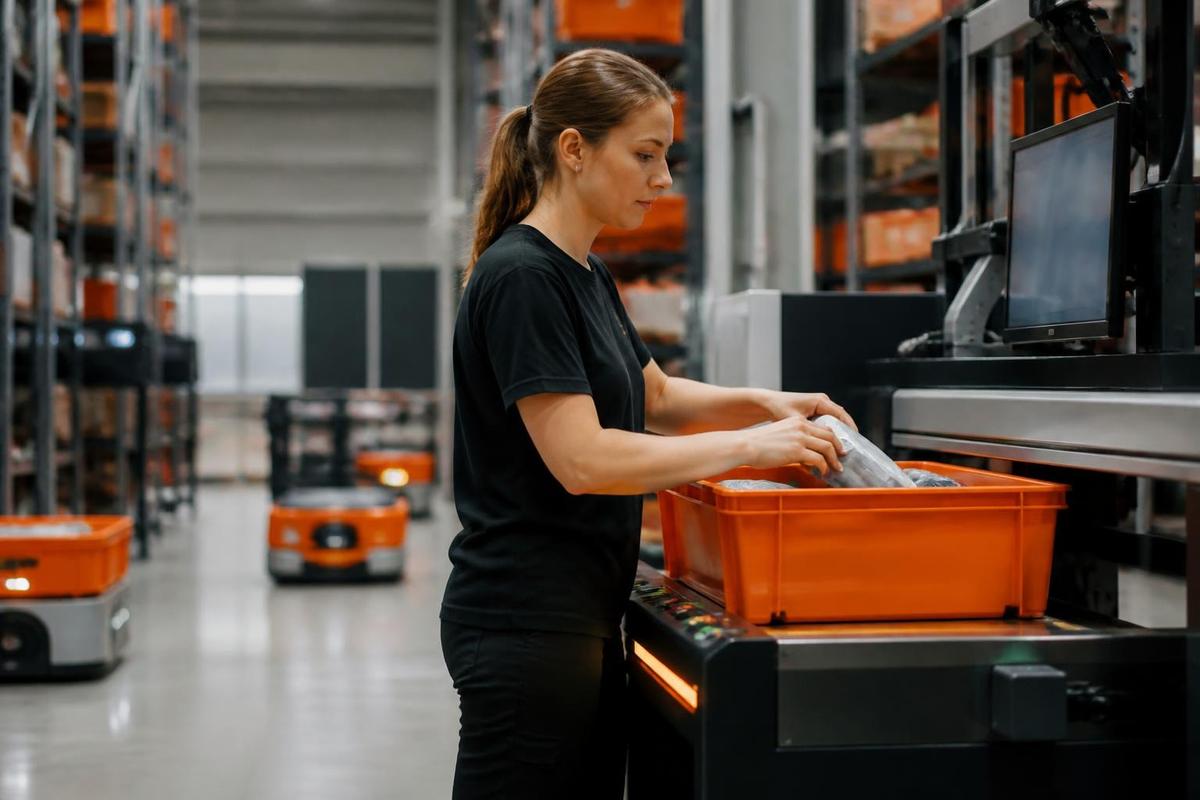
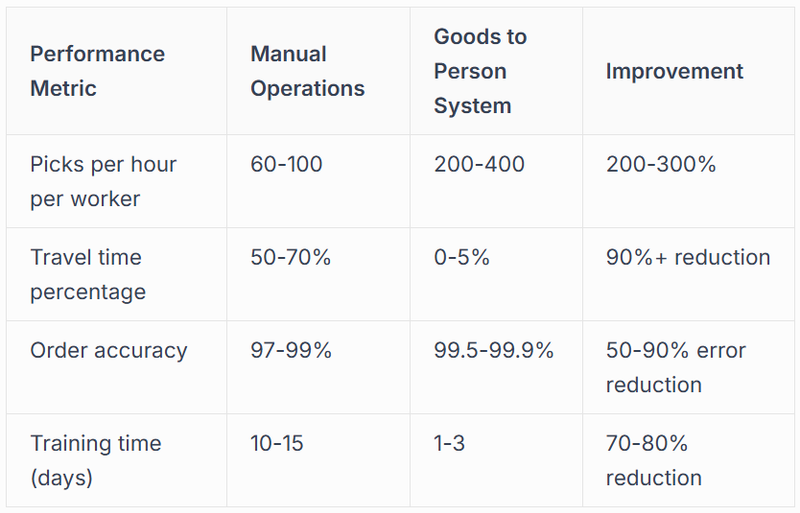
A goods to person system automates the retrieval and delivery of inventory to workers stationed at ergonomic picking workstations. Rather than requiring human operators to navigate aisles searching for products, automated storage and retrieval systems transport the required bins, totes, or shelving units directly to the picker. This approach eliminates the non-value-added walking time that typically consumes 50-70% of a warehouse worker's shift in conventional operations.
The fundamental principle reverses traditional workflows. In person-to-goods operations, workers receive pick lists and traverse the warehouse to locate items. This methodology becomes increasingly inefficient as facilities expand and SKU counts grow. Goods-to-person automation transforms this dynamic by making the warehouse come to the worker, creating stationary picking zones where operators remain in fixed positions whilst inventory circulates to them.
Core Components and Technologies
Several technological approaches enable goods to person functionality, each suited to different operational requirements and facility constraints.
Module-based systems utilise vertical lift modules (VLMs) or horizontal carousels that store inventory in enclosed units. These systems retrieve specific trays or carriers and present them at ergonomically positioned openings. VLMs maximise vertical space in facilities with limited floor area, whilst carousels excel in high-throughput applications requiring rapid item access.
Aisle-based solutions deploy shuttle systems or mini-load automated storage and retrieval systems (AS/RS) within high-density racking structures. Shuttles travel horizontally along rails at each level, retrieving bins or totes and delivering them to vertical lifts that transport inventory to picking stations. This configuration suits operations with extensive SKU variety and moderate to high throughput demands.
Cube-based storage employs robotic systems that operate within a three-dimensional grid structure. Robots travel across the top of the grid, retrieving bins from depth and delivering them to peripheral workstations. This technology, popularised by Norwegian innovators in the early 2010s, provides exceptional storage density and scalability for operations with fluctuating inventory levels.
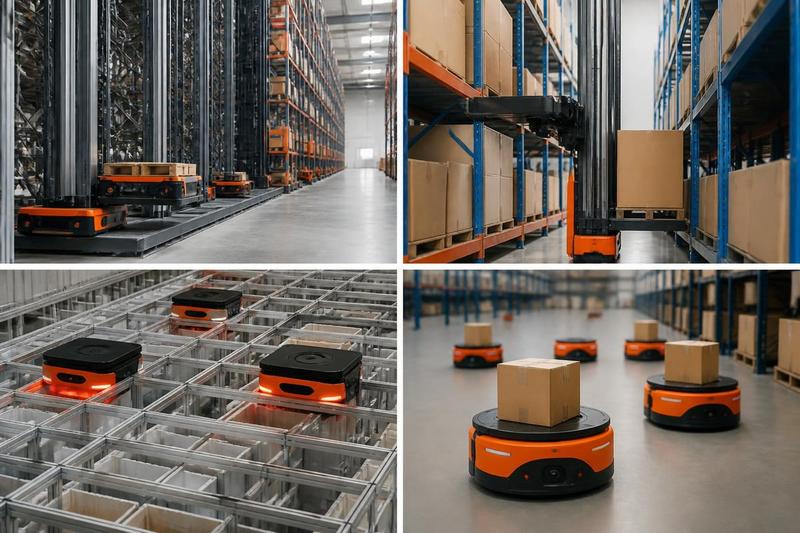
Autonomous mobile robots (AMRs) represent the newest category of goods to person technology. These intelligent robots navigate warehouse floors independently, transporting shelving pods or bins directly to picking stations. AMR-based systems offer exceptional flexibility, allowing facilities to scale capacity incrementally and reconfigure layouts without extensive infrastructure modifications.
Operational Benefits and Performance Metrics
The transition to a goods to person system delivers quantifiable improvements across multiple performance dimensions. Understanding these benefits helps justify capital investment and set realistic expectations for implementation outcomes.
Productivity and Throughput Enhancement
Eliminating travel time produces the most immediate productivity gain. Workers in conventional warehouses spend approximately 60% of their time walking between pick locations. Goods to person systems reduce this non-productive time to near zero, enabling individual operators to process 200-400 picks per hour compared to 60-100 picks in manual operations.
Throughput improvements extend beyond individual productivity. Facilities can process significantly higher order volumes with fewer workers, addressing labour shortage challenges whilst controlling operational costs. Many operations report 200-300% productivity increases following automated warehouse picking implementation.
Accuracy and Quality Improvements
Pick accuracy represents another critical advantage. Traditional picking methods introduce errors through misreads, location confusion, and fatigue. Goods-to-person automation integrates with warehouse management systems to provide visual pick-to-light indicators, barcode verification, and weight confirmation. These technologies reduce picking errors by 50-90%, decreasing returns, customer complaints, and associated costs.
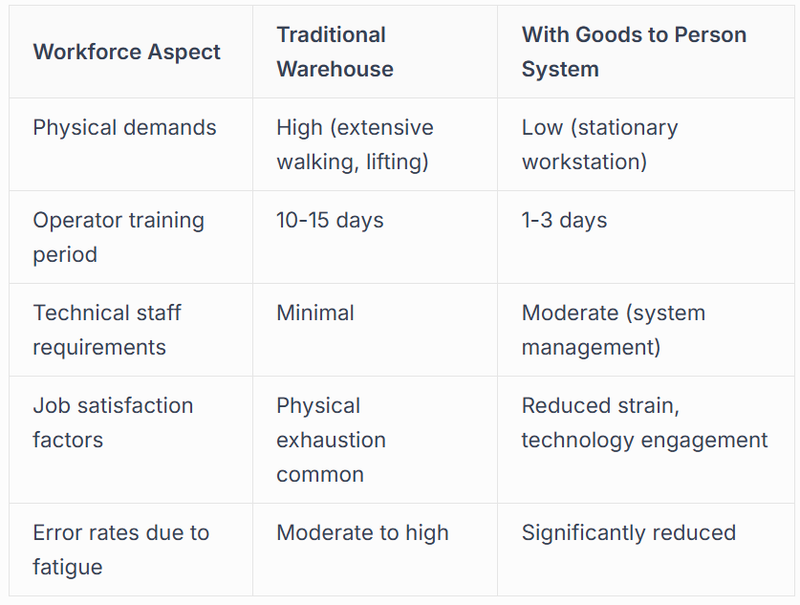
The ergonomic benefits contribute to sustained accuracy throughout shifts. Workers remain at waist-height workstations rather than bending, reaching, or climbing ladders. This reduces physical strain and fatigue-related errors, particularly during extended shifts or peak seasons.
Space Optimisation
Goods to person systems dramatically improve storage density compared to conventional racking. High-density configurations eliminate the need for wide aisles, utilising vertical space more effectively. Facilities often achieve 40-60% storage density improvements, allowing them to accommodate inventory growth without facility expansion or enabling operations to downsize physical footprints whilst maintaining capacity.
Cube-based and VLM solutions excel in space efficiency, storing inventory in compact configurations that would be impossible to access manually. This becomes particularly valuable in urban distribution centres where property costs are substantial or cold-storage facilities where every cubic metre of refrigerated space carries ongoing energy costs.
Implementation Considerations and System Selection
Selecting and implementing a goods to person system requires careful evaluation of operational requirements, facility constraints, and growth projections. The diversity of available technologies means organisations must match solutions to specific circumstances rather than adopting a one-size-fits-all approach.
Operational Profile Assessment
Successful implementation begins with comprehensive operational analysis. Order profiles, SKU characteristics, throughput requirements, and growth trajectories all influence technology selection.
Order profiles determine optimal system configuration. Operations processing high volumes of single-line orders benefit from different technologies than those fulfilling multi-line orders with dozens of SKUs. Peak season variability also affects decisions, as some technologies scale more flexibly than others.
SKU characteristics including size, weight, velocity, and turnover patterns guide storage methodology. Fast-moving items may require preferential positioning or dedicated handling approaches. Oversized or irregularly shaped products might necessitate hybrid solutions combining automated and manual zones.
Throughput requirements establish baseline capacity needs. Systems must handle average daily volumes whilst accommodating peak periods. Understanding these demands prevents over-specification that wastes capital or under-specification that creates bottlenecks.
Technology Comparison Framework
Different goods to person technologies suit distinct operational contexts. The following framework helps evaluate options:
- Vertical Lift Modules: Best for operations with limited floor space, moderate throughput, and items suited to tray storage
- Horizontal Carousels: Optimal for high-velocity picking of small to medium items with consistent dimensions
- Shuttle Systems: Appropriate for extensive SKU variety, scalable throughput, and facilities with available vertical height
- Cube Storage: Ideal for operations requiring maximum density, flexible capacity scaling, and variable inventory levels
- AMR-Based Systems: Suited to operations prioritising flexibility, incremental scaling, and minimal infrastructure modification
For businesses beginning their automation journey, entry-level solutions provide accessible pathways to goods to person benefits. The Automate-X GTP Starter Grid offers small to medium operations in Australia and New Zealand a practical, cost-effective approach to automating picking processes without the complexity and capital requirements of enterprise-scale systems.
Integration and Software Requirements
Goods to person systems function as components within broader warehouse ecosystems. Effective integration with warehouse management systems (WMS), enterprise resource planning (ERP) platforms, and order management systems ensures seamless information flow and coordinated operations.
The system must receive pick instructions from the WMS, direct inventory movements, track stock locations, and confirm completed transactions. Real-time synchronisation prevents inventory discrepancies and enables dynamic task prioritisation based on shipping deadlines and order priorities.
Advanced implementations incorporate warehouse software with machine learning capabilities that optimise storage locations based on velocity patterns, predict maintenance requirements, and balance workload across multiple picking stations. These intelligent features extract maximum value from automation investments.
Workforce Transformation and Change Management
Implementing a goods to person system fundamentally changes warehouse operations and workforce dynamics. Successful transitions require proactive change management, comprehensive training, and clear communication about how automation affects roles and responsibilities.
Role Evolution
Automation doesn't eliminate human workers but rather transforms their responsibilities. Physical tasks decrease whilst technical and supervisory roles expand. Pickers become workstation operators who verify items, confirm quantities, and manage exceptions. This transition generally improves job satisfaction by reducing physical strain and monotonous walking whilst increasing engagement with technology.
New roles emerge around system management, maintenance, and optimisation. Technical staff monitor system performance, troubleshoot issues, and coordinate with automation vendors. Analysts review operational data to identify improvement opportunities and adjust configurations for optimal performance.
Training and Skill Development
Simplified workflows reduce initial training requirements. New operators typically achieve proficiency within 1-3 days compared to 10-15 days in conventional warehouses. The stationary workstation environment with visual prompts and confirmations creates intuitive processes that minimise learning curves.
However, organisations must invest in technical training for maintenance and support personnel. Understanding system architecture, troubleshooting methodologies, and preventive maintenance procedures ensures rapid issue resolution and maximises uptime.
Financial Analysis and Return on Investment
Goods to person systems represent substantial capital investments requiring rigorous financial justification. Comprehensive analysis examines costs, benefits, payback periods, and long-term value creation.
Investment Components
Total implementation costs encompass multiple elements beyond equipment acquisition. Equipment costs vary significantly based on technology type, capacity, and sophistication. Module-based systems might range from $200,000-$500,000 for smaller configurations, whilst extensive shuttle or cube-based installations can exceed several million dollars.
Installation expenses include site preparation, integration with existing infrastructure, and commissioning. Facilities may require floor reinforcement, electrical upgrades, or structural modifications. Software and integration costs cover WMS interfaces, control systems, and customisation for specific operational requirements.
Training and change management investments ensure successful adoption. While often modest compared to equipment costs, allocating adequate resources for workforce preparation proves essential for realising projected benefits.
Benefit Quantification
Return on investment calculations must capture both direct and indirect benefits. Labour savings from productivity improvements typically drive financial justification. Reducing headcount requirements or redeploying workers to value-added activities creates ongoing operational savings.
Accuracy improvements reduce costs associated with returns, re-shipments, and customer service interventions. Many operations underestimate these expenses until tracking them systematically. Research on goods-to-person automation demonstrates error reduction frequently delivers 15-25% of total ROI.
Space optimisation generates value through several mechanisms. Avoiding facility expansion defers substantial capital expenditures. Improved density may enable consolidation of multiple facilities or create capacity for revenue-generating inventory growth without additional real estate.
Payback Period Considerations
Typical payback periods range from 2-5 years depending on operational scale, labour costs, and achievable productivity gains. High-volume operations with expensive labour markets see faster returns, whilst smaller facilities or low-wage regions extend payback timelines.
Financial analysis should incorporate long-term perspectives beyond simple payback calculations. Goods to person systems typically operate for 10-15+ years, generating value well beyond initial recovery periods. Factoring in ongoing operational savings, avoided costs, and revenue enablement through improved capacity provides comprehensive value assessment.
Scalability and Future-Proofing Strategies
Warehouse automation investments must accommodate growth and evolving operational requirements. Goods-to-person systems offer various approaches to scalability, though capabilities differ significantly across technologies.
Modular Expansion Approaches
AMR-based solutions provide exceptional scalability through incremental robot additions. Facilities can start with minimal robot counts and add units as volumes grow, matching capacity investments to revenue generation. This approach minimises upfront capital requirements and reduces implementation risk.
Cube-based systems similarly support modular expansion by adding grid sections and robots. This flexibility suits operations with uncertain growth trajectories or seasonal variability requiring temporary capacity increases.
Fixed infrastructure systems like shuttle-based installations require more deliberate capacity planning. While additional shuttles and stations can be incorporated, the fundamental racking structure must be sized appropriately during initial implementation. This necessitates accurate long-term forecasting and potentially over-specifying initial capacity.
Technology Evolution and Adaptability
The rapid pace of warehouse automation innovation creates both opportunities and risks. Selecting systems with open architectures, standard interfaces, and vendor commitment to ongoing development helps future-proof investments against obsolescence.
Industrial robotics continues advancing, with improvements in artificial intelligence, sensing capabilities, and manipulation technologies expanding automation possibilities. Systems designed for integration with emerging technologies maintain relevance as capabilities evolve.
Organisations should also consider vendor stability, support networks, and spare parts availability. Automation systems require ongoing maintenance and periodic upgrades throughout multi-decade operational lives. Partnering with established providers offering comprehensive support infrastructure protects long-term value.
Industry-Specific Applications and Case Studies
Goods to person systems serve diverse industry segments, each with unique requirements and implementation considerations. Understanding sector-specific applications helps organisations identify relevant precedents and best practices.
E-commerce and Third-Party Logistics
High-volume e-commerce fulfilment drives substantial goods to person adoption. These operations process thousands of orders daily with tight shipping deadlines and extreme seasonal peaks. Automated warehouse systems enable the rapid throughput required whilst maintaining accuracy for customer satisfaction.
Third-party logistics providers serving multiple clients benefit from goods to person flexibility. Systems accommodate diverse SKU profiles and varying order characteristics across different customers within unified infrastructure.
Pharmaceutical and Healthcare
Pharmaceutical distribution requires exceptional accuracy with stringent regulatory compliance. Goods to person systems provide the verification, tracking, and documentation capabilities essential for controlled substances and prescription medications. Automated environments also maintain consistent temperature and contamination control for sensitive products.
Batch tracking, expiration date management, and serialisation integration become seamless within automated frameworks, supporting both operational efficiency and regulatory adherence.
Food and Beverage Distribution
Perishable goods handling presents unique challenges including temperature requirements, first-expired-first-out (FEFO) rotation, and lot traceability. Goods to person systems excel in these environments by maintaining precise inventory control and minimising handling time that could compromise product quality.
Cold storage applications particularly benefit from automation that reduces human exposure to harsh environments whilst maximising storage density in expensive refrigerated spaces.
Manufacturing and Industrial Supply
Manufacturing support operations supply production lines with components, tools, and materials. Goods to person systems ensure timely parts availability whilst minimising inventory carrying costs through dense storage and precise tracking. This supports lean manufacturing initiatives and just-in-time delivery requirements.
Goods to person systems represent proven technology delivering measurable improvements in warehouse productivity, accuracy, and space utilisation across diverse industries and operational scales. As logistics demands intensify and labour challenges persist, automation transitions from competitive advantage to operational necessity. Automate-X combines modern robotics, intelligent warehouse software, and expert system integration to deliver tailored goods to person solutions that streamline operations, improve productivity, and enable scalable growth for logistics, e-commerce, manufacturing, and distribution businesses throughout Australia and New Zealand.