


Conveyor System Companies: Selection Guide for 2026
Share on
The material handling landscape has evolved dramatically, with conveyor system companies now delivering far more than simple belt transportation. Modern logistics operations demand intelligent, integrated solutions that seamlessly connect robotics, warehouse management software, and automated storage systems. As businesses across New Zealand and Australia seek to optimize distribution efficiency and meet rising customer expectations, selecting the right partner from among conveyor system companies has become a strategic decision that impacts operational capacity, workforce productivity, and long-term scalability. This comprehensive guide explores the critical factors, emerging technologies, and evaluation criteria that logistics managers, warehouse directors, and supply chain professionals should consider when partnering with conveyor system providers in 2026.
Understanding the Modern Conveyor System Landscape
Conveyor system companies have transformed from equipment suppliers into comprehensive automation partners. Today's providers integrate advanced technologies including artificial intelligence, machine learning, and IoT connectivity to deliver solutions that adapt to changing operational demands.
The global conveyor system market continues experiencing substantial growth, driven by Industry 4.0 adoption and increasing automation across logistics operations. Manufacturers, e-commerce fulfilment centres, 3PL providers, and cold-storage facilities are investing heavily in conveyor infrastructure that supports higher throughput while reducing labour dependency.
Key Technologies Shaping Conveyor Solutions
Modern conveyor system companies incorporate several cutting-edge technologies:
- Predictive maintenance sensors that monitor bearing temperature, belt tension, and motor performance
- AI-powered routing algorithms that optimize product flow based on real-time demand
- Modular designs enabling rapid reconfiguration as operational requirements evolve
- Energy-efficient drive systems reducing operational costs by 30-40%
- Integrated safety systems ensuring compliance with OSHA conveyor regulations
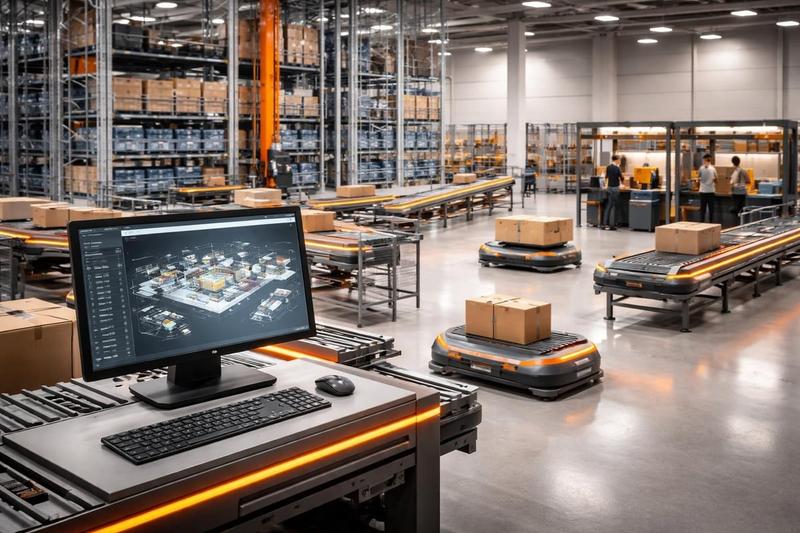
The integration of industrial automation and robotics with conveyor systems creates comprehensive material handling ecosystems. Rather than isolated equipment, today's solutions function as coordinated networks where conveyors, autonomous mobile robots, automated storage systems, and picking stations communicate continuously to optimize workflow.
Evaluating Conveyor System Companies: Critical Selection Criteria
Choosing among conveyor system companies requires methodical evaluation across multiple dimensions. Technical capability represents just one consideration among factors including industry experience, post-installation support, and strategic alignment with your operational vision.
Industry-Specific Expertise and Track Record
Different sectors demand specialized conveyor solutions:
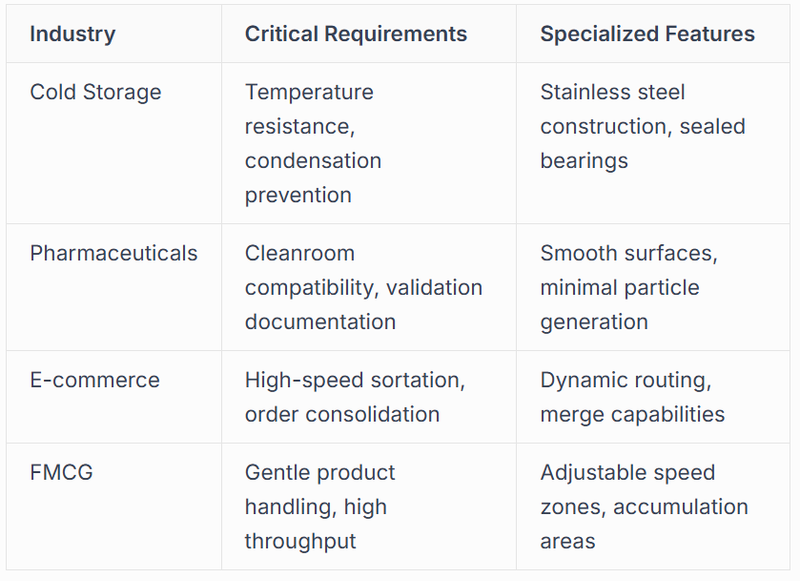
Leading conveyor system companies demonstrate proven success within your specific industry through documented case studies and referenceable installations. Request detailed information about projects involving similar product types, throughput volumes, and operational constraints.
Integration Capabilities and System Compatibility
Modern warehouse operations rarely implement conveyors in isolation. Your chosen provider must demonstrate expertise integrating conveyor infrastructure with existing or planned automation technologies.
Evaluate whether conveyor system companies can seamlessly connect with your warehouse management system, enterprise resource planning software, and existing material handling equipment. The ability to coordinate goods-to-person automation with conveyor networks determines overall system efficiency and return on investment.
Key integration considerations include:
- Control system architecture – Centralized or distributed control platforms
- Communication protocols – Compatibility with industry-standard interfaces
- Data exchange capabilities – Real-time status reporting and performance analytics
- Scalability provisions – Support for future expansion without system replacement
- Vendor collaboration – Willingness to coordinate with other automation suppliers
For small and medium-sized operations beginning their automation journey, solutions like the Automate-X GTP Starter Grid provide an accessible entry point that can expand as operational needs evolve. This approach allows businesses to validate automation benefits with manageable capital investment before committing to larger infrastructure projects.

Technical Considerations for Conveyor System Selection
Beyond vendor evaluation, understanding the technical specifications and operational characteristics of different conveyor technologies ensures optimal solution selection for your specific application.
Conveyor Types and Application Suitability
Conveyor system companies typically offer multiple technology platforms, each optimized for particular product characteristics and operational requirements. Belt conveyors excel at transporting diverse package sizes across extended distances, while roller conveyors provide accumulation capabilities for order consolidation zones.
Common conveyor configurations include:
- Belt conveyors – Continuous transport with gentle handling for fragile items
- Roller conveyors – Gravity or powered options supporting heavy loads
- Sortation systems – High-speed product diversion based on destination
- Spiral conveyors – Vertical elevation within minimal floor space
- Chain conveyors – Robust handling for pallets and heavy containers
The conveyor solution design process should begin with detailed operational analysis including product specifications, throughput requirements, facility constraints, and future growth projections.
Performance Metrics and Capacity Planning
Establish clear performance expectations before engaging conveyor system companies:
- Throughput capacity measured in units per hour or cases per minute
- Velocity requirements for both transport and accumulation zones
- Load capacity specifications for individual products and maximum accumulation
- Availability targets defining acceptable downtime percentages
- Mean time between failures for reliability assessment
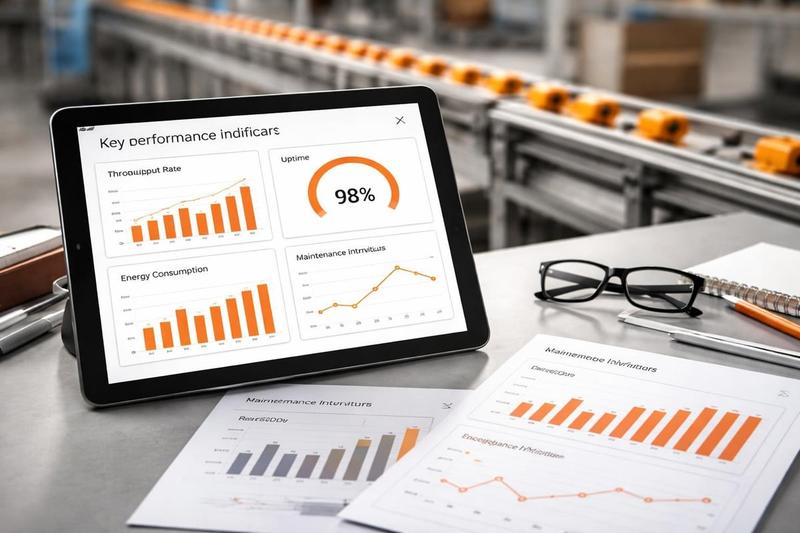
Recent trends in conveyor system technology emphasize sustainability alongside performance, with energy-efficient designs reducing operational costs while supporting corporate environmental commitments. When evaluating proposals from conveyor system companies, request detailed energy consumption projections and compare lifecycle operating costs rather than focusing exclusively on capital expenditure.
Safety Standards and Regulatory Compliance
Workplace safety represents a non-negotiable requirement when implementing conveyor infrastructure. Reputable conveyor system companies prioritize compliance with established safety standards and proactively incorporate protective features throughout their designs.
Essential Safety Features and Standards
The ASME B20.1 Safety Standard provides comprehensive guidelines for conveyor design, installation, and operation. Verify that prospective providers demonstrate familiarity with these standards and implement required safety measures as baseline features rather than optional upgrades.
Critical safety components include:
- Emergency stop systems accessible throughout conveyor runs
- Guarding preventing access to pinch points and rotating components
- Lock-out/tag-out provisions for maintenance activities
- Warning signage and visual indicators for active equipment
- Interlock systems preventing operation during unsafe conditions
Mining and heavy industry applications require particular attention to conveyor safety protocols, though these principles apply across all operational environments. Conveyor system companies should provide comprehensive operator training and maintenance documentation ensuring safe ongoing operation.
Maintenance Requirements and Lifecycle Support
The relationship with conveyor system companies extends far beyond initial installation. Long-term operational success depends on comprehensive maintenance support, spare parts availability, and responsive technical assistance when issues arise.
Preventive Maintenance Programs
Effective maintenance strategies incorporate multiple approaches:
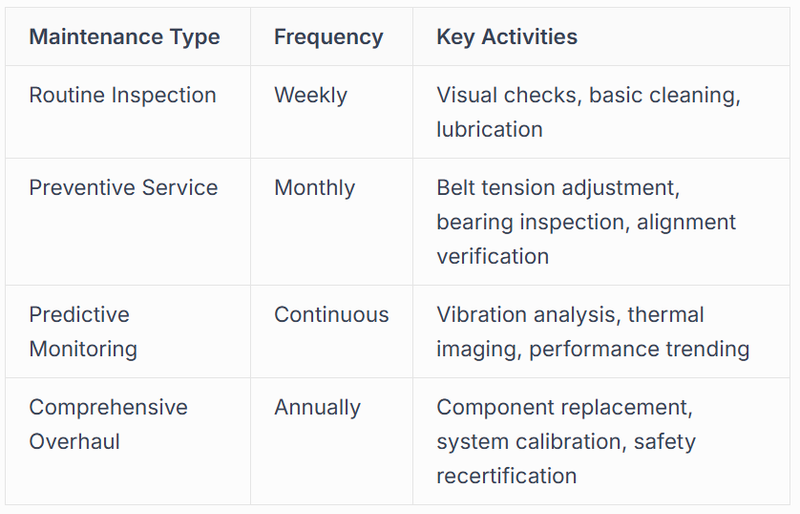
Leading conveyor system companies offer structured maintenance programs with predictable costs and guaranteed response times. Evaluate whether providers maintain local service teams with genuine spare parts inventory, minimizing downtime when repairs become necessary.
The integration of AI-driven monitoring systems enables predictive maintenance strategies that identify potential failures before equipment breakdown occurs. This proactive approach reduces unplanned downtime while optimizing maintenance resource allocation.
Financial Considerations and Investment Justification
Capital investment in conveyor infrastructure requires thorough financial analysis comparing costs against projected operational benefits. Conveyor system companies should support your investment decision with detailed return on investment calculations and realistic implementation timelines.
Total Cost of Ownership Analysis
Comprehensive financial evaluation includes multiple cost components:
- Initial capital expenditure for equipment and installation
- Integration costs connecting conveyors with existing systems
- Facility modifications including electrical, structural, and safety upgrades
- Training expenses for operators and maintenance personnel
- Ongoing operational costs covering energy consumption and routine maintenance
- Spare parts inventory and emergency repair provisions
Compare proposals from multiple conveyor system companies on total cost of ownership rather than initial purchase price alone. A more expensive system delivering superior energy efficiency and reliability often provides better long-term value than budget alternatives requiring frequent repairs.
Quantifying Operational Benefits
Document expected benefits supporting investment justification:
- Labour reduction through automated transport and sortation
- Throughput improvement enabling higher order volumes
- Accuracy enhancement reducing picking and shipping errors
- Space utilization gains from vertical transport options
- Scalability supporting future growth without facility expansion
Warehouse automation systems deliver measurable productivity improvements typically ranging from 25-60% depending on baseline conditions and implementation scope. Work with conveyor system companies to establish realistic projections based on documented performance data from comparable installations.
Emerging Trends Influencing Conveyor System Development
The material handling industry continues evolving rapidly as new technologies emerge and operational requirements shift. Understanding these trends helps evaluate whether conveyor system companies invest in innovation or simply maintain legacy product lines.
Artificial Intelligence and Machine Learning Integration
Industry 4.0 technologies are fundamentally transforming conveyor system capabilities. Advanced algorithms analyze operational data to optimize routing decisions, predict maintenance requirements, and automatically adjust system parameters based on real-time conditions.
AI-enhanced conveyor systems deliver:
- Dynamic load balancing distributing products across parallel conveyor lanes
- Adaptive speed control matching downstream processing capacity
- Predictive analytics identifying performance degradation before failures occur
- Automated troubleshooting reducing technical support requirements
Modular and Flexible Design Approaches
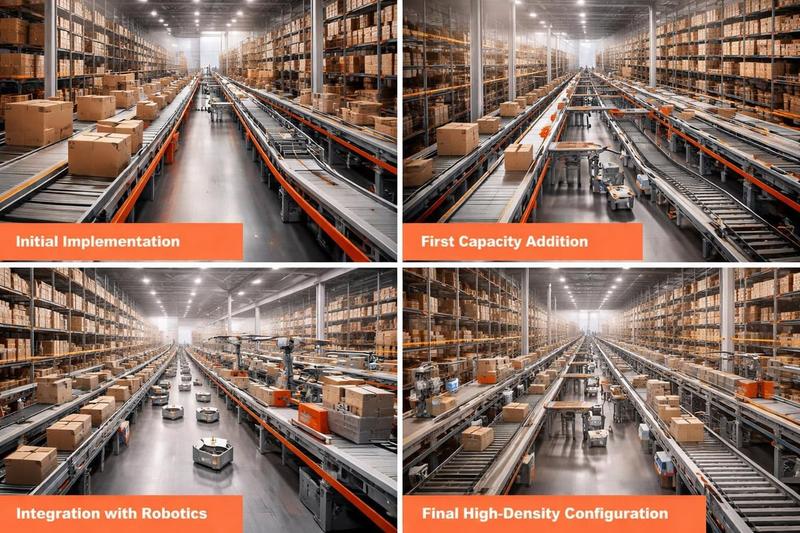
Modern warehouse operations must adapt quickly to changing product mixes, seasonal volume fluctuations, and evolving customer requirements. Conveyor system companies increasingly offer modular designs enabling rapid reconfiguration without complete system replacement.
These flexible platforms support incremental expansion as operational needs grow, protecting initial investments while providing scalability. Evaluate whether prospective vendors design systems for evolution rather than static configurations locked into original specifications.
Sustainability and Energy Efficiency
Environmental responsibility and operational cost reduction align in driving energy-efficient conveyor development. Leading conveyor system companies incorporate regenerative braking, variable frequency drives, and optimized motor selection reducing energy consumption substantially compared to legacy systems.
Beyond equipment efficiency, consider lifecycle sustainability including recyclable materials, refurbishment capabilities, and decommissioning procedures when comparing proposals from different providers.
Implementation Planning and Project Execution
Successful conveyor system deployment requires meticulous planning and disciplined project management. The most technically sophisticated solution delivers minimal value if implementation disrupts ongoing operations or extends beyond scheduled timelines.
Phased Implementation Strategies
Risk mitigation through staged deployment:
- Pilot installation testing core functionality in limited operational area
- Validation period confirming performance meets specifications
- Progressive expansion extending coverage across additional zones
- Full integration connecting all subsystems and automation components
- Optimization phase fine-tuning parameters based on operational data
Conveyor system companies should present detailed implementation plans addressing facility preparation, equipment delivery schedules, installation sequences, testing protocols, and workforce training programs. Request contingency provisions addressing potential delays or technical challenges discovered during deployment.
Change Management and Workforce Preparation
Technology implementation succeeds or fails based on workforce acceptance and operational readiness. Partner with conveyor system companies that prioritize comprehensive training and change management support rather than simply installing equipment and departing.
Effective training programs cover:
- Normal operation procedures and control interface navigation
- Basic troubleshooting techniques for common issues
- Safety protocols and emergency response procedures
- Preventive maintenance tasks within operator responsibility
- System performance monitoring and reporting processes
The integration of system integration expertise ensures conveyor infrastructure functions harmoniously with broader warehouse automation ecosystems, creating cohesive operational environments where technology enhances rather than complicates workflows.
Vendor Relationship and Long-term Partnership
The decision regarding conveyor system companies establishes a relationship extending decades as equipment operates, evolves, and eventually requires replacement. Evaluate vendors on partnership potential rather than transactional equipment supply.
Support Infrastructure and Responsiveness
Assess vendor capabilities across critical support dimensions:
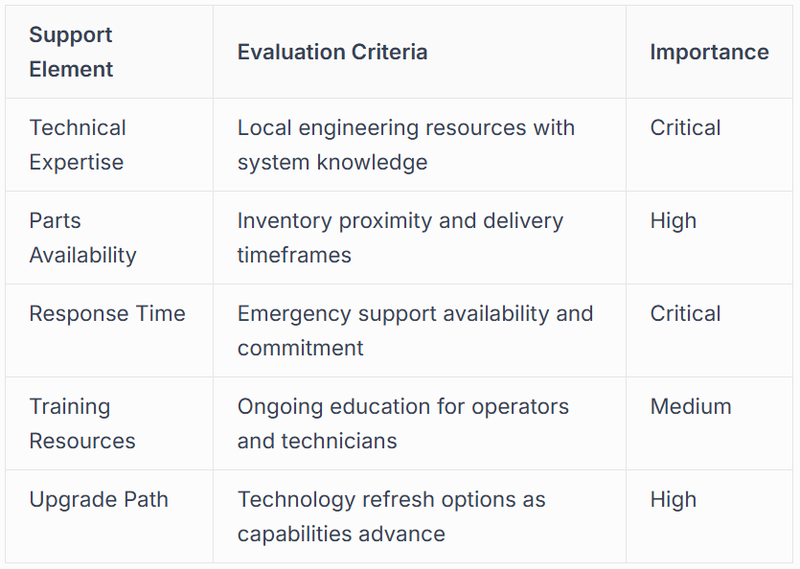
Request references from existing customers and inquire about their experience with post-installation support, issue resolution, and ongoing relationship quality. Conveyor system companies with strong reputations willingly provide multiple customer contacts for reference discussions.
Innovation and Continuous Improvement
Technology evolves continuously, with emerging trends in material handling creating new opportunities for operational enhancement. Partner with conveyor system companies demonstrating commitment to research, development, and product innovation rather than vendors maintaining static product portfolios.
Inquire about upgrade paths allowing technology refresh without complete system replacement. Forward-thinking providers design solutions accommodating future enhancements through modular components and software updates.
Regional Considerations for New Zealand and Australian Operations
Geography influences conveyor system selection through factors including local support availability, parts supply logistics, and compliance with regional regulations. Evaluate whether conveyor system companies maintain meaningful presence within New Zealand and Australia or operate primarily from distant international locations.
Regional factors affecting vendor selection:
- Service technician availability within reasonable response timeframes
- Spare parts inventory held locally versus international shipping delays
- Familiarity with regional building codes and safety regulations
- Currency stability and pricing predictability for international suppliers
- Time zone alignment for technical support and project communication
The growth of warehouse automation across the region reflects increasing recognition that operational excellence requires modern infrastructure and technology partnerships. Businesses implementing conveyor systems today position themselves for sustained competitive advantage as customer expectations and market dynamics evolve.
Selecting from among conveyor system companies represents a strategic decision impacting warehouse efficiency, operational scalability, and competitive positioning for years to come. By evaluating vendors across technical capability, integration expertise, safety compliance, financial value, and long-term partnership potential, logistics leaders make informed choices supporting business objectives. Automate-X delivers comprehensive warehouse automation solutions combining intelligent conveyor systems, advanced robotics, and integrated software platforms tailored for logistics operations throughout New Zealand and Australia. Contact our team to discuss how modern material handling technology can transform your distribution capabilities and drive measurable operational improvements.