

Automation in Operations: A 2026 Strategic Guide
Share on
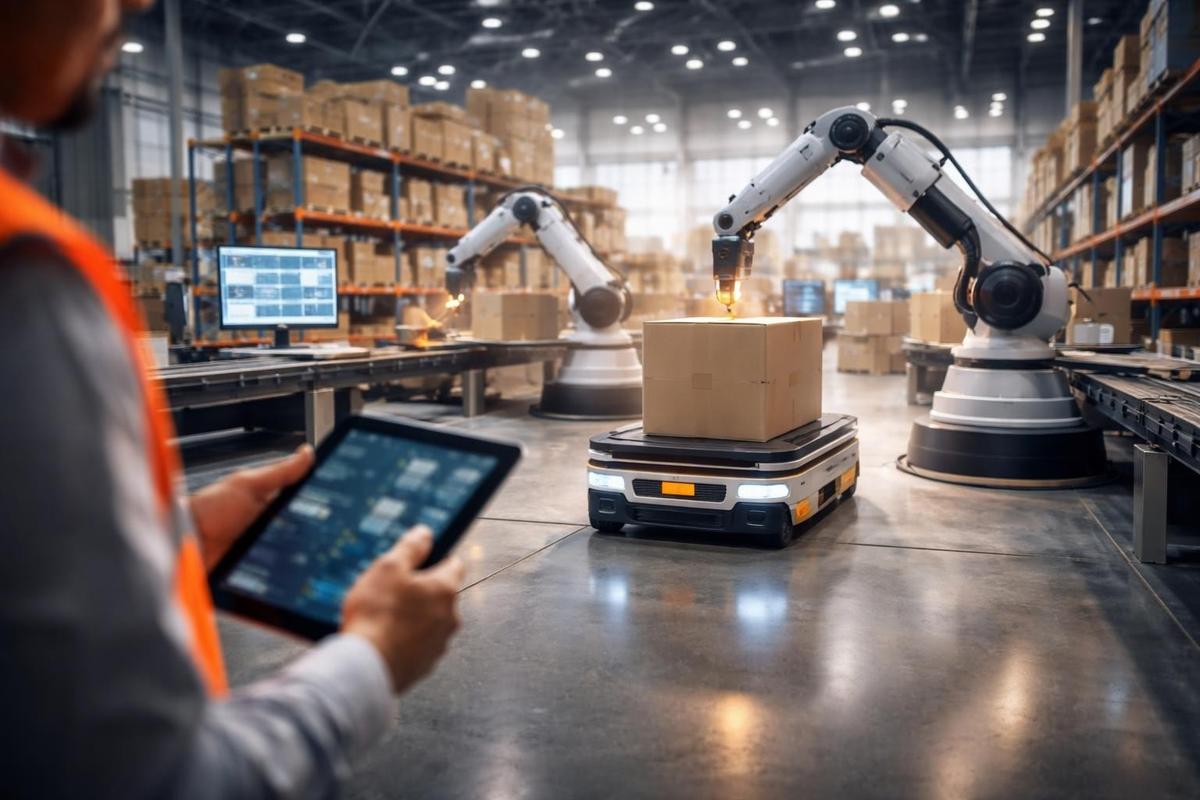
Modern warehouse operations face unprecedented pressure to deliver faster, more accurately, and at lower cost. The convergence of robotics, artificial intelligence, and sophisticated warehouse management systems has transformed how distribution centres function. Automation in operations represents more than just installing conveyor belts or deploying autonomous mobile robots. It encompasses a comprehensive approach to redesigning workflows, integrating intelligent systems, and building scalable infrastructure that adapts to fluctuating demand whilst maintaining operational excellence.
The Strategic Foundation of Operational Automation
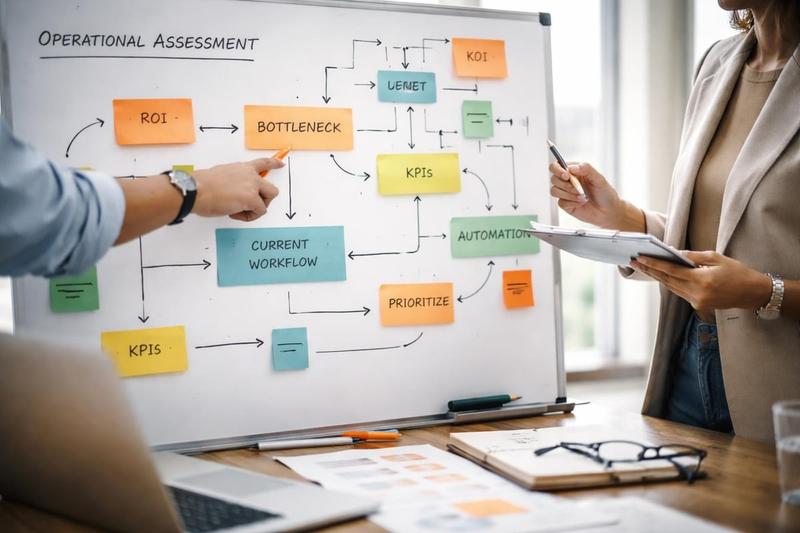
Automation in operations begins with a clear understanding of current processes, bottlenecks, and strategic objectives. Before implementing any technology, businesses must conduct thorough operational assessments to identify high-impact opportunities where automation delivers measurable returns. This foundation determines whether automation projects succeed or fail.
Successful automation strategies share common elements:
- Comprehensive data collection on current operational metrics
- Clear definition of key performance indicators and improvement targets
- Stakeholder alignment across operations, IT, finance, and executive leadership
- Phased implementation roadmaps that balance quick wins with long-term transformation
- Continuous improvement frameworks that adapt as operations evolve
The Operations Council emphasizes that operational leaders must embrace digital transformation as a core competency. This shift requires moving beyond viewing automation as a cost centre to recognising it as a strategic enabler of competitive advantage.
Building a Source of Truth for Automation
One of the most critical yet overlooked aspects of automation in operations is establishing a reliable source of truth. AWS guidance on operations automation highlights that accurate, centralized data forms the foundation for automated decision-making across warehouse systems.
Without this foundation, automation systems operate on inconsistent or outdated information, leading to errors that compound across integrated processes. A centralized source of truth ensures that inventory management, order routing, resource allocation, and performance monitoring all reference the same authoritative data.
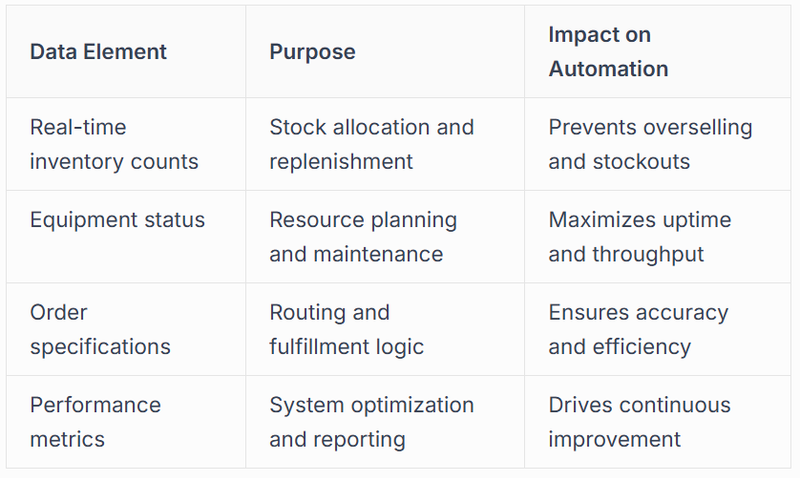
This centralized approach becomes particularly critical as operations scale and integrate multiple automation technologies that must communicate seamlessly.
Core Technologies Driving Operational Automation
The landscape of warehouse automation technologies has expanded dramatically, offering solutions for virtually every operational process. Understanding which technologies align with specific operational challenges enables more strategic investment decisions.
Goods-to-Person Systems
Goods-to-person automation fundamentally reimagines warehouse picking by bringing inventory to stationary operators rather than having workers travel through aisles. This approach dramatically reduces walking time, increases pick rates, and improves ergonomics. For businesses just beginning their automation journey, entry-level systems offer an accessible starting point without requiring complete facility redesigns.
The Automate-X GTP Starter Grid provides small and medium businesses with a modular approach to implementing goods-to-person automation, allowing operations to automate picking processes incrementally whilst maintaining budget control and operational flexibility.

Modern goods-to-person implementations incorporate:
- Automated storage and retrieval systems that maximize vertical space utilisation
- Intelligent software that optimizes inventory placement based on velocity and order patterns
- Ergonomic workstations that present items at optimal heights and angles
- Integration capabilities with existing warehouse management systems
Autonomous Mobile Robots and Material Handling
Autonomous mobile robots (AMRs) have revolutionized internal logistics by automating material movement without fixed infrastructure. Unlike traditional automated guided vehicles, AMRs navigate dynamically using sensors and mapping technology, adapting to changing warehouse layouts and obstacles.
Industrial robotics solutions now handle tasks ranging from simple pallet transport to complex picking operations. The flexibility of these systems allows operations to redeploy robots as demand patterns shift, providing scalability that fixed automation cannot match.
Key advantages of AMR deployment include:
- Reduced labor costs for low-value transport activities
- Improved workplace safety by separating human and machine workflows
- Enhanced throughput consistency regardless of shift or season
- Scalability that grows with operational demand
Conveyor Systems and Sortation
Conveyor systems remain fundamental to automation in operations, forming the circulatory system that moves products through facilities. Modern conveyor technology extends far beyond simple belt systems, incorporating intelligent sortation, dynamic routing, and real-time tracking capabilities.
Advanced sortation systems process thousands of units per hour with accuracy rates exceeding 99.9%, directing items to appropriate lanes based on destination, carrier, service level, or custom business rules. This automation eliminates manual sorting errors whilst dramatically increasing throughput capacity.
Implementing Automation Across Operational Functions
Automation in operations extends beyond physical material handling to encompass the full spectrum of warehouse activities. Each functional area offers distinct automation opportunities with specific implementation considerations.
Inbound Operations and Receiving
Automating receiving processes accelerates inventory availability whilst improving accuracy. Technologies ranging from automated dock scheduling to robotic unloading systems transform traditionally manual operations into streamlined, data-rich processes.
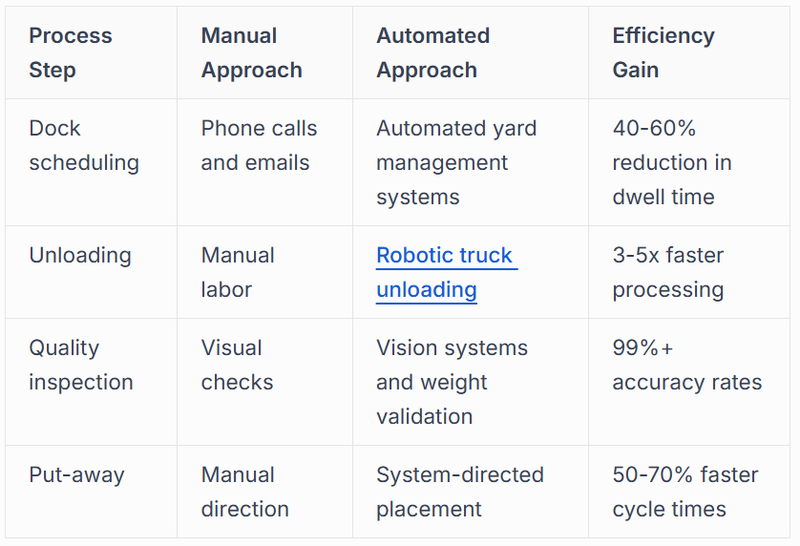
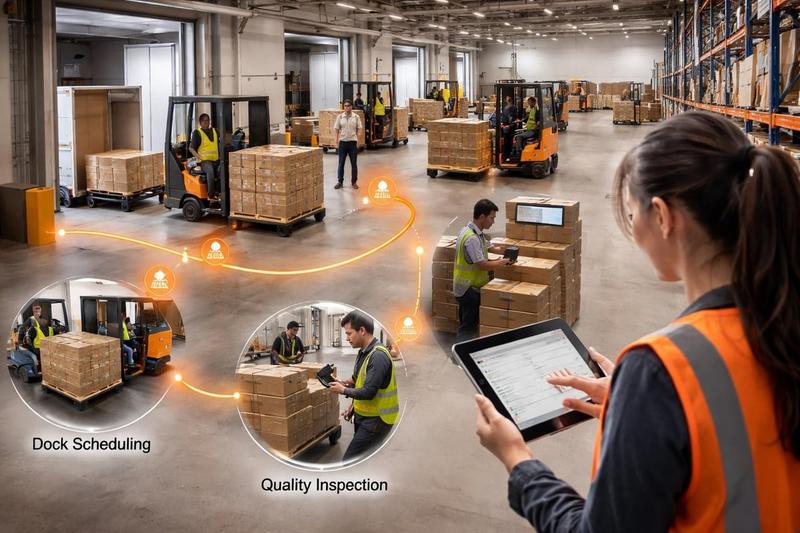
These improvements compound throughout operations. Faster, more accurate receiving means inventory becomes available for fulfillment sooner, reducing order cycle times and improving customer satisfaction.
Order Fulfillment and Picking Optimization
Order picking optimization represents the highest-impact area for automation in most warehouse operations. Picking typically accounts for 50-60% of operational labor costs, making it the primary target for efficiency improvements.
Automation strategies for picking range from basic wave planning software to fully automated fulfillment systems:
- Batch and zone picking reduces travel time by grouping orders intelligently
- Voice and light-directed picking eliminates paper whilst improving accuracy
- Pick-to-tote systems with automated sortation enable high-density fulfillment
- Robotic piece picking handles repetitive, high-volume SKUs autonomously
- Collaborative robots assist human pickers with heavy or awkward items
The optimal approach depends on order profiles, SKU characteristics, throughput requirements, and accuracy expectations. Many operations deploy multiple picking methodologies simultaneously, routing orders to the most appropriate automation based on specific characteristics.
Packing and Shipping Automation
Packaging automation completes the fulfillment process by protecting products whilst minimizing material waste and labor input. Automated packing systems select optimal box sizes, apply void fill, print and apply shipping labels, and route parcels to appropriate carriers.
Modern systems integrate directly with carrier APIs to obtain real-time rates, generate compliant shipping documentation, and trigger tracking updates automatically. This integration eliminates manual data entry whilst ensuring shipping accuracy.
Advanced packing automation delivers:
- Right-sized packaging that reduces dimensional weight charges
- Consistent pack quality that minimizes damage claims
- Automatic documentation that ensures compliance and traceability
- Throughput rates of 600-1200 parcels per hour per line
Inventory Management and Cycle Counting
Automation transforms inventory management from periodic physical counts to continuous, automated verification. Technologies including RFID, weight sensors, and vision systems monitor inventory continuously, identifying discrepancies immediately rather than weeks later during scheduled counts.
Automated storage solutions inherently maintain inventory accuracy because systems track every movement automatically. Unlike manual operations where mispicks and misplacement create errors, automated systems enforce data integrity through controlled access and automated verification.
Integration Challenges and Solutions
Whilst individual automation technologies offer compelling benefits, realizing their full potential requires seamless integration across systems. Automation in operations succeeds or fails based on how well disparate technologies communicate and coordinate.
System Integration Architecture
Modern warehouse operations typically involve multiple systems that must exchange data in real-time:
- Warehouse Management Systems (WMS) orchestrating overall operations
- Warehouse Control Systems (WCS) directing automation equipment
- Enterprise Resource Planning (ERP) systems managing inventory and orders
- Transportation Management Systems (TMS) coordinating outbound logistics
- Labor Management Systems (LMS) optimizing workforce deployment
The six principles of effective automation emphasize that integration must prioritize visibility, accuracy, and user experience. Systems that operate in isolation create data silos, manual handoffs, and opportunities for errors.
Successful integration strategies employ middleware platforms that translate data between systems, maintaining operational continuity even when individual components require updates or replacement.
Managing the Ironies of Automation
Research on automation paradoxes highlights that increased automation often requires more skilled operators rather than fewer people. As systems become more sophisticated, the expertise required to monitor, maintain, and optimize them increases substantially.
Operations must plan for this reality by:
- Investing in training programmes that develop technical capabilities
- Redesigning roles to focus on oversight and problem-solving rather than manual tasks
- Creating clear escalation paths when automated systems encounter exceptions
- Maintaining manual backup procedures for critical processes during system failures
The goal isn't eliminating human involvement but rather elevating it to higher-value activities that leverage uniquely human capabilities like judgment, creativity, and adaptability.
Measuring Automation Performance and ROI
Automation in operations demands rigorous performance measurement to validate investments and guide continuous improvement. Establishing the right metrics ensures that automation delivers promised benefits whilst identifying opportunities for optimization.
Key Performance Indicators for Automated Operations
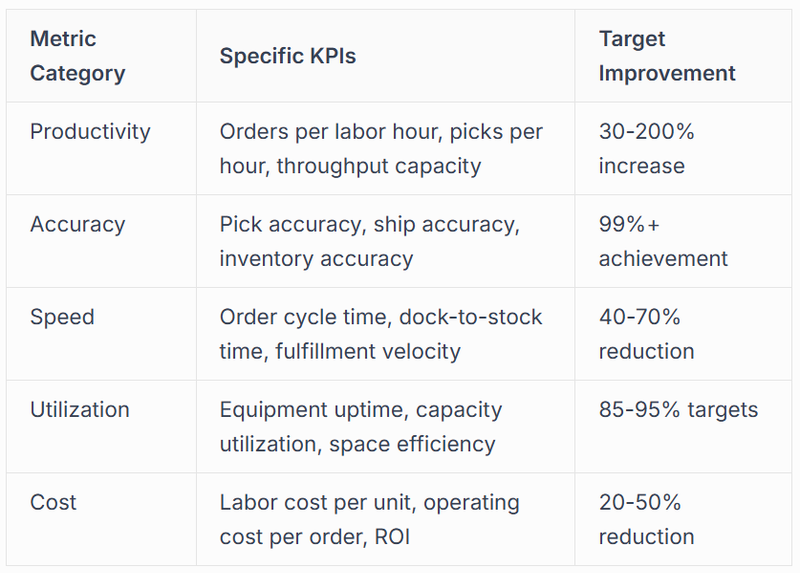
Beyond operational metrics, automation impacts financial performance through improved customer satisfaction, reduced damage and returns, and enhanced scalability without proportional cost increases.
Continuous Optimization Frameworks
Automation in operations isn't a one-time project but an ongoing journey of refinement and enhancement. Intralogistics solutions evolve continuously as operational requirements change, technology advances, and business strategies shift.
Effective optimization requires:
- Regular performance reviews comparing actual results against targets and benchmarks
- Exception analysis identifying patterns in errors, delays, or system failures
- Process refinement adjusting workflows, parameters, and rules based on data insights
- Technology updates incorporating new capabilities and features as they become available
- Stakeholder feedback capturing insights from operators, managers, and customers
This systematic approach ensures that automation investments continue delivering value long after initial implementation.
Industry-Specific Automation Considerations
Different industries face unique operational challenges that shape optimal automation strategies. Understanding these sector-specific requirements ensures that automation in operations aligns with regulatory requirements, product characteristics, and customer expectations.
Food and Beverage Operations
Food and beverage logistics require strict temperature control, lot traceability, and FIFO inventory management. Automation systems must accommodate variable product weights, promotional packaging variations, and rapid SKU proliferation whilst maintaining food safety standards.
Cold storage automation minimizes human exposure to extreme temperatures whilst maintaining the precise environmental control required for product integrity. Automated systems also improve traceability, enabling rapid response to quality issues or product recalls.
Pharmaceutical Automation
Pharmaceutical operations demand uncompromising accuracy, complete traceability, and rigorous regulatory compliance. Automation in these environments must validate every transaction, maintain comprehensive audit trails, and enforce strict access controls.
Serialization requirements, temperature monitoring, and expiry date management create complexity that manual operations struggle to handle consistently. Automation eliminates human error whilst providing the documentation and verification that regulatory authorities require.
E-commerce and Third-Party Logistics
E-commerce fulfillment presents unique challenges including high SKU counts, variable order sizes, and compressed delivery timeframes. Third-party logistics providers serving multiple clients must accommodate diverse requirements whilst maintaining operational efficiency.
Automation enables the flexibility and scalability that these dynamic environments demand. Systems can quickly onboard new clients, adapt to seasonal demand fluctuations, and handle the small-order, high-mix profiles typical of direct-to-consumer fulfillment.
Security and Risk Management in Automated Operations
As automation in operations becomes more sophisticated and interconnected, security considerations become increasingly critical. CISA guidance on security automation emphasizes the need for comprehensive strategies that protect operational technology whilst enabling the connectivity that automation requires.
Critical security considerations include:
- Network segmentation isolating operational technology from corporate IT networks
- Access controls ensuring only authorized personnel can modify automation parameters
- Backup and recovery procedures enabling rapid restoration after system failures or attacks
- Vendor security assessment evaluating the cybersecurity practices of technology providers
- Incident response planning defining procedures for security events affecting operations
Physical security also evolves with automation. Facilities must balance open collaboration areas that support human-robot interaction with restricted zones that protect sensitive inventory or controlled substances. Automated access control systems, surveillance integration, and automated alerts enhance security whilst supporting operational efficiency.
Future Trends Reshaping Operational Automation
Automation in operations continues evolving rapidly as emerging technologies mature and new capabilities become economically viable. Understanding these trends helps operations leaders prepare for future investments and capability requirements.
Artificial Intelligence and Machine Learning
AI in warehouse management enables systems to learn from operational data, optimizing decisions in real-time without explicit programming. Applications include demand forecasting, dynamic slotting optimization, predictive maintenance, and autonomous exception resolution.
Rather than following fixed rules, AI-powered systems adapt continuously based on observed patterns, improving performance over time as they process more data. This capability transforms automation from rigid process execution to intelligent operational orchestration.
Cloud-Based Automation Platforms
Cloud architectures enable rapid deployment of automation capabilities without significant capital investment in on-premises infrastructure. These platforms provide:
- Instant access to the latest features and capabilities
- Scalable compute resources that flex with operational demand
- Advanced analytics and reporting capabilities
- Simplified integration with e-commerce, ERP, and carrier systems
The shift to cloud-based automation democratizes access to sophisticated capabilities previously available only to large enterprises with substantial IT resources.
Digital Twin Technology
Digital twins create virtual replicas of physical warehouse operations, enabling scenario testing, performance optimization, and operator training without disrupting live operations. These simulations model how changes to layouts, processes, or automation configurations impact performance before implementation.
As automation in operations becomes more complex, digital twins provide essential tools for planning, optimization, and troubleshooting that reduce risk and accelerate time-to-value for new initiatives.
Automation in operations has evolved from a competitive advantage to an operational necessity for businesses seeking to meet modern logistics demands. Strategic implementation of automation technologies, grounded in solid data foundations and continuous optimization, enables transformative improvements in efficiency, accuracy, and scalability. Whether you're exploring your first automation investment or expanding existing capabilities, Automate-X combines robotics, software, and integration expertise to design solutions that align with your specific operational challenges and growth objectives.